$2,000Median
1Sold (12 mo)
$2,000Last sale
Recent salesSee more
4 for sale · $450–$1,100 USD
11 in the gallery
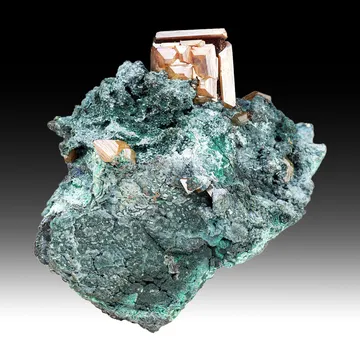
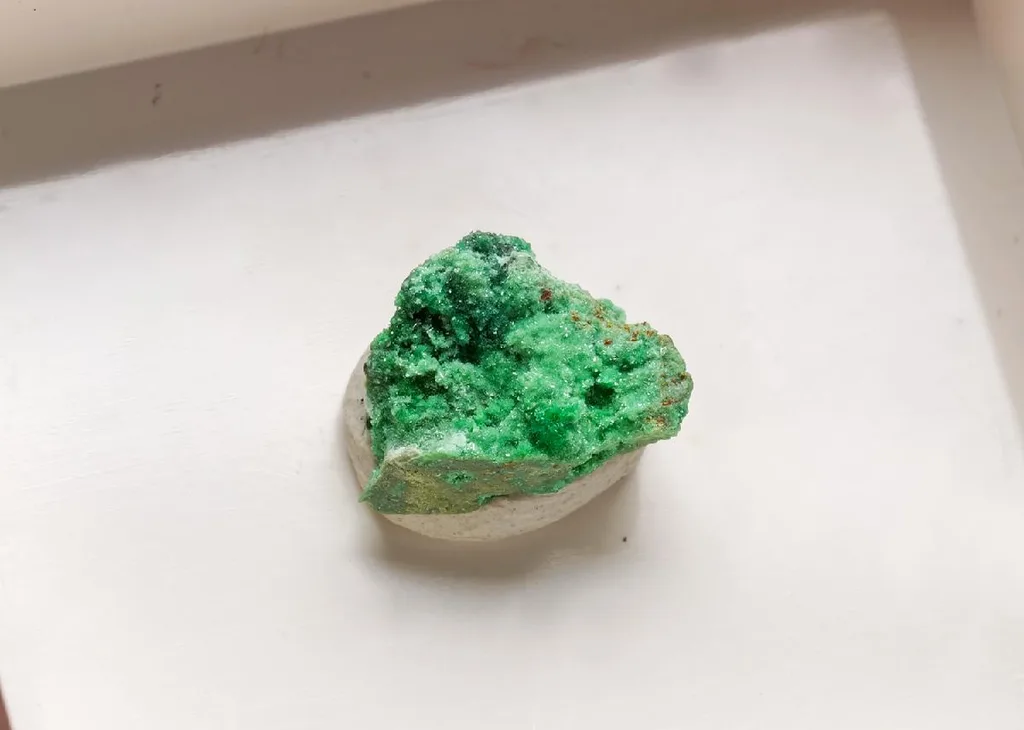
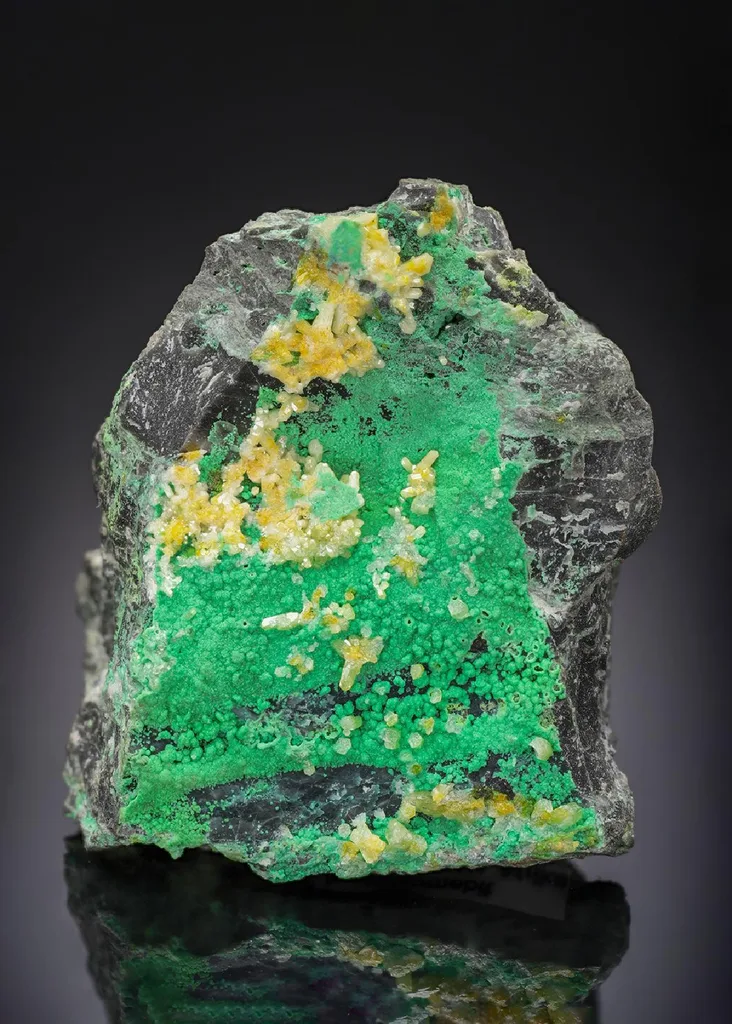
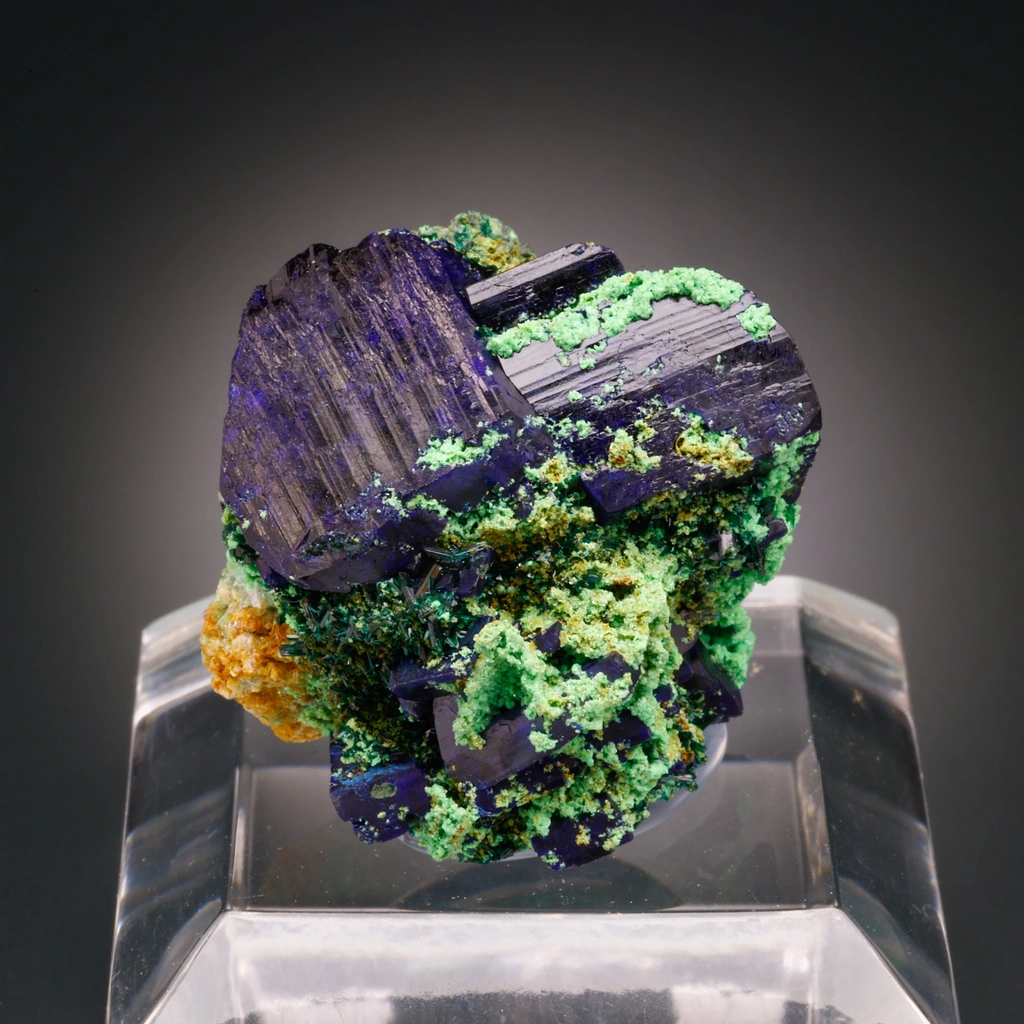
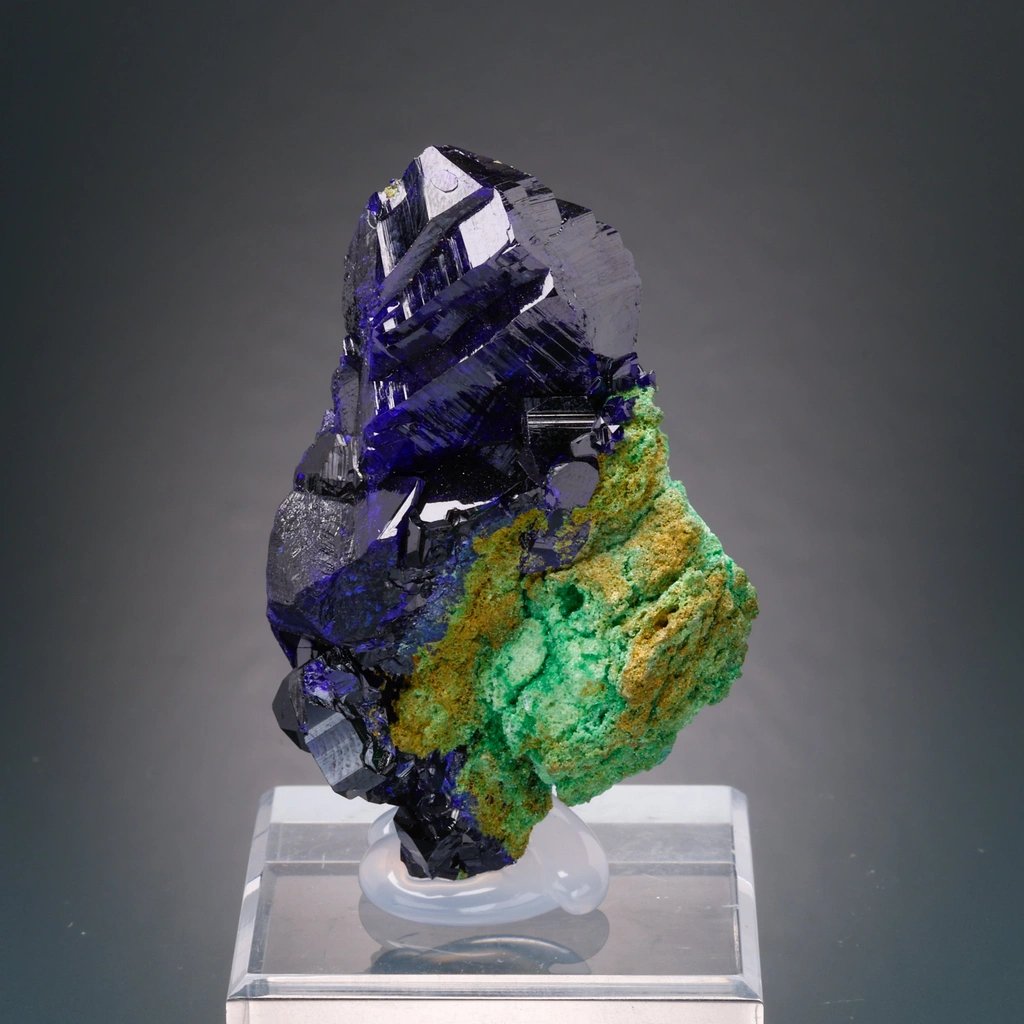
Tsumebite is a lead copper phosphate-sulfate mineral that forms as a secondary phase in oxidized zones of sulfide deposits. It commonly occurs as prismatic to tabular crystals or masses, often displaying a vitreous to resinous luster and a bright green to blue-green color that can be striking in well-formed specimens. The mineral is typically associated with other secondary minerals and can occur in fern-like or aggregated habits, reflecting its growth in open cavities where fluids percolate through rock. Fine specimens are most famously sourced from the Tsumeb mine in Namibia, a historic locality known for a wide range of rare lead and copper phosphates, with other good examples reported from various destinations in the world.
Collectors value tsume bite for its vivid coloration, crystallographic form, and the historical connection to classic mine sites. While not among the most common secondary phosphates, when well-formed crystals or aesthetically pleasing aggregates are found, they stand out in a collection for their distinctive hue and mineral chemistry, offering insight into oxidized environments and the mobility of lead and copper in mineralizing fluids.