$250Median
1Sold (12 mo)
$250Last sale
Recent salesSee more
1 in the gallery
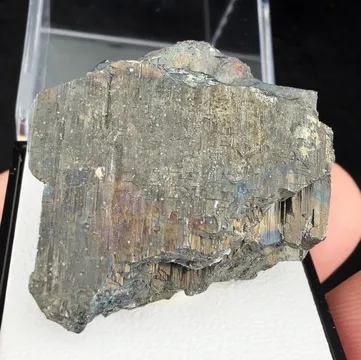
Rhodostannite is a copper iron tin sulfide that crystallizes in the tetragonal system. It typically forms compact to granular aggregates with a metallic lustre and a gray to steel-gray color, and it is opaque with a relatively low hardness around 4 on the Mohs scale. The mineral’s composition includes copper, iron, tin, and sulfur, giving a compact, somewhat brassy appearance that can occur in silvery-gray tones.
Notable specimens have been reported from Bolivia, where sands or hydrothermal environments can yield small, well-formed grains and crusts. In hand specimens the mineral can present as metallic, somewhat dull to bright surfaces, sometimes revealing subtle prismatic or stubby crystal faces. Collectors value rhodostannite for its distinctive copper-tinish involvement within a sulfide, its lustre, and its association with other sulfide minerals found in high-temperature hydrothermal deposits, contributing to varied mode of occurrence and stacking in mineral assemblages.