$70Median
1Sold (12 mo)
$70Last sale
Recent salesSee more
6 in the gallery
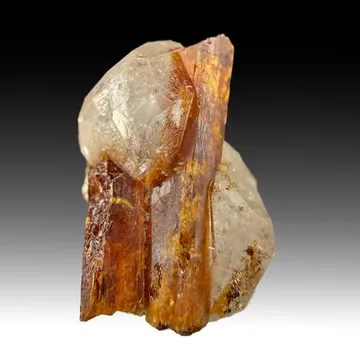
Manganoneptunite is a rare feldspathoid-bearing manganese silicate that forms dark, often black to brown crystals with a glassy to pearly lustre. The mineral typically occurs as well-formed, prismatic to blocky crystals and can show complex intergrowths with other silicate phases. Its composition includes manganese in a silicate framework, and in polished specimens the surfaces reflect a subtle metallic sheen that can enhance its intricate shapes.
Notable specimens come from localities in Canada and Russia, where stable, high‑temperature hydrothermal environments or pegmatitic settings provide the conditions for manganese-rich silicate crystallization. Collectors prize Manganoneptunite for its rarity and the striking contrast between its dark color and the often sparkling crystal faces, as well as the curiosity of its multi-element, lattice structure. Well-preserved crystals with sharp terminations and clear habit are sought after for display and study, offering a tangible glimpse into complex silicate chemistry and crystal geometry.