






Curite specimens for sale
1 for sale · $450 USD
9 in the gallery
Curite is a uranyl-oxide phosphate mineral that forms as secondary crystals in oxidation zones of uranium-rich ore deposits. It typically appears as orange to brown, often tabular or prismatic crystals with a resinous to submetallic lustre, sometimes forming granular aggregates. The mineral crystallizes in layered, complex structures containing lead and uranium, and its appearance is strongly influenced by hydration and the surrounding oxidized environments.
- Formula
- Pb3[ (UO2)4O4(OH)3 ]2 · 2 H2O
- Rarity
- Rare
- Stability
- Moderately Stable
- Collector interest
- High Interest
- Classification notes
- Oxide-hydroxide, uranyl hydroxide; Strunz 4.GB
Key characteristics
- Crystal system
- orthorhombic
- Mohs hardness
- 4–5
- Specific gravity
- 7.2–7.4
- Luster
- adamantine, vitreous, silky
- Transparency
- transparent, translucent
- Color
- yellow, orange, red, brown
- Streak
- yellow, orange
- Cleavage
- good
- Fracture
- uneven, subconchoidal
- Crystal habit
- tabular, prismatic, acicular, fibrous, radiating, massive, granular
- Radioactive
- Classic / historic
Buy Curite specimens
View all 1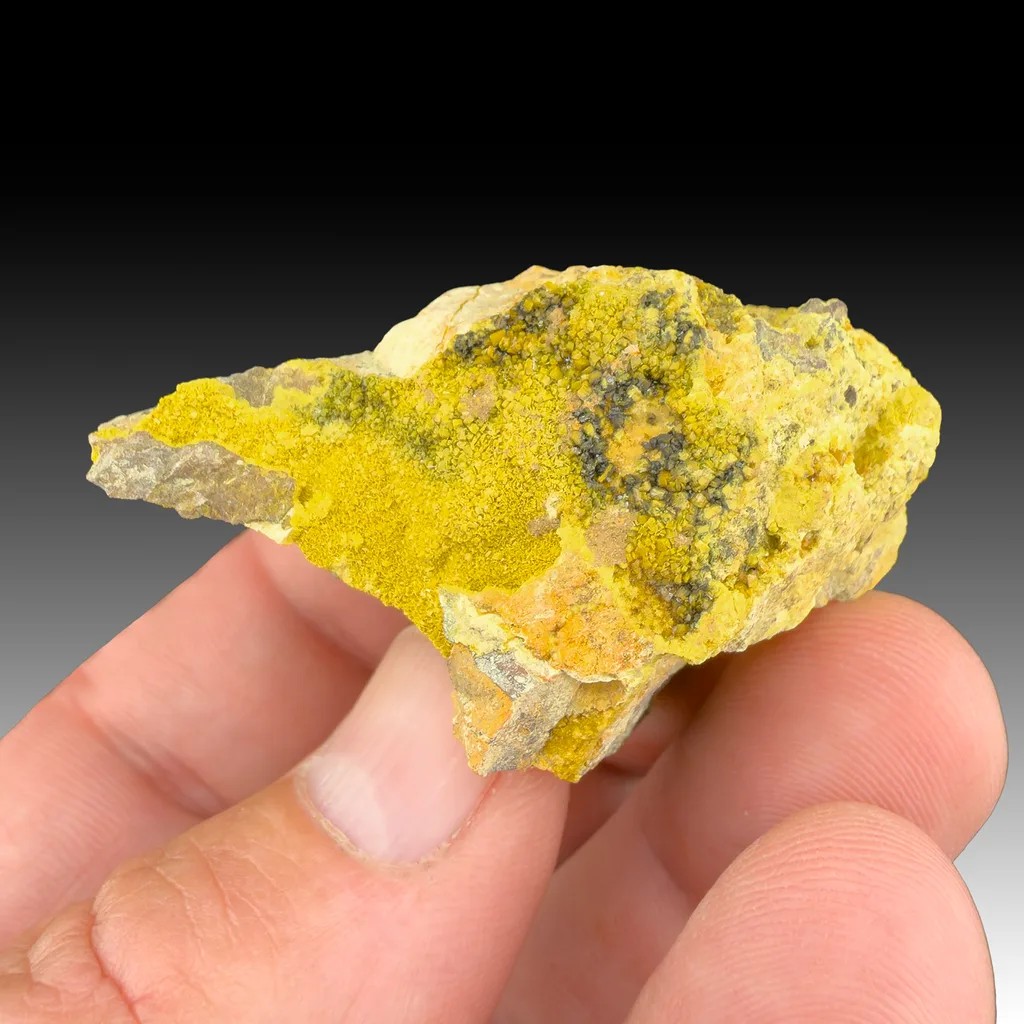
Where Curite is found
Top localities
- Shinkolobwe1 specimen
- Shinkolobwe Mine1 specimen
About Curite
Notable specimens come from the oxidation zones of uranium-rich deposits in the Democratic Republic of Congo, among other localities. Collectors prize curite for its distinctive color and the way it records the paragenesis of uranyl minerals in manganese- and lead-rich systems. Crystals can be small but striking, sometimes accompanied by associated minerals such as liebigite or alcaliphlogopite in the same assemblage. Careful handling is advised due to the uranium content, but when encountered in well-formed crystals, curite provides a compelling glimpse into secondary mineralization processes and the geologic history of its host deposits.