$1,500Median
1Sold (12 mo)
$1,500Last sale
Recent salesSee more
1 in the gallery
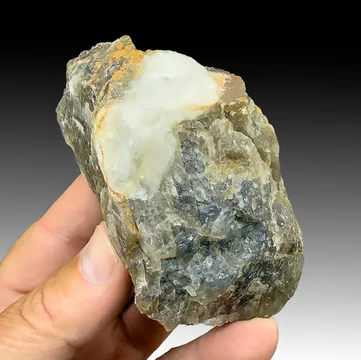
Cryolithionite is a rare aluminum- and fluorine-rich halide mineral. It crystallizes in the isometric system and typically forms octahedral, granular, or massive aggregates. Specimens are colorless to white, with a vitreous to greasy lustre and a conchoidal to good cleavage that can create sharp, reflective faces. The mineral’s transparency and low Mohs hardness around 2.5 make fresh, well-formed crystals delicate but striking when displayed in mineral cabinets.
Notable occurrences include Denmark, where curated samples have contributed to the mineral’s recognition among collectors. Cryolithionite is appreciated for its unusual chemistry, comprising sodium, lithium, aluminum, fluorine, and oxygen in a halide-alumino-fluoride framework, which gives it a distinctive microstructure and glow under suitable lighting. Collectors value well-formed octahedra and clean, colorless crystals that contrast with hosting minerals in veined or matrix settings. Its rarity and the relative scarcity of high-quality specimens add to its appeal for those seeking unusual halide minerals with compact, diagnostic crystals.