$108Median
2Sold (12 mo)
$120Last sale

8 in the gallery
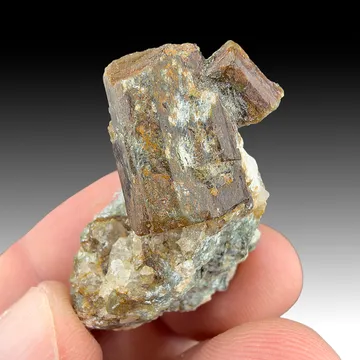
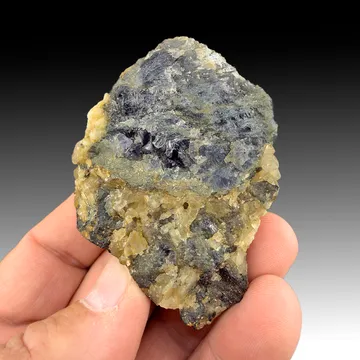
Cordierite is a mineral that forms in metamorphic rocks, typically presenting as prismatic to tabular crystals with a characteristic blue to violet pleochroism. The mineral commonly displays a vitreous to resinous luster and can occur in low-silica, aluminum-rich environments where metamorphism concentrates magnesium and iron. Worldwide localities yield specimens of interest to collectors, with notable material described from the USA, Canada, Germany, Australia, and Myanmar, among others. Clean, well-formed crystals from these regions are prized for their color, transparency, and the delicate associations they form within metamorphic veins and schists.
Collectors seek cordierite for its subtle color variation, crystal habit, and regional diversity. Specimens may appear as slender prisms or tabular crystals, sometimes twinning, and are often accompanied by associated minerals such as sillimanite oralusite in metamorphic assemblages. While not always abundant, particularly striking cords—especially those that show strong pleochroism or exhibit well-defined faces—are sought after for display and study. Its quiet beauty lies in the mineral’s serenity under reflected light and the way blue-to-violet hues shift with viewing angle, offering a contemplative and educational addition to any collection.