Chrysoprase
4 in the gallery
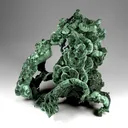
Chrysoprase is a green variety of chalcedony colored by trace amounts of nickel. It forms in silica-rich nodules and veins, typically presenting a translucent to opaque appearance with a waxy to vitreous luster. The familiar apple-to deep-green hues are most often seen in compact masses or layered bedding within oxide-rich hosts, and it can exhibit a slightly fibrous or microcrystalline texture upon close inspection. Notable occurrences include Australia, where chrysoprase nodules are commonly associated with serpentinite and ultramafic rocks, producing vibrant, even tones that collectors prize for their uniformity and depth.
- Formula
- SiO2
- Rarity
- Common
- Stability
- Stable
- Collector interest
- High Interest
- Classification notes
- Silica, Quartz group; Quartz family (SiO<sub>2</sub>) within the chalcedony/quartz subclass
Key characteristics
- Crystal system
- trigonal
- Mohs hardness
- 6.5–7
- Specific gravity
- 2.58–2.64
- Luster
- vitreous, waxy, dull
- Transparency
- translucent, opaque
- Color
- green
- Streak
- white
- Cleavage
- none
- Fracture
- conchoidal, uneven
- Crystal habit
- massive, botryoidal, granular
- Gem mineral
- Light-sensitive
- Classic / historic
About Chrysoprase
Collectors value chrysoprase for its distinctive color and relative rarity in high-quality, transparent to translucent specimens. The material is often cut or cabbed to maximize color uniformity and polish, making it a popular centerpiece in mineral cabinets and jewelry components. While not as scarce as some rare minerals, fine-quality chrysoprase from reputable localities remains a sought-after addition for its visual appeal and the connection to classic Australian serpentinite geology.