$150Median
3Sold (12 mo)
$150Last sale
8 for sale · $200–$5,000 USD
35 in the gallery
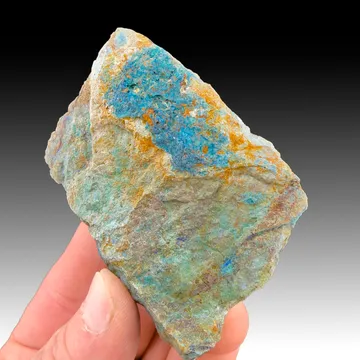
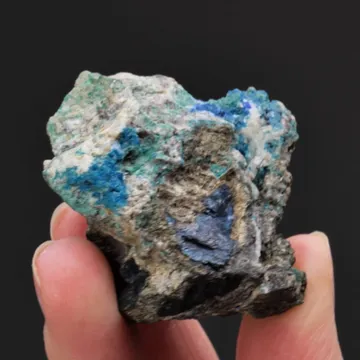
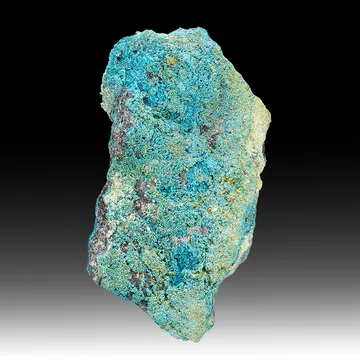
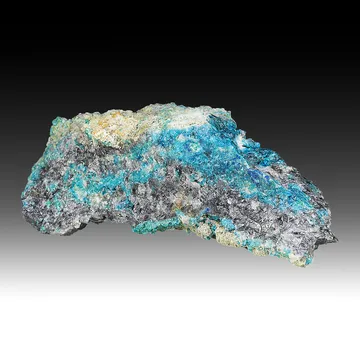
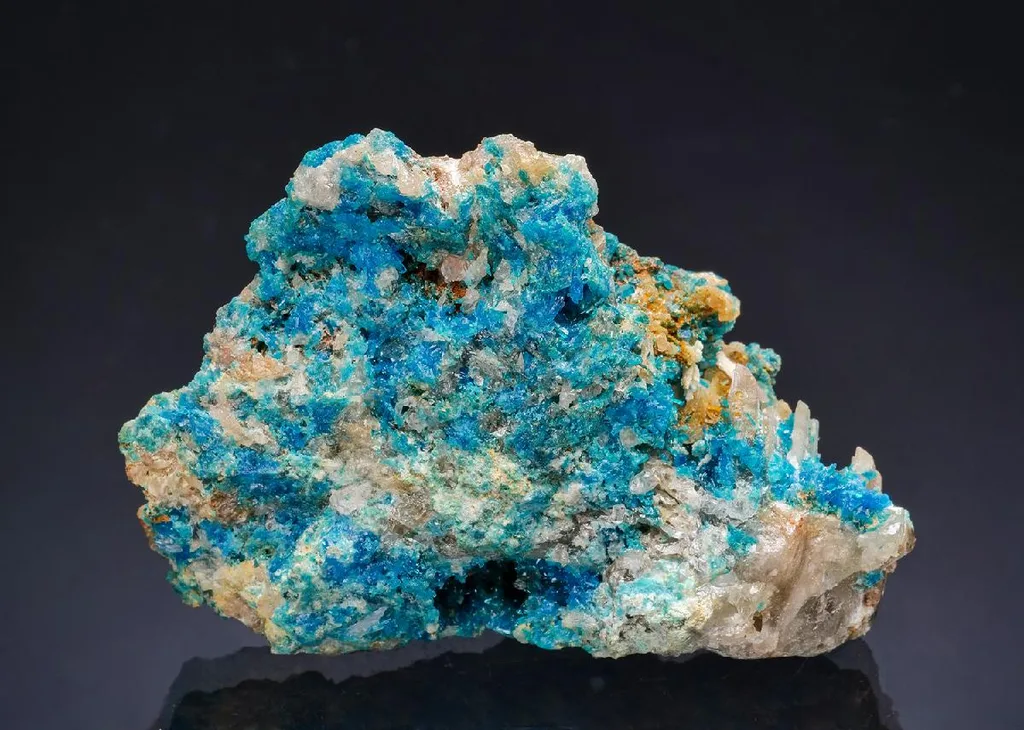
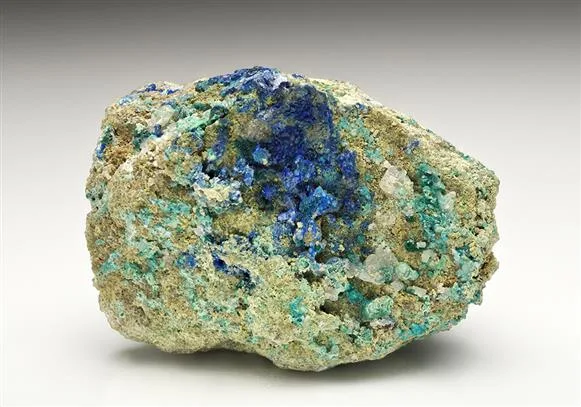
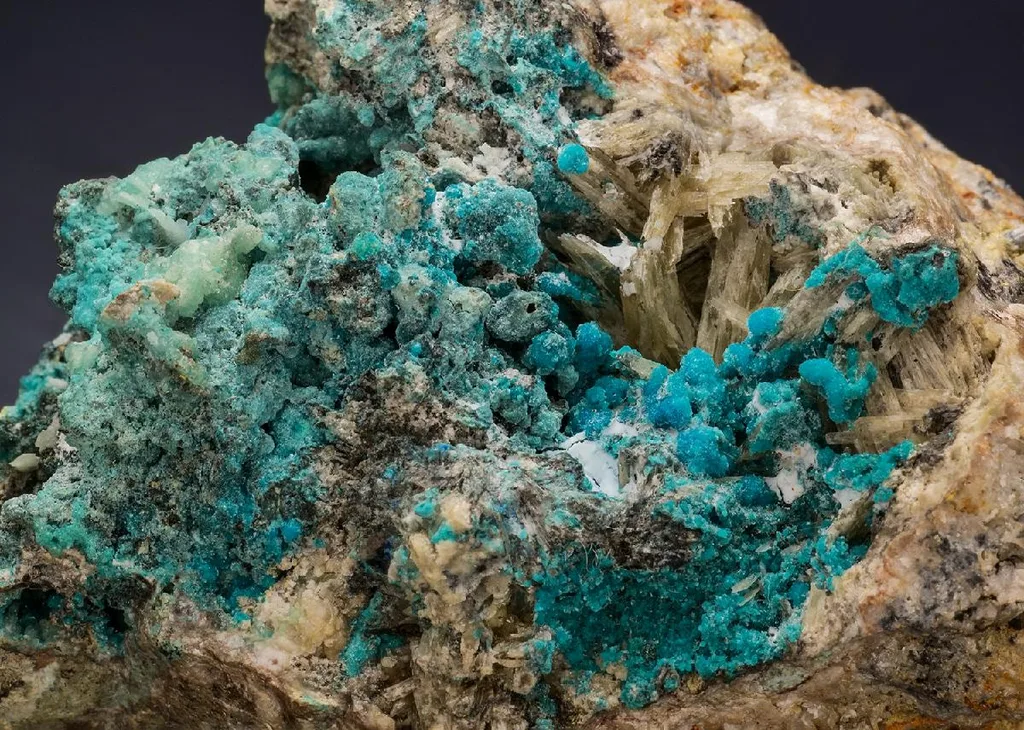
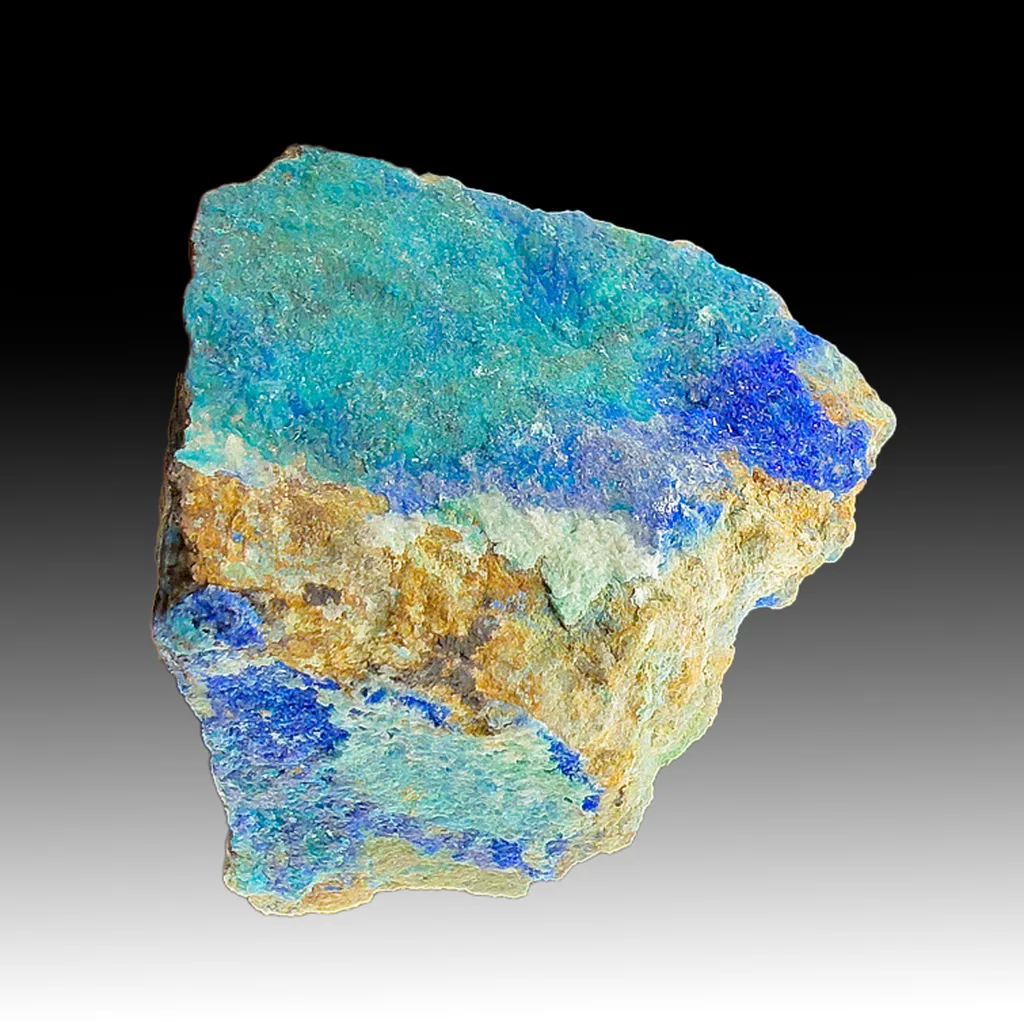
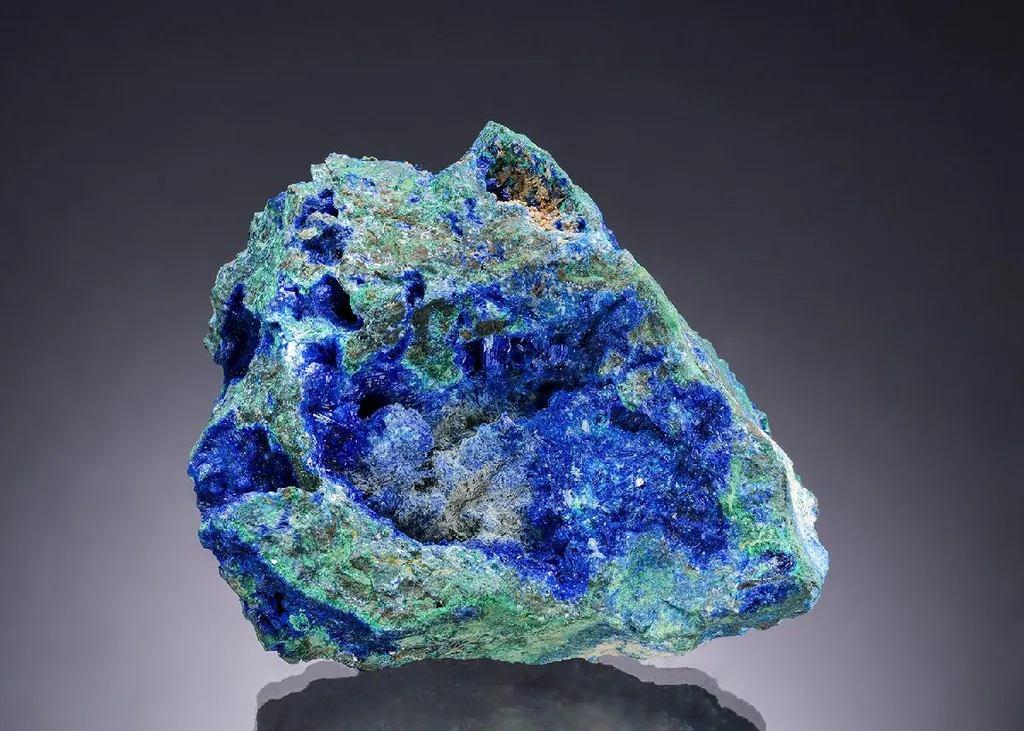
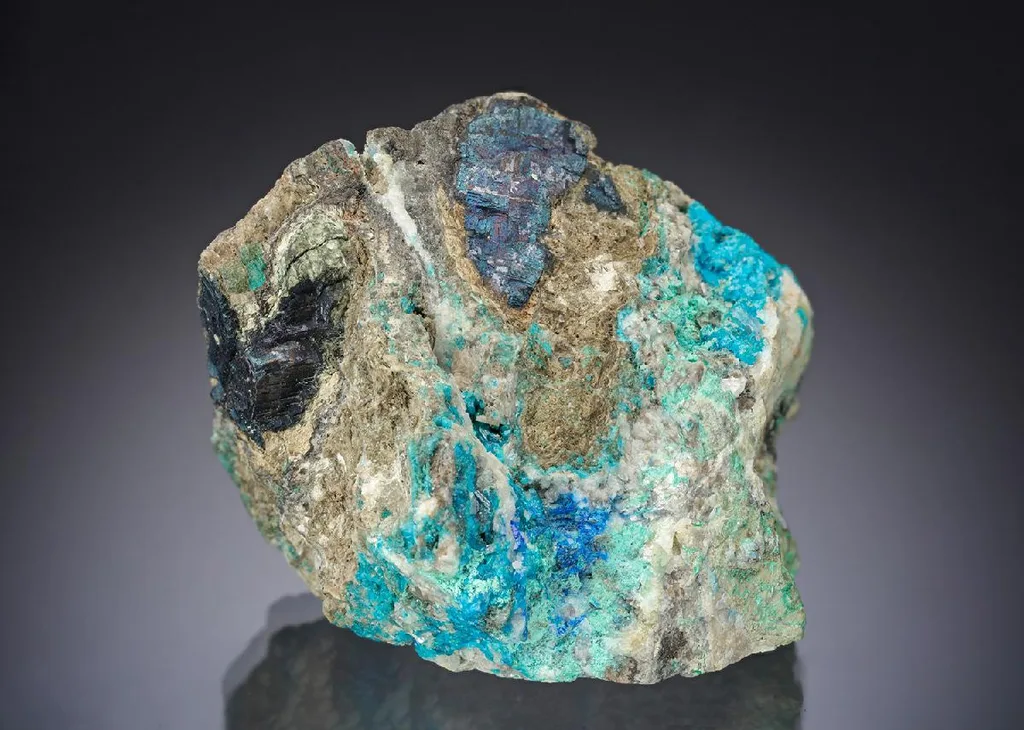
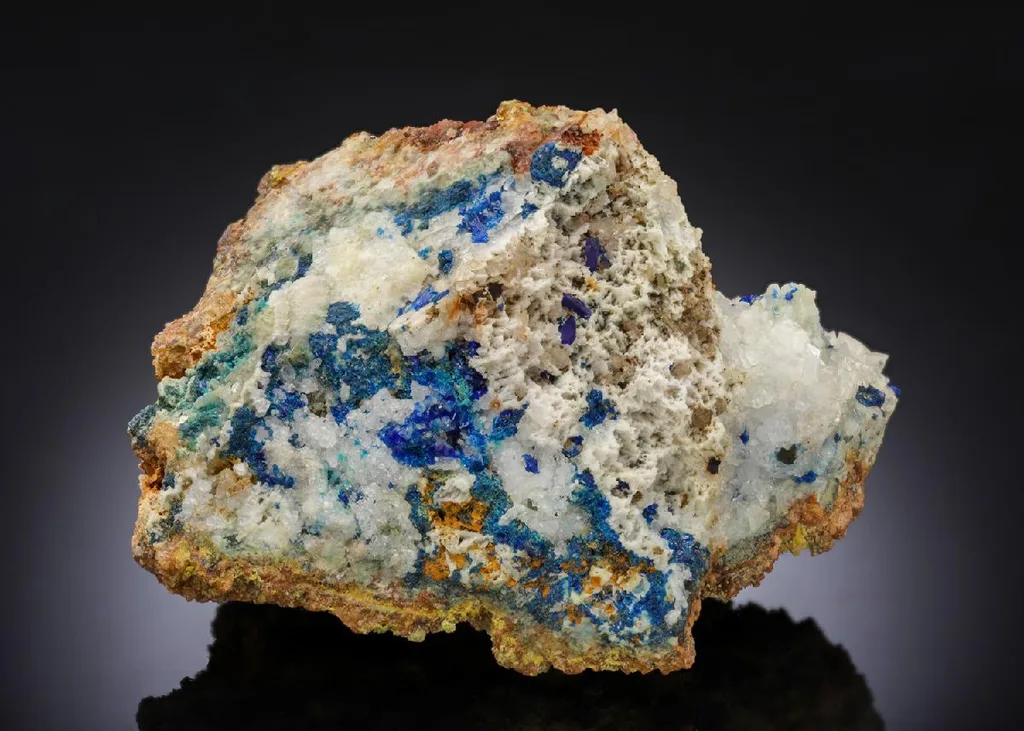
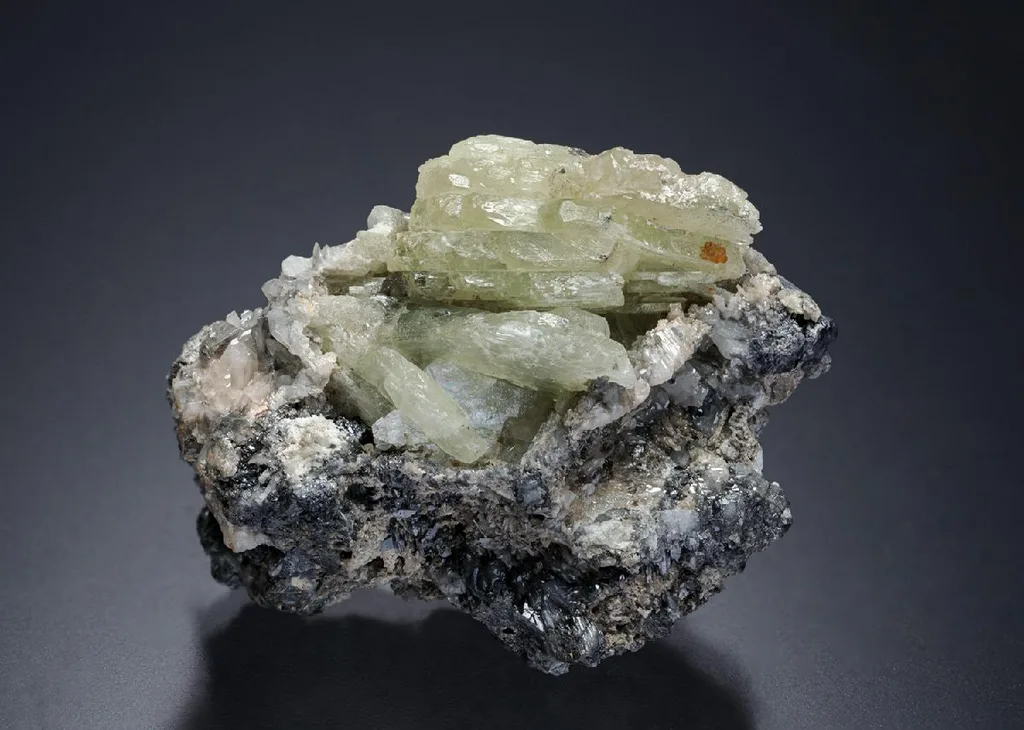
Caledonite is a sulfo- carbonate mineral composed of lead, copper, sulfate and carbonate with hydroxide. It forms short prismatic to tabular crystals that can exhibit a vitreous to resinous luster and may display blue-green to grayish hues depending on impurities and lighting. It often occurs in hydrothermal veins and openings within oxidized zones, where accompanying minerals include azurite, cerussite, and malachite, contributing to richly colored assemblages. Notable specimens have been reported from Namibia and Russia, among other localities, where high-quality crystals arise in well-formed clusters that are prized by collectors. The mineral’s rarity and distinct crystal habit were historically documented in classic localities, adding to its appeal for cabinets and display pieces.
Collectors value caledonite for its striking color range, clear to translucent crystals, and the context of its formation within secondary ore environments. The combination of lead and copper in a single mineral phase, along with its relatively crisp crystallography, makes it a desirable reference specimen for mineralogical studies and display. While not as common as more ubiquitous sulfates, high-quality, well-formed caledonite crystals from established localities continue to attract attention from mineral enthusiasts seeking distinctive, scientifically interesting pieces for their collections.