$150Median
1Sold (12 mo)
$150Last sale
Recent salesSee more
1 in the gallery
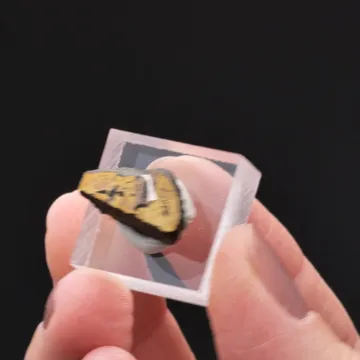
Cabriite is a sulfide mineral that forms in crystalline, metallic masses with a bright, silver-to-gold appearance and a high luster. The mineral chemistry centers on a sulfide framework where silver and copper are partially substituted by palladium and platinum, yielding a variable composition that can influence color and reflectivity. Crystals, when present, are commonly small but can reveal a cubic to tetrahedral habit under suitable mineralogic conditions, contributing to its distinctive metallic sheen.
Notable specimens have been associated with hydrothermal environments where sulfide minerals crystallize from high-temperature fluids. Localities known for cabriite tend to produce specimens with clean, reflective surfaces and a refined metallic finish that captures light, making the mineral attractive to micromounters and specimen cabinets. Its rarity adds to its allure, as even small samples are prized for the unique combination of silver-rich facets and the potential presence of palladium- and platinum-group element substitutions, which makes cabriite a compelling target for dedicated collectors researching sulfide mineral chemistry and crystallography.