$288Median
2Sold (12 mo)
$75Last sale
5 for sale · $260–$3,500 USD
14 in the gallery
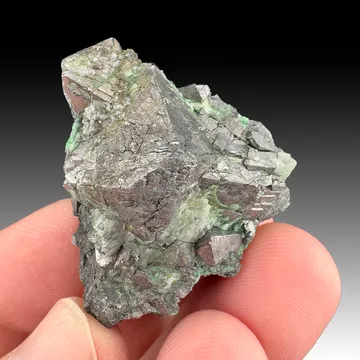
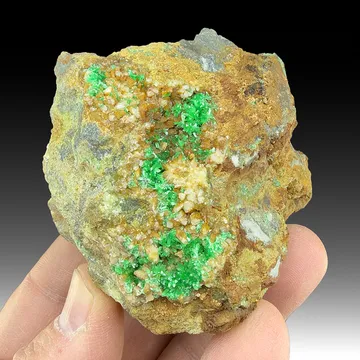
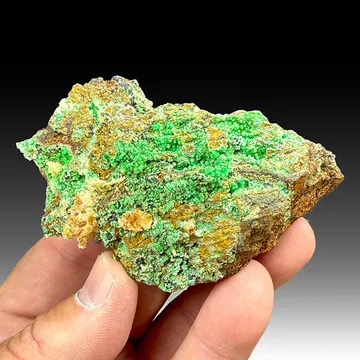
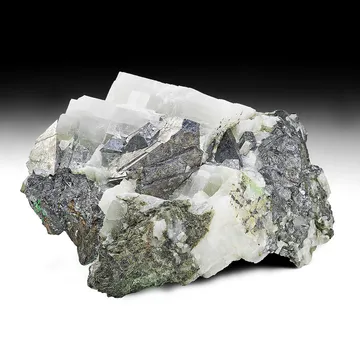
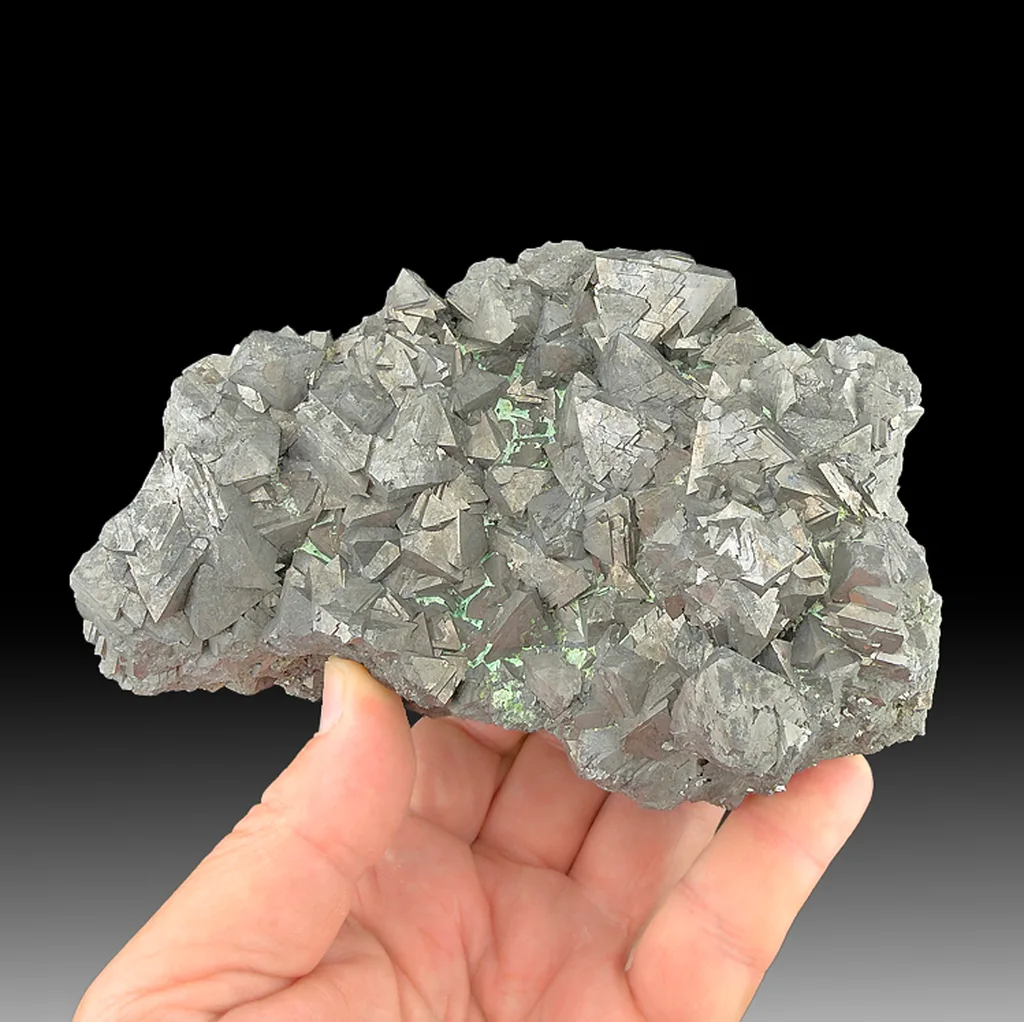
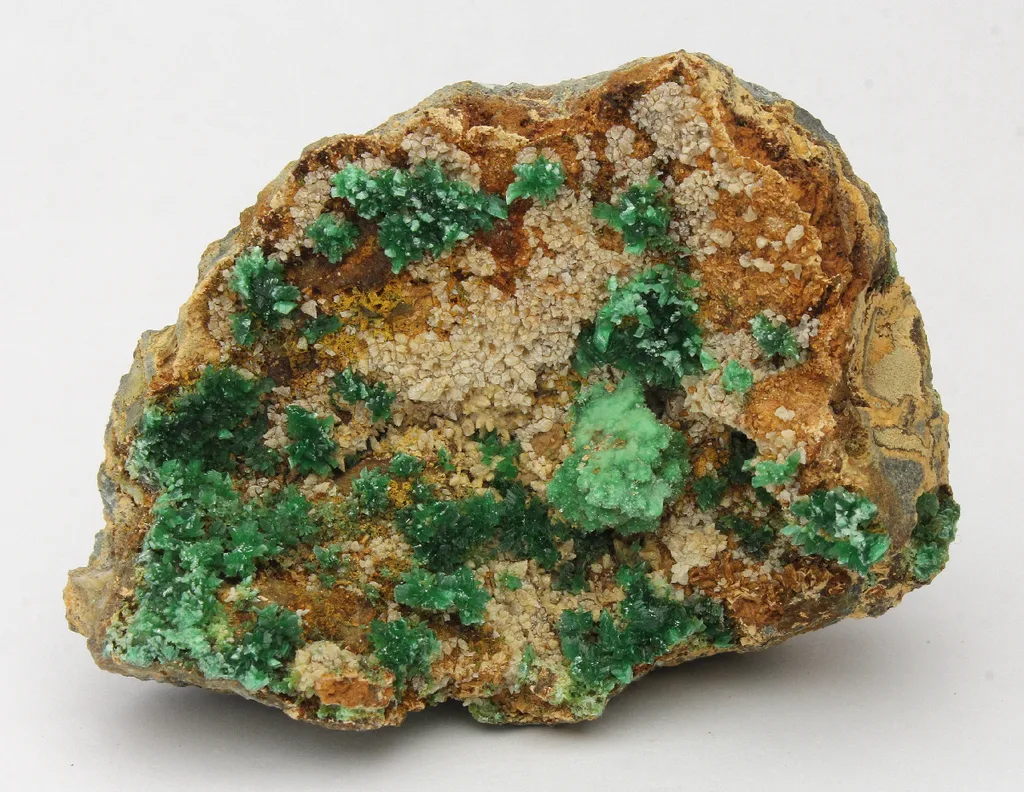
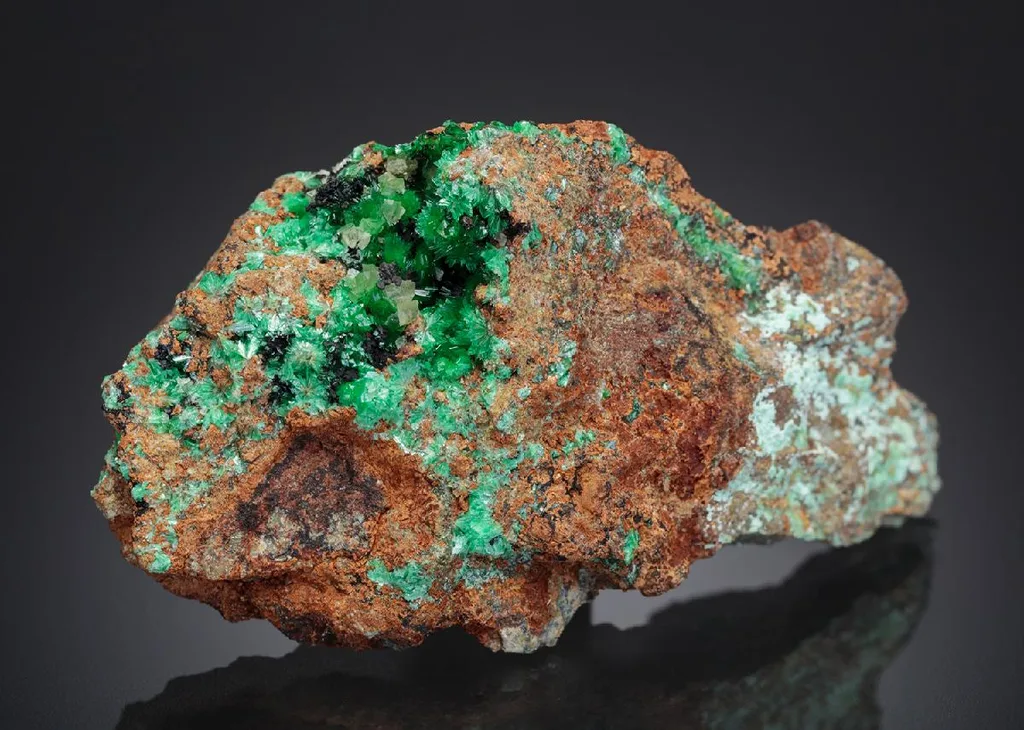
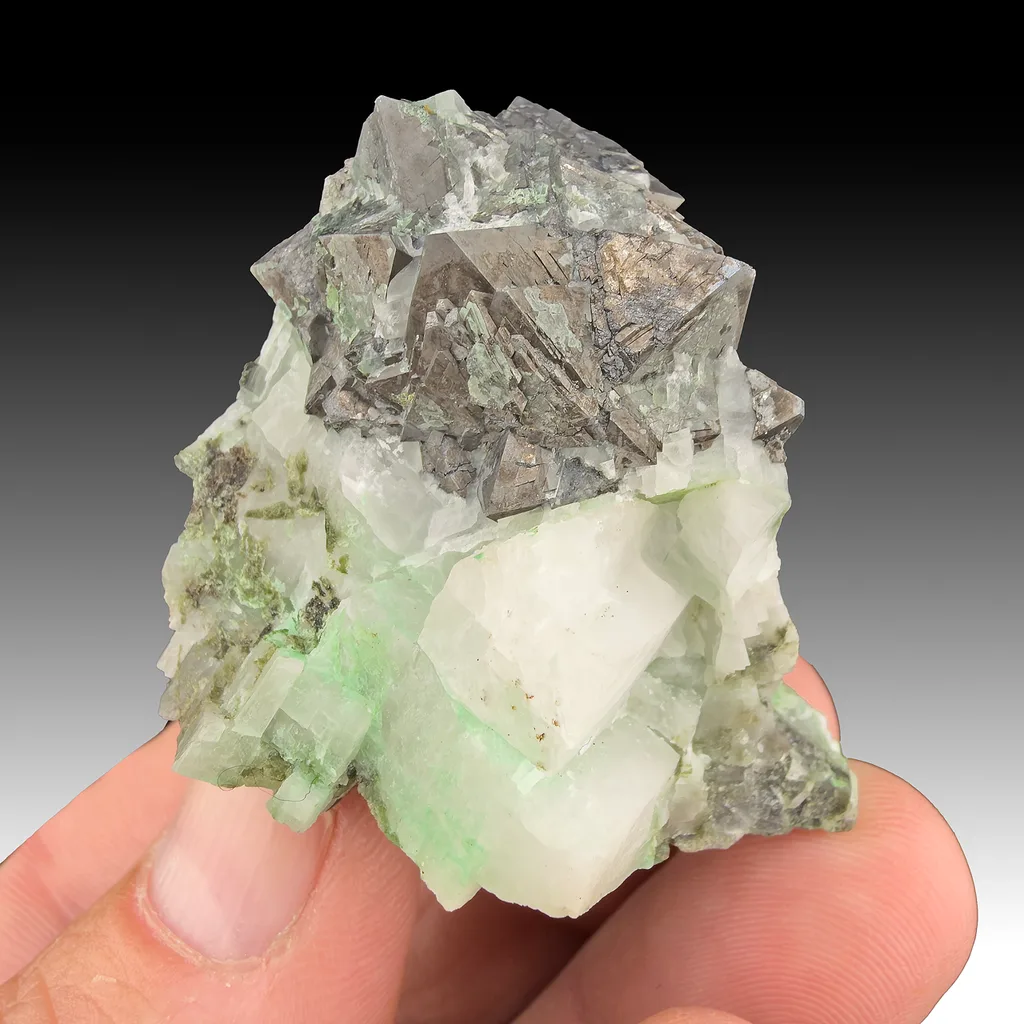
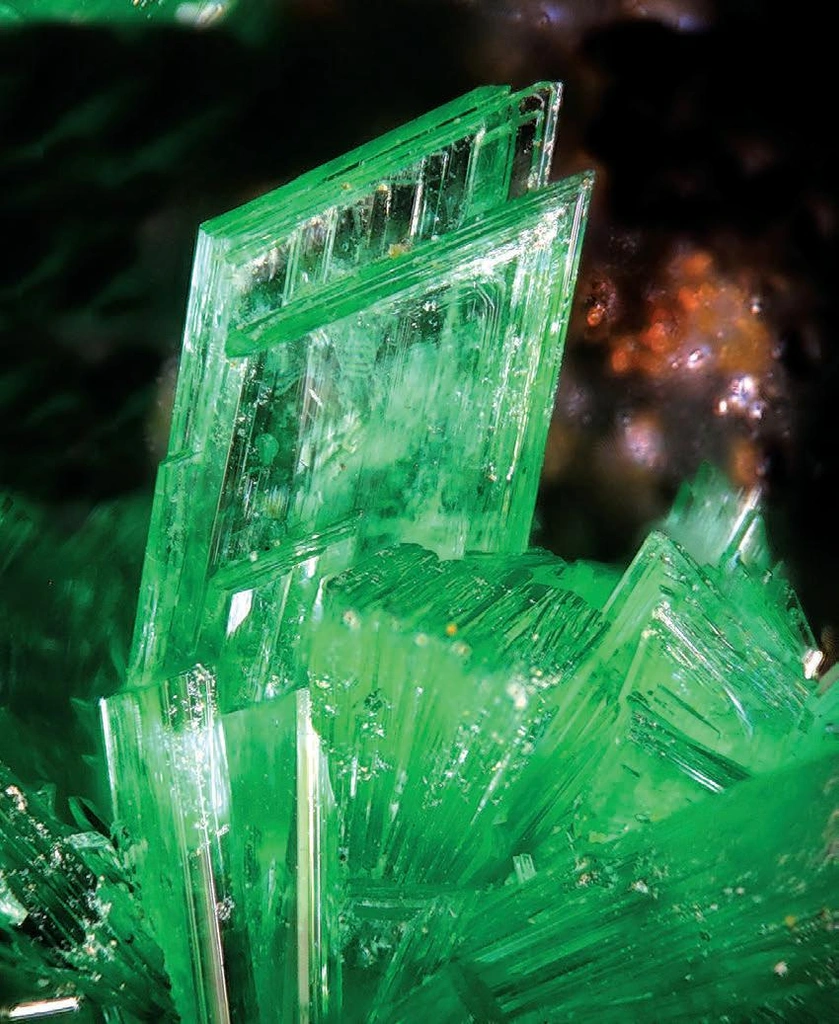
Annabergite is a hydrated nickel arsenate mineral that forms translucent to emerald-green crystals and associated masses. It typically exhibits a vitreous to resinous lustre and can occur as prismatic or tabular crystals, sometimes with a pleasing, glassy surface that enhances color. The mineral often forms as secondary crusts or aggregates in oxidized nickel-rich environments, and it can occur alongside other nickel arsenates and secondary nickel minerals in sulfide-bearing or arsenate-bearing localities. Notable specimens have come from well-known deposits in Greece, Morocco, and the United States, with other established localities contributing rich, grassy-green crystals that attract display-focused collecting and study.
Collectors prize annaberrnite for its intense green coloration, rarity in well-formed crystals, and the way it compositions complement other nickel-arsenate groups in a collection. Its habit and lustre offer visually striking pieces that photograph well under lighting that brings out the mineral’s subtle transparency. As a secondary mineral, annaberrnite typically appears in association with mining-impacted or alteration zones, making well-documented localities especially valuable for provenance and display purposes.