






A collector's guide to Turkana County, Kenya: its geology, mining history and notable minerals, illustrated with the 34 specimens documented from this locality on EarthWonders.
Key facts
Turkana County is one of those African localities whose collector fame rests less on long mining tradition than on a startling, limited appearance of distinctive quartz. The specimens that made the name familiar to quartz collectors are large, loose, well-formed quartz and amethyst crystals labelled simply from Turkana County or the Rift Valley of Kenya: doubly terminated floaters, sceptred and multiply terminated crystals, smoky-to-amethystine zoned pieces, and pale “Brandberg-like” interiors with purple colour suspended as internal blushes rather than painted evenly across the crystal. In the better pieces, the appeal is not only colour but architecture—skeletal growth, re-entrant faces, glassy windows, internal veils, hematite-like red inclusions, and in at least one large recorded example, an enhydro bubble.
Geologically, Turkana sits in the great structural hinge between the Ethiopian and Kenyan rift systems. The county includes Precambrian Mozambique Belt basement of gneisses, granulites, amphibolites, quartzites, marbles and migmatites; the Cretaceous to early Paleogene Lapur Sandstone, formerly grouped with the “Turkana Grits”; and a thick cover of Eocene to Miocene volcanic rocks, including basalts, rhyolites, phonolites, nephelinites and related alkaline volcanic assemblages. That setting is important for collectors because the collectible silica occurrences—amethystine quartz crystals and the blue lace agate/chalcedony recorded from the Lapurr Range—belong to a rift landscape cut by faults, volcanic centres and porous sedimentary intervals, rather than to a formal, long-operated quartz mine.
Regional View
Country View
Turkana is also a serious petrographic locality. The North Turkana Volcanic Province has documented alkaline-rock minerals such as aegirine-augite, aenigmatite, analcime, kaersutite, katophorite, nepheline, riebeckite, sanidine, sodalite and titanite, while the Lapurr Range has yielded blue lace agate and chalcedony. Those minerals are not, for the most part, cabinet-specimen species in the way the quartz is; they are the mineralogical framework that explains why this county is more than a single quartz find. Its best display specimens are quartz oddities from a rift province better known to geologists for tectonics, volcanism, petroleum basins and fossiliferous strata.
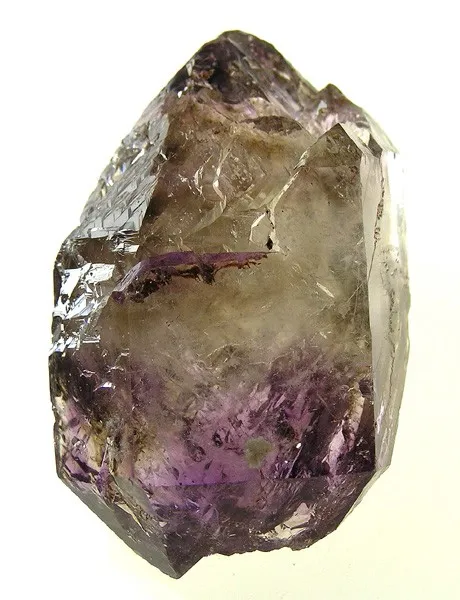
Photo: EarthWonders
Search for specimens: View all specimens from Turkana County, Kenya
Turkana County occupies the northwestern corner of Kenya, with Lake Turkana forming much of its eastern boundary and the Lapurr/Lapur Range rising along the western side of the northern Turkana Basin. For the mineral collector, the key point is that “Turkana County” on quartz labels is generally a broad regional label, not a named mine label. The amethystine quartz specimens that circulated through the collector market were described as coming from a Kenyan Rift Valley find, but public specimen records do not identify a specific mine, claim, operator, pocket name or stratigraphic horizon for the quartz. Treat the locality as a county-level occurrence unless older labels or dealer files supply better provenance.
The county’s geological architecture is unusually complex. The Lapur Range exposes Precambrian basement rocks in the footwall of the Murua Rith–Lapur border-fault system, overlain unconformably by the Lapur Sandstone and then by the “Turkana Volcanics.” Modern studies describe the Lapur Sandstone as a fluvial to alluvial-fan succession, locally several hundred metres thick, with calcite, hematite and kaolin cements in different parts of the formation. Above it, volcanic sequences include basaltic and rhyolitic rocks tied to the long Cenozoic evolution of the Turkana Depression. In practical specimen terms, this is a landscape in which silica could be mobilized through fractures, cavities, sedimentary porosity and volcanic-rock permeability, producing quartz crystals and chalcedony rather than a conventional metal-ore vein system.
The best-known collector occurrence besides the amethystine quartz is the Lapurr Range blue lace agate/chalcedony occurrence. Mindat records the Lapurr Range, at about 4.33333° N, 35.80000° E, as a mountain-range locality within Turkana County and lists quartz, blue lace agate and chalcedony there. Published specimen photos show rough blue agate/chalcedony pieces of hand-specimen size, including a 7.5 x 5 x 3.5 cm example. These are lapidary-style silica specimens rather than open-pocket crystal groups, but they are important because they document collectible silica from a more precise sublocality inside the county.
Turkana’s broader mineral-resource picture is much larger than its quartz market. County development documents and government reports refer to gypsum, limestone, clay, silica, manganese, iron ore, zircon, niobium and other mineral occurrences, while recent county enforcement notices discuss artisanal mining sites for gypsum and bentonite around Kalokol/Kapua and regulatory action at Naduat. Gold occurrences and artisanal mining have also been reported in parts of the county, especially in public notices and news coverage dealing with licensing, community consent and illegal mining. None of that should be confused with a documented amethyst mine: the quartz specimens appear to have emerged as a specimen find, not as a formal gemstone mine with an established production history.
Mining access today should be approached conservatively. Kenya’s Mining Act framework treats minerals as nationally managed resources, and mining, prospecting or artisanal extraction requires the appropriate licence or permit. Turkana County has also become more active in inspections, community engagement and enforcement against unpermitted or unsafe operations. A collector should not assume that remote ground is “open.” Any field visit requires permission from landholders and local communities, and any collecting beyond casual observation may require consultation with county authorities, the State Department for Mining, and any mineral-rights holder. The county’s heat, remoteness, security conditions, sparse water and long distances between services are real field constraints.
The notable specimen “pockets,” insofar as public records allow the word, are better described as batches or finds. Dealer and collector records document large doubly terminated quartz and amethyst crystals ranging from small-cabinet pieces around 5–8 cm up to dramatic specimens over 30 cm long. Several are floaters, some are sceptred or multiply sceptred, and many have pale smoky or colourless bodies with internal purple zoning. The finest pieces combine size, completeness, transparency and unusual growth rather than the saturated, geode-style colour collectors expect from Brazil or Uruguay.
Turkana quartz is prized precisely because it does not look like routine quartz from a major commercial field: the best recorded pieces are individual floaters and large crystals with doubly terminated, sceptred, skeletal or tabular forms, often with smoky zones, water-clear windows, etched or jagged growth faces and internal veils. Published specimen records include crystals from about 5 cm to more than 30 cm, with standout examples described at 20.9 x 10.9 x 9.1 cm, 21.5 x 6.9 x 6.6 cm, 31.5 x 8.1 x 8.1 cm and 32.3 x 9.7 x 8.4 cm. Ordinary Turkana quartz is pale, irregular or merely large; exceptional pieces have complete terminations, floater quality, readable internal structure, attractive smoky-amethyst colour transitions and enough transparency to show the suspended purple blushes and inclusions that make the locality recognizable.
Turkana amethyst is best understood as amethystine quartz rather than uniformly purple amethyst: the purple is commonly localized inside otherwise colourless to smoky crystals, appearing as lavender to richer violet clouds, bands or edge-zones. The most desirable examples are doubly terminated floaters and sceptred crystals with high glassy lustre, “Brandberg-like” internal colour placement, smoky overtones, skeletal growth planes and occasional red hematite/lepidocrocite-like inclusions; recorded specimens range from modest small-cabinet pieces such as 7.3 x 4.1 x 3.1 cm to giant collector pieces exceeding 30 cm. Good Turkana amethyst is judged by completeness, internal colour placement, transparency and sculptural growth, not by geode-like saturation: a pale crystal with a vivid internal purple core and sharp terminations can be more important than a darker but battered or opaque one.
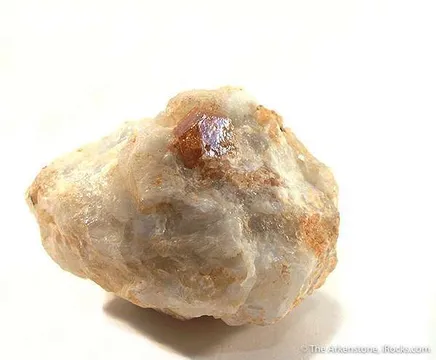
Other minerals documented from Turkana County are mostly tied to its volcanic and metamorphic geology rather than to cabinet-specimen mining. The North Turkana Volcanic Province records a suite of alkaline igneous minerals including aegirine-augite, aenigmatite, albite, analcime, augite, kaersutite, katophorite, magnetite, nepheline, orthoclase, phlogopite, riebeckite, sanidine, sodalite and titanite. The county list also includes pyrope and zircon, and the Lapurr Range records blue lace agate and chalcedony. No valid mineral species is currently documented as having Turkana County as its type locality; its rarity value lies instead in uncommon Kenyan quartz, blue chalcedony/agate, and the petrographic record of an alkaline volcanic province at a major rift intersection.
The first authenticity issue is locality precision. Many quartz specimens are labelled only “Turkana County, Kenya” or “Rift Valley, Kenya,” and that is often all the public record supports. Be wary of overly precise mine names unless they are backed by old labels, field notes, invoices or a credible chain of custody. Conversely, do not automatically downgrade a county-level label: for this particular find, broad labelling is normal.
The second issue is visual comparison. Turkana amethystine quartz can resemble Namibian Brandberg quartz in its internal purple zones, smoky colour, enhydros and skeletal growth; it can also resemble some Brazilian elestial or sceptred quartz in habit. That makes mislabelling plausible in both directions. A Turkana label should be supported by provenance, not just by appearance. Strongly saturated purple geode fragments, sawn-and-polished agate novelties, or dyed bright-blue chalcedony should not be accepted as Turkana collector material without evidence.
Condition is critical. Many of the crystals are floaters or near-floaters with complex growth surfaces, so it can be difficult to distinguish natural skeletal faces, rehealed edges and contact surfaces from bruising. Check termination edges under magnification. The large crystals are especially vulnerable to edge chips, bruised lustre on projecting faces, and internal fractures that become obvious only when the piece is backlit. Because the best value is in transparency and internal colour, cloudy repairs, oiling, glued tip restoration or undisclosed fracture filling would be especially damaging to desirability.
For amethyst, assume normal quartz stability but avoid prolonged display in strong sunlight. Pale lavender zoning can be subtle, and unnecessary UV or direct-window exposure is not worth the risk. Enhydro-bearing specimens should be protected from thermal shock; do not leave them in a hot car, near a display light that heats the case, or in direct sun after washing. Clean only with mild water and a soft brush unless you are certain the inclusions and any iron staining will tolerate stronger methods.
Market availability is sporadic. Turkana is not a continuous commercial quartz producer like Arkansas, Brazil, Namibia or the Himalaya. The best specimens seen on the market appear to come from limited batches dispersed through high-end dealers and collections. Small-cabinet crystals with good form and faint internal purple are obtainable from time to time; large, complete, doubly terminated or multiply sceptred pieces are genuinely scarce and should be treated as locality specimens first and amethyst specimens second.
When the Turkana amethystine quartz first began appearing in serious collector circles, the surprise was scale. A 20.9 x 10.9 x 9.1 cm crystal was photographed and described in 2008 as a “monster amethyst crystal” from a locality unfamiliar to most collectors. It was doubly terminated, with multiple terminations at one end, and its colour was not a uniform purple skin but a blush held inside the body of the crystal. That distinction became part of the locality’s personality: Turkana pieces could be large, dramatic and visually related to Brandberg quartz, but they were not Brandberg. They were Rift Valley Kenyan quartz, and the best ones made collectors recalibrate what Kenya could produce in display quartz.
The later specimen records only sharpened that impression. One recorded crystal, 31.5 x 8.1 x 8.1 cm, was described as a sceptre quartz of extraordinary size for Africa, a foot-long specimen with internal inclusions and dramatic growth. Another, 32.3 x 9.7 x 8.4 cm, was a gigantic complete floater, multiply sceptred at both ends, with skeletal growth along the side faces and a large moving bubble in fluid inside. These are not routine amethyst-cavity plates; they are individual crystals that read like geological objects, with the history of growth, dissolution, rehealing and fluid capture visible through their interiors.
A quieter but equally useful field note comes from the Lapurr Range blue agate/chalcedony material. In November 2008, a rough 7.5 x 5 x 3.5 cm specimen was photographed from the Marek Patúš collection and recorded as blue agate and chalcedony from the Lapurr Range. It is not glamorous in the way the amethyst floaters are, but for a locality guide it matters: it pins collectible silica to a named Turkana sublocality and shows that Turkana’s quartz story is not only about isolated amethyst crystals moving through dealer stock, but also about chalcedony and agate formed within the same broad rift province.