Kop Krom Mine, Türkiye - famed for chromium-rich kämmererite (electric magenta-to-violet clinochlore) on chromite, with historic pockets prized by collectors.
Key facts
Kop Krom Mine is one of those rare localities whose fame rests on a single color: the electric magenta-to-violet of chromium-bearing clinochlore, long traded under the varietal name kämmererite. The mine lies in the Kop Dağları of northeastern Türkiye, in the Aşkale District of Erzurum Province, within the ophiolitic ultramafic belt that stretches across the Erzincan-Erzurum-Bayburt region. Its ore is chromite, hosted by highly altered mantle rocks—chiefly dunite, harzburgite, serpentinite and related ultramafic units—and the collector specimens are the late, chromium-rich chlorite expression of that chromite system.
Regional View
Country View
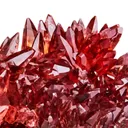
For collectors, Kop Krom matters because its best kämmererite is not merely “purple chlorite.” It occurs as sharp, lustrous, translucent to transparent crystals—commonly pseudohexagonal, tapered, bipyramidal or tabular—set on dark chromite-rich matrix, often over a sparkling carpet of smaller crystals. Fine miniatures can look almost backlit even under normal light; under strong transmitted light the better crystals shift from deep plum to glowing raspberry-red. The most desirable specimens combine contrast, coverage, undamaged crystal edges, and a few larger crystals rising from a drusy magenta ground.

Photo: Mineral Auctions
The locality also has historical weight. The classic collector material entered the mineral market in the 1960s through 1980s, with the most celebrated pockets associated with the late 1970s and early 1980s. By 1978 Kop Krom had already earned a dedicated Mineralogical Record article, and it remains the reference locality most collectors picture when they hear “kämmererite”: lustrous purple-red crystals on chromite from the Kop Mountains of eastern Anatolia.
Search for specimens: View all specimens from Kop Krom Mine, Türkiye
Kop Krom Mine is a chromite mine in the Kop Dağları, near Aşkale in Erzurum Province. The mineralization belongs to the Kop ophiolite system, a slice of ultramafic and mafic oceanic lithosphere now exposed in northeastern Türkiye. Regional studies of the Kop Mountains describe chromitite bodies in ophiolitic ultramafic rocks extending from Erzincan to Erzurum, with massive, disseminated and banded textures. The host assemblage is exactly the setting a collector would expect for chromium-rich chlorite: chromite lenses and ore bodies enclosed in dunite, harzburgite, serpentinite and related altered mantle rocks.
The ore body style is podiform to lens-like chromitite rather than a large, continuous stratiform seam. Regional Aşkale work describes high-grade chromite within dunite of the Upper Cretaceous Kop Ophiolites, with NE-SW-trending mineralization, steep dips, and small to medium-scale high-grade ore bodies. In this setting, the kämmererite specimens formed as a late chromium-bearing clinochlore phase on and around chromitite matrix, commonly with white to pale carbonate or magnesium-carbonate minerals in the assemblage. The best collector pieces are not ore samples with a purple stain; they are crystallized chlorite specimens in which the chromium gives both the color and the locality identity.
The documented mineral list is compact and serpentinization-related. Besides clinochlore and its chromium-bearing variety, the locality has yielded artinite, brucite, calcite, chrysotile, heazlewoodite, hydromagnesite, hydroxylapatite, opal, pentlandite and uvarovite. Those species make geological sense in a chromite-ultramafic environment: magnesium carbonates and hydroxides from alteration, nickel sulfides from the ultramafic system, chromian garnet in the chrome-rich assemblage, and carbonate coatings or pockets that may accompany kämmererite-bearing pieces.
Kop Krom was worked as a chromite mine, not as a specimen mine in the modern commercial sense. Published exploration in the Kopdağ area intensified in the late 1970s, when chromite in ultrabasic rocks was the principal target of geological work. A 1978 MTA-linked survey of the Kopdağ area recorded reconnaissance, semi-detailed and detailed geological mapping, trench sketches and gallery work across a broad regional project area involving Turkish and Japanese geologists. The collector literature and specimen record place the important kämmererite finds in the same general era: the late 1970s, with specimens still labelled from early 1980s finds and old European collections.
No dependable public collecting arrangement is associated with Kop Krom today. Treat it as an old industrial chromite locality in mountainous terrain, not as an open fee-dig site. Any field visit would require current land, mining and safety permissions, and old workings in altered ultramafic rocks should be assumed unstable unless assessed by qualified mine personnel. For most collectors, Kop Krom is a market and collection locality: specimens circulate from old holdings, estate releases, dealer inventories and occasional auction appearances rather than from a steady modern supply.
At Kop Krom, clinochlore’s chromium-bearing variety is the entire reason the mine is famous: deep magenta, purple-red to mauve crystals of Mg5(Al,Cr)2Si3O10(OH)8 on chromite-rich matrix. Typical specimens show druses of minute sparkling crystals with sharper, larger pseudohexagonal, tapered, tabular or bipyramidal individuals rising above the surface; good crystals commonly fall in the 3-9 mm range, while the literature records transparent crystals reaching about 2 cm. The finest pieces are small miniatures to cabinet specimens with clean, lustrous, translucent crystals, strong color under both incident and transmitted light, and dark matrix contrast. Ordinary examples are merely purple crusts or broken granular coatings; top Kop Krom specimens have discrete, well-formed crystals, depth of color, little bruising, and enough relief that the crystal architecture reads at arm’s length.
Other minerals from Kop Krom are subordinate but important for understanding the specimens. Uvarovite is the most collectible rarity outside kämmererite, occurring as a chrome-garnet accessory in the chromite environment. Calcite, hydromagnesite, artinite and brucite document the magnesium-rich alteration suite; chrysotile records serpentinization; heazlewoodite and pentlandite reflect the nickel-bearing sulfide component typical of ultramafic systems; hydroxylapatite and opal round out the compact species list. Kop Krom is not a known type locality for a major species; its mineralogical distinction is instead its world-class expression of chromium-bearing clinochlore.
Kop Krom kämmererite is a classic where locality matters greatly. Old labels may say “Kop Daglari,” “Kop Dağları,” “Kop Krom,” “Erzurum,” “Eastern Anatolia,” or simply “Turkey.” Some older or hurried labels use “Erzincan,” and collectors should be cautious: the Kop Mountains span a broader region, there is also the nearby Pembe Gül Mine roughly 10 km away, and kämmererite is reported from other Turkish chromite districts. A vague “Erzincan, Turkey” label on a purple clinochlore specimen is not automatically Kop Krom, but many old European specimens with that wording have later been corrected to Kop Krom or Kop Dağları after comparison with the classic material.
Documented concerns are mostly mislabelling, not treatment. The color is natural chromium coloration, and the best crystals should show the expected chlorite features: softness, perfect basal cleavage, pearly to vitreous luster, pseudohexagonal or platy morphology, and strong color zoning or internal reflections when lit. Massive purple ornamental material from other countries has appeared in the gem trade, but it should not be confused with the crystallized Kop Krom matrix specimens.
Condition is critical. Clinochlore is soft, commonly listed around Mohs 2-2.5, and cleaves readily. Edges and terminations bruise easily, especially on protruding pseudohexagonal crystals. Many specimens are drusy plates over heavy chromite matrix, so contact points, rubbed high crystals, and edge trimming are common. Use a soft brush only with care; avoid ultrasonic cleaning, acids, aggressive detergents, and prolonged soaking. Display lighting should emphasize transmitted or low-angle illumination, but heat buildup is unwise for thin chlorite plates and associated hydrous minerals.
Fluorescence is not a selling point for Kop Krom kämmererite. GIA’s work on faceted chromium-rich clinochlore from Turkey recorded inert reactions to both long-wave and short-wave ultraviolet, with a positive pink Chelsea filter reaction and gemological properties around RI 1.580-1.588 and SG 2.65-2.67 for the examined stones. The more useful collector test is optical: fine crystals are translucent to transparent and can glow red-purple when backlit.
Market availability is sporadic. Small drusy miniatures with crystals of a few millimeters still appear, but strong pieces from the old finds are not plentiful. Auction records show the spread clearly: modest miniatures may trade in the low to mid hundreds, good small-cabinet specimens have brought several hundred to around a thousand dollars, and exceptional large, richly covered cabinet pieces with provenance can reach five figures. The combination that moves a specimen into the serious tier is large size for the locality, abundant undamaged crystals, saturated magenta color, chromite contrast, and credible old provenance.
Kop Krom’s best story is the way a hard, black chrome-ore mine produced one of the softest-looking colors in mineral collecting. The deposit was never famous for a great suite of showy species; it was famous because, from chromite in the Kop Mountains, collectors suddenly had purple-red chlorite crystals sharp enough to stand beside classics from the Alps and Urals. The 1978 Mineralogical Record index later summarized the locality in the language collectors remember: Kop Krom, west of Erzurum, chromian “kämmererite,” crystals to 2 cm, many habits and twins. That short line explains the enduring appeal—size, color and crystallography in a species that rarely offers all three.
One small but telling episode comes from old-label archaeology. In 2007 a collector posted a specimen labelled only “Erzincan, Turkey” and asked for help narrowing it down. The replies moved quickly toward Kop Krom: Erzincan was suspected to be a label error or an imprecise regional label, while the classic source near Erzurum was identified as the likeliest origin. Another contributor noted the small palaeographic trap in old labels: “Daglari” could be misread as “Daglan” when handwritten, especially where the final letters run together. That is exactly the sort of small human error that follows specimens for decades, and it remains relevant whenever an old purple clinochlore turns up with a vague Turkish label.
The old-find character of the locality is also visible in specimen provenances. One well-documented piece was labelled as found around 1982 and later passed through the Pedro Goy collection; it measured 7.7 x 3.8 x 3.8 cm, with a main crystal about 0.8 x 0.6 cm. Fabre Minerals has described several Kop Krom specimens as translucent, deep mauve, bipyramidal druses on matrix—small, jewel-like plates that preserve the look of the classic finds without needing cabinet scale.
A dramatic modern market episode came in 2025, when a large Kop Krom kämmererite on chromite from the Mike Scott collection sold at auction. The specimen measured 11.6 x 5.5 x 4.6 cm, carried Rolf Wein and Mike Scott provenance, and was described as an old 1970s piece with numerous crystals ranging from 4 mm to 1 cm on chromite matrix. The bidding closed at $10,500 on September 6, 2025. That result was not simply about size; it was a vote for old-find Kop Krom material as a modern classic. The provenance added another layer: Michael “Scotty” Scott, Apple Computer’s first CEO, was also a gem collector, science supporter, donor and mineral collector whose estate specimens reached the collecting public after his death in 2025.