






ExploreMarketCollectors

Earthwonders

The global marketplace for authentic geological specimens. Connecting passionate collectors with trusted dealers worldwide.

Get on the list for the latest from EarthWonders
Privacy Policy
Join Our Community
InstagramLinkedInFacebookYouTube
Discover

Browse Market

Browse specimens

Collector Profiles

Learn

Guides

All Policies

Blog

Newsletter

Company

About Us

Our Story

Contribute

Careers

© 2026 earthwonders
    GuidesEventsBlog
    AllFeaturedJust droppedUnder $500Statement piecesGreenBluePurpleAmethystQuartzFluoriteTourmalineMalachiteAzuriteRhodochrosite🇳🇦Tsumeb🇲🇽Mexico🇧🇷Brazil🇮🇳India
    6 views
    Login to Edit Guide
    Translated from English—See original

    Eosphorite 收藏家指南

    Overview

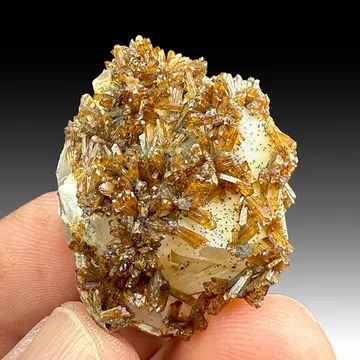
    Eosphorite 是一种锰铝磷酸盐,是 Mn-dominant 成员,位于 childrenite–eosphorite 系列中。受到伟晶岩爱好者的喜爱,它最常以蜜棕色至金橙色的棱柱晶体、扇形和放射状簇晶形式出现,生长在明亮白色的 albite 或石英上——这些组成往往具有惊人的美感。单个晶体通常为毫米至厘米级,拥有玻璃光泽和细小的条纹;也会出现更大、分离良好的棱柱晶,但较为罕见。颜色范围从黄褐色到琥珀色、焦糖色,在 Mn 含量较高的区域有时带有细腻的粉红色或橙色调。由于 eosphorite 容易与其富铁的伙伴 childrenite 发生互生,常见的分带或芯–边缘变体增加了科学趣味。

    Collectors prize eosphorite for:

    • 在 cleavelandite/albite 以及烟晶(smoky quartz)或乳状石英(milky quartz)上的对比度颇具吸引力。
    • 优雅的放射状簇晶和簇束,展现出极佳的观感。
    • 丰富的磷酸盐相关伴生物(hureaulite、roscherite–群、jahnsite–群、triphylite/lithiophilite 变体组合),使其成为伟晶岩体系中的基石。

    Popularity

    Among phosphate collectors, eosphorite is a classic. It lacks the neon colors of showy silicates, yet great pieces have undeniable presence—especially Brazilian fans perched on white feldspar or quartz. Historic U.S. occurrences (New Hampshire and South Dakota) supply “textbook” systematic examples with excellent provenance, while Brazil produces modern cabinet-grade matrix pieces with outstanding aesthetics. Availability is moderate: small singles and sprays are accessible, but robust, undamaged matrix clusters with top color and balance are selective and command strong prices. Because many sprays are delicate, pristine condition significantly impacts value. As with many pegmatite phosphates, choice pieces are absorbed into collections and do not re-enter the market often, keeping pressure on fine examples.

    在磷酸盐收藏者中,eosphorite 是经典之作。它缺乏华丽硅酸盐的霓虹色彩,但优质晶体仍具不可否认的气场——尤其是那些安放在白色正长石或石英上的巴西收藏品。美国历史上的发现地点(新罕布什尔州和南达科他州)提供了具有优良产地信息的“教科书级”系统样本,而巴西则产出现代橱柜级基质晶,外观极佳。可获得性适中:小型单晶和簇晶易得,但具有高色彩、平衡度的完整、未损伤的基质簇通常更稀缺且价格偏高。由于许多簇晶较为脆弱,晶体的无损状态对价值影响显著。与许多伟晶岩磷酸盐类似,精品往往被收藏进收藏品,市场上不常再现,从而对优品形成持续的需求。

    Top Collecting Localities

    Below are reliable, well-documented sources that produce (or produced) distinctive and collectible eosphorite. Each locality link includes a quick map and a gallery filtered to eosphorite specimens from that source.

    Ilha Claim, Brazil

    Loading locality...

    Another Linópolis classic, the Ilha Claim has yielded sharp, glassy eosphorite fans with excellent brightness and composition. Collectors value the contrast of warm eosphorite with clean albite blades and clear quartz, and the frequent phosphate paragenesis that creates “teaching” specimens for pegmatite mineralogy. Matrix integrity and minimal repairs lift top examples into the upper tier.

    Collector’s Guide

    Evaluating Specimen Quality

    • Color and Transparency:

      • Best pieces show warm honey, amber, golden-brown, or orange-brown hues; occasional pinkish or peach tones can occur in Mn-rich areas.
      • Most eosphorite is translucent to opaque; partial translucency near terminations or in thinner blades adds life. Strong, even color that reads well without intense backlighting is ideal.
    • Crystal Form and Habit:

      • Highly aesthetic pieces feature tidy radiating sprays or well-formed prisms with sharp terminations and striated faces.
      • Fans rising from clean albite or perched on quartz points display exceptionally well. Balance and composition (height variation, angle, and spacing of sprays) matter greatly.
      • Intergrowth with childrenite is common; attractive zoning or parallel overgrowths can be a plus and provide scientific interest.
    • Luster and Surface Quality:

      • Glassy to bright vitreous luster on prism faces is preferred; dull, heavily etched, or chalky surfaces detract.
      • Fine striations are normal; avoid heavily pitted faces unless they add character to an otherwise strong specimen.
    • Matrix and Associations:

      • White albite/cleavelandite and quartz provide superb contrast. Smoky quartz, lepidolite, hureaulite, and other phosphates can elevate interest and value.
      • Matrix integrity is crucial—look for solid, unrepaired matrix with sprays that are naturally anchored and not “floating” due to disguised glue.
    • Size and Aesthetics:

      • Sprays from a few centimeters up to cabinet-size matrix clusters are collectible. Quality trumps size: a smaller, undamaged, perfectly positioned fan on bright matrix often outshines a larger but jumbled piece.
      • Multi-spray arrangements that feel balanced from the primary display angle are particularly desirable.
    • Condition:

      • Eosphorite has perfect cleavage and is brittle; dings at tips and along edges are common and significantly impact value.
      • Inspect for missing needles in sprays, bruising, or flaking along cleavage. Minor, inconspicuous nicks may be acceptable on otherwise superb pieces; major damage or many broken spokes is a red flag.

    Detecting Repairs or Treatments

    • Repairs:

      • Due to fragility, reattachments are common—both of sprays onto matrix and of broken fans. Examine junctions for clear epoxy lines, slight misalignments in striations, or glossy seams.
      • A 10x loupe and, when possible, longwave UV (some adhesives fluoresce) help reveal glue. Matrix–spray contact points deserve special scrutiny.
      • Assemblage “upgrades” (sprays added to unrelated matrix) do occur; ensure matrix paragenesis matches known locality associations.
    • Treatments:

      • Color treatments are rare for specimens. Avoid ultracleaned pieces with suspiciously uniform “polish” on cleavage faces—polishing to disguise damage should be disclosed and lowers desirability.
      • Oiling/fracture-filling is uncommon but possible; uneven, plasticky luster in cracks may indicate fillers.

    Care and Storage

    Eosphorite is moderately hard (about 5 on Mohs) but brittle with perfect cleavage—treat it gently.

    • Handling:

      • Always support matrix; avoid pinching or pressing on sprays or tips. Transport in well-padded containers, keeping fans immobilized to prevent flexing.
      • Use minimal mineral tack on stable parts of the matrix only; never wedge tack under delicate sprays.
    • Environment and Light:

      • Colors are generally light-stable. Normal case lighting (preferably LED) is fine. Avoid prolonged direct sun or heat sources that could promote microcracking or stress in the matrix.
      • Maintain stable, moderate temperatures; avoid thermal shock.
    • Cleaning:

      • Best: dry dusting with a soft artist’s brush or gentle air bulb. If needed, use room-temperature distilled water with a drop of mild dish soap; rinse and air-dry thoroughly.
      • Avoid ultrasonic or steam cleaning—vibration and heat can cleave or detach sprays.
      • Do not use acids; phosphates and their matrices (albite, mica) can be damaged. Iron stain removers (sodium dithionite solutions) are sometimes used for matrix only—test very cautiously and keep solutions away from delicate sprays.
      • Never scrub sprays with stiff brushes; if clay is present, soften with brief soaks and coax away with the softest tools under magnification.
    • Storage:

      • Store individually in padded boxes or drawers so no pressure is applied to fans. Keep away from heavier, harder specimens that could topple and damage sprays.
      • Label thoroughly with locality and provenance; phosphate suites often carry premium value when well-documented.

    By prioritizing sharp form, vibrant warm color, bright luster, clean contrasty matrix, and excellent condition—with minimal or well-disclosed repairs—you can assemble an eosphorite suite that’s both aesthetically compelling and scientifically instructive.