Emma Mine, Butte, Montana — a rhodochrosite source; famed for rosy crystals, layered bands, and being Butte’s largest Mn producer, prized by collectors.
Key facts
The Emma Mine is the great rhodochrosite name of Butte’s western manganese ground: a classic Montana locality on the Black Chief lode, in the peripheral part of the Butte hydrothermal system, where low-temperature Mn-Zn-Pb-Ag veins cut the Late Cretaceous Butte Quartz Monzonite of the Boulder batholith. To collectors, “Emma” means more than pink carbonate ore. It means old-time rhombs and cleavage masses of MnCO3 in shades from pale salmon and cream to saturated rose, commonly with sparkling pyrite, quartz, chalcopyrite, sphalerite, galena, and occasional baryte. The best specimens have a warm, translucent rose color, glassy rhombohedral faces or crisp cleavage faces, and enough matrix or contrasting sulfide to show that they came from a true Butte lode rather than a lapidary slab.
Regional View
Country View
The mine’s collecting importance rests on a rare convergence: it was not merely a specimen occurrence within a famous district, but Butte’s largest manganese mine and Montana’s most significant rhodochrosite producer. Early descriptions of the carbonate ore singled out the Emma for rose-pink material with rhombic cleavage faces as large as an inch across, with crusts, bands, massive sections, and open spaces lined by free crystals. Later mineralogical work showed why Emma material can be so variable: much of it was deposited layer by layer, with changes in grain size, color, optical properties, and minor Mg-Ca-Fe substitution from band to band and even within single crystals.
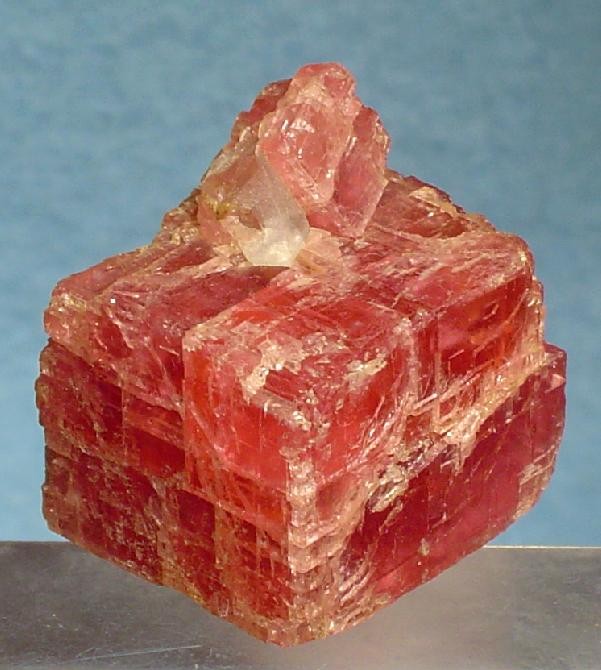
Photo: Wikimedia Commons
Emma rhodochrosite should not be judged by Sweet Home standards. The Butte look is more muscular and vein-bound: densely intergrown rhombs, cleavages, pink carbonate seams, quartz points rising out of rhodochrosite, and little metallic pyrite accents. Fine cabinet pieces exist, but most genuine Emma material on the market is older miniature to small-cabinet material, often from mid-20th-century collections rather than recent mining.
Search for specimens: View all specimens from Emma Mine, null
The Emma Mine is in the Butte Mining District, also known historically as the Summit Valley Mining District, in Silver Bow County, Montana. Historical names attached to the property include the Ancient Mine and the Black Chief Mine, a clue to its earlier silver development before the Emma name became fixed in collector usage. The mine lay near Montana Street on the east side of Missoula Gulch; the vein crossed South Washington Street and ended in a high knob overlooking the gulch, with a smaller outcrop beyond it. The surface locality has been reclaimed so completely that the mine site is now essentially a small grassy area, and the mine hoist survives off-site at the World Museum of Mining in Butte.
Geologically, Emma belongs to the outer, manganese-rich expression of Butte’s great polymetallic system. The central Butte ores are famous for copper sulfides and sulfosalts, but outward from the district center the vein assemblage shifts toward Mn-Zn-Pb-Ag mineralization. In that peripheral zone, rhodochrosite and rhodonite appear with quartz, sphalerite, galena, pyrite, and subordinate copper minerals. Emma represents the rhodochrosite-dominant end of this zonation: a hydrothermal vein system hosted in quartz monzonite and deposited at lower temperature than the central copper lodes.
The ore bodies were not simple narrow stringers. Published descriptions record some Emma ore shoots made almost entirely of rhodochrosite, localized at vein intersections and where the dip of the vein flattened. Smaller rhodochrosite stringers ran parallel to the main vein, while many vein walls were tight and sharp. The famous specimen material came from this same carbonate ore environment: crustlike layers ranging from coarse to fine texture, compact banded carbonate, large cleavage masses, and open cavities where rhodochrosite formed free crystals.
The mining history reads like a condensed version of Butte itself. The property was originally developed for silver as the Ancient Mine, later became the Emma, and then entered its major 20th-century phase under Anaconda involvement. By 1916 the shaft had been dewatered to the 800-foot level, old workings were cleaned and repaired, and large Zn-Pb-Ag ore bodies were exposed. A deep crosscut from neighboring workings was driven to connect with or undercut the Emma vein, and by 1920 a 1,763-foot crosscut was being extended toward the Ophir Mine, which had been acquired to work in conjunction with the Emma. In 1924 the Czarromah claim was acquired, along with the Mary Louise and Railroad claims. By 1926 the main shaft was to the 1,200-foot level.
Emma’s manganese period came later and made the locality famous to mineral collectors. Manganese was produced from 1934 to 1957, during the era when the western part of Butte was actively exploited for rhodochrosite-rich carbonate ore. The mine’s mid-century development was substantial: records note 1,263 feet of shaft work and 26,459 feet of drifts added in 1942, followed in 1943 by another 25,962 feet of shafts and 23,095 feet of drifts. In 1945, Anaconda, operating under lease, produced 20,337 tons of zinc-lead middlings from the treatment of manganese ore, and the Emma was noted as an important source of silver and a leading zinc producer.
Analytical data from the 1,000-foot level record high-grade zinc ore containing 21% Zn, 38 ounces per ton Ag, and 8% Pb, while manganese bodies reached 41% Mn. For collectors, the 1,000-foot level is also significant because studied Emma rhodochrosite from that level included a deep- to medium-pink zoned cleavage rhomb from a coarse aggregate. Other documented Emma material includes banded carbonate in which cream, pale pink, and rose layers vary in optical index and composition, a visible expression of the chemical subtlety hidden inside what may first look like simple pink carbonate.
Collecting access today is not a field-collecting proposition. The mine has been abandoned for decades, the workings are not open, the site has been reclaimed, and Butte mine ground must be treated as private, hazardous, and historically sensitive. Modern Emma specimens come from old collections, dealer dispersals, and occasional estate material, not from casual surface collecting.
Emma rhodochrosite is most prized as rose-pink to pastel-pink rhombohedral crystals, coarse cleavage masses, and banded crystalline vein material, commonly with quartz and pyrite and less commonly with chalcopyrite, galena, sphalerite, baryte, or marcasite. Classic descriptions emphasize cleavage faces up to about 1 inch across, while modern collector specimens often show rhombs from a few millimeters to roughly 1.5 cm on edge, with exceptional small-cabinet pieces carrying larger, sharper, more translucent aggregates. The color range is broader than many collectors expect: deep rose, medium pink, pale pink-gray, cream, and texturally banded mixtures all occur, and single crystals may be zoned. The best Emma pieces combine saturated rose color, sharp rhombohedral geometry, bright luster, and matrix contrast; ordinary pieces are massive, pale, bruised, or so densely cleaved that the locality character is less apparent.
Other documented Emma minerals reflect its place in the peripheral Butte vein system. Quartz is the dominant gangue partner, and pyrite is the most common visual associate on specimens; chalcopyrite, sphalerite, galena, baryte, and marcasite are also documented on Emma rhodochrosite specimen data. Broader Butte rhodochrosite studies record rhodonite, ankerite, calcite, barite, arsenopyrite, chalcopyrite, tetrahedrite, tennantite, chalcocite, and bornite as associates in the district’s manganese-carbonate environment. A particularly interesting Emma rarity is greenish wolframite occurring as extremely tiny prisms intimately intergrown with quartz in banded rhodochrosite, confirmed by chemical and X-ray work in the classic 1942 study of Butte rhodochrosite. The Emma is not chiefly a type-locality collecting site; its mineralogical weight lies in classic, well-studied rhodochrosite from a major American polymetallic district.
Emma specimens are classic, but they demand careful labels. “Emma Mine” alone is ambiguous because mines of that name occur in several western districts; a reliable label should say Butte or Silver Bow County, Montana, and older labels may use Ancient Mine or Black Chief Mine. Another documented mislabelling issue is confusion with the Leonard Mine: Leonard is a central Butte copper-sulfide locality famed for covellite, while rhodochrosite is a peripheral-zone mineral and a Leonard attribution for Emma-style rhodochrosite should be treated skeptically unless the provenance is exceptional.
Condition is the central value issue. Rhodochrosite has perfect rhombohedral cleavage, and Emma material often occurs as coarse cleavage aggregates; edge bruising, cleaved corners, rubbed high points, and internal cracks are common. Many pieces are old and were collected as ore-mineral specimens rather than modern display pieces, so trimmed backs, sawed bases, and pocket grime are not surprising. Quartz-over-rhodochrosite pieces can be especially attractive, but they should be checked for repaired quartz points and for acid-etched carbonate surfaces.
Treatment and cleaning concerns are mostly practical rather than scandalous. Rhodochrosite reacts with warm acids and can be dulled, rounded, or etched by aggressive cleaning. Historic descriptions note that Emma rhodochrosite turns black when heated and that some specimens decrepitate violently, so heat testing or flame “identification” is destructive and inappropriate. Keep specimens away from acids, avoid ultrasonic cleaning on fractured or cleaved material, and store fine rhombs where they cannot abrade against harder quartz or sulfides.
Market availability is limited. Massive or lapidary-grade Butte rhodochrosite appears more often than sharp Emma display specimens. Good miniatures and small cabinets surface intermittently from older collections, and top examples with sharp rhombs, saturated color, quartz or pyrite contrast, and documented Emma provenance are genuinely scarce. Recent dealer and auction records show that fine small-cabinet Emma material can reach high three-figure to several-thousand-dollar territory, with exceptional or especially aesthetic old pieces valued still higher.
In 1916 the Emma was not yet the placid reclaimed patch a visitor sees today. It was a wet, old Butte shaft being brought back into the hard machinery of Anaconda development. The mine had last been operated in 1906 by the Butte Copper & Zinc Co., but under an Anaconda lease the Emma shaft was dewatered to the 800-foot level, the old workings were cleaned out, and prospecting began again. The reward was immediate: a large body of ore carrying zinc, lead, and silver values opened on the 800-foot level. Contemporary reports described plans to sink below the 800 and drive a deep crosscut from the Original or Gagnon side so that the Emma vein could be cut far below the known workings.
By late 1916 the engineering ambition had become explicit. The deep crosscut from the Gagnon workings had reached a point about 800 feet below the Emma shaft, with raising and sinking planned and stations to be cut every 200 feet. Another report said the mine was being pushed toward a producing basis of 400 tons of zinc ore a day, with the ability to increase output if demand required. That image is worth keeping in mind when looking at a small pink rhomb from Emma: the specimen locality was not a dainty pocket mine, but part of a large, interconnected Butte development program trying to turn deep vein ground into industrial metal.
The manganese story gave the Emma its second life. During World War I and again in the mid-20th century, Butte’s rhodochrosite was no mere collector’s mineral; it was strategic carbonate ore. The high-grade Emma material could be calcined into a manganese oxide concentrate, while lower-grade ore had to be studied for concentration methods. One 1929 account of flotation work on rhodochrosite ore noted that the Butte area held large quantities of manganese carbonate ore and that, because of the size of the Emma ore body, much of the experimental work at Rolla was done on material from this property. A representative low-grade Emma sample was taken across a 45-foot vein; it was about half quartz, carried lead, zinc, and iron sulfides, and contained nearly 40% rhodochrosite, equivalent to about 20% manganese.
The most collector-relevant descriptions are almost tactile. The 1918 USGS account calls out Emma specimens with delicate rose-pink shades and rhombic cleavage faces as large as an inch across. Some material was compact and massive; some was made of crustlike layers, coarse to fine in texture; the coarser material was typically more translucent and deeply tinted, while finer material tended to be paler and semi-opaque. Open spaces were lined with free crystals. The same report records a dramatic testing detail that should make modern collectors wince: when heated, rhodochrosite turned black, cracked, became friable, and some Emma specimens decrepitated violently.
A later mineralogical study turned those hand-specimen observations into chemistry. In the Emma’s banded rhodochrosite, the pale and rose layers were not merely decorative; they recorded changing carbonate composition and changing optical properties. A studied specimen from the 1,000-foot level was a single large zoned cleavage rhomb, deep to medium pink, analyzed with only trace insoluble material. Another Emma specimen yielded a surprise: minute greenish prisms in quartz within banded rhodochrosite, chemically and X-ray confirmed as wolframite. For a mine remembered by collectors as “the rhodochrosite mine,” Emma still had room for microscopic complexity.
Hewett, D. F., and Pardee, J. T. “Manganese at Butte, Montana.” U.S. Geological Survey Bulletin 690-E, 1918. The indispensable early federal account of Butte manganese, including Emma rhodochrosite appearance, ore character, roasting behavior, and district reserves.
Wayland, Russell G. “Composition, Specific Gravity and Refractive Indices of Rhodochrosite; Rhodochrosite from Butte, Montana.” American Mineralogist, vol. 27, 1942, pp. 614–628. The key mineralogical study for Emma and Butte rhodochrosite chemistry, zoning, optical variation, and associated minerals, including Emma material from the 800- and 1,000-foot levels.
Jenkins, Robert E. II, and Jerry A. Lorengo. “Butte, Montana: Minerals, Mines and History.” The Mineralogical Record, vol. 33, no. 1, 2002, pp. 5–69. The modern collector reference for Butte minerals, mines, and historical context, with Emma rhodochrosite placed within the district’s broader specimen legacy.
Mindat.org locality page: Emma Mine, Butte Mining District, Silver Bow County, Montana, USA. Concise locality data, historical names, coordinates, geology, production period, workings, and documented status of the reclaimed mine site.
Mindat.org occurrence page: Rhodochrosite from Emma Mine, Butte Mining District, Silver Bow County, Montana, USA. Useful specimen-photo and association data for Emma rhodochrosite, especially quartz, pyrite, chalcopyrite, galena, baryte, sphalerite, and marcasite associations.
Western Mining History: Emma Mine. MRDS-derived mining record with commodities, ownership, workings, development comments, production dates, analytical data, and references to USGS and USBM records.
WPA. “Emma Mine.” Minerals Yearbook, All, no. 363, Digital Commons @ Montana Tech, 1945. A compact historical note recording Anaconda’s 1945 operation under lease and production of zinc-lead middlings from manganese ore.
Lund, Karen, Ryan J. McAleer, John N. Aleinikoff, and Michael Cosca. “Two-event genesis of Butte lode veins: Geologic and geochronologic evidence from ore veins, dikes, and host plutons.” U.S. Geological Survey, 2021. Current USGS framing of Butte’s porphyry and Main Stage lode-vein history.
Emma Mine on Mindat — Best single starting point for locality identity, historical names, coordinates, geology, reclamation status, and references.
Rhodochrosite from Emma Mine on Mindat — Specimen-focused page showing documented mineral associations and photo data for Emma rhodochrosite.
Wikimedia Commons: Rhodochrosite-227658.jpg — Open-licensed image of a classic rose-red Emma Mine rhodochrosite rhomb from the John Ydren collection.
Wikimedia Commons category: Rhodochrosite, Emma Vein; Emma Mine, Butte, Montana — Field and specimen photographs of Emma Vein rhodochrosite material.
Western Mining History: Emma Mine — MRDS-derived production, ownership, workings, and development record for the mine.
USGS Bulletin 690-E: Manganese at Butte, Montana — Early technical description of Butte manganese ore and the classic published description of Emma rhodochrosite.
American Mineralogist archive: Wayland, 1942, rhodochrosite from Butte — Detailed mineralogical treatment of Butte and Emma rhodochrosite composition, zoning, and optical variation.
Mineralogical Record back issue: Butte, Montana, Vol. 33 No. 1 — Collector-grade issue covering Butte minerals, mines, and history.
Digital Commons @ Montana Tech: WPA “Emma Mine” — Short 1945 Minerals Yearbook index entry for Emma Mine production and Anaconda operation.
Collectors Edge specimen archive/current listing: Rhodochrosite, Quartz, Emma Mine — Modern market example of an Emma rhodochrosite with quartz from an old Butte mine engineer’s collection.
— Useful market record for a rare quartz-over-rhodochrosite Emma combination with old collection provenance.
Reed, Mark H., and John H. Dilles. “Ore Deposits of Butte, Montana.” Montana Bureau of Mines and Geology guidebook chapter. A modern district-scale synthesis useful for understanding Emma as part of the peripheral Mn-Zn-Pb-Ag zone.
Mineral Auctions: Rhodochrosite, Emma Mine, ex Jack Halpern — Good example of recent market discussion around Emma-style rhodochrosite, condition, and Leonard Mine mislabelling.







