






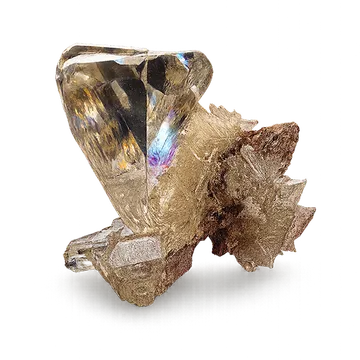
Broken Hill セレサイト: オーストラリアのクラシックな Pb-Zn-Ag鉱床からの象徴的な白象牙の結晶。古風な結晶形、産地の系図、そして完品の生存が高く評価される。
Key facts
Broken Hill のセリササイトは、オーストラリアの銀-鉛-亜鉛鉱床の古典的な視覚的特徴のひとつです。密集しており、驚くほど重い白色から象牙色の鉛炭酸塩のクラスターが、ダイヤモンドの閃光を帯び、網目状の格子、”雪の結晶”ネットワーク、V字 Twin、矢じり型ツイン、そして採鉱キャンプが生き延びたとは思えないほど繊細すぎる長い刃状の結晶に配置されることが多いです。その魅力は、Broken Hill がセリササイトを産出したというだけではなく、多くの鉛鉱床がそうであるように、旧時代の形状・規模・産地系譜・Broken Hill 藩の酸化帯の際立った結びつきの組み合わせにあります。

写真: Wikimedia Commons / GeoDIL
Broken Hill のセリササイトは、世界有数の Pb-Zn-Ag鉱床システムの風化上部ストーリーに属します。主要鉱体は「Broken Hill type」沈殿鉱床の典型で、前期古生代のウィリヤマ・スーパ―グループの変成・構造的に複雑な銀-鉛-亜鉛鉱体です。セリササイトは後に酸化帯で形成され、方鉛鉱や他の鉛鉱物が重炭酸水によって侵食され、開放空間、割れ目、ゴッサン空洞に鉛炭酸塩を生成しました。コレクターのコレクションでは、結果はすぐに識別可能になります。濃いマンガン-鉄酸化物の背景に白色またはクリーム色のセリササイト、砂糖のようなアンササイトの被膜、スミスソナイト、マラカイト、アズライト、クロロアルジャイト、ピロモルファイト、あるいは方鉛鉱の名残などが現れます。
偉大な Broken Hill のセリササイトは、鉱物標本であるだけでなく歴史的な遺物でもあります。最も美しい作品の多くは、酸化した鉱脈が開かれ、 camp がまだ荒削りで急いでおり、壊れやすい結晶を保存するには装備が不足していた採鉱初期の数十年に採集されました。初期の著述家は、最良の群を完全な状態で取り除くことの難しさを繰り返し強調しています。コレクターは、サイズと輝きだけでなく、生存も価値の一部として重視します:元の古いラベル、初期の鉱山出所、損傷のない終端、再構築されていない網目状ネットワークなどが含まれます。

*写真: Wikimedia Commons*Broken Hill の最も著名な標本はオーストラリアの公共コレクションに所蔵されており、オーストラリア自然史博物館が誇る Block 14 試料を含みます。1930年以前に採集され、1933年に登録された長さ33×幅27×高さ12 cm のグループです。その最長結晶は28.7 cm に達し、世界の最良の方解石(cerussite)産地を巡って収集家が議論する際、Broken Hill がなお話題に挙がる理由を説明しています。ツームベ(Tsumeb)は現代のガラス状で宝石のような方解石の印象を支配しているかもしれませんが、Broken Hill はその建築美によって地位を保っています。剣状の結晶、格子状の構造、箱状結晶、そして古い酸化帯の組み合わせは、まさにこの並外れた鉱脈からしか生まれ得ません。## 特集標本
Search for specimens: View all cerussite specimens from Broken Hill, Australia
Broken Hill lies in far western New South Wales and is one of the foundational names in Australian mining. The orebody was discovered in 1883 when boundary rider Charles Rasp recognized mineralization on the outcrop, initially thinking in terms of tin before the silver-lead richness of the lode became clear. The Broken Hill Proprietary Company was formed in 1885, and the district became the birthplace of BHP, later one of the world’s major resource companies.
Geologically, cerussite is a secondary mineral here, concentrated in the oxidized zone above and within the weathered portions of the lead-zinc-silver lode. The original Broken Hill orebody consisted chiefly of galena, sphalerite, and silver-bearing minerals, later modified by metamorphism, deformation, and long exposure to surface waters. Where lead-bearing sulfides were oxidized, cerussite developed in cracks, vugs, and gossan cavities, especially in association with anglesite, pyromorphite, coronadite, goethite, quartz, and other secondary species. The dark gossan at Broken Hill was not a simple iron cap; published work describes much of it as a dense black rock rich in plumbic coronadite, with cerussite and pyromorphite becoming more evident downward in cracks and scattered masses.
Historically important cerussite specimens came from multiple parts of the Line of Lode, including the Broken Hill Proprietary Mine, Block 14, the British Mine, the Central Mine, South Mine workings, and later the Kintore and Block 14 open cuts. Early descriptions single out the British Mine for long prismatic “sword” crystals and the Central Mine for enormous masses of reticulated white cerussite. The BHP Block 14 Mine is especially important to collectors because of the great museum specimens collected before its closure and the major suite donated to the Australian Museum in 1933.
Collecting access today should be treated as essentially closed unless formal permission has been obtained. Broken Hill is not an open public collecting ground; the old workings, dumps, leases, and operating or rehabilitated mine areas involve private tenure, mine safety obligations, and environmental controls. The best way to study the locality in person is through museum displays and heritage interpretation, especially the Albert Kersten Mining and Minerals Museum in Broken Hill and the Australian Museum collections in Sydney. Modern field collecting around active or historic mines without permission is not appropriate, and serious Broken Hill cerussite on the market overwhelmingly comes from old collections rather than contemporary casual collecting.コレクター品質の正長石鉛鉛(cerussite)の生産は、19世紀後半から20世紀初頭の酸化帯の初期採掘期に最も盛んでした。後年、酸化地盤の露天掘りは特にキントール周辺とブロック14で、角閃石を含む方解石の二次鉱物を追加生産しましたが、象徴的な大きな網目状・鋭鋒状標本は主に旧時代の作品です。その年齢は彼らのアイデンティティの一部です。ブロークン・ヒル産の正長石鉛鉛には、初期のオーストラリア収集史が刻まれており、PbCO3の標本にとどまらず、オーストラリアの鉱物収集形成期の生存者としての価値があります。## Broken Hill, Australia産セレササイトの特性
最も価値の高いBroken Hill産セレササイトは、いくつかの recognizable な習性に分類される。最初の特徴はネット状のセレササイト:相互に成長した二重結晶が格子状、メッシュ状、箱状組織、そして「雪の結晶」群を形成する。これらは平坦で開放的かつ建築的であってもよいし、白〜クリーム色の結晶リブが繰り返しの双晶配向を横切る、密で三次元的なものもある。多くは部分的に浮遊体であったり、かつてそれらを支えた空洞壁から分離した骨格群である。
二つ目の古典的な習性は長いプリズマティックあるいは刃状の「剣」状結晶である。初期のBroken Hillの記述は、基部から突き出た細長い結晶を miniature swords のように強調し、しばしば群を構成する小さな中間結晶がこれを補っていた。最も優れた刃状標本は劇的に彫刻的だが、割れやすさの点でも非常に脆弱なものでもある。
矢じり型双晶とV字型双晶はBroken Hillのもうひとつの特徴である。歴史的な記録には、矢じり型双晶がキャビネット規模に達することがあり、博物館や販売業者の標本では、角ばった白色から色彩不透過の結晶が循環的な双晶と繰り返される鋭い終端を示している。個々の結晶や双晶の一部はガラス状で無色であることもあるが、多くのBroken Hill産材料はタムベブや一部のモロッコ産標本に関連する超透明なセレササイトよりも象牙色、白、クリーム色、灰色、煙色、黄みがかった、あるいは淡い茶色である。
角閃石(Anglesite)は主要な関連鉱物のひとつで、しばしばセレササイトのきらめくコーティングとして現れる。いくつかの標本ではコーティングが薄く砂糖のようで、形を隠さず光沢を加える。一方で角閃石が部分的にセレササイトを置換または覆い隠すこともあり、真珠のような白色からベージュの箱状組織を作る。この関連性は非常に一般的で、Broken Hillのセレササイトは必ず拡大鏡で検査することが推奨される。初見ではくすんだ白色のセレササイトに見えるものが、角閃石微結晶でコーティングされたセレササイトであったり、より複雑なセレササイト-角閃石の共成長である可能性がある。
他にも、スミソナイト、孔雀石、藍晶石、塩酸銀石、コロナダイト、ゲオタイト、ミウム、銀鉛鉱、ピロモルファイト、方解石、銅酸化銅鉱、天然銅、リナライト、ミメタイト、及びまれに銀ハライドなどの再現性のある関連鉱物が見られる。濃いコロナダイト-ゲオタイト豊富な基質は、白色セレササイトの双晶に対して特に対照を提供する。マラカイト、藍晶石、偽マラカイトの組み合わせは希少だが、バランス良く配置されていると視覚的に魅力的である。
典型的なコレクター向け標本は、結晶が小さな二重晶を有するサムネイルやミニチュアから、小さなキャビネット群、キャビネット群まで幅がある。大きな完全なネット状群は稀で、歴史的に重要な標本は15〜30 cm以上に達することがある。例外的な博物館標本は通常のコレクター規模を超える:オーストラリア博物館のBlock 14標本は33 × 27 × 12 cm、結晶は28.7 cmまで。とはいえ一般市場の素材では、シャープで傷のない5〜8 cmのBroken Hillセレササイトで、良好なネット状、光沢、由来を備えたものでも、すでに重要な標本になり得る。品質はまず建築様式で判断されます。ブロークン・ヒル産のセリサイトの良品は、オープンなリティケーション、清潔なV字型双晶、刃状グループ、あるいは昔ながらのボックスワークとして、 recognizable twin form を持つべきです。光沢は非常に重要です:白色結晶であってもダマンダイン(硬質)な面があると、望ましい標本と Chalky や著しく腐食したものとを区別します。 この地域ではある程度の損傷が想定されますが、その損傷の配置と正直さが決定的です。古い標本では周辺に青あざのような損傷が許容される場合がありますが、展示面全体にわたる焦点ブレードの折損、接着されたネットワーク、あるいは終端部の欠搩ははるかに重要です。出所は品質の重要な要因であり、特にPieceをBlock 14、BHP、South Mine、British Mine、Central Mine、Kintore、あるいは旧オーストラリアのコレクションに結びつけるラベルがあることが挙げられます。## Collector Notes
Broken Hill cerussite is an authenticity-driven locality. The species itself is not hard to identify when tested sensibly: cerussite is very dense, relatively soft, adamantine to vitreous, and usually white to colorless in Broken Hill material. The challenge is not usually whether the mineral is cerussite, but whether the specimen is correctly localized, honestly described, and structurally original.
Documented specimen-scale fraud specific to Broken Hill cerussite is not a major published theme, but repairs are a real concern. The very forms collectors prize—open reticulated lattices, long bladed crystals, and arrowhead twins—are mechanically vulnerable. Old-time specimens may have been broken during mining, transport, cleaning, photography, or later handling. Use magnification to inspect crystal junctions, the bases of blades, and points where reticulated networks meet matrix. Look for glossy glue in recesses, mismatched luster across a break, repeated oddly perfect junctions, or faces that do not line up crystallographically. Longwave UV can sometimes reveal modern adhesives, though absence of fluorescence does not prove absence of repair.
Condition standards should be realistic. Many genuine Broken Hill cerussites have small chips, bruised edges, missing terminations, iron-oxide staining, or natural coatings of anglesite that mute the luster. Old labels may use broad locality names such as “Broken Hill,” “B.H.P. Mine,” “South Mine,” or “Block 14,” and these are often more credible than modern overly precise attributions without provenance. A vague but old Australian label can be preferable to a recent label assigning an exact sublocality with no supporting history.
Treatments to watch for include stabilization of fragile reticulated groups, reattachment of broken blades, trimming of matrix to improve display, and overly aggressive cleaning. Acid cleaning can brighten cerussite but may also alter gossan matrix or remove desirable patina. Shellacked or darkened matrix is less often discussed for this locality than for some others, but any unnatural gloss on iron-oxide matrix deserves scrutiny. Cerussite is a lead mineral, so normal mineral-specimen hygiene applies: do not lick, soak, abrade, or prepare specimens in a way that creates dust; wash hands after handling; and keep fragile lead-carbonate specimens away from children.
Rarity is strongly tied to form and condition. Small Broken Hill cerussites and cerussite-bearing combination specimens remain available, especially from dispersed old collections. Large undamaged reticulated groups, good sword-crystal specimens, and pieces with early collection history are scarce. The finest examples have migrated into museums or long-held private collections, and when a significant old specimen appears, its value is driven as much by locality status and survival as by mineral aesthetics.## Stories & Field Notes
最も印象的なブロークン・ヒルのセレウサイトの物語は、地下ではなくホテルで始まる。ブロークン・ヒルのデューク・オブ・コーンウォール・ホテルの公使人エドワード・W. “テディ”・オルドリッジは、19世紀後半に偉大な初期ブロークン・ヒルの鉱物コレクションの一つを築いた。地元の伝説には、彼が酒場を通る鉱夫と specimens を beer と交換していたとある。すべての交換が彼らのようにきっちり成立したかどうかはさほど重要ではない。物語が明らかにする点の方が重要だからである:酸化帯の年には、作業中の鉱夫から直接、地元の cabinet、ホテルの部屋、私設の展示ケースへと標本が移動した。パワーハウスはオルドリッジが約5000標本を蓄積したと記録しており、オルドリッジ=ディクソン・コレクションの cerussites の一群はその社会史を今も保存している:鉱夫、ビール、公使、大学、博物館。
オルドリッジ材料は単純に私的な手へと消え去ったわけではない。コレクションの大部分は、シドニー大学のエッジワース・デイヴィッド卿に代わってヒュー・ディクソンによって購入され、おそらくアメリカ人買い手への販売の代替として、デイヴィッドがこのコレクションをオーストラリアに留めておくことを望んだという。1912年には、シドニー大学を通じてパワーハウス博物館に92個のオルドリッジ鉱物が寄贈された。後の別の記録として、17 x 15.5 x 8 cm のレティキュレーテッド・セロツサイトのエピソードが同じコレクションの別の、ほとんど漫画のような章を語っている:ハンス・J・ポール博士が1952–1953年頃、シドニー大学地質学部からそれを取得した時、同部は「重複するオルドリッジ標本を“捨てていた”」時期であった。現在では重要なローカリティ宝として扱われる鉱物が、かつては大学の廃棄物から救い出されることもあった。
オーストラリア美術館のブロック14のセロツサイトは、より正式で博物館級の生存物語である。標本は1930年以前に採集され、1933年に登録され、閉鎖後のBHPブロック14鉱山の経営陣が集めたコレクションから来ている。鉱山管理者F. ヴォス=スミスを通じて同美術館に寄贈された。このコレクションは、ブロークン・ヒルからシドニーへ木製箱で鉄道輸送されなければならず、脆い鉛-炭酸塩の格子と長い刃状結晶にとって危険な旅であった。驚くべき点は、輸送中に標本の一つも損傷しなかったことである。28.7 cm までの結晶を持つ33 x 27 x 12 cm のセロツサイト・グループにとって、それは標本自体ほど印象的である。
同じブロック14のセロツサイトは後に公共のアイコンとなった。アルバート・チャップマンはこれをピーター・バンクロフトの1973年の著書『世界の最高の鉱物と結晶』に推薦し、どの種の結晶群の中でも最高の一つとみなされた。その選択基準は容赦なく、結晶の完成度、マトリックス、美観、関連、色、光沢、サイズであり、ブロークン・ヒルのセロツサイトはそれらで高得点を取った。1983年、オーストラリア郵便局はブロークン・ヒルの100周年を祝うプリスタンプ封筒の図柄としてこれを選び、 fragile oxidized-zone の鉱物を国家的記念像へと変えた。世界中のコレクターが覚えておくべき、警告的なBroken Hillの物語もあります。Peter Andersenは、多くのコレクターが世界最高峰のBroken Hillの例と見なす、別の有名なBlock 14のセラサイトの軌跡を記録しました。それはKevin DavyコレクションからNoel Franksへ、そして1984年にはAlbert Chapmanへと渡り、価格は6500ドルでした。シドニーのGlebe PointにあるChapman宅での写真撮影の際、標本は落とされ粉々に破損しました。できる限り修復されましたが、その事故は物体を永久に変えてしまいました。後にそれはWarren Somervilleの保有を経て、最終的にはオーストラリア博物館のBathurst拡張部門へと渡りました。教訓ははっきりしています:最高峰のセラサイトでさえ、1つの不注意な瞬間で修復問題へと転じ得るのです。## 鉱物学的記録と公刊物
Australian Museum — “Cerussite” — 伝説的なBHP Block 14のセリサライトの博物館記録。サイズ、収集日、登録詳細、後にBancroftやAustralia Postの文脈での登場を含む。
Mindat — Cerussite from Broken Hill, Broken Hill district, New South Wales — Broken Hillおよび周辺の世界的標準品としてのセリサライトを示す基本 locality 記述と、関連鉱物および下位 locality の記録。
Mindat — “Best of… Cerussite” — Broken Hillのセリサライト習性のコレクター向け要約。網状群、矢頭ツイン、剣状結晶、MarshとSmithの参照が含まれる。
Marsh, C.W. (1897), Mineralogical notes. No. V. Cassiterite, cerussite, zeolites and other Australian minerals. Australian Museum PDF — 早期のオーストラリア鉱物学的考察。Broken Hillのセリサライトを含む。
Smith, George (1926), A Contribution to the Mineralogy of New South Wales, Mineral Resources No. 34, New South Wales Department of Mines — Broken Hillのセリサライトおよびその他のニューサウスウェールズ州鉱物の記述で繰り返し引用される古典的資料。
Worner, H.K. and Mitchell, R.W., eds. (1982), Minerals of Broken Hill. Australian Mining & Smelting Ltd. Bibliographic listing — 大規模な locality モノグラフ。数百種のBroken Hill鉱物を記述し、重要標本を図示。
Powerhouse Collection — “Specimen of cerussite from Broken Hill, New South Wales” — Aldridge-Dixsonコレクションの十三点のセリサライト標本の記録。出典と収集履歴を含む。
Mindat minID FDL-MKH — Broken Hill Proprietary Mine cerussite — Aldridgeコレクション背景と後のシドニー大学史を含む、17 x 15.5 x 8 cmの網状セリサライトを記録。
Peter Andersen — “The world’s best Broken Hill, N.S.W., cerussite” — Davy、Franks、Chapman、Somervilleコレクションを経た著名なBlock 14セリサライトの出自物語。
Peter Andersen — “A Compilation of some Broken Hill mineral collections” — 主要なBroken Hill鉱物コレクションと旧標本の移動を追踪する有益なコレクター史記事。## さらなる読み物と外部リンク
オーストラリア博物館 — 硫砒鉄鉛鉱 cerussite — 有名な Block 14 の硫砒鉄鉛鉱とその博物館の歴史についての最良の公開ページ。
Mindat — Broken Hill の cerussite 発生地 — サブローカリティ、関連性、試料写真の文脈を含む必須の産地データベース項目。
Mindat — Best of Cerussite — Broken Hill の cerussite を他の世界産地と比較するのに有用な収集家向けガイド。
Wikimedia Commons — Minerals of Broken Hill — Broken Hill の cerussite、anglesite-cerussite、その他多くの関連種を含む公開画像アーカイブ。
ScienceDirect — “The gossan at Broken Hill” — 異例の Broken Hill のゴッサンと酸化帯における cerussite and pyromorphite の位置づけに関する技術要約。
Geoscience Australia — Broken Hill Exploration Initiative Project — Broken Hill- Olary 地域の地質学的文脈と広域の Curnamona Province 作業。
Broken Hill City Council — History — 1883 年の発見、採掘開発、および BHP の起源の簡潔な市民史。
BHP — Our History — Broken Hill の銀-鉛発見と BHP の形成から始まる企業史の年表。
Albert Kersten Mining and Minerals Museum — Broken Hill の地質学・鉱物学・採鉱遺産の地元博物館資源。
Powerhouse Collection — Aldridge cerussite specimens — Aldridge-Dixson 出典の物語を記録する博物館記録。
.jpg)
