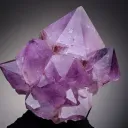
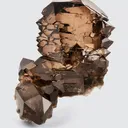
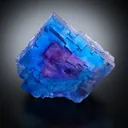
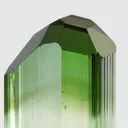
Batalha Mine, Paraíba, famed cuprian elbaite tourmaline with neon blue hues; rare, well-provenanced display crystals prized by collectors.
Key facts
Batalha is the original collector’s locality behind the name “Paraíba tourmaline”: a small, steep-sided pegmatite hill at Morro Alto near São José da Batalha, Salgadinho, Paraíba, Brazil, where copper-bearing elbaite changed the color scale for tourmaline. The deposit belongs to the Borborema pegmatite province of northeastern Brazil, within a belt of rare-element pegmatites cutting quartzites of the Equador Formation. Its fame rests on an improbable mineralogical circumstance: elbaite in a highly kaolinized granitic pegmatite incorporated enough copper, with manganese also contributing to the color system, to produce the saturated blue, greenish blue, violetish blue, and green hues that dealers soon called “neon,” “electric,” “turquoise,” and “sapphire” blue.
For collectors of crystals rather than faceted gems, Batalha is both legendary and frustrating. The finest material was so valuable that most clean crystals and fragments were cut, while many surviving crystals are naturally broken, corroded, or etched from their life in the pegmatite and later weathering environment. True display specimens from the mine are therefore scarce. The best pieces show the unmistakable glowing cyan-to-greenish-blue body color in small prisms, etched fragments, or occasional crystal sections on quartz or in kaolinized pegmatite, sometimes with pink cores, violet zones, or green outer areas. A complete, sharply terminated Batalha cuprian elbaite is a serious specimen; a matrix specimen with vivid color and credible old provenance is a prize.
Regional View
Country View
The deposit is also important because it forced gemology to treat locality, chemistry, and trade terminology as separate questions. “Paraíba” began in the marketplace as shorthand for the extraordinary material from São José da Batalha, but later copper-bearing tourmalines from Rio Grande do Norte, Nigeria, and Mozambique complicated the name. For specimen collectors, “Batalha mine” or “Mina da Batalha” provenance remains far more precise than the gem-trade word “Paraíba.”
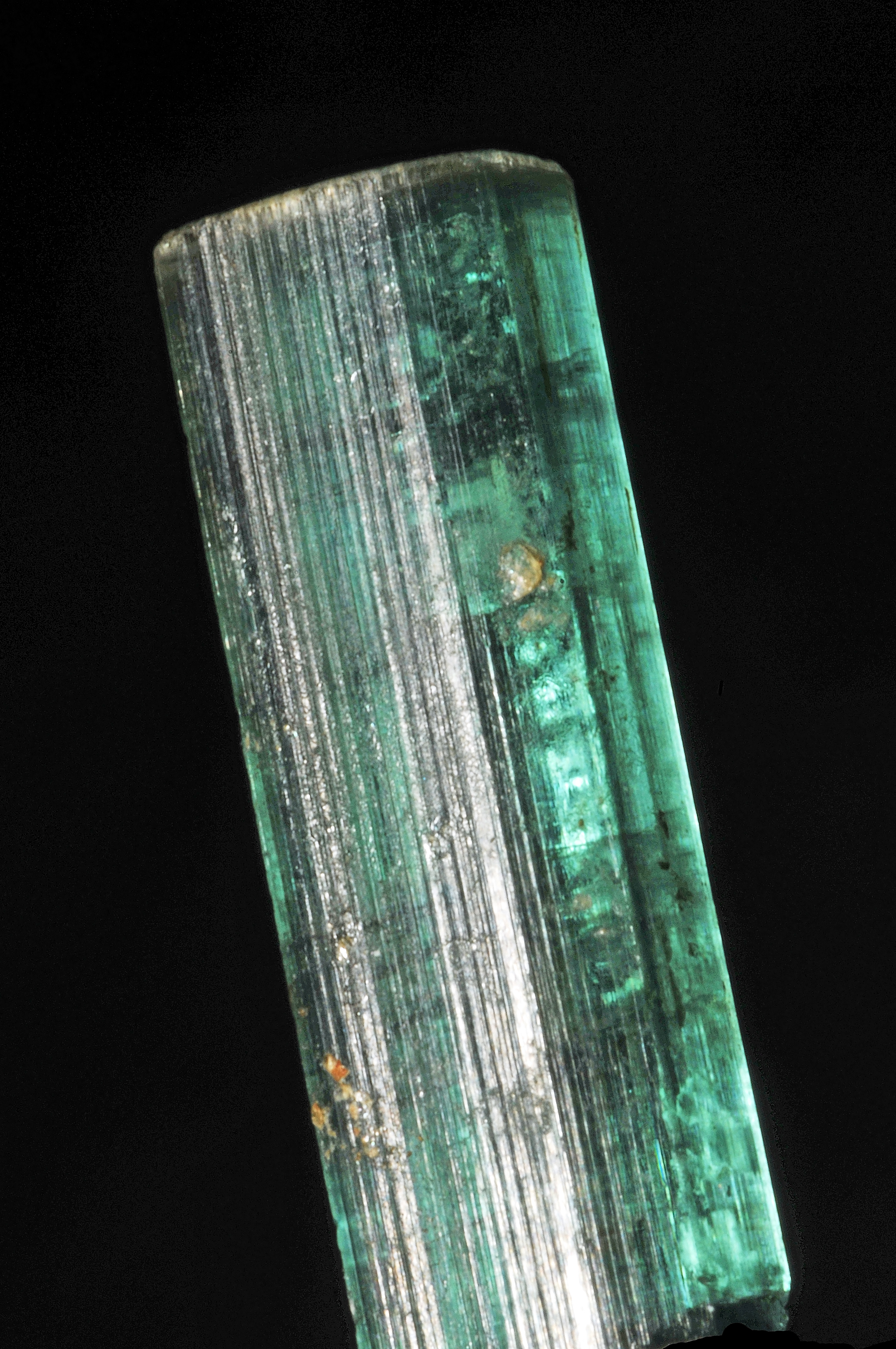
Photo: Géry Parent, Wikimedia Commons
Search for specimens: View all specimens from Batalha Mine, null
The Batalha mine, also recorded as the Heitorita mine or Mina da Batalha, is a gem-bearing rare-element pegmatite locality near São José da Batalha in the municipality of Salgadinho, Paraíba. Mindat places the mine at 7° 4' 52'' S, 36° 50' 40'' W and records it as a gem mine about 4.5 km northeast of Salgadinho. The classic workings are on Morro Alto, a small hill on or near the Serra do Frade ridge, in the Serra das Queimadas, locally also known as Serra dos Quintos.
Geologically, the deposit is not a broad open pocket field but a system of narrow tabular pegmatite dikes, locally called “lines.” Published descriptions record six roughly parallel pegmatites, generally vein-like and steeply dipping, from about 20 cm to 4 m thick. The most productive tourmaline-bearing dikes are typically thinner than a meter. They cut foliated muscovite quartzite of the Equador Formation and are composed largely of feldspar altered to white kaolin, with quartz and mica, especially muscovite and lepidolite. The gem tourmaline occurs irregularly: near quartz-core zones, in association with lepidolite, in small clay-filled pockets, as thin stringers, embedded in kaolinized feldspar, or intergrown with massive quartz.
The broader Borborema pegmatite province has long been worked for industrial and strategic pegmatite minerals: feldspar, kaolin, quartz, mica, beryl, tantalite-columbite, and related rare-element minerals. Batalha itself had earlier importance as a tantalum-bearing pegmatite prospect before its gem identity became famous. In the tourmaline zone, the pegmatites carry schorl, ordinary elbaite, copper-bearing elbaite, quartz, muscovite, lepidolite, kaolinite, feldspar, and Nb-Ta oxides including tantalite and columbite-series minerals. The unusual copper source remains one of the deposit’s enduring questions; the copper is not simply a common feature of granitic pegmatites.
The discovery story begins in the early 1980s with Heitor Dimas Barbosa, who recognized bright colored specks in pegmatite ore and pursued the source with local garimpeiros. Tourmaline-bearing pegmatites were found in the Batalha area, and by the mid-1980s green stones were being recovered. The breakthrough came in the late 1980s, when the blue and greenish-blue copper-bearing elbaites reached the gem trade and then Tucson, where the color created immediate astonishment. Barbosa and associates filed claims, and COGASBRA was registered with Brazil’s DNPM in 1990.
Production history is intensely uneven. The great run was short: the principal output of gem-quality blue-to-green cuprian elbaite came from about 1989 to 1991, with estimates of 10 to 15 kg of jewelry-quality crystals and fragments recovered in that early phase. Afterward, ownership disputes and litigation slowed or stopped work through much of the 1990s. Later efforts included reopening underground workings, building walls for security, adding electric winches and fluorescent lighting, processing older dumps and eluvial/alluvial material, and exploring deeper extensions. Modern reporting indicates the mine has remained in the Barbosa family sphere, with Sergio Barbosa maintaining the operation after Heitor Barbosa’s death in 2023.
The workings have included near-vertical shafts, horizontal galleries driven along the pegmatite lines, and later mechanized or semi-mechanized reworking of dumps, eluvium, and alluvium. Early mining was famously primitive: shafts to 50–60 m, narrow tunnels, hand tools, occasional blasting, hand winches, candlelight, and very little ventilation. Later mining and adjacent operations used pneumatic drills, electric winches, washing plants, excavators, backhoes, dump trucks, and sieving plants for clay-rich pegmatite and alluvial material.
The named “lines” matter to collectors because color and quality varied by dike. Published field accounts report line 1 as the greatest producer of crystals, chiefly green and grayish purple material that could heat to bright greenish blue; line 2 produced smaller quantities but better colors, including green and prized blue material that did not require heat treatment; lines 3 and 4 yielded varied colors in lesser quality and quantity; line 6, also called the Jucurí line in one worked area, produced small crystals with good blue-to-green colors; line 5 was reportedly poor or unproductive. The classic Batalha look—small, corroded, intensely colored fragments—is a direct consequence of this geology and mining history.
Collecting access should be understood as private-mine access, not casual field collecting. Historically, even in 1990, access required prior arrangement. Later reports describe gated compounds, ownership divisions, active mining concerns, security walls, and restricted underground access. Any modern collecting should be considered a matter of permission, mining-rights control, and safety; loose “Batalha” labels in the market deserve much more scrutiny than a specimen with old collection history, lab chemistry, or a credible chain of ownership.
Batalha tourmaline is overwhelmingly about copper-bearing elbaite: vivid blue, greenish blue, turquoise, violetish blue, purple-to-violet, green, pink-cored, and complexly color-zoned crystals and fragments from narrow kaolinized pegmatite dikes. Most pieces are small, naturally broken, etched, or corroded, commonly under a gram in rough, though exceptional rough fragments and crystals of several grams to tens of grams have been documented; fine faceted stones over a few carats from the original mine are rare, and specimen-grade crystals were sacrificed heavily to cutting. Crystal habits range from rough prismatic sections and etched terminated prisms to broken columnar pieces, sometimes enclosed in quartz or associated with lepidolite, kaolinized feldspar, muscovite, schorl, and non-cuprian elbaite. The finest collector pieces show saturated “electric” blue to greenish-blue color without muddy overtones, clear or translucent zones, recognizable crystal form, credible Batalha provenance, and minimal modern repair; ordinary pieces are typically tiny, abraded fragments, pale green to grayish violet rough, or material sold under the broad Paraíba trade name without mine-specific evidence.
Other minerals documented from Batalha reflect its rare-element pegmatite setting. Quartz occurs as milky quartz, smoky quartz, rose quartz, amethyst, and citrine; feldspar is commonly altered to kaolinite, giving much of the mine’s ore its soft white clay matrix; muscovite and lepidolite are important associates, especially near productive tourmaline zones. Schorl and dark green non-cuprian elbaite occur with the copper-bearing elbaite, while tantalite, manganotantalite, and columbite-series minerals record the deposit’s earlier strategic-mineral character. Native copper is a notable rarity, best known as microscopic dendritic inclusions in cuprian elbaite, and tenorite has also been documented as tiny inclusions. “Heitorita” is historically important as a local and commercial name for intense Batalha copper-bearing elbaite, but it is not a separate IMA-valid mineral species.
The first collector problem with Batalha material is terminology. A label reading “Paraíba tourmaline” does not automatically mean Batalha mine. It may refer broadly to copper-bearing tourmaline from Paraíba, Rio Grande do Norte, Nigeria, Mozambique, or simply to Paraíba-type color in the trade. For a mineral specimen, insist on “Batalha mine,” “Mina da Batalha,” “Heitorita mine,” or “São José da Batalha, Salgadinho, Paraíba” provenance, and treat vague “Brazil Paraíba” labels as less precise.
The second problem is treatment. Heating is well documented for some color varieties: grayish purple or violetish material can shift toward brighter blue-green as Mn3+ is reduced, while copper remains the essential chromophore. Some of Batalha’s most prized blue material reportedly did not require heat treatment, especially material from line 2 and the “Heitorita” production described by Barbosa’s group, but the absence of treatment cannot be assumed from color alone. Standard gemological testing is not enough to prove copper content or heat status; advanced analytical work such as EDXRF, LA-ICP-MS, or UV-visible spectroscopy may be needed, especially for cut stones and high-value crystal fragments.
Documented misrepresentation is mostly about locality and trade naming rather than outright synthetic fakes. Published accounts note that tourmaline from other Brazilian deposits was at times mixed with or marketed as Batalha material, and later African copper-bearing tourmalines further blurred the commercial meaning of “Paraíba.” For specimens, provenance is king: old labels, invoices from reputable mineral dealers, museum publication history, and photos predating the explosion of “Paraíba-type” marketing can matter almost as much as chemistry.
Condition standards for Batalha should be realistic. Many real pieces are etched, naturally fractured, contacted, broken, or cloudy. A complete crystal with a clean termination is far rarer than an etched fragment with superb color. Natural corrosion should not automatically be read as damage; it is part of the deposit’s normal appearance. Conversely, be alert for repaired crystals, fragments glued to quartz, oiling or resin filling in fractures, and polished or sawn pieces being described too enthusiastically as “crystals.”
The market is thin and provenance-sensitive. Facet-grade material from the original mine is overwhelmingly absorbed by the gem trade, and good crystals are scarce because so many early pieces were cut. Small crystal fragments, polished pieces, and tiny vivid crystals appear periodically; matrix pieces are much less common; large, strongly colored, well-formed Batalha crystals are in the top tier of modern tourmaline collecting. Fluorescence is not a major buying feature here; published gemological data report Batalha copper-bearing elbaite as inert to longwave and shortwave UV.
Heitor Dimas Barbosa’s search has the shape of a prospector’s obsession. In the early 1980s, he saw bright specks in pegmatite ore shown by José Pereira, a local garimpeiro, and spent months searching pegmatites across the Paraíba countryside. The trail finally led to a small manganotantalite prospect on a hillock at Morro Alto, at the base of Serra do Frade. For years the work produced green tourmalines but not the color that would make the mine famous. Then, in August 1987, the workings yielded the blue material—the color later described again and again as “electric.”
The early Batalha workings were not romantic in the comfortable sense. Barbosa’s team of roughly thirteen to fifteen garimpeiros sank deep shafts into decomposed pegmatite and followed the dikes underground through narrow galleries. They worked in heat, drought, clay, quartzite, and poor ventilation, hauling buckets by winch and picking gem fragments by hand. At the height of production, shafts had reached more than 60 m and hundreds of meters of horizontal tunnel had been driven along the pegmatites. The extraordinary part is that much of this was done with simple hand tools, occasional blasting, and candles for light.
When the first stones reached the gem world, skepticism was immediate. The color was too saturated, too blue, too improbable for the tourmaline many dealers thought they knew. Gemologists soon found the explanation in the chemistry: copper, with manganese playing an important role in the color system. The mine’s finest colors did not merely add a new shade to elbaite; they altered the collector’s idea of what tourmaline could look like.
The story then turned contentious. The mine became entangled in ownership disputes, rival claims, investors, politics, and local interests. For much of the 1990s production faltered. At one stage the site was divided into separate sections, with different owners and operators controlling different parts of the hill and adjacent ground. Dumps were reprocessed, alluvial and eluvial ground around Morro Alto was worked, and old pegmatite lines were pursued again. The geology had already made the material rare; the legal history made clean provenance even more important.
A GIA field team’s 2014 visit preserved a late chapter of the mine in vivid detail. At the Parazul operation, a blower forced air down a plastic ventilation duct to workers roughly 70 m below, while the underground air remained humid and well above 100°F. Access to the lower level was by electric winch and harness. Brian Cook, the geologist and long-time Paraíba specialist, stepped into the harness first and was swung out over the shaft on a small gantry. One slip, the account noted, and he would have swung like a pendulum against the quartzite wall. When the harness returned, miners replaced it with an improvised ore bucket made from a vehicle tire and resumed hauling ore.
The next day the GIA team visited Heitor Barbosa himself. He was in his eighties then, still animated by the blue tourmaline that had defined his life. The team interviewed him inside one of the original Mina da Batalha tunnels, capturing his account of discovery, first production, and disputed ownership. In an old photograph from the early 1990s, Barbosa holds a bright-blue crystal weighing more than 10 grams—exactly the kind of specimen that, had it survived intact and uncut, would sit among the most coveted modern tourmalines.
Heitor Barbosa died on September 23, 2023, at age 90. His story now belongs to both mineral collecting and gem history: a man driven by intuition through years of skepticism, who turned a small kaolinized pegmatite hill in Paraíba into one of the most consequential gem localities of the late twentieth century.
Emmanuel Fritsch, James E. Shigley, George R. Rossman, Meredith E. Mercer, Sam M. Muhlmeister, and Mike Moon, “Gem-Quality Cuprian-Elbaite Tourmalines from São José da Batalha, Paraíba, Brazil,” Gems & Gemology, Fall 1990, Vol. 26, No. 3, pp. 189–205 — The foundational gemological paper on the original Batalha material, including color, chemistry, occurrence, mining history, and heat-treatment observations.
Franz Brandstätter and Gerhard Niedermayr, “Copper and Tenorite Inclusions in Cuprian-Elbaite Tourmaline from Paraíba, Brazil,” Gems & Gemology, Fall 1994, Vol. 30, No. 3 — Important documentation of native copper and tenorite inclusions in São José da Batalha cuprian elbaite.
James E. Shigley, Brian C. Cook, Brendan M. Laurs, and Marcelo de Oliveira Bernardes, “An Update on ‘Paraíba’ Tourmaline from Brazil,” Gems & Gemology, Winter 2001 — The best single technical overview of the Batalha area’s geology, dike system, production history, adjacent alluvial/eluvial workings, and comparison with Rio Grande do Norte occurrences.
Wendell E. Wilson, “Cuprian Elbaite from the Batalha Mine, Paraíba, Brazil,” The Mineralogical Record, Vol. 33, No. 2, 2002, pp. 127–137 — A specimen-focused mineralogical treatment of Batalha cuprian elbaite and its rarity as preserved crystals.
Masashi Furuya, “Copper-Bearing Tourmalines from New Deposits in Paraíba State, Brazil,” Gems & Gemology, Fall 2007 — Useful context for later Paraíba State finds near Junco do Seridó and how they compare with Mina da Batalha.
GIA Staff, “In Memoriam: Heitor Barbosa,” Gems & Gemology, Winter 2023, Vol. 59, No. 4 — Concise modern biographical note on Barbosa, his early production, and the mine’s continuation under Sergio Barbosa.
Smithsonian National Museum of Natural History, Paraíba Tourmaline, catalog NMNH G9964 — Museum record for a 6.69 ct deep-blue Paraíba tourmaline from Brazil, noting the rarity and significance of Mina da Batalha material.
“Parazul Tourmaline mine” — GIA — A field-video segment embedded in GIA’s 2014 Brazil expedition report, showing descent into one of the Batalha tourmaline mine workings by winch and harness.
URL: https://www.gia.edu/gia-news-research-an-overview-of-2014-gia-brazil-expedition
“More on Paraíba tourmaline” — GIA, with Brian Cook — A four-video sequence in which geologist Brian Cook explains the geology of the Batalha area, mining methods, and his connection to the Paraíba tourmaline story.
URL: https://www.gia.edu/gia-news-research-an-overview-of-2014-gia-brazil-expedition
“Field Trip to Paraiba Tourmaline Mines in Brazil” — SSEF, Alexander Klumb — A field report with photographs from the 2017 SSEF visit to Paraíba and Rio Grande do Norte tourmaline mining areas, including the road to São José da Batalha.
URL: https://www.ssef.ch/jp/field-trip-to-paraiba-tourmaline-mines-in-brazil/
Mindat: Heitorita mine, São José da Batalha, Salgadinho, Paraíba, Brazil — Locality coordinates, alternate names, mineral list, and locality hierarchy for the Batalha/Heitorita mine.
GIA: “Gem-Quality Cuprian-Elbaite Tourmalines from São José da Batalha, Paraíba, Brazil” — Essential original technical article on the discovery-era material.
GIA: “An Update on ‘Paraíba’ Tourmaline from Brazil” — Detailed geology, mining, and production account for Mina da Batalha and adjacent deposits.
GIA: 2014 Brazil Expedition Overview — Firsthand field narrative, photographs, and embedded videos from the Batalha mines and other Brazilian gem localities.
GIA: “Copper and Tenorite Inclusions in Cuprian-Elbaite Tourmaline from Paraíba, Brazil” — Focused study of native copper and tenorite inclusions in cuprian elbaite.
The Mineralogical Record: March–April 2002, Vol. 33, No. 2 — Issue listing Wendell Wilson’s specimen-oriented article on cuprian elbaite from Batalha.
Wikimedia Commons: Tourmaline paraïba from Batalha Mine — Freely licensed photograph of a Batalha Paraíba tourmaline crystal by Géry Parent.
Wikimedia Commons: Elbaite on Quartz from Batalha Mine — Rob Lavinsky photograph of cuprian elbaite with quartz from the Batalha mine.
Smithsonian National Museum of Natural History: Paraíba Tourmaline — Museum entry highlighting the exceptional rarity and gem significance of Mina da Batalha copper-bearing tourmaline.
SSEF: Field Trip to Paraiba Tourmaline Mines in Brazil — Modern gemological field context for Paraíba tourmaline mining districts.