Learn about Chrysocolla
sky-blue to teal-green copper silicate; botryoidal coatings and stalactites, often with quartz drusy, valued for color and locality; ID tips.Chrysocolla from Tenke-Fungurume Area, DR Congo
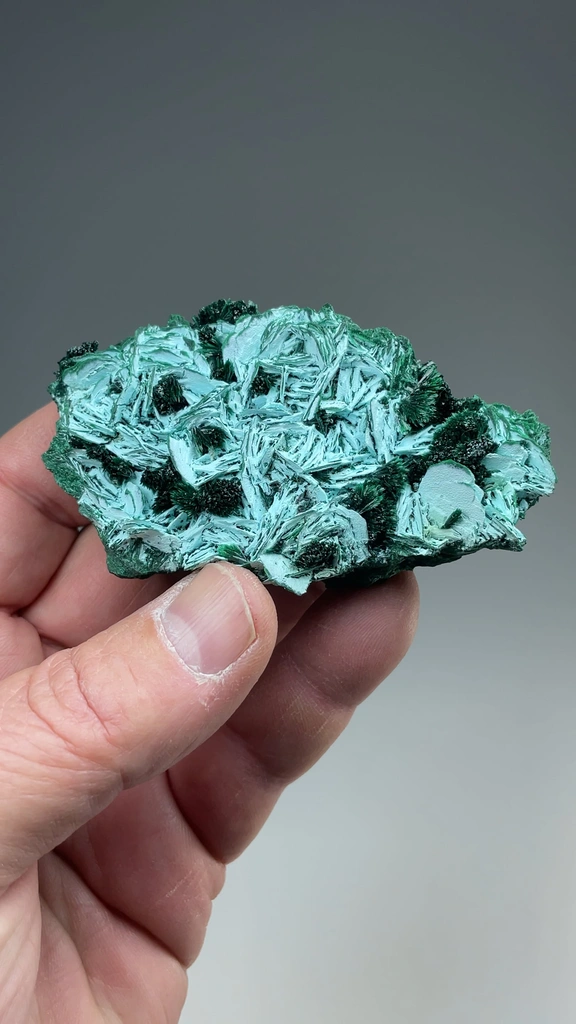
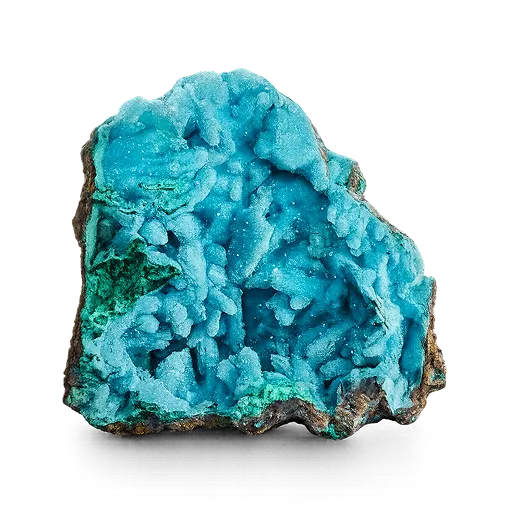
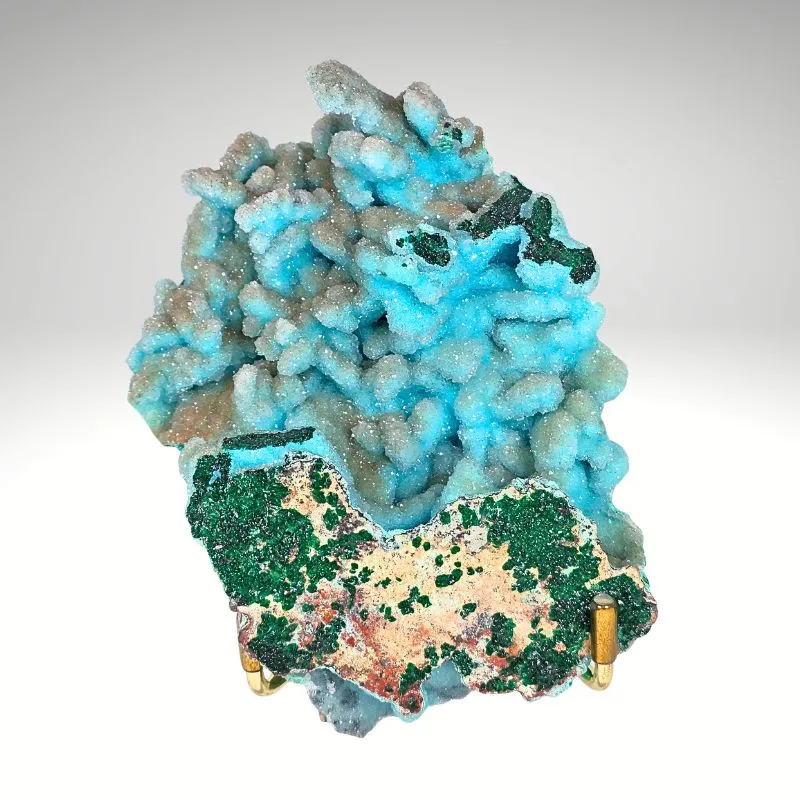
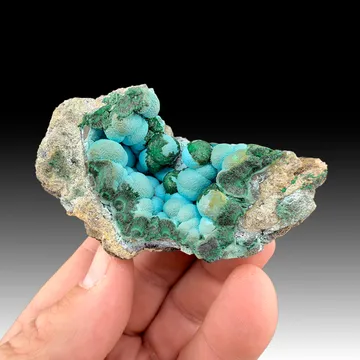
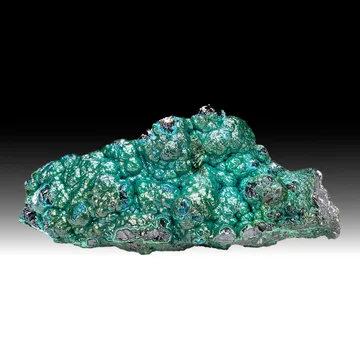
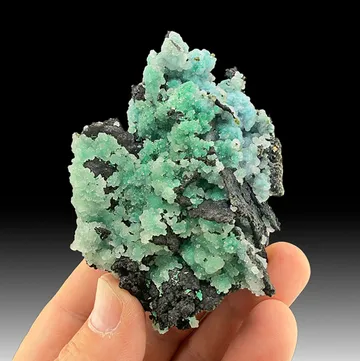
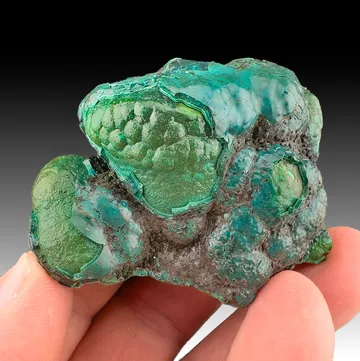
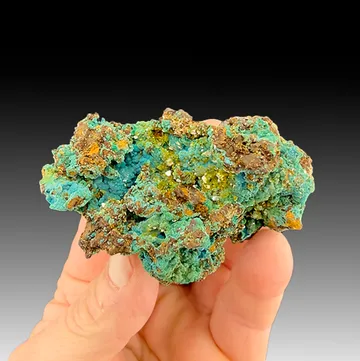
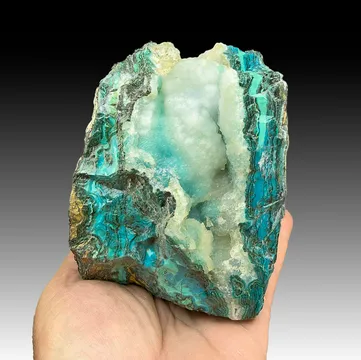
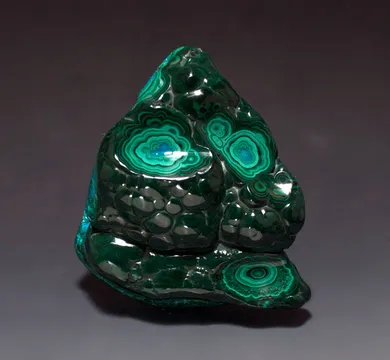
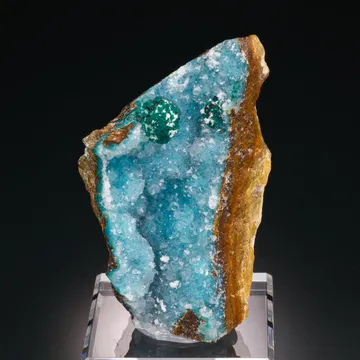
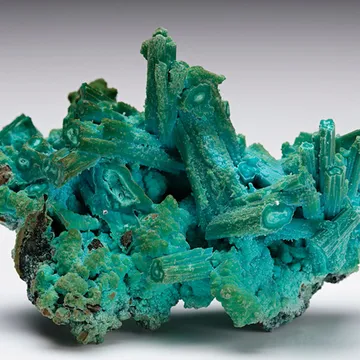
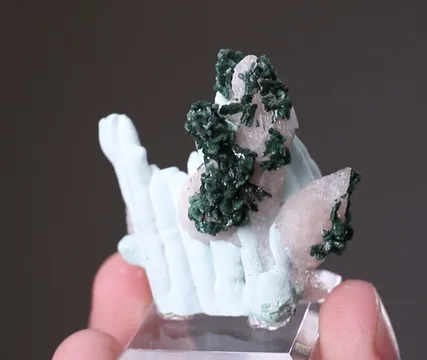
from the Tenke-Fungurume area belongs to one of the most important modern copper-cobalt districts on Earth, and the best collector pieces show that pedigree immediately: saturated sky-blue to turquoise chrysocolla, commonly draped with glittering microcrystalline quartz, set against remnants of malachite-green, dark copper oxides, or pale carbonate matrix. The finest specimens are not simply color pieces; they are paragenetic puzzles, preserving earlier copper-carbonate forms as pseudomorphs and epimorphs. In the best-known modern style, bladed or tabular forms—usually interpreted as azurite at the start of the sequence, though barite or gypsum has also been suggested for some habits—were replaced first by malachite and then partly or wholly by chrysocolla, before a late silica event added a sparkling quartz skin.Tenke-Fungurume area
A collector's guide to Tenke-Fungurume area, DR Congo: its geology, mining history and notable minerals, illustrated with the 242 specimens documented from this locality on EarthWonders.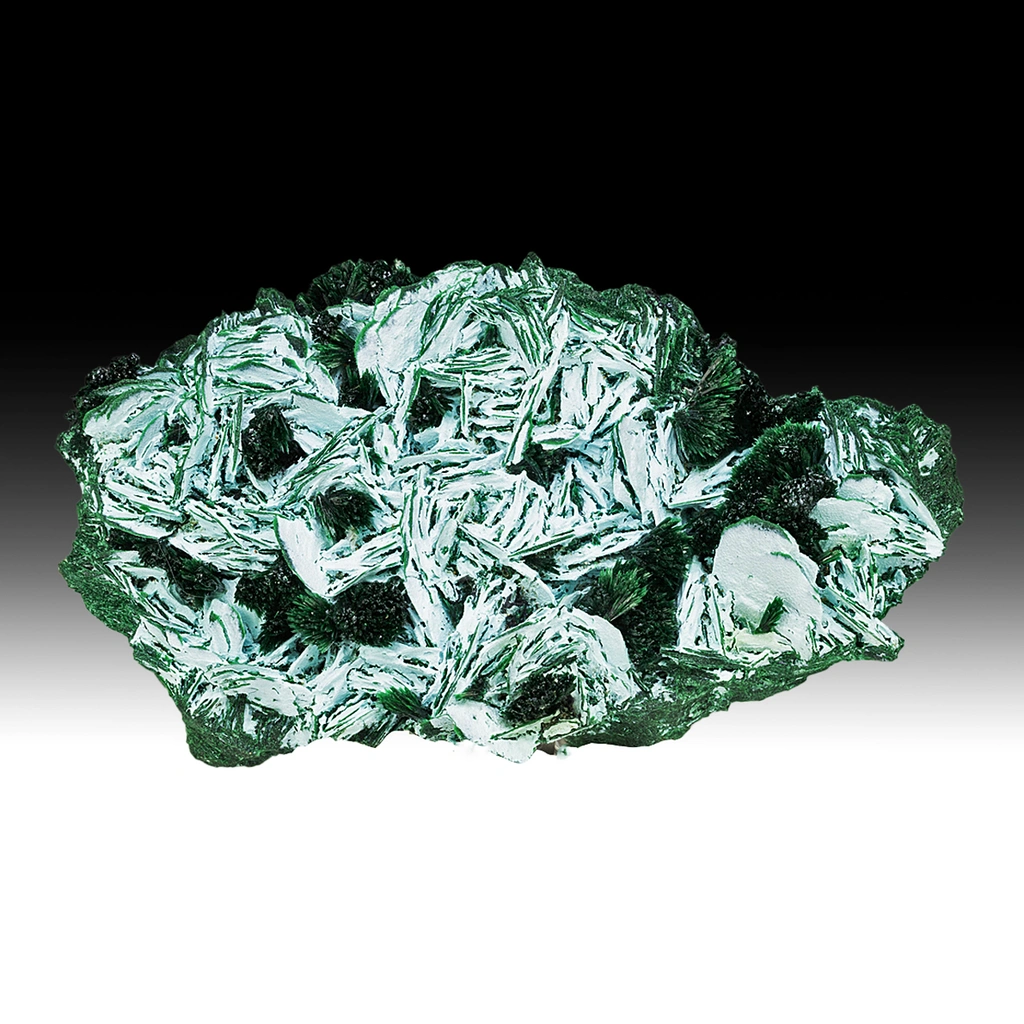
Comments