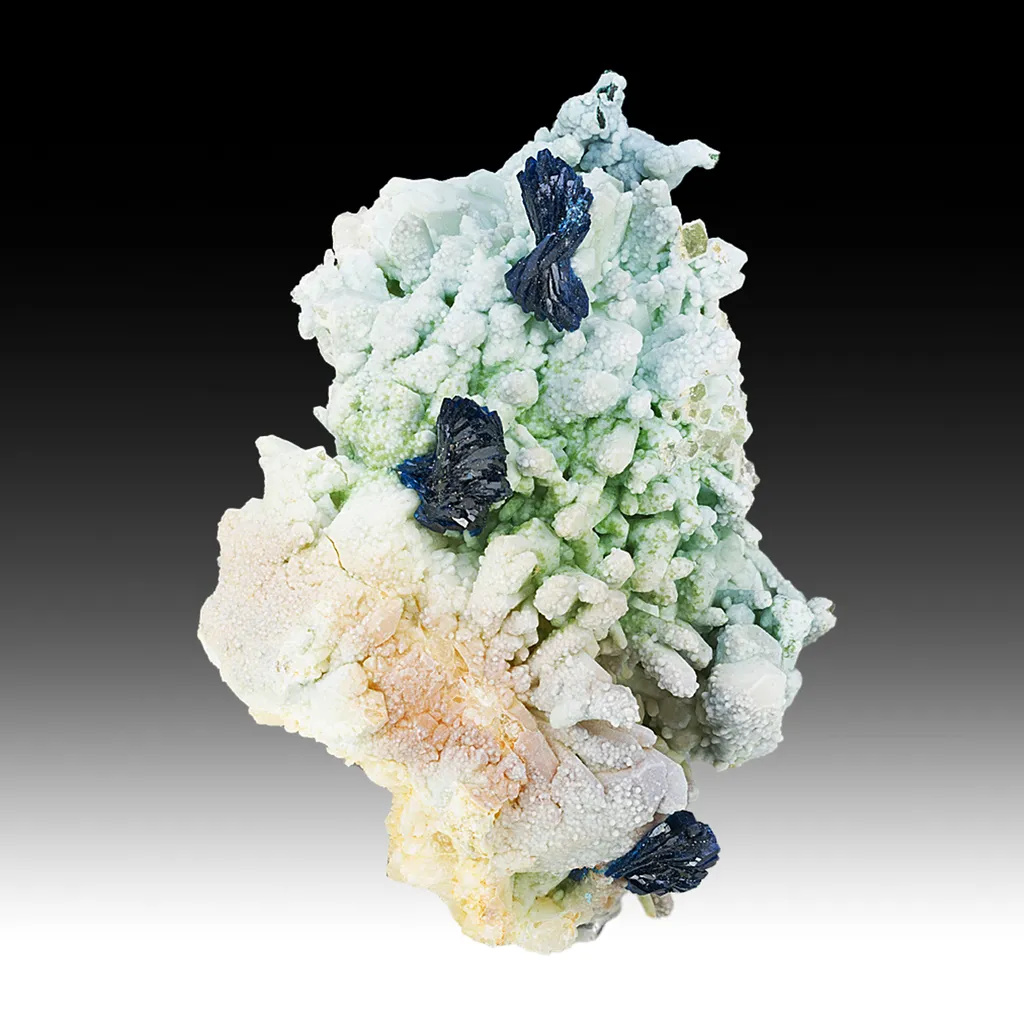
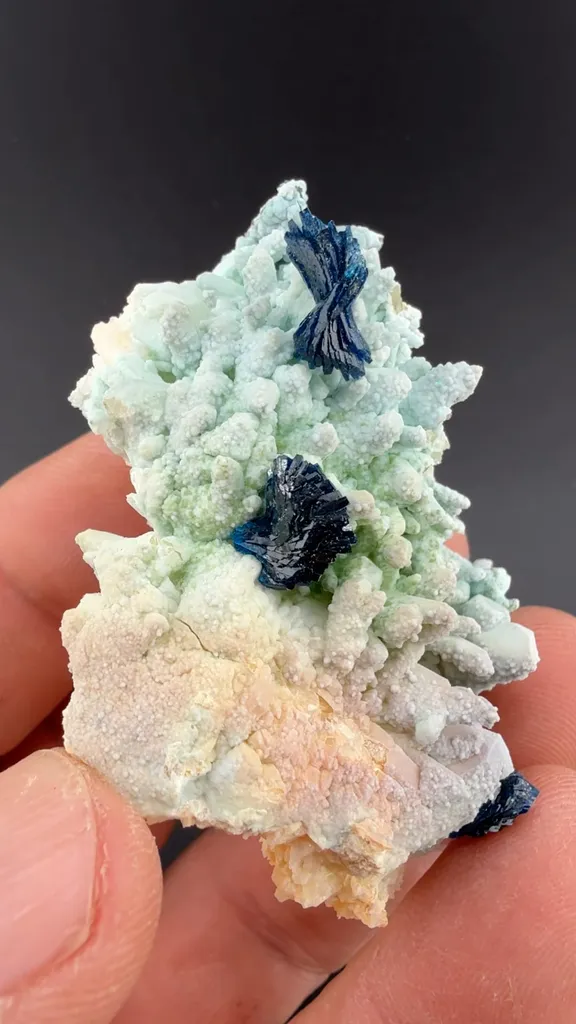
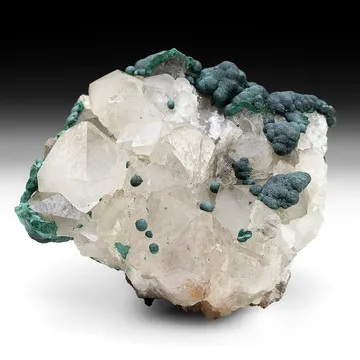
Outstanding blue lustrous curving crystal groupings of veszelyite measuring to 1.0 cm in size across the top of a crystallized quartz matrix, the quartz coated with blue micro hemimorphite crystals. This is in really good condition and is outstanding for the species.
The Dongchuan copper mining district in Kunming, Yunnan, China, has an ancient operational history spanning over 2,000 years, with historical records indicating mining activities dating back to at least the fourth century B.C. Production intensified significantly during the Tang and Song Dynasties and reached its historical peak under the Qing Dynasty in the 17th to 19th centuries, when it served as a vital state copper supplier. Commercial large-scale state operations continued into the modern era before winding down or transitioning in the late 20th century, though artisanal and specialized mineral collecting persists. Geologically, the region consists of sediment-hosted copper, lead, and zinc deposits situated within Proterozoic and Paleozoic strata, primarily featuring dolomites and quartz sandstones cut by structural fault zones. Intense weathering of these primary sulfide and tennantite-bearing ore veins within the upper oxidation zones has created favorable geochemical conditions for rare secondary minerals, notably exceptional specimens of the rare copper-zinc phosphate veszelyite (alongside related species like arsenoveszelyite) forming striking blue crystalline rosettes and aggregates.
Comments