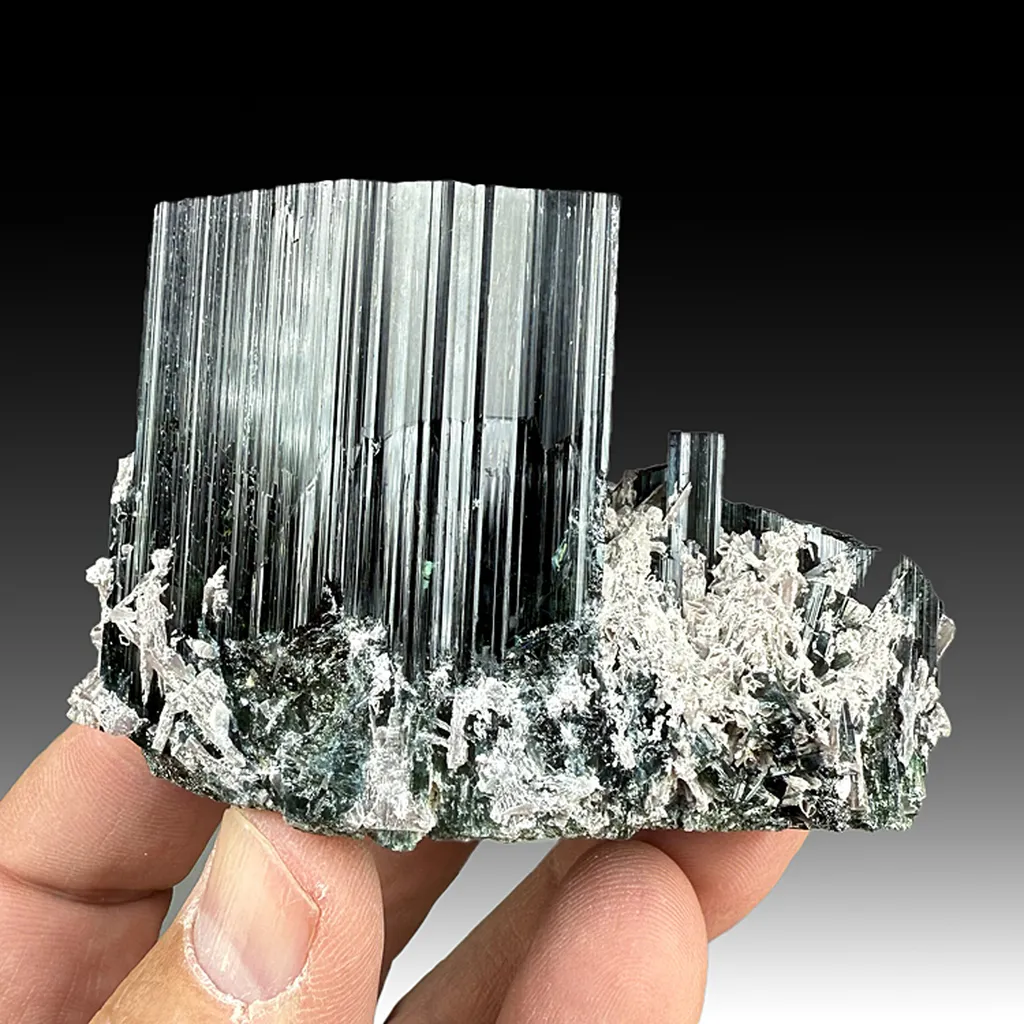
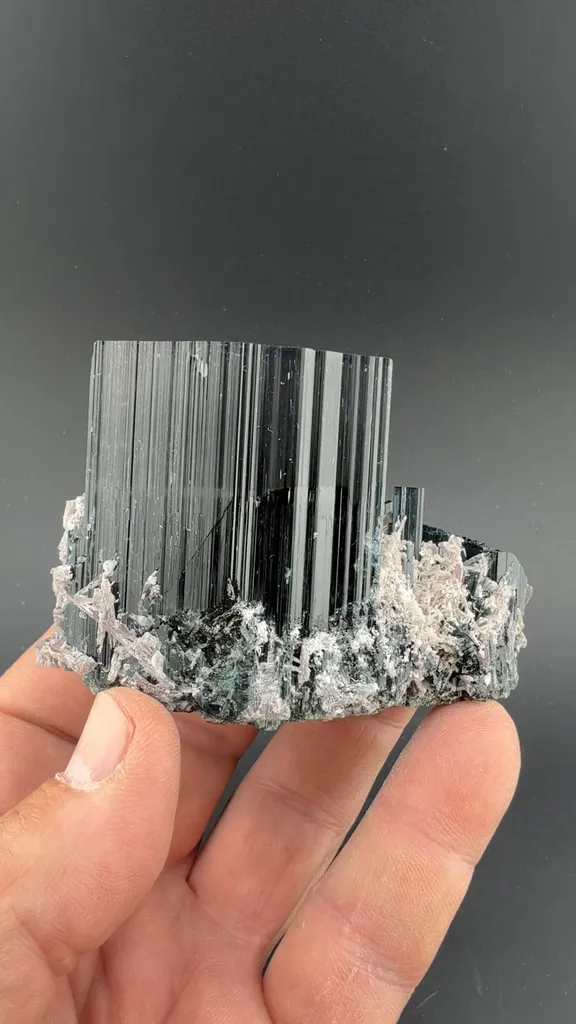
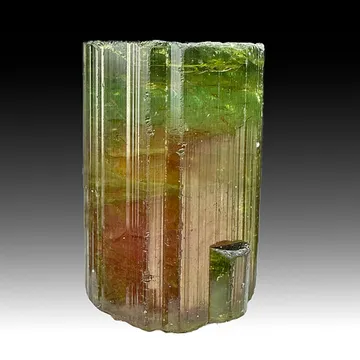
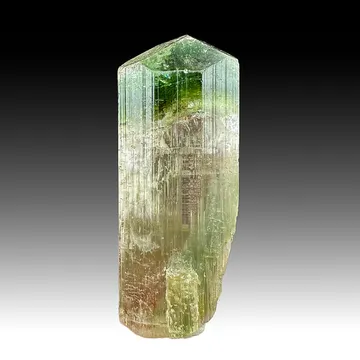
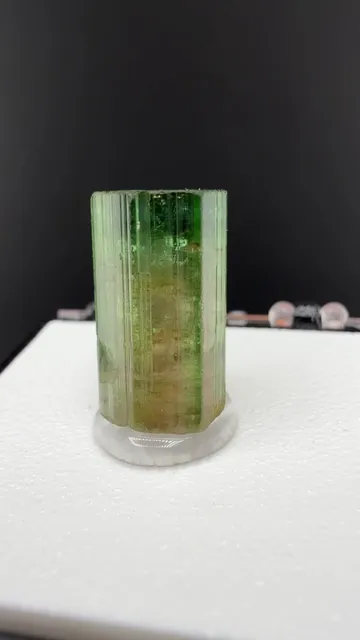
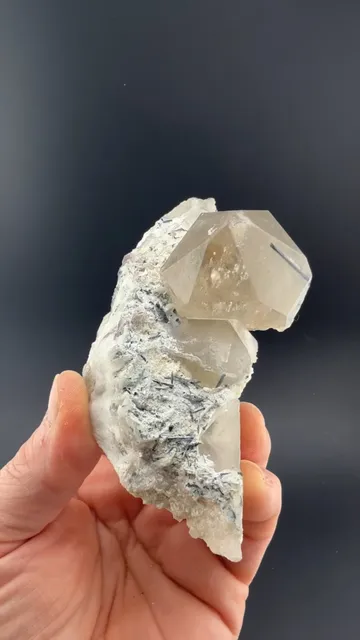
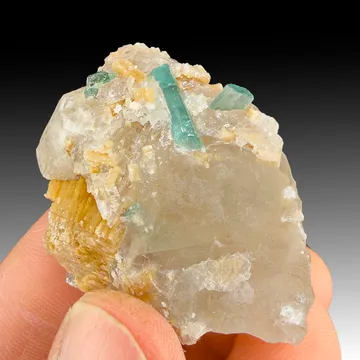
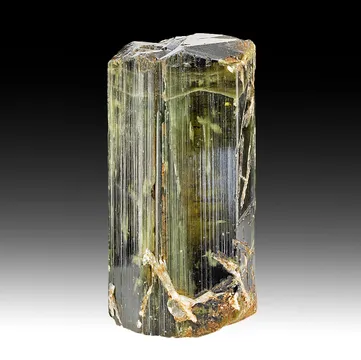
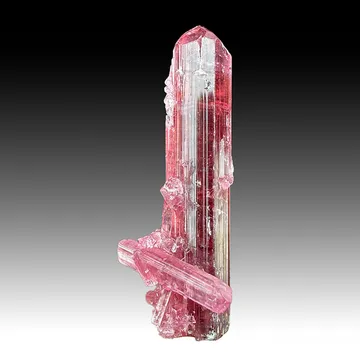
A lustrous deep blue slightly translucent crystal of terminated indicolite measuring 4.5 cm across and tall coming off matrix. This is sharply formed and in great condition.
The Golconda Mine (comprising several related workings like Golconda I, II, and III) located in the Eastern Brazilian Pegmatite Province of Minas Gerais, Brazil, was originally discovered and opened in 1908 primarily for commercial muscovite production. Operations expanded through the mid-20th century, including significant output during World War II, and later transitioned into intermittent or sporadic gem extraction targeting world-class elbaite tourmaline and other rare pocket minerals into the late 20th century. Geologically, the deposit consists of sheet-like granitic pegmatites intruded into regional Precambrian schists and gneisses. These complex pegmatites feature strong internal zoning with highly evolved central quartz-rich cores, kaolinized pocket zones, and specialized hydrothermal environments responsible for precipitating exceptional crystal specimens, including fine green and indicolite blue tourmalines.



 Ships from USA

Comments