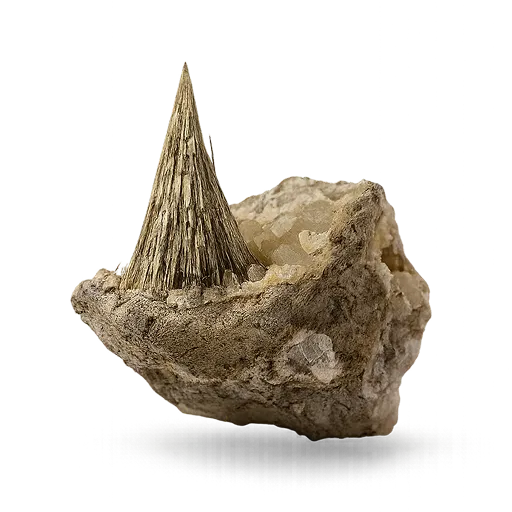
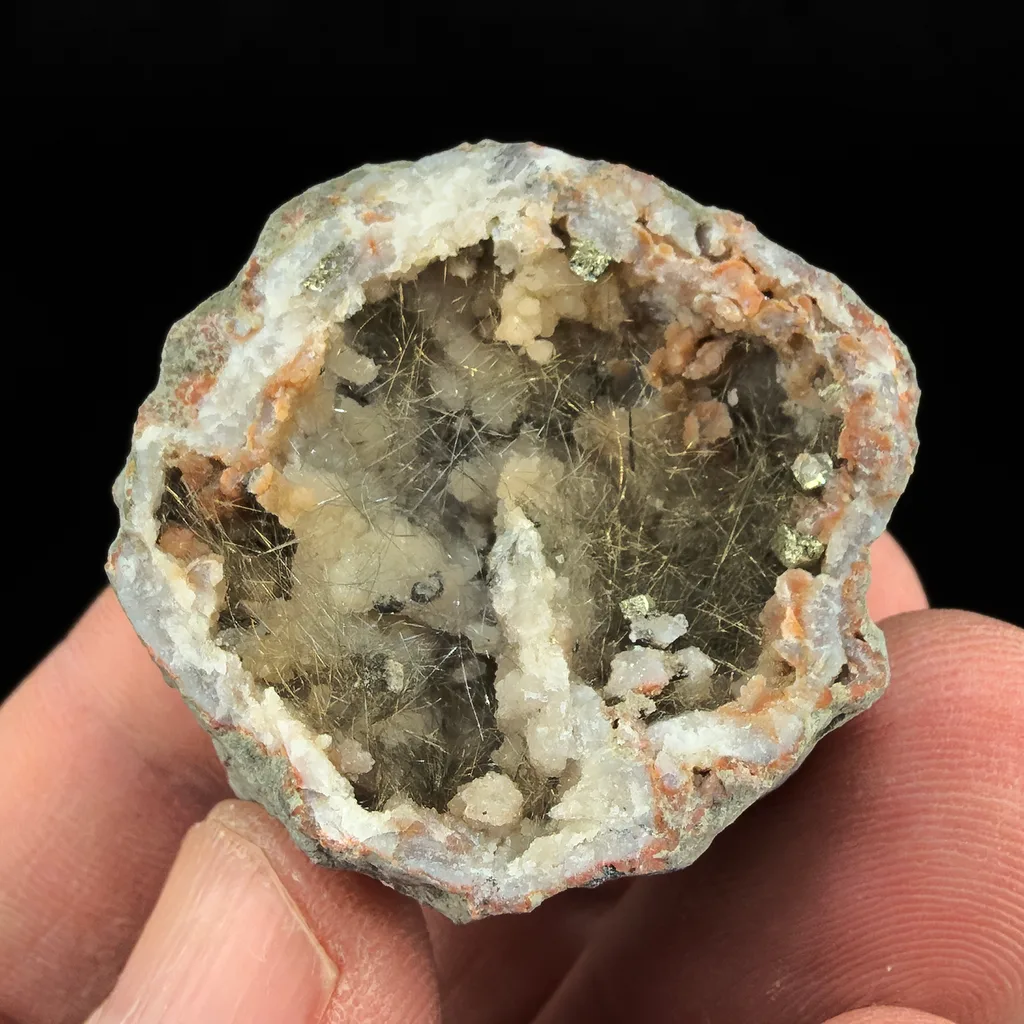
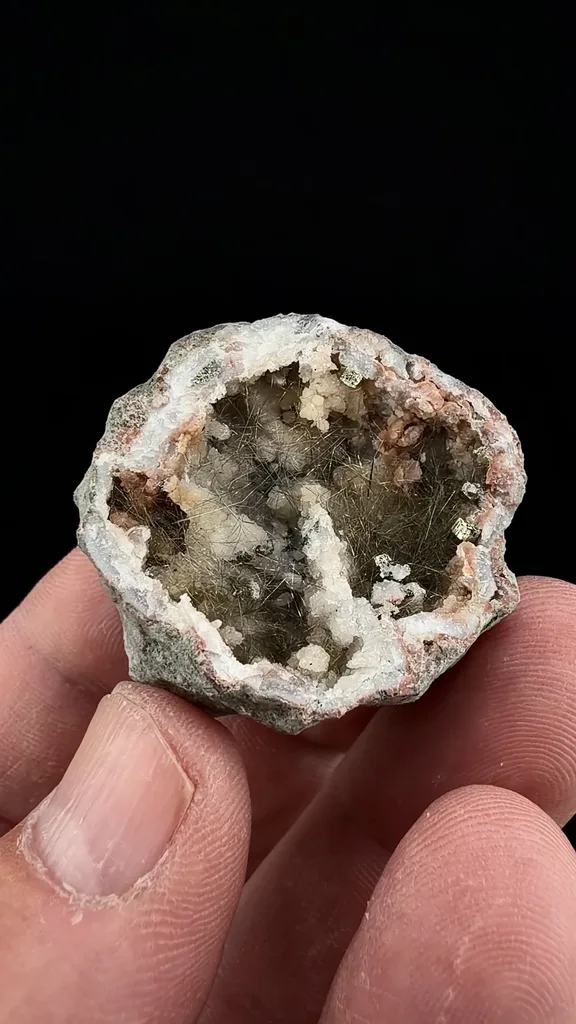
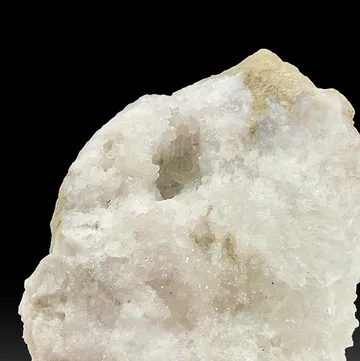
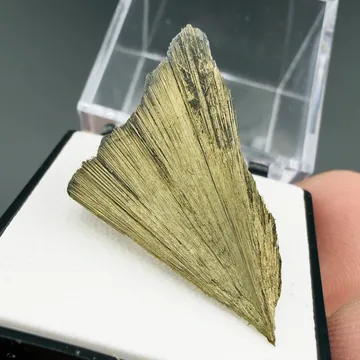
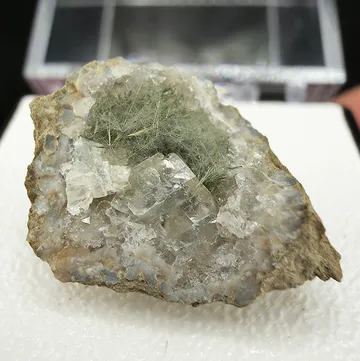
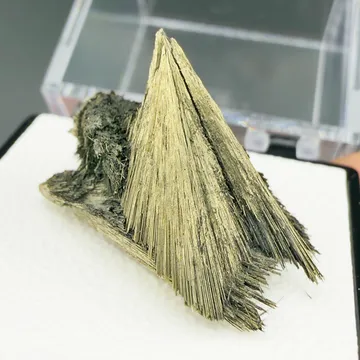
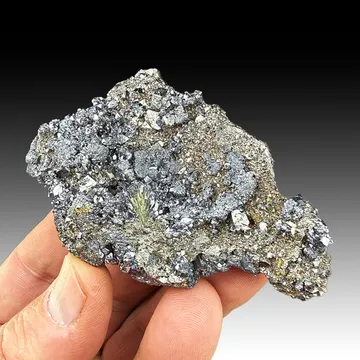
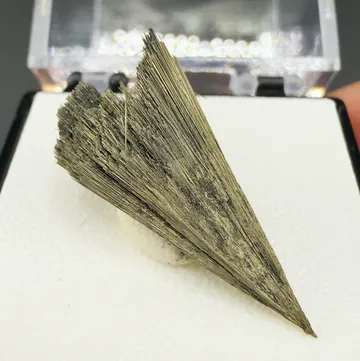
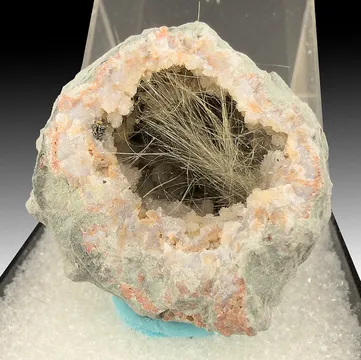
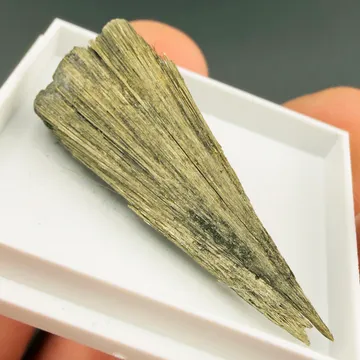
An open geode half lined with crystallized quartz. Quite rich throughout are thin wispy acicular crystals of metallic millerite. Minor pyrite present. The specimen comes with two previous collection labels, one from Ray DeMark, one from John Medici.At Hall's Gap in Lincoln County, Kentucky, delicate brass-yellow, hair-like needles of millerite occur alongside glittering pyrite and sparkling quartz crystals inside hollow geodes and vugs weathered from Mississippian-age Borden Formation siltstones and dolostones. Low-temperature hydrothermal fluids migrating through the sedimentary strata of the Cincinnati Arch deposited these sulfide and silica minerals within cavities originally left by dissolved fossils or evaporite nodules. Exposed during mid-twentieth-century road-cut excavations along U.S. Highway 27, the Hall's Gap roadcut quickly became one of the most famous mineral collecting localities in the eastern United States, prized by collectors for dramatic, intact geodes hosting sprays of fine metallic millerite threads perched on contrasting white quartz and cubic pyrite.
Comments