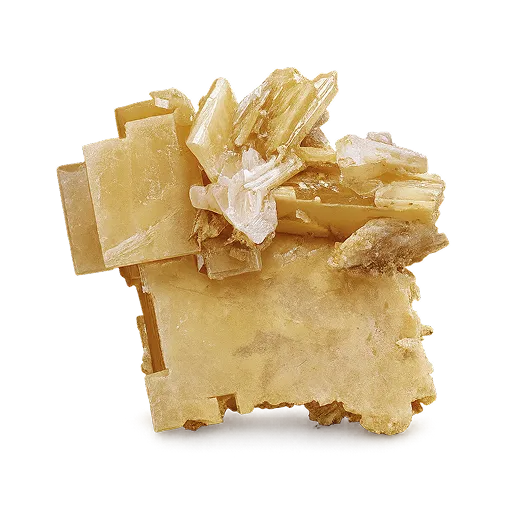
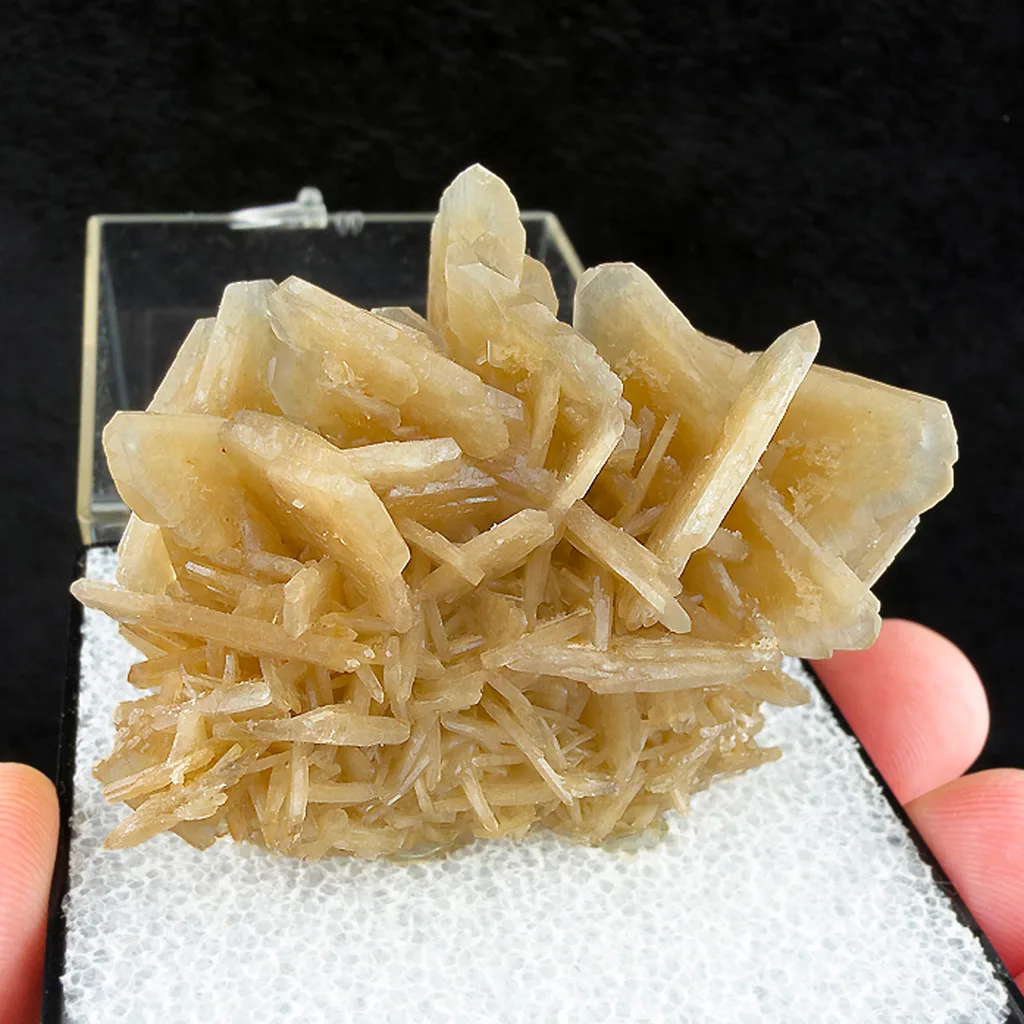
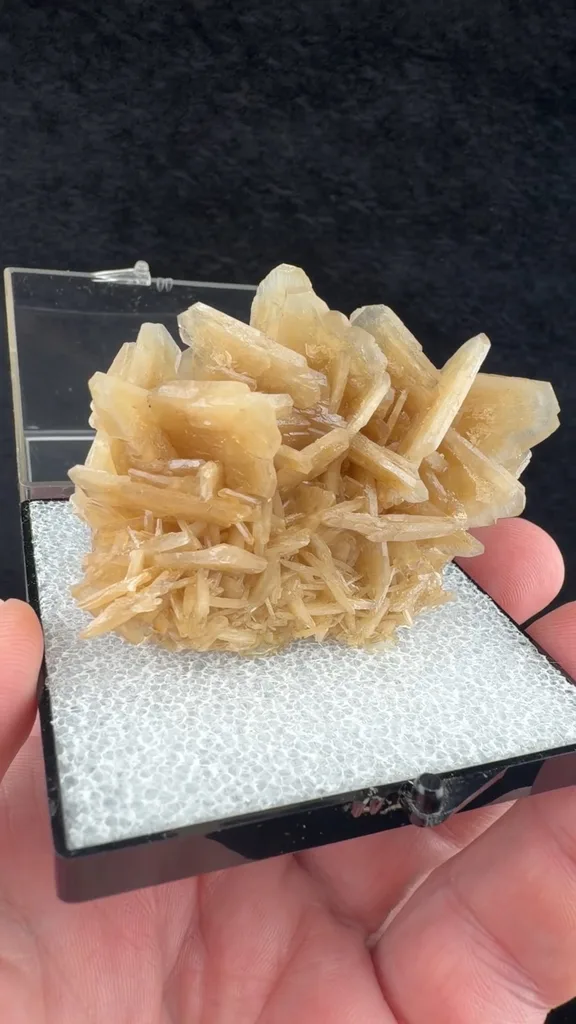
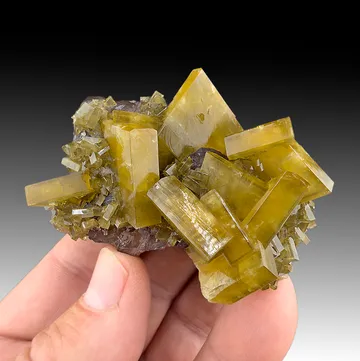
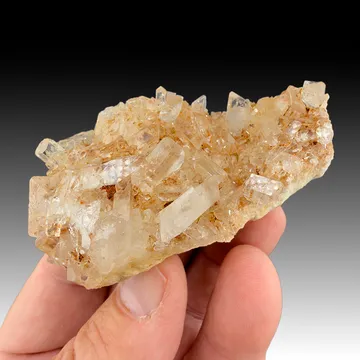
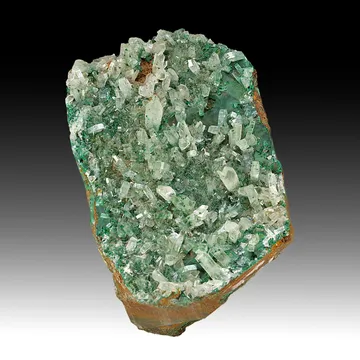
Classic for the species and locality, lustrous bladed crystals of barite measuring to 3.5 cm in size forming a matrix less cluster. Very minimal cleaving present, all of the large prominent crystals are in excellent condition. Brightly fluorescent. From the 1970s. The specimen comes with a previous label from the collection of Ray DeMark.
The Palos Verdes Peninsula in Los Angeles County, California, features prominent marine terraces composed mainly of Miocene sedimentary rocks known as the Monterey Formation. Coastal uplift and erosion have exposed these organic-rich shale and siltstone beds along sea cliffs like White Point, where thermal and hydrothermal activity historically altered the marine strata. During the nineteenth and early twentieth centuries, small-scale mining and quarrying operations worked parts of the peninsula for diatomaceous earth and decorative stone, while rockhounds frequently visited the coastal beaches and bluffs to search for mineralized veins. Barite occurs notably within these sedimentary layers as tabular crystals, rosette-like clusters, and dense nodules inside fractures and Septarian concretions. Collecting along the bluffs today is heavily regulated due to coastal erosion, landslide hazards, and nature preserve designations, but historic specimens of pale yellow to white barite from the area remain well known in California mineralogy collections.


 Ships from USA
Comments