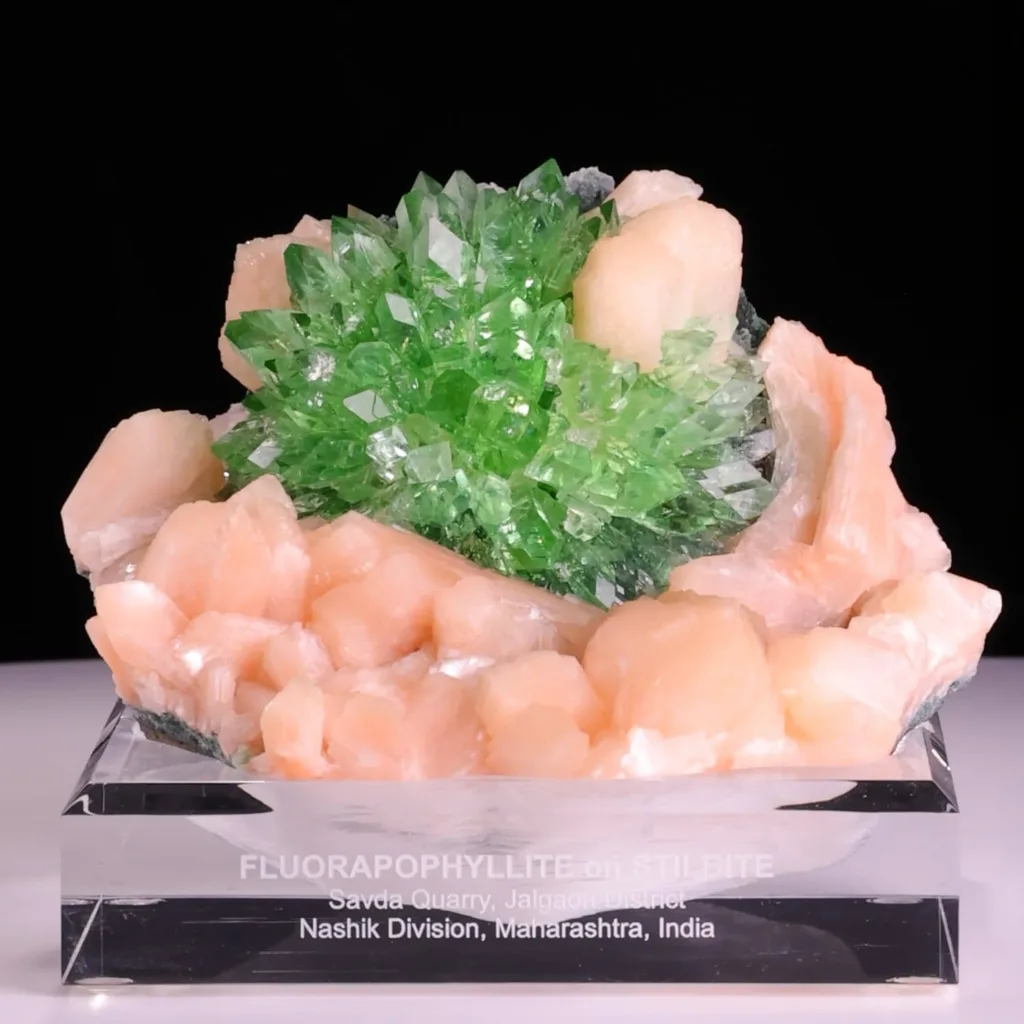
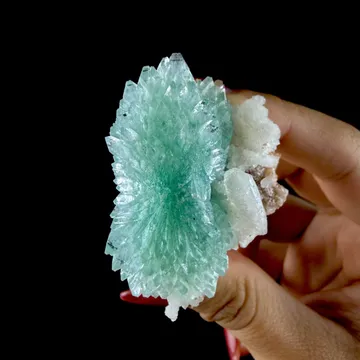
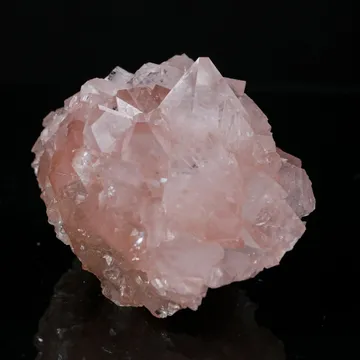
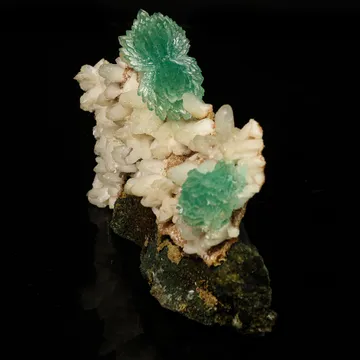
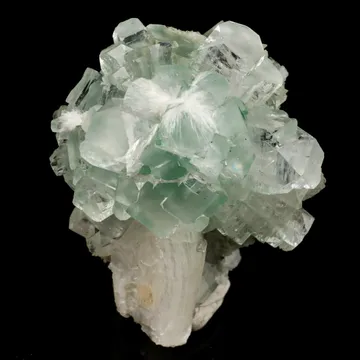
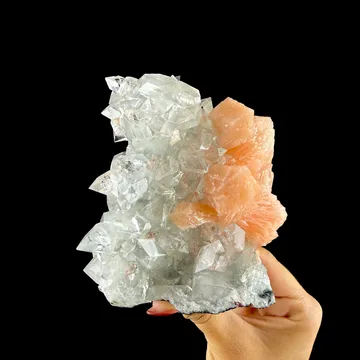
This is an iconic example of a classic habit for apophyllite, but rarely seen in such size or quality from the mineral deposits of the Deccan Plateau in India. The Jalgaon District of Maharashtra State is also the location, inarguably, for best-of-species examples. As a young collector, I first fell in love with colorful minerals through the chance to buy a special style of mint green, gemmy apophyllite (for $500, in 1985). India has produced green apophyllite ever since, but there are levels, and then there are Levels. Apophyllite may often be one of the more affordable species for collectors on a budget, but the best of the best are valued similarly to top tourmaline and even gold. Truly great pieces—those combining sparkling glassy luster, color, impact, and a stunning geometric shape—remain so rare that we see fewer than one world-class example per year among thousands of lesser specimens. I have spent decades trying to buy the best of these, and I've been lucky enough to hold several acknowledged top specimens, both large and small, in world-class collections and museums. In person, such specimens are among the most impactful mineral specimens to hold. Even after decades of searching, they still give me a feeling in my gut that surprises me. This magnificent large cluster is nicely balanced in matrix, just under 6 inches across, and extremely three dimensional. (Sidenote: technically the mineral scientists renamed this species three times since my childhood and we are supposed to call it fluorapophyllite (mid-2000s–2008), apophyllite-(KF) (2008–13) or fluorapophyllite-(K) at this time.)
Comments