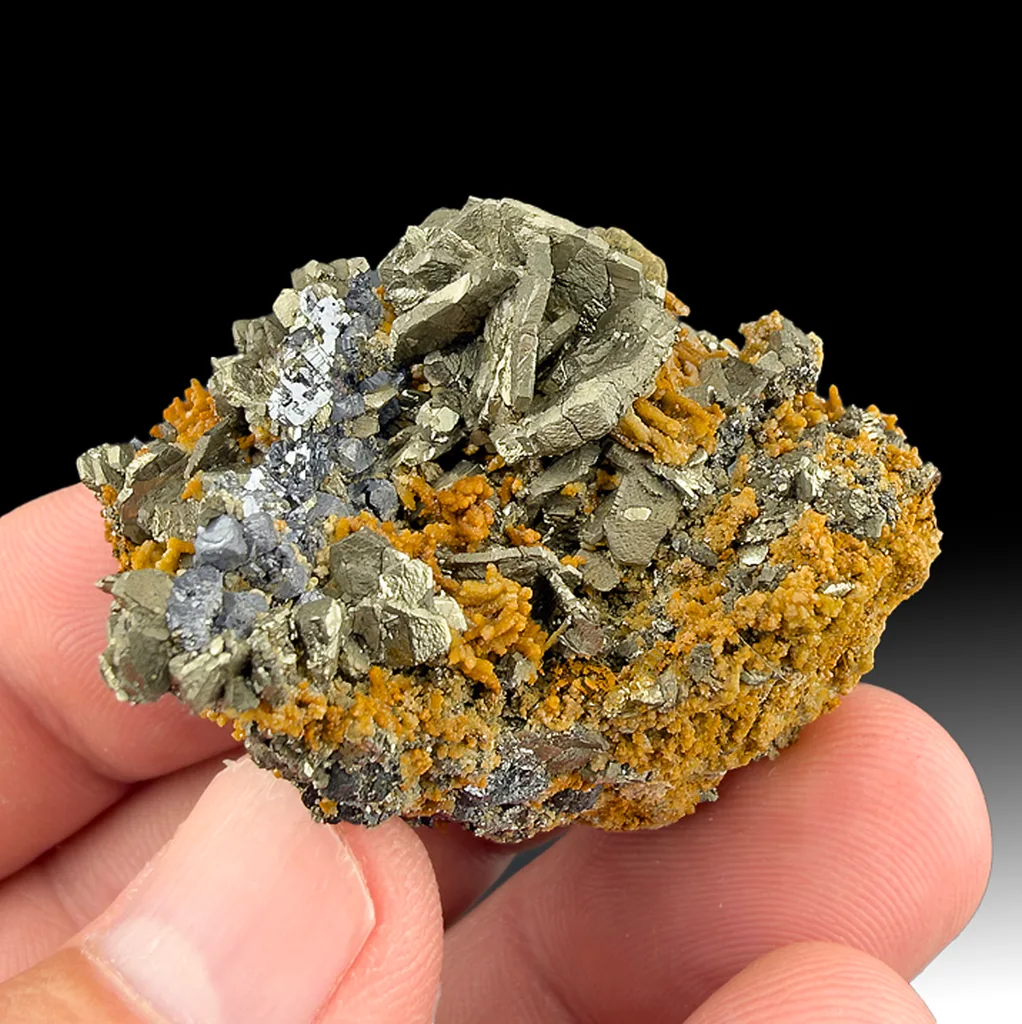
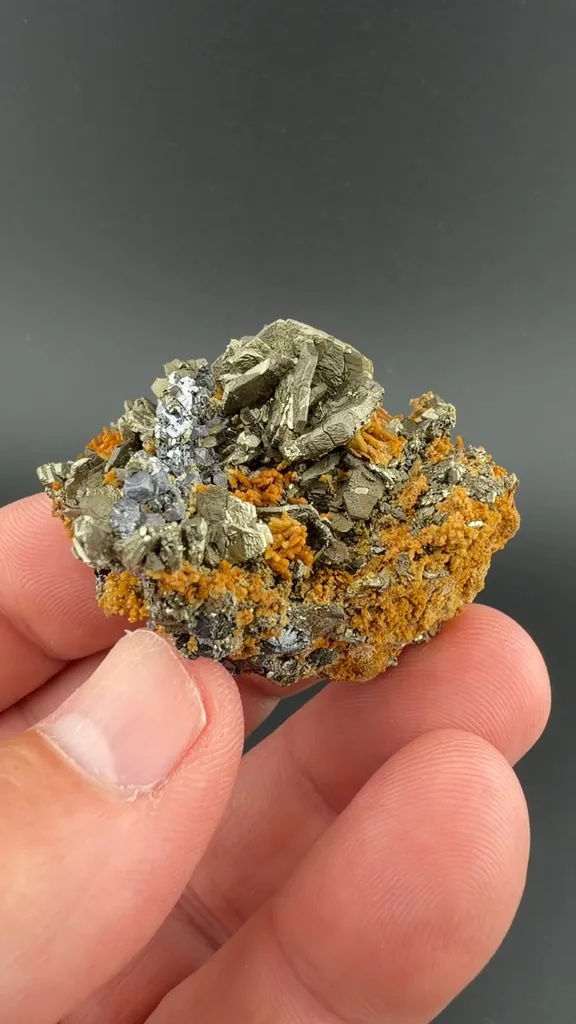
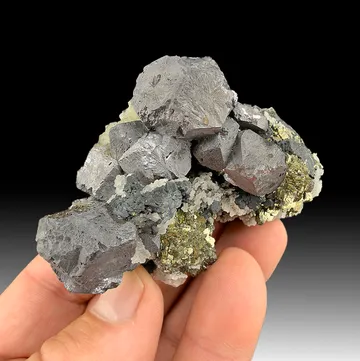
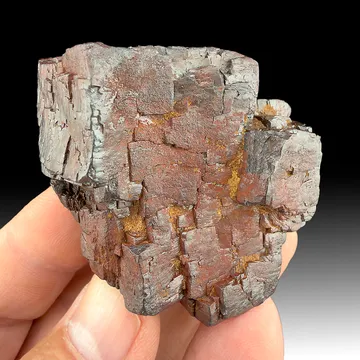
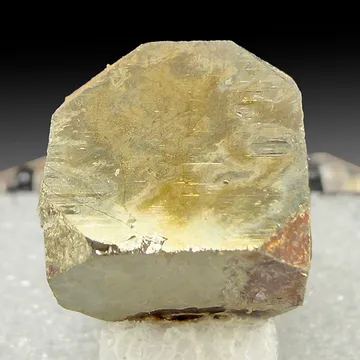
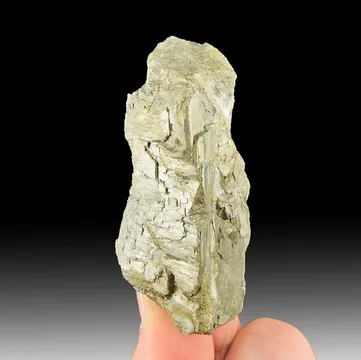
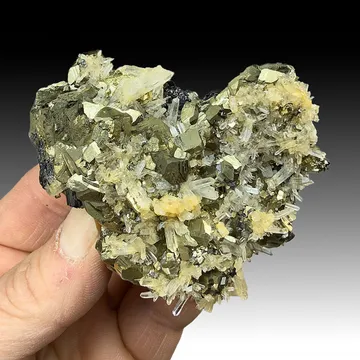
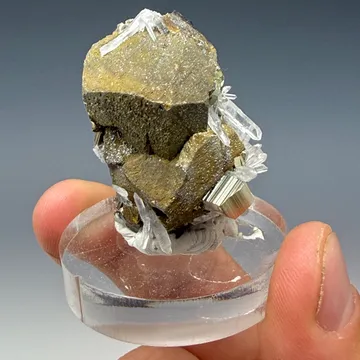
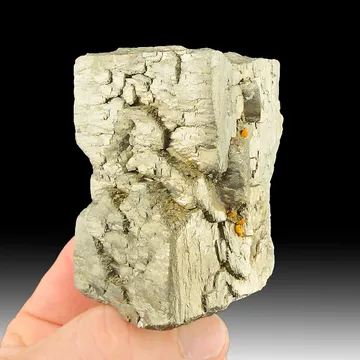
Sharp pseudo-hexagonal platy crystals of what were once pyrrhotite measuring to 0.7 cm in size standing up nicely from a galena and siderite crystal matrix. These are replaced by golden micro crystalline pyrite. In great condition.The El Potosi Mine, located in the historic Santa Eulalia District of Chihuahua, Mexico, is hosted within an extensive sequence of Cretaceous limestones that were intruded by Tertiary igneous rocks. This geological setting facilitated the formation of massive replacement ore bodies, including large mantos and vertical chimneys rich in lead, zinc, and silver. Discovered during the Spanish colonial era, the district underwent intensive large-scale commercial mining from the late 19th century onward. Beyond its industrial production, the mine became globally famous among mineral collectors for yielding world-class, pristine specimens of secondary minerals such as smithsonite, hemimorphite, gypsum, and creedite from its deep oxidized zones.Pyrite after pyrrhotite is a classic pseudomorph where iron disulfide replaces iron sulfide while preserving the original crystal morphology of the precursor mineral. Geologically, these transformations occur within hydrothermal veins, metamorphic rocks, or massive sulfide deposits when changing chemical conditions, such as rising sulfur activity or oxidation, destabilize pyrrhotite. Mineralogically, the resulting specimens typically retain the distinctive hexagonal or tabular crystal habits characteristic of pyrrhotite, while acquiring the brassy yellow metallic luster and cubic crystal system attributes of pyrite.


 Ships from USA
Comments