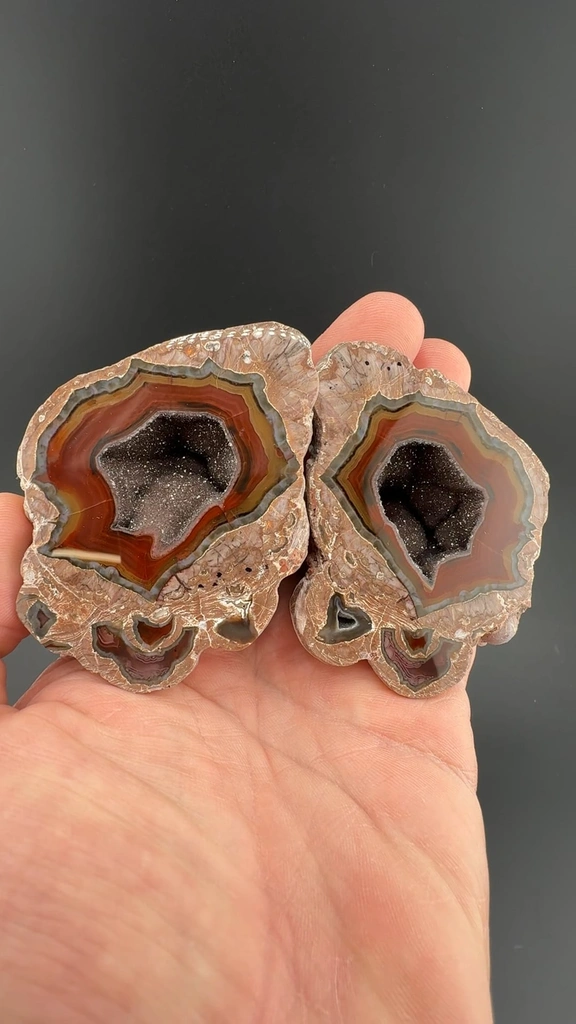
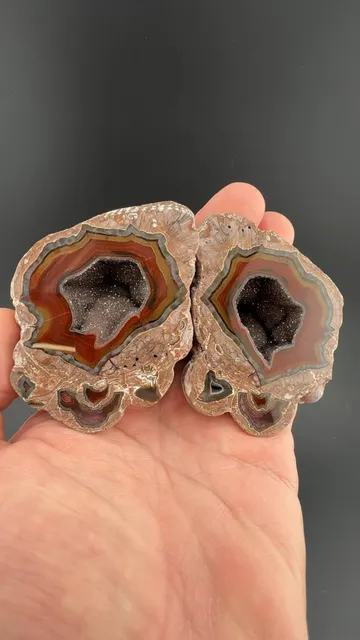
A matching pair of cut and polished agate specimens, this the type often called a thunderegg agate. There is an open cavity lined with crystallized sparkling quartz making this quite pretty. The specimen comes with a previous label from the collection of Ray DeMark.The geology of the Baker Agate Field, also known as the Baker Egg Mine in Luna County, New Mexico, is defined by tertiary volcanic activity where rich silica-bearing solutions filled cavities within rhyolitic lava flows and ash-flow tuffs. Discovered in the 1950s and heavily worked by local prospectors, the site became world-famous among rockhounds for producing unique thundereggs. Thunderegg agate nodules form as rough, spheroidal rock structures created when gas pockets in viscous volcanic glass or lava are later filled by hydrothermal fluids, depositing concentric layers of microcrystalline quartz. When cut and polished, these specific regional specimens reveal striking multicolored agate fortification lines, vibrant pink or white opal, and crystal-lined central cavities that make them highly prized by collectors.

Comments