$350Median
181Sold (12 mo)
$250Last sale
Molybdenum is not a common metal; in nature, it is only found in oxidized states and as mineral phases. Although wulfenite is not the primary commercial source of Mo, it is among the most attractive, diverse, and delicate specimens for collectors.
Secondary minerals often display more vivid colors than their primary counterparts. Enhanced oxidation, whether by circulating fluids or bacterial activity, promotes the formation of new chemical compounds and concentrates certain elements, yielding the rich variety of specimens we see today. Wulfenite typically forms in the weathered zones of porphyry Mo–epithermal Pb–Zn–Ag–Au deposits. More commonly, Mo and Pb (with some Zn) are leached from a primary source by oxidized meteoric water and then reprecipitate upon encountering reduced hosts such as shale or limestone. At Los Lamentos, wulfenite is hosted in limestone veins; the presence of white, recrystallized calcite attests to fluid passage through the rock. Although abundant limonite is also observed in this area, the precise petrogenetic relationship remains unclear. If the original iron phases were Fe²⁺ (for example, pyrite), then oxidizing mineralizing fluids would have converted Fe²⁺ to Fe³⁺ during wulfenite precipitation. Alternatively, if iron was already in an Fe³⁺ state prior to wulfenite formation, this might point to a preceding oxidizing hydrothermal event, possibly related to, but not necessarily concurrent with, the calcite recrystallization. In this case, oxidized iron would help maintain a locally reduced environment that favors wulfenite deposition.
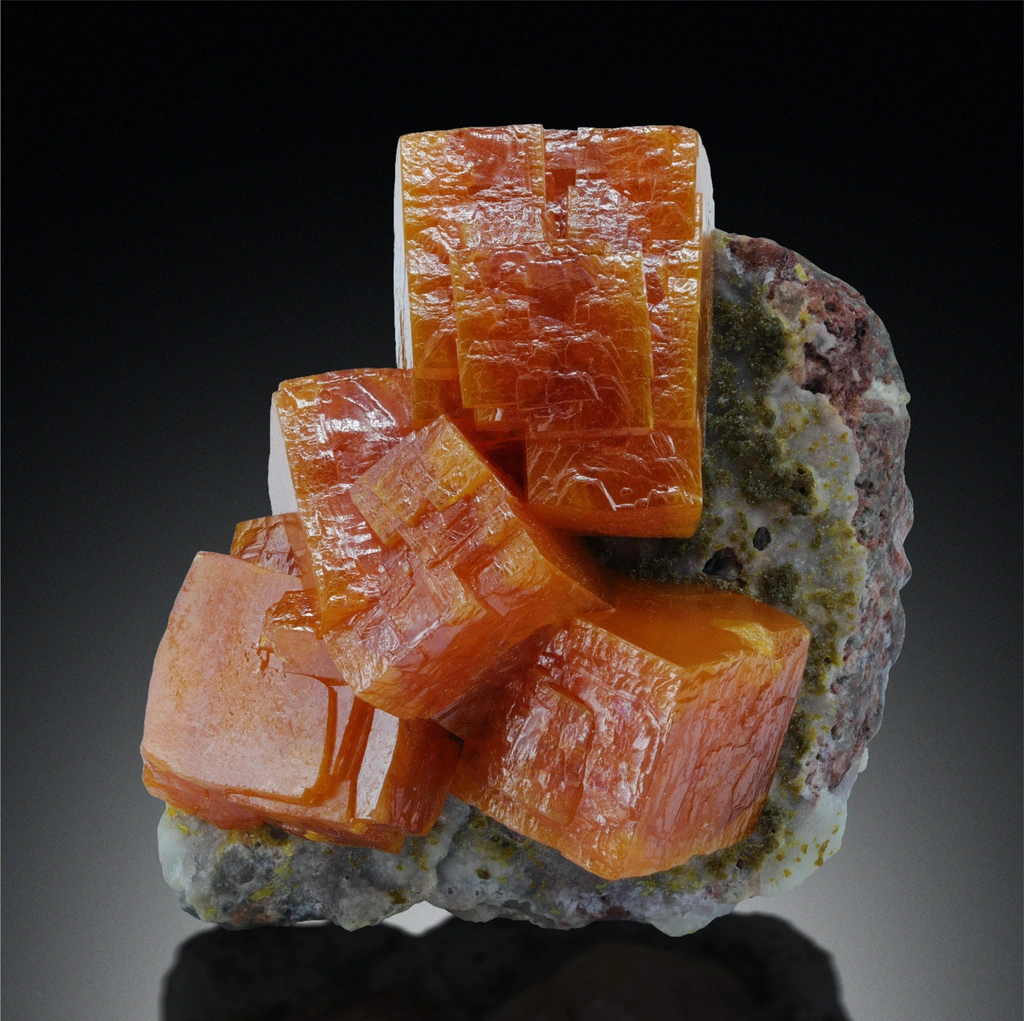
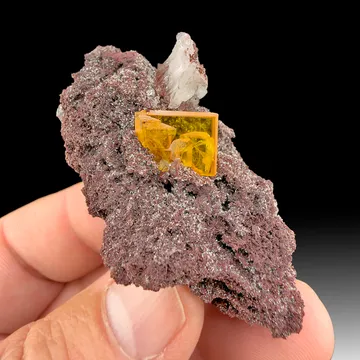
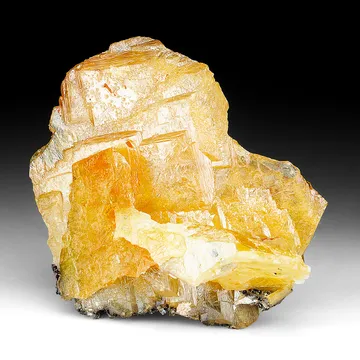
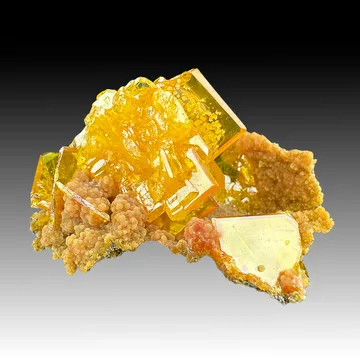
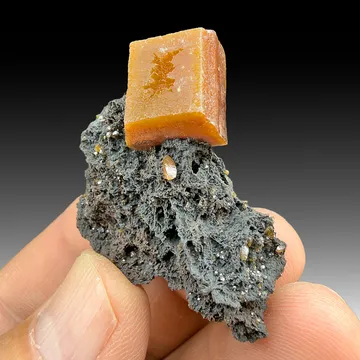
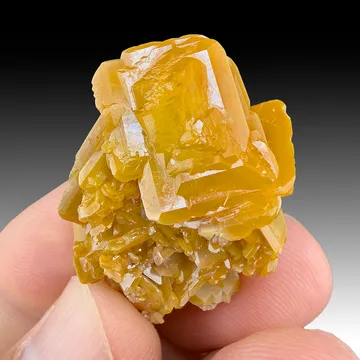
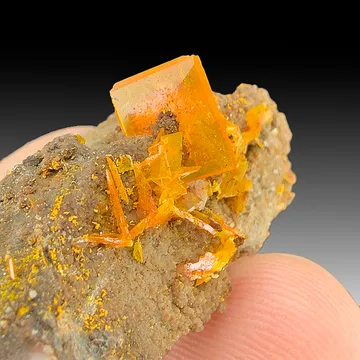
This particular specimen exhibits unusually thick tabular crystals rather than the more common, fragile thin blades. The highly lustrous, honey-colored wulfenite contrasts sharply with its matrix, making it eye-catching.
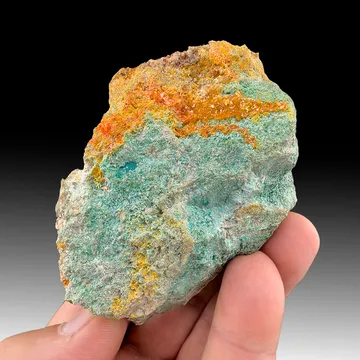
Wulfenite on Calcite, 3.7cm, Erupción Mine, Los Lamentos Mountains, Ahumada Municipality, Chihuahua, Mexic.
Jingnan (Tom) Zhang Coll & Photo
Comments