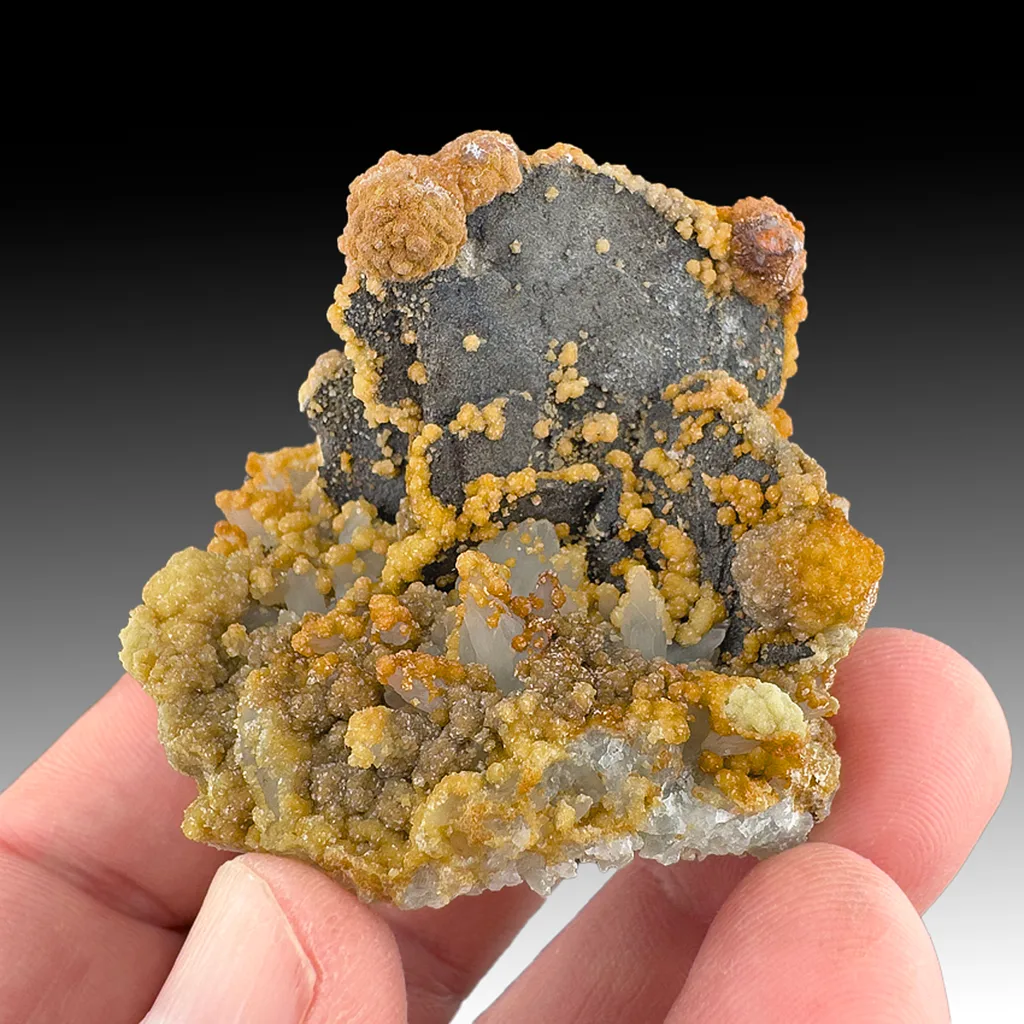
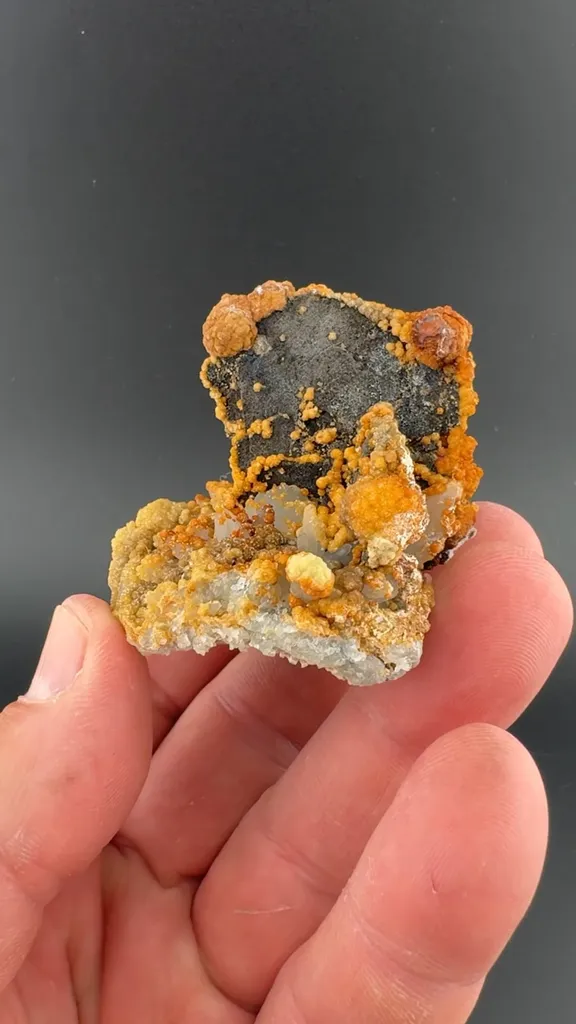
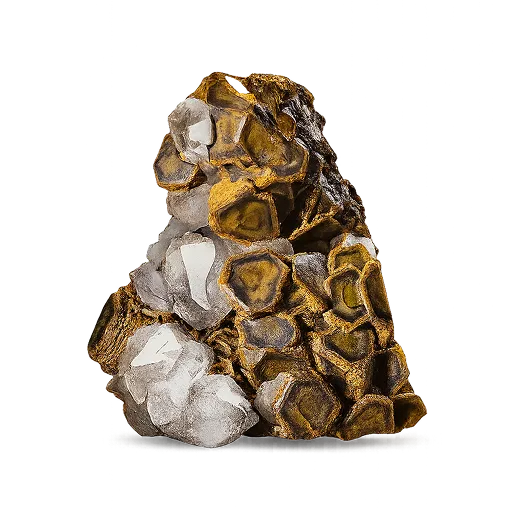
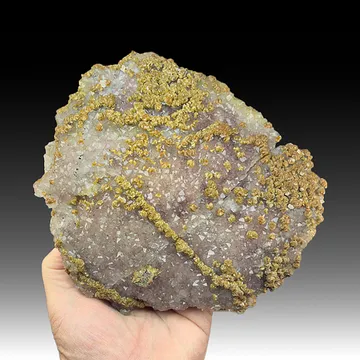
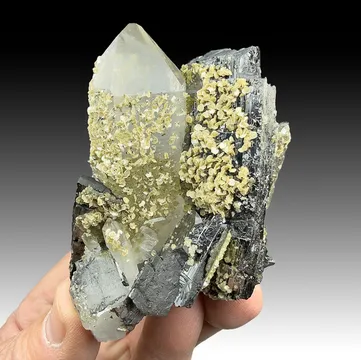
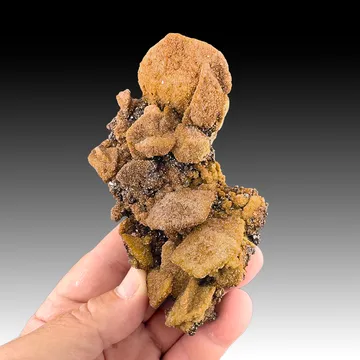
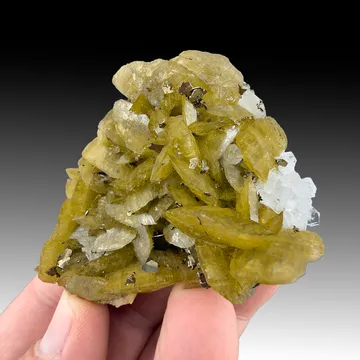
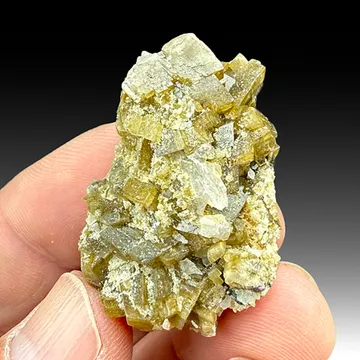
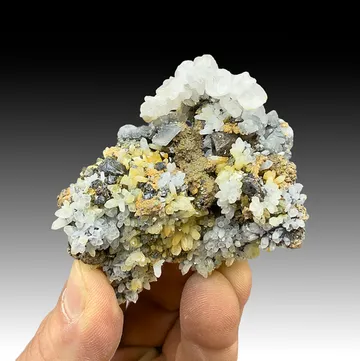
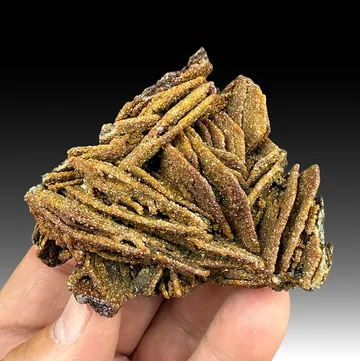
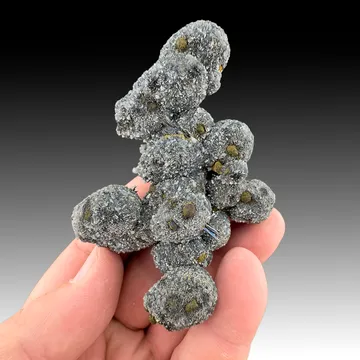
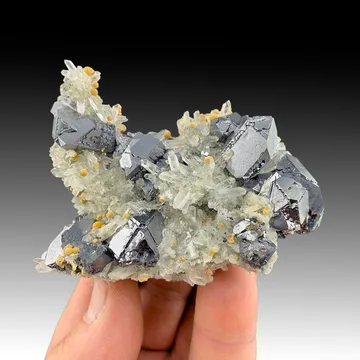
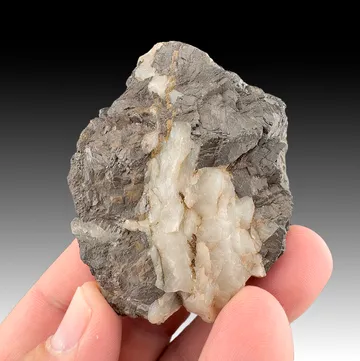
Thin platy pseudo-hexagonal crystals of pyrrhotite measuring to 3.5 cm in size, these now replaced by crystallized pyrite and coming off of a crystallized quartz matrix with siderite. In great condition all around.
The Turt Mine, located in the Satu Mare County of northwestern Romania within the Oas Mountains, is a historic mining district with roots extending back several centuries, with structured commercial and state operations expanding during the Austro-Hungarian period and continuing through the 20th century before closing. Geologically, the deposit is associated with Neogene calc-alkaline volcanic activity, consisting of epithermal veins hosted in volcanic and sedimentary rocks formed during intense hydrothermal mineralization. Mineralogically, the district is celebrated for its rich base metal assemblages, producing exceptional specimens of siderite forming replacements after calcite, pyrite, galena, etc.
Pyrite after pyrrhotite is a classic pseudomorph where iron disulfide replaces iron sulfide while preserving the original crystal morphology of the precursor mineral. Geologically, these transformations occur within hydrothermal veins, metamorphic rocks, or massive sulfide deposits when changing chemical conditions, such as rising sulfur activity or oxidation, destabilize pyrrhotite. Mineralogically, the resulting specimens typically retain the distinctive hexagonal or tabular crystal habits characteristic of pyrrhotite, while acquiring the brassy yellow metallic luster and cubic crystal system attributes of pyrite.
Comments