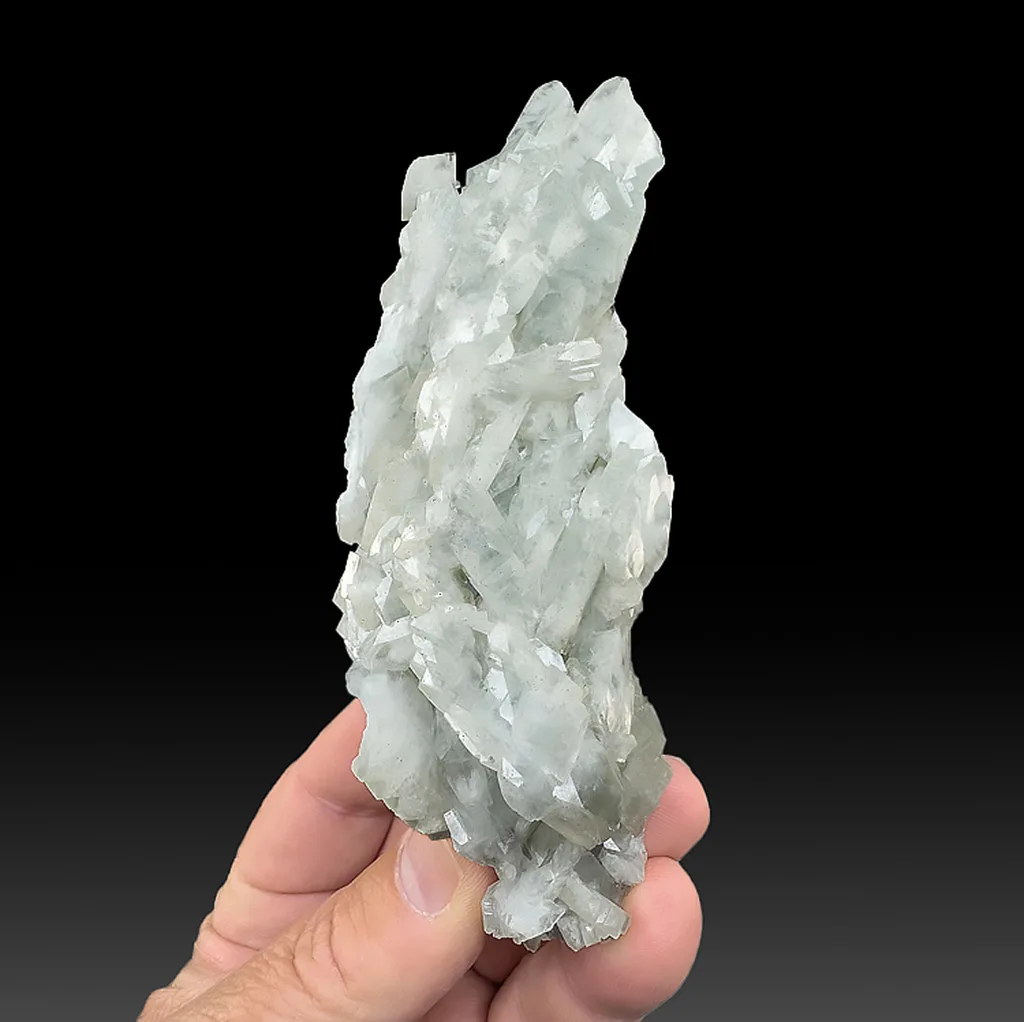
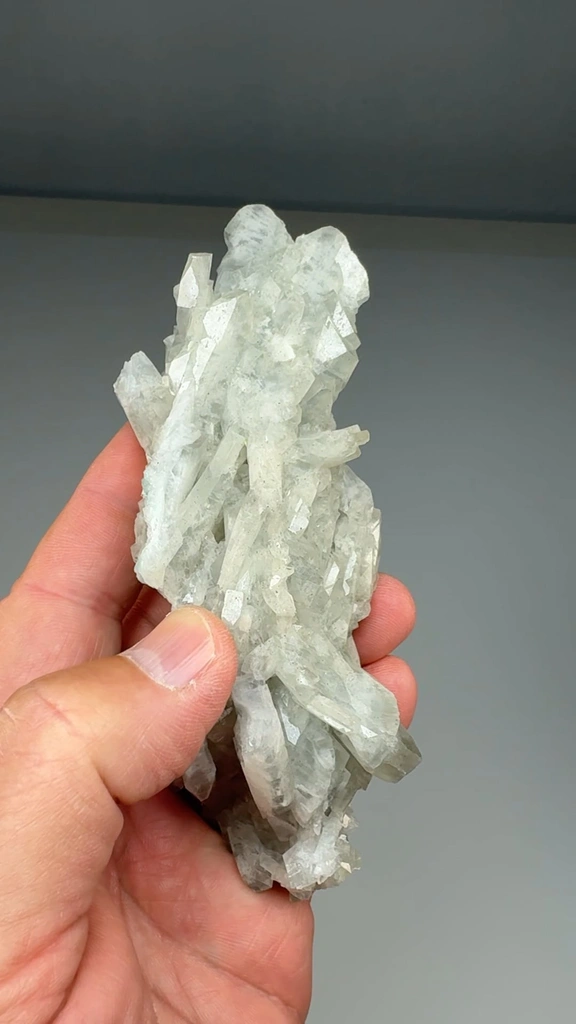
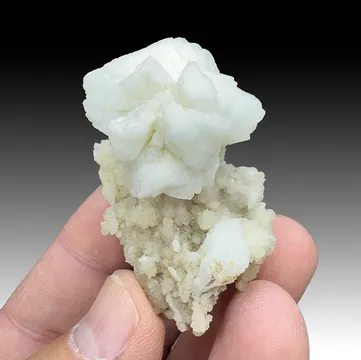
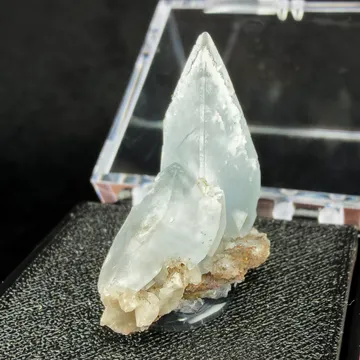
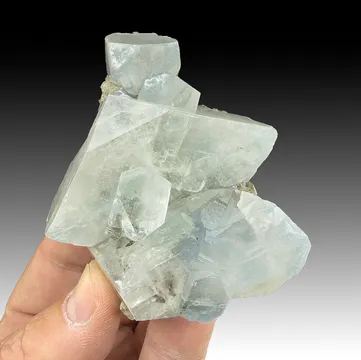
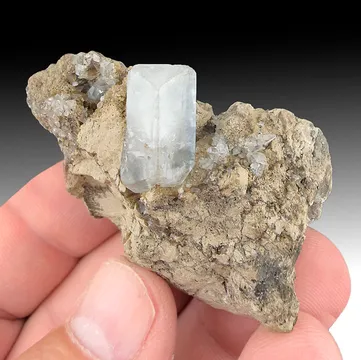
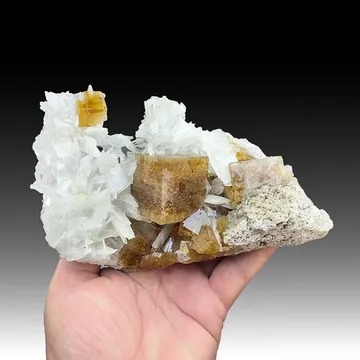
Fine grouping of pale blue lustrous bladed Celestine crystals without matrix. Really nice for this old locality. In good condition. The specimen comes with a previous label, note the piece is misidentified on this label as barite.
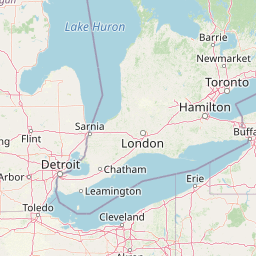
The celestine deposits at Put-in-Bay, situated on South Bass Island within Ottawa County, Ohio, United States, represent a globally renowned mineralogical phenomenon mined both for industrial strontium and public exhibition. Geologically, these extraordinary strata-bound deposits are hosted within the Upper Silurian-age Lucas Dolomite, a highly weathered carbonate sequence where localized dissolution by ancient groundwater carved out massive subsurface solution cavities and collapse breccias. Circulating, strontium-rich hydrothermal fluids later filled these expansive pockets, slowly precipitating magnificent, tabuliform to blocky crystals of celestine (historically often referred to as celestite) that range in color from a delicate, ice-blue to translucent white. Historically, the most famous of these pockets, known as Crystal Cave, was accidentally discovered in 1897 by laborers drilling a well on the property of Gustav Heineman, who quickly realized that the cavern was actually a massive, continuous geode lined with giant crystals measuring up to 18 inches in length. Commercial mining operations commenced almost immediately at the site to extract the high-purity strontium sulfate for use in manufacturing fireworks, signaling flares, and refining beet sugar, but the industrial exploitation of the primary cave was halted after just a few years when Heineman wisely decided to preserve the stunning geological wonder as a paid tourist attraction to save his winery from bankruptcy.
Comments