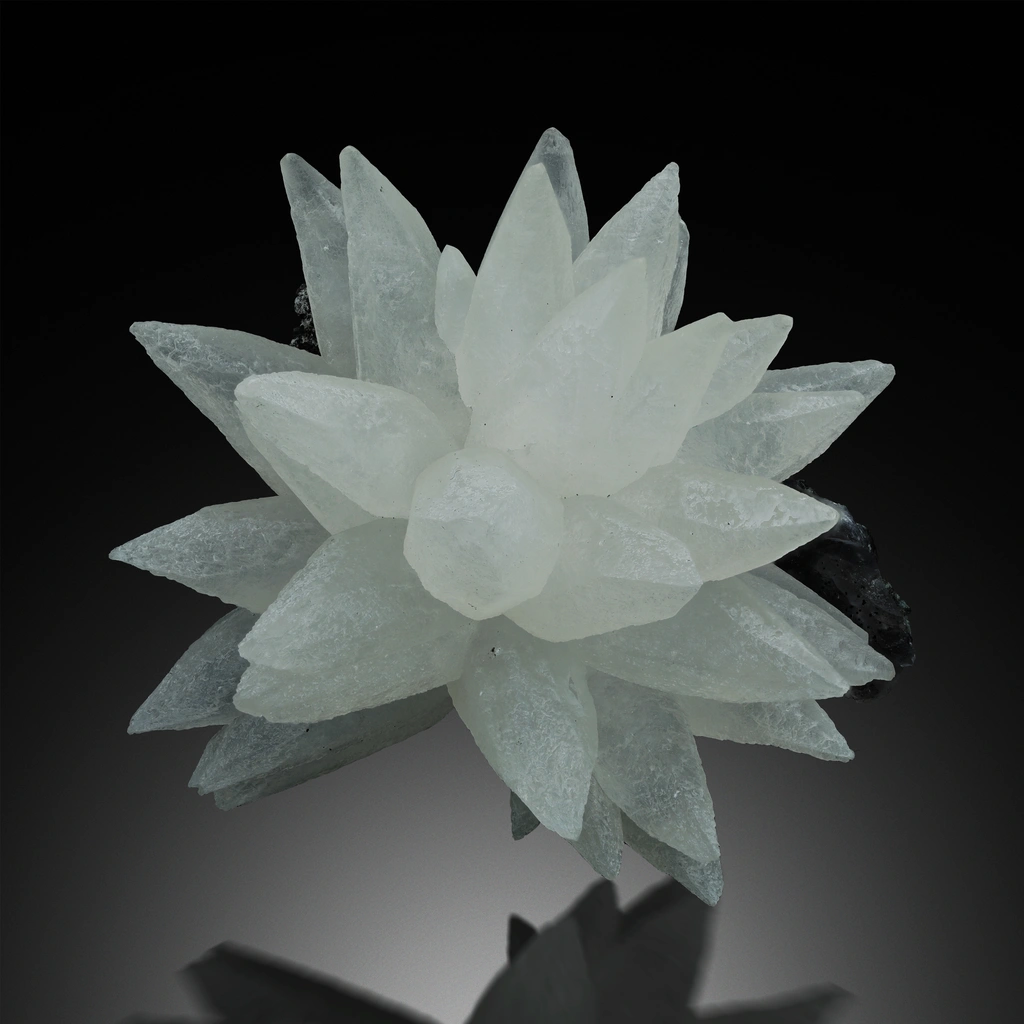
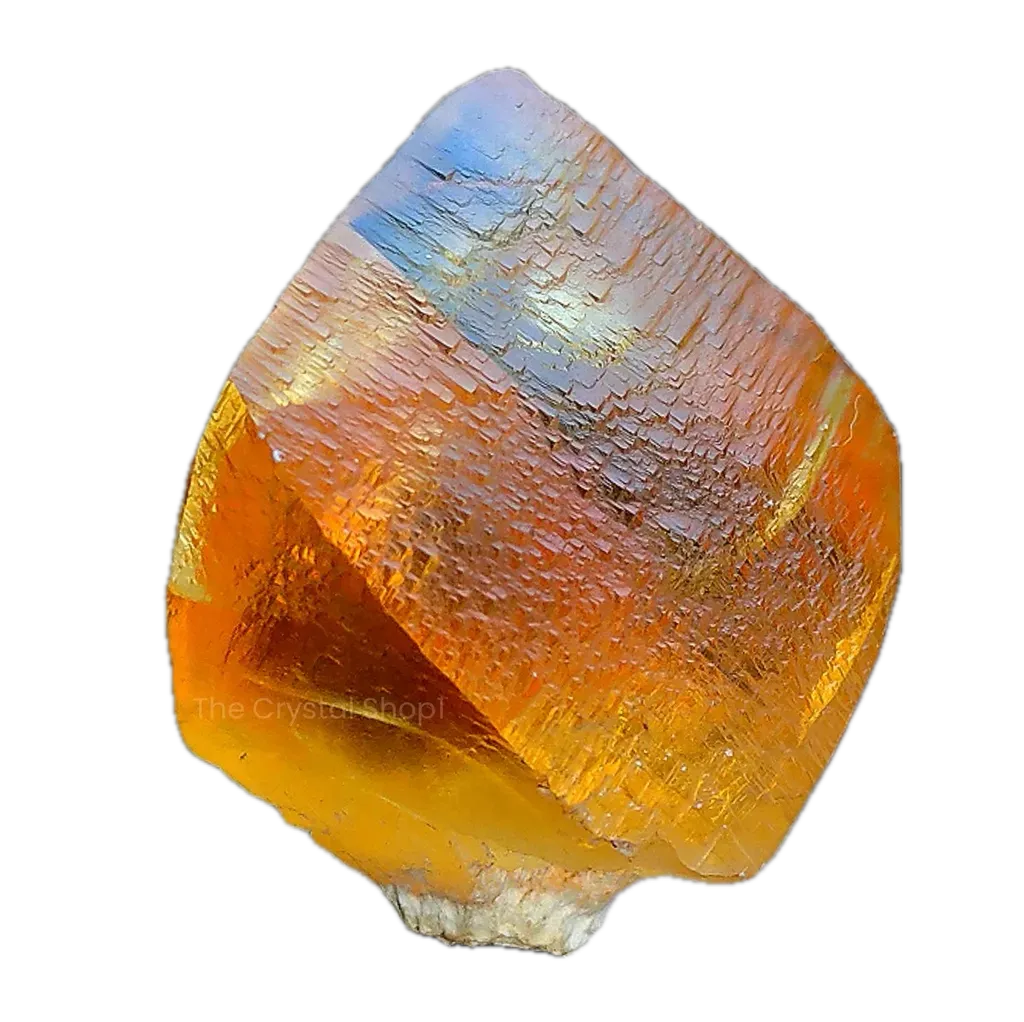
Calcite is one of the most common and diverse minerals, with thousands of forms that are controlled by such as pressure, temperature, PH, EH values, impurities, and the associations are even more ubaccountable.
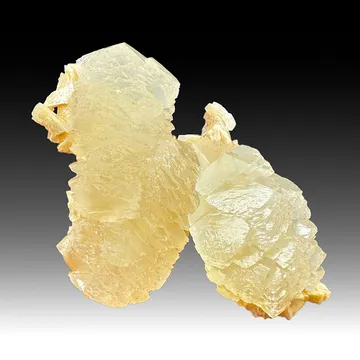
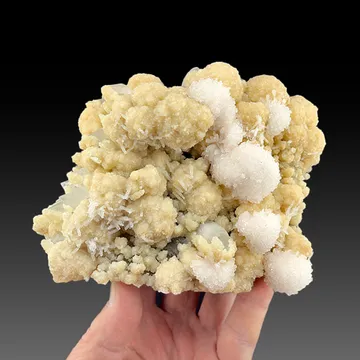
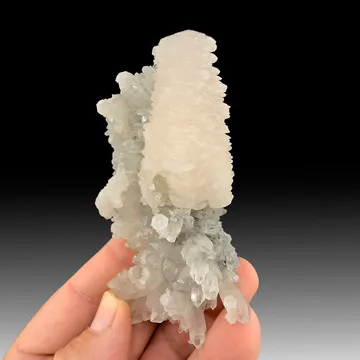
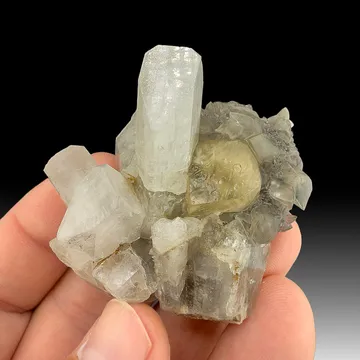
Low-temperature hydrothermal ditrigonal-pyramid calcites from Brazil are classic, usually associate with amethyst and chalcedony. These calcite- and amethyst-bearing geodes are hosted by a ~40- to 50-m-thick subhorizontal high-Ti basaltic lava flow of the Lower Cretaceous Paraná Continental Flood Basalt Province. Calcite formed throughout the whole crystallization sequence, but most commonly as very late euhedral crystal, as observed by the stage of crustallization. The most likely source of silica, calcium, carbon, and minor elements in the infill of the geodes is the highly reactive interstitial glass of the host basalts leached by gas-poor aqueous solutions of meteoric origin ascending from the locally artesian Botucatú aquifer system in the footwall of the volcanic sequence.
This is an aesthetic style of these classic materials, although they are fairly common, beautiful objects are always scarce.
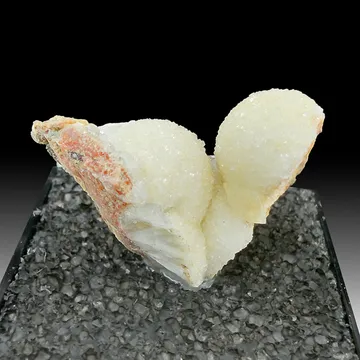
Calcite on amethyst and chalcedony, 5cm, Iraí, Rio Grande do Sul, Brazil.
Jingnan Zhang Coll & Photo
Comments