Unusual specimen from unusual geology is always fascinating, although they are some times not beautiful, still tell interesting stories.
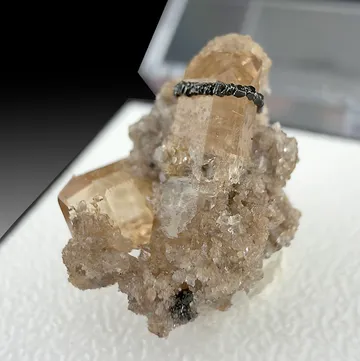
Topaz rhayolites of Cenozoic age are widely distributed across the western U.S. and Mexico.The Thomas Range rhyolite, recognized as a source of topaz for over a century (probably 1902 if I remember right) is located adjacent to Spor Mountain, the world's largest economic source of beryllium.
Beginning about 23 My ago, extensional tectonism produced large, regional faults and associated volcanism in the area. The rhyolites are part of the bimodal sequence of basalt and rhyolite typical of the region, including the red beryl-bearing rhyolite
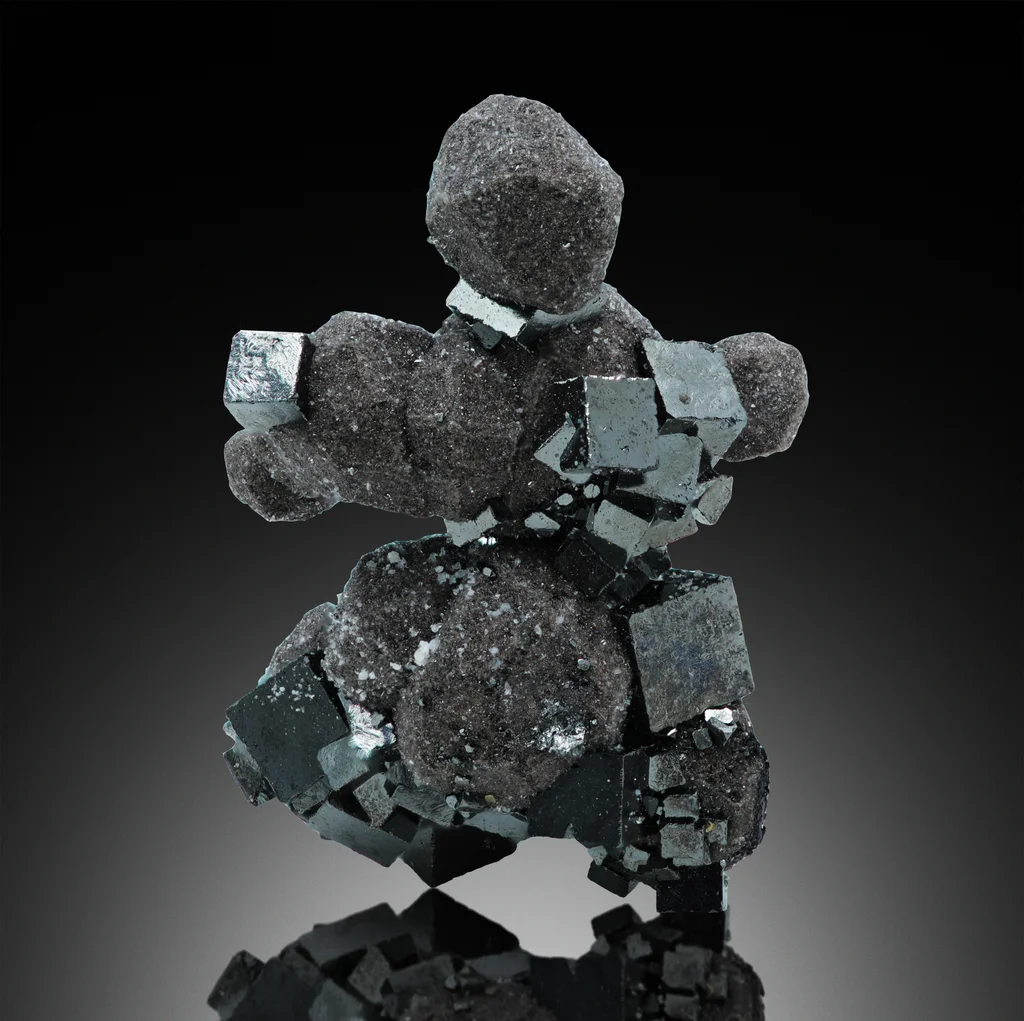
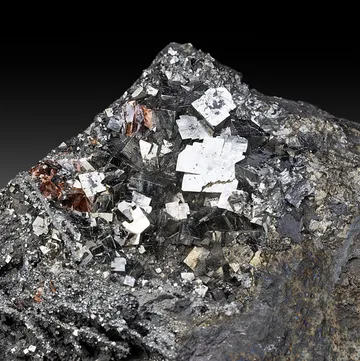
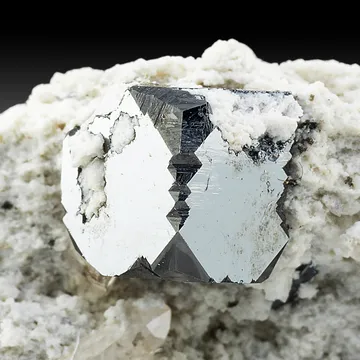
flow at the Ruby Violet deposit. Red bery, topaz, and bixbyite (Mn3+2O3, can contain some iron)are probably the three most impressive Minerals found in this region. However, a small find of hematite PS. garnet (probably Fe-rich) associate with bixbyite made me even more excited. Forming garnet typically need high pressure, unless the magma extremely enriched garnet-forming elements, which tell us something about the chemistry. Bixbyite xls perched on the pseudomorph suggest the late formation when Mn was introduced in, this may provide important clue that the source of Mn is unlikely from the magma itself (btw, red beryl requires Mn2+ to make it red). It's more likely trace Mn was from the sediments when the rhyolite bathed in water during the eruption, the field observation of oxidized Fe-Mn rich veins in occurrence of these minerals also suggest Mn is probably enthetic. These rhyolites are A-type, which is typically reduced magma, also hard to produce oxidize during fast cooling. These are just my guess, haven't done any work and case studies for this place, but unique specimens always encourage me to think.
Comments