$465Median
60Sold (12 mo)
$450Last sale
65 for sale · $190–$20,000 USD
126 in the gallery
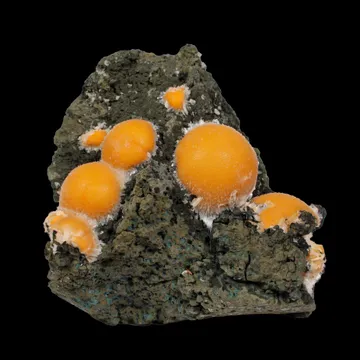
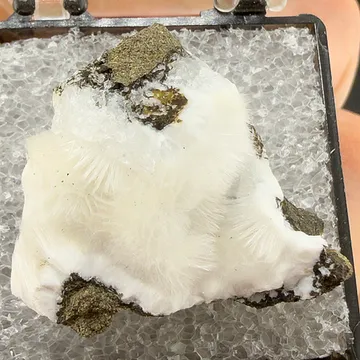
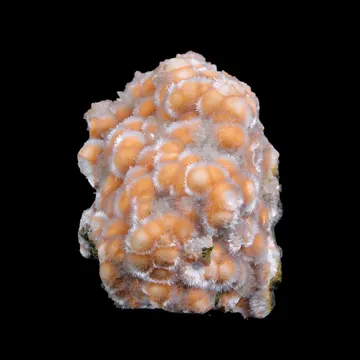
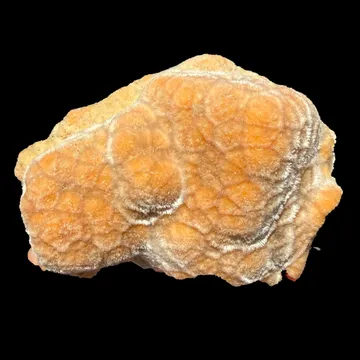
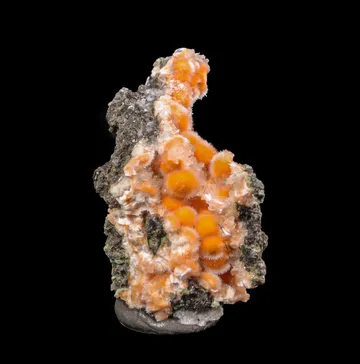
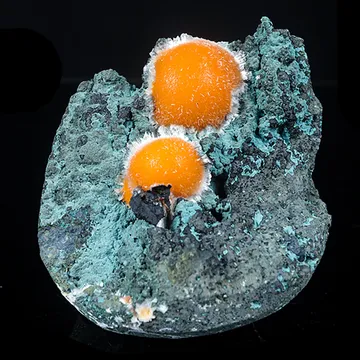
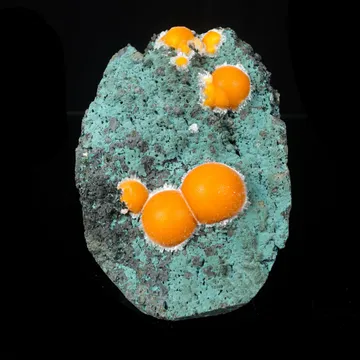
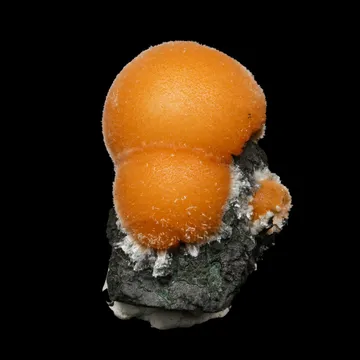
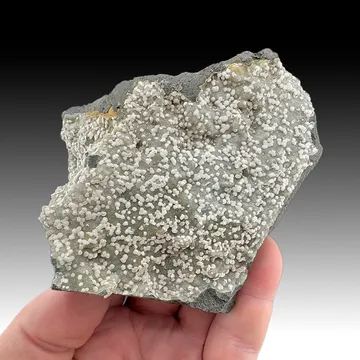
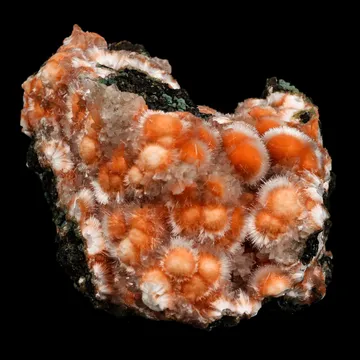
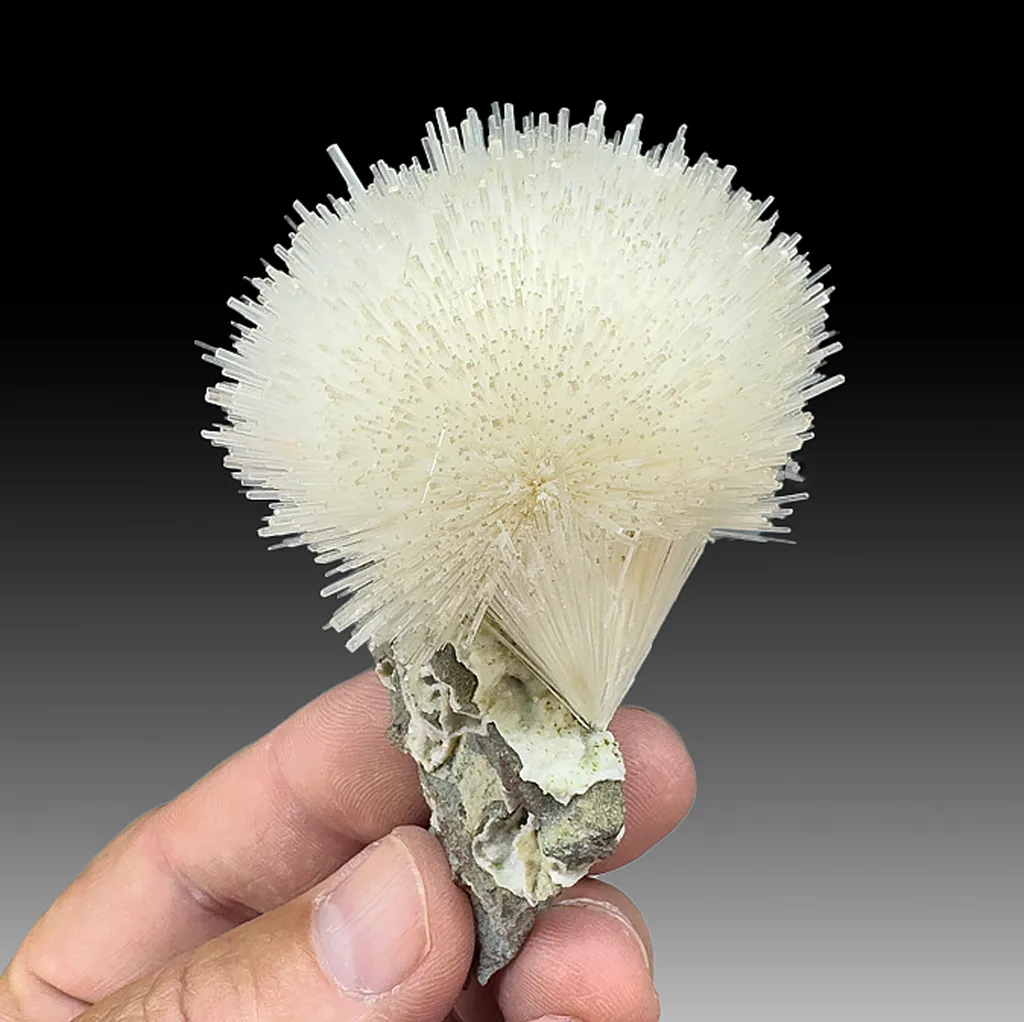
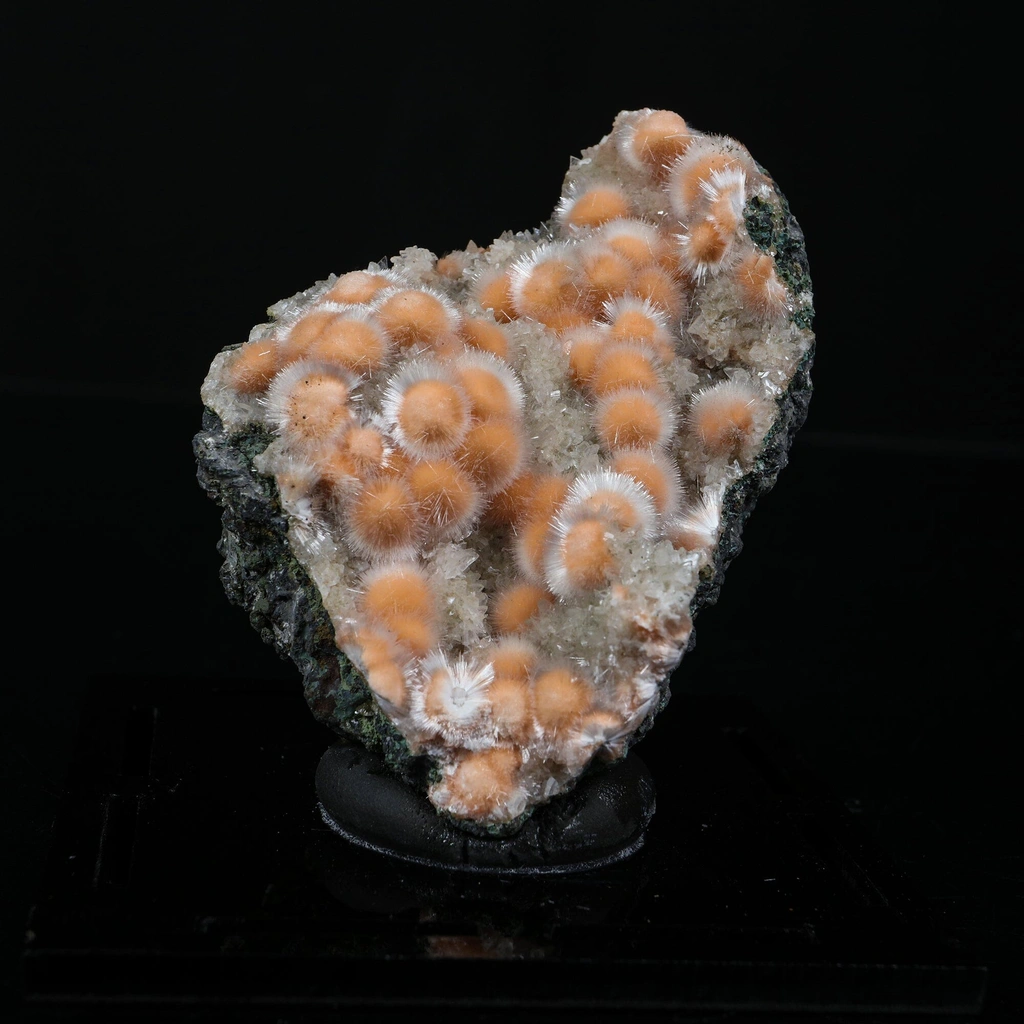
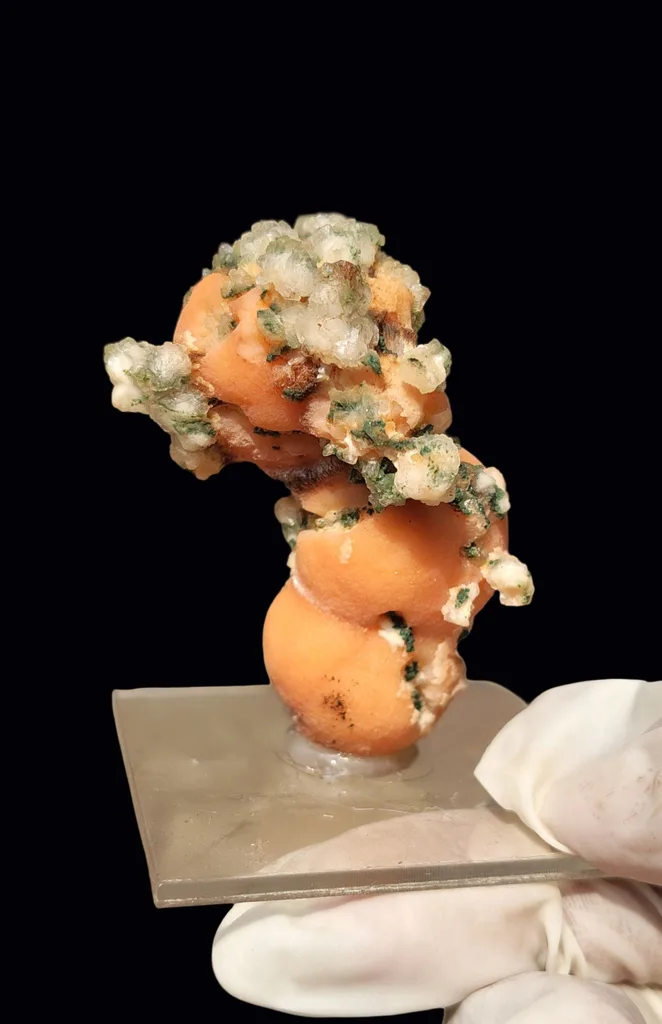
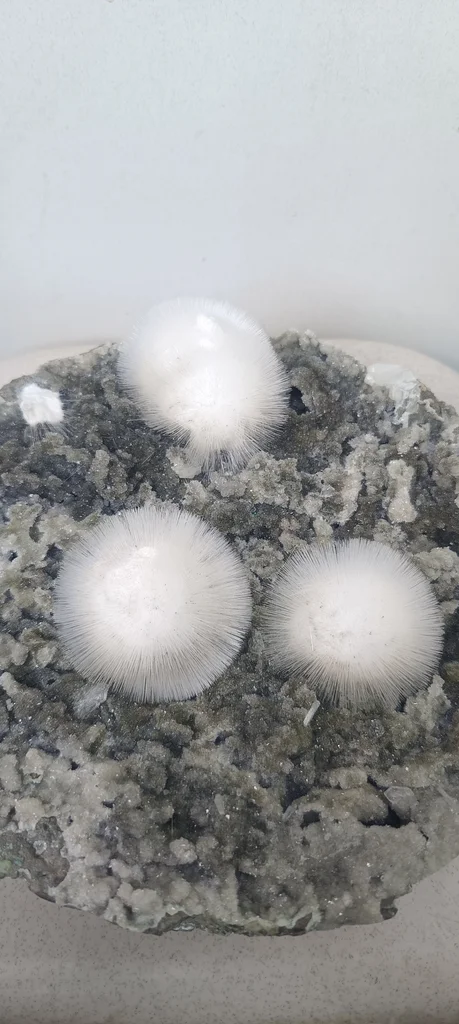
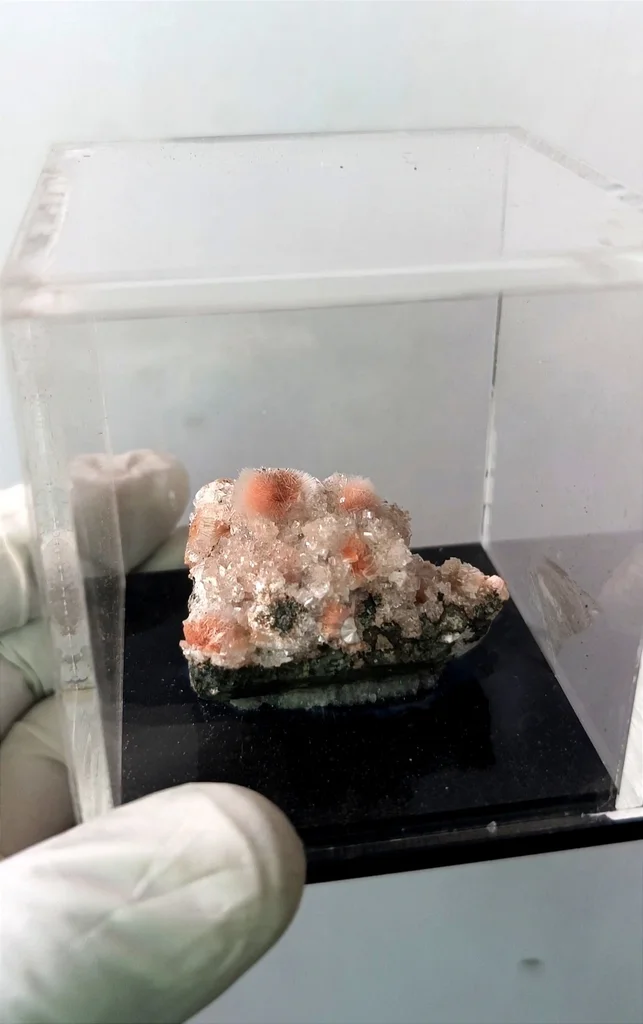
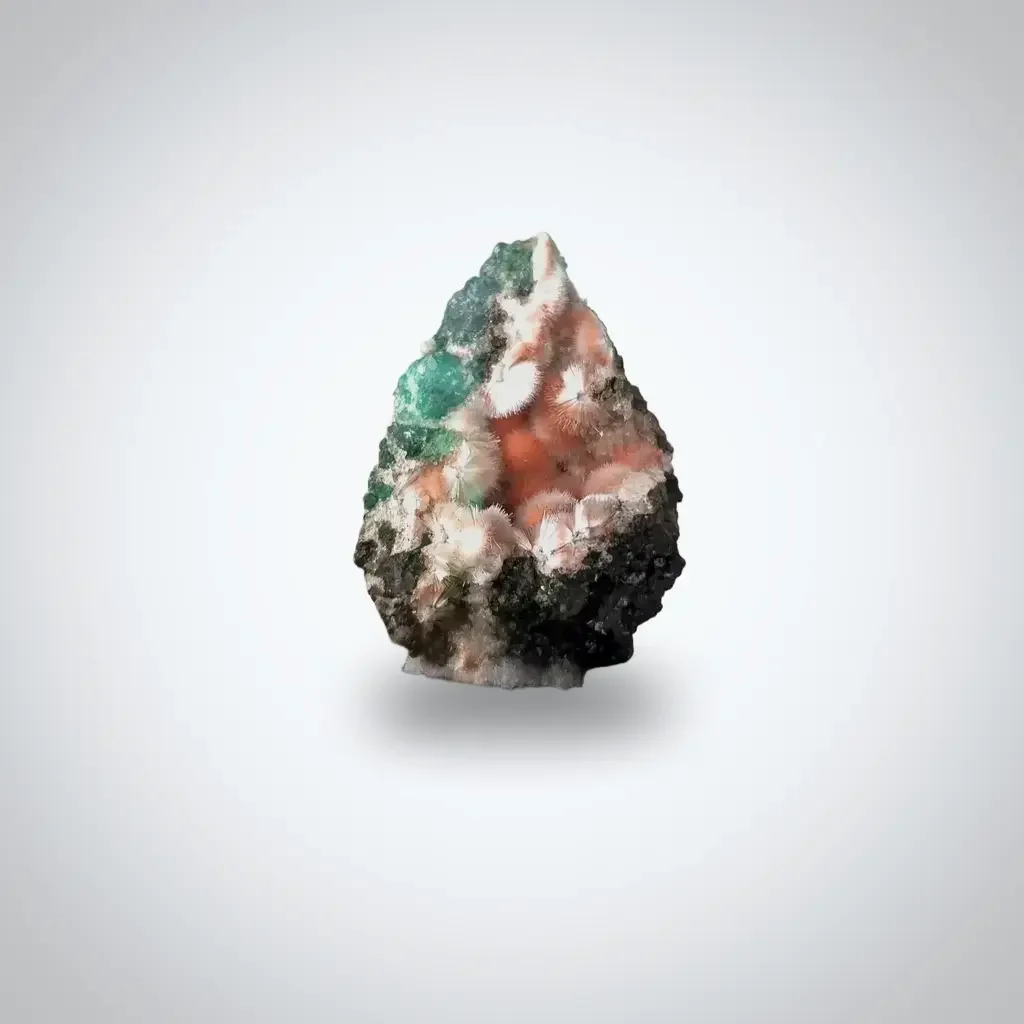
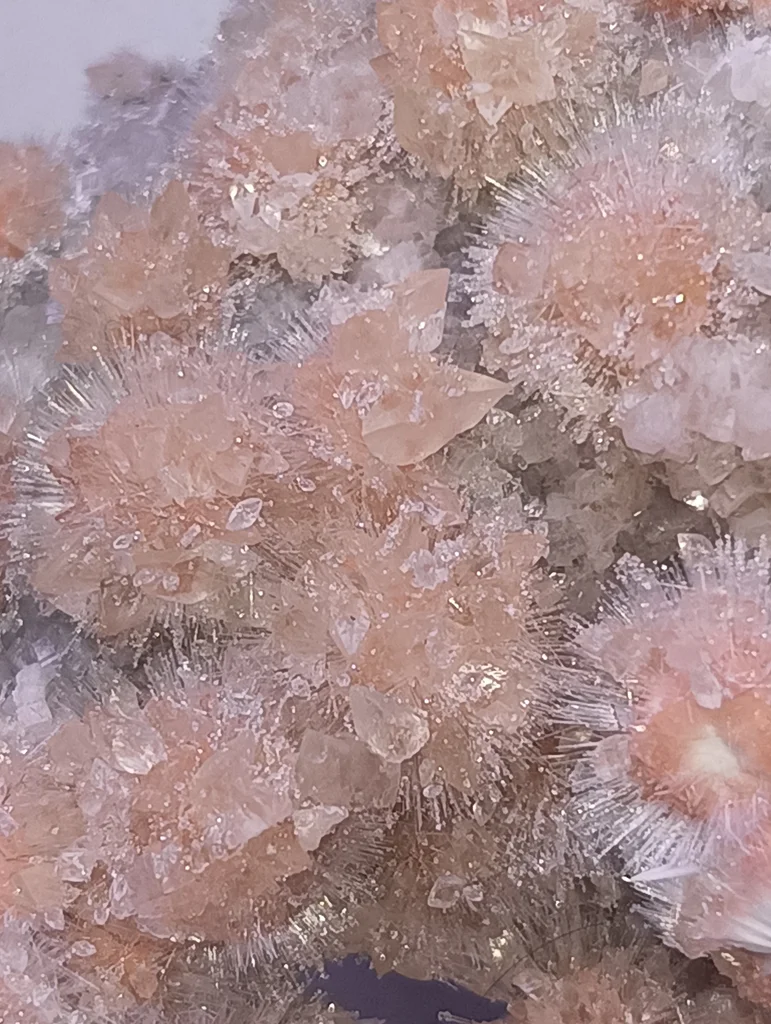
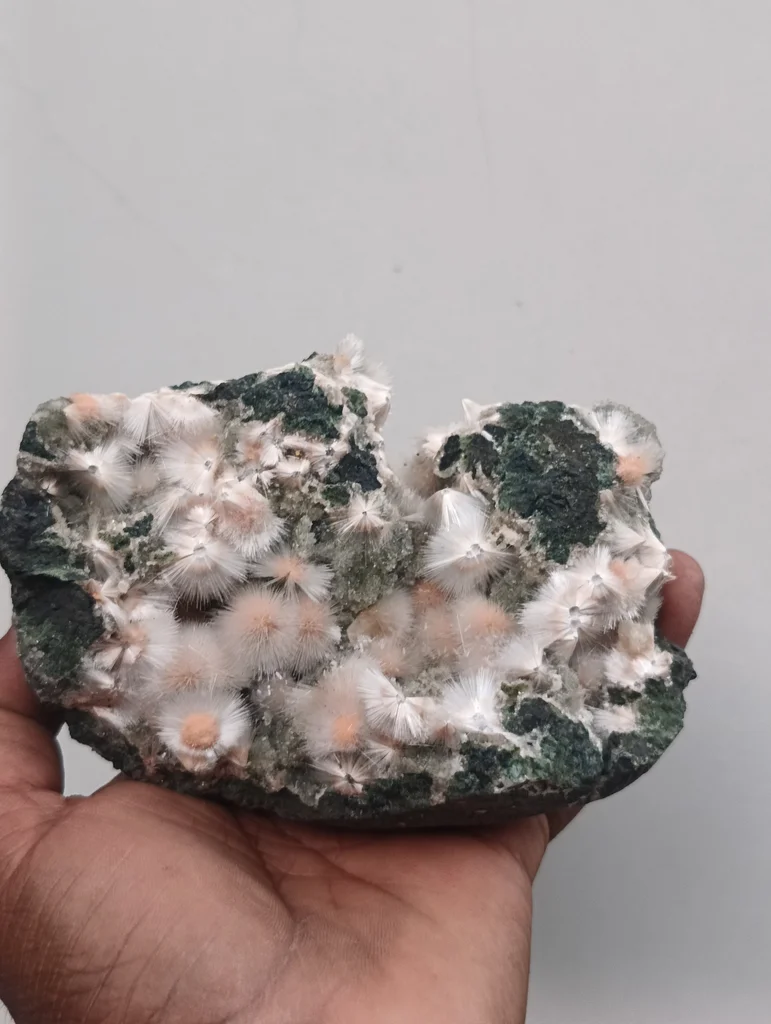
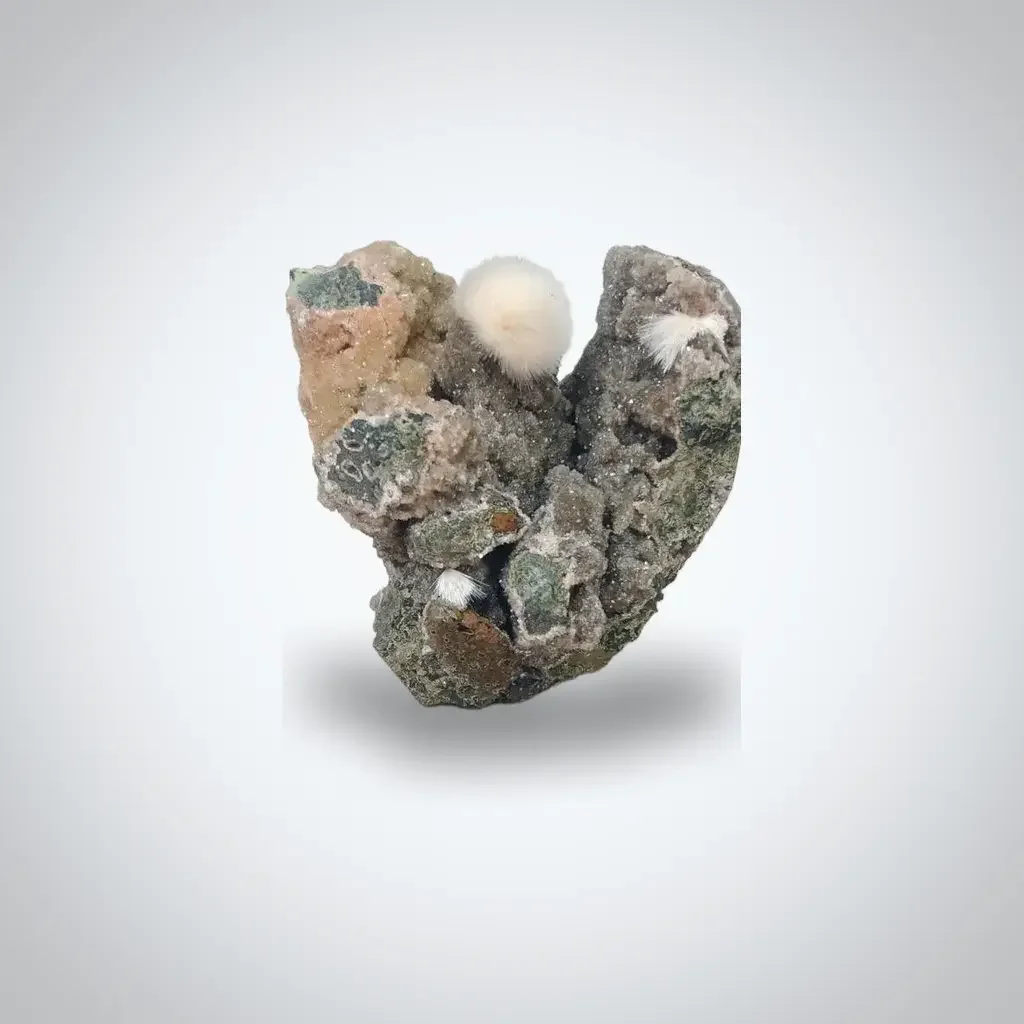
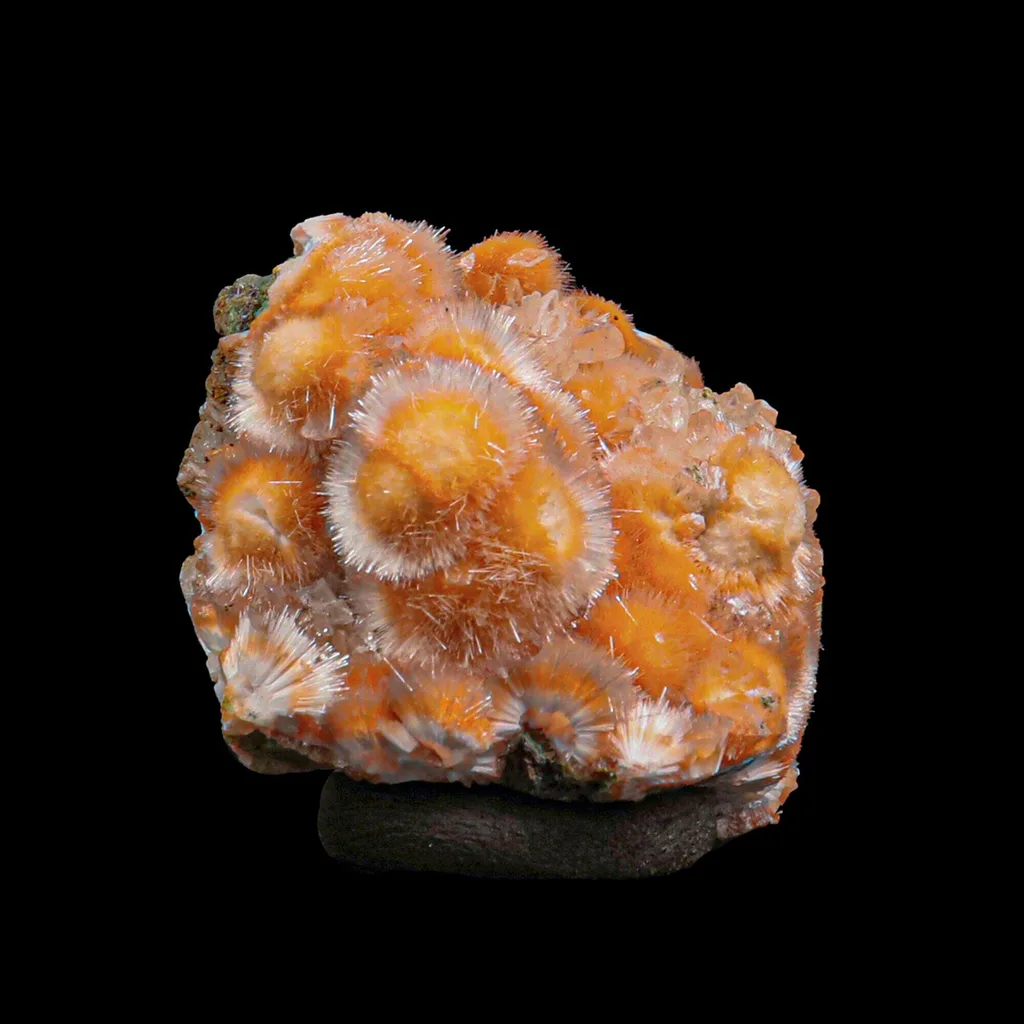
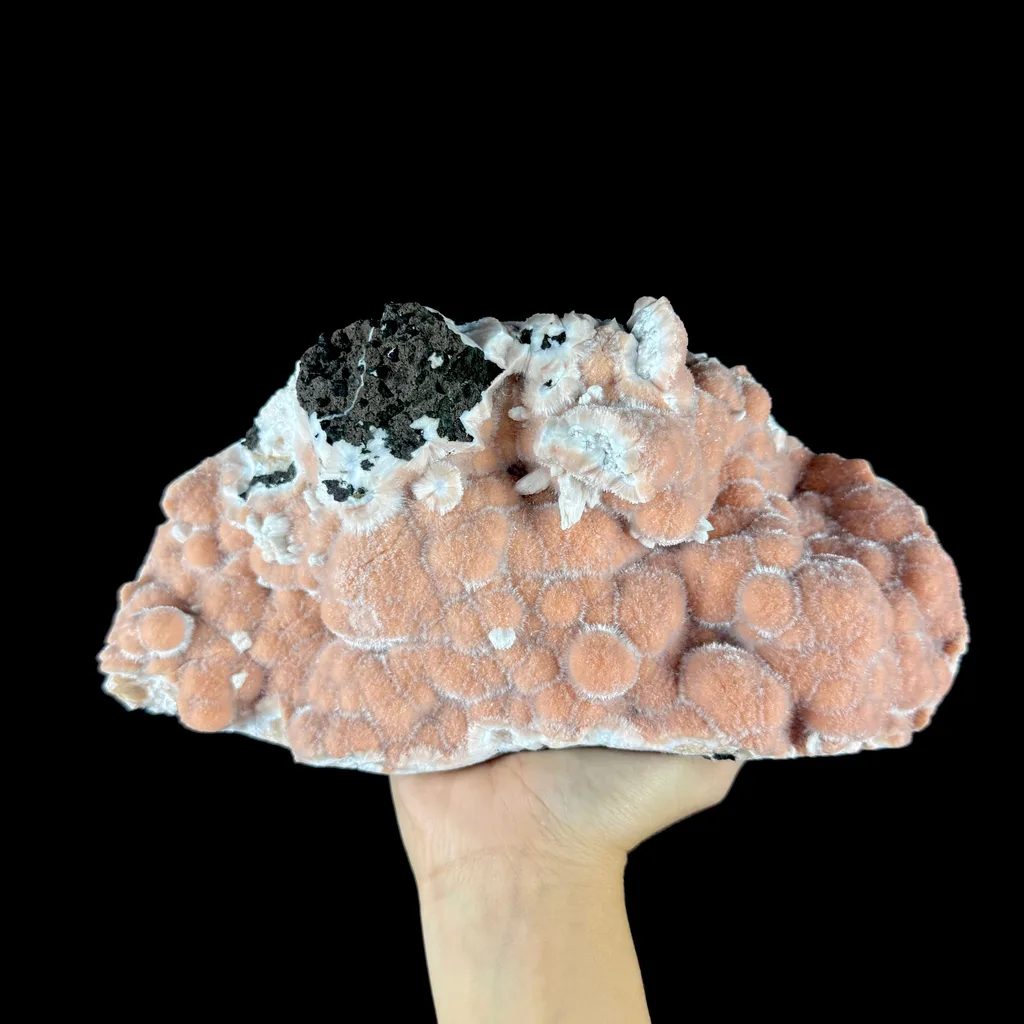
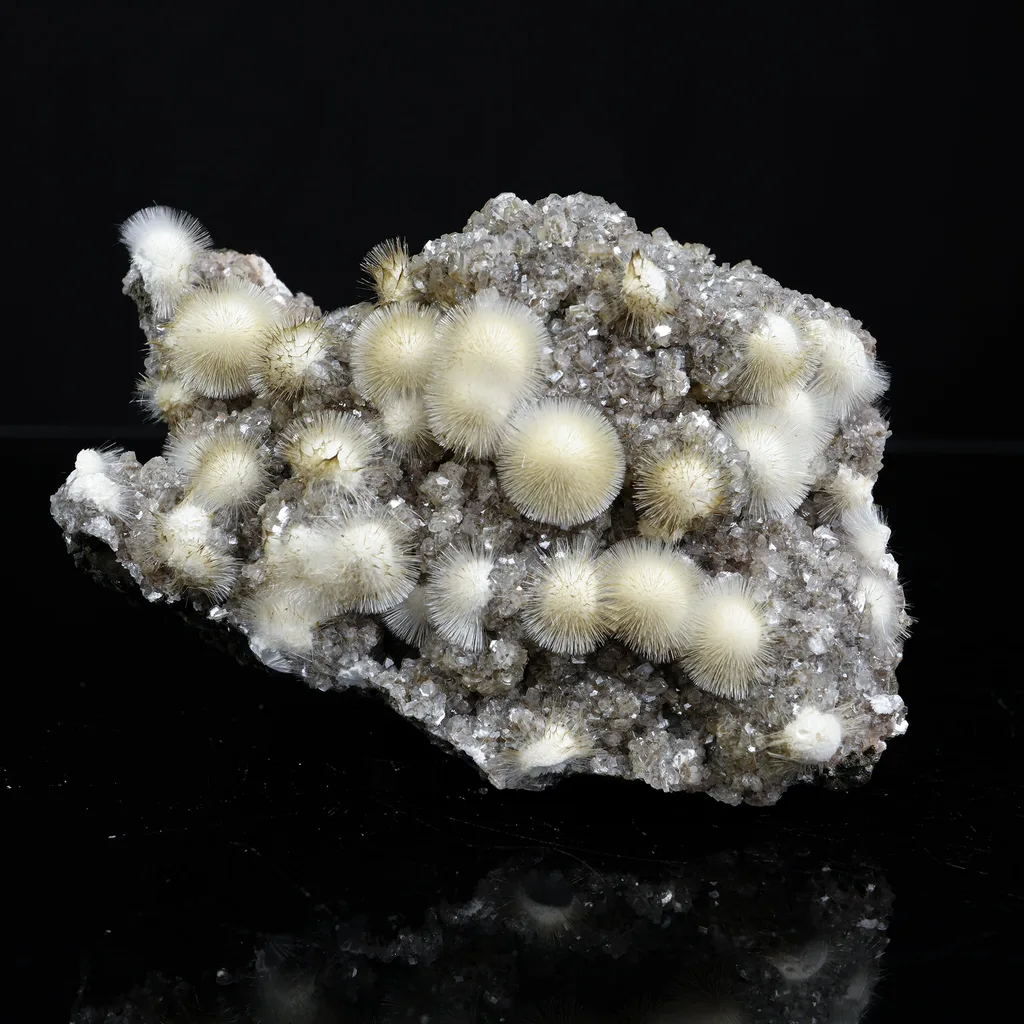
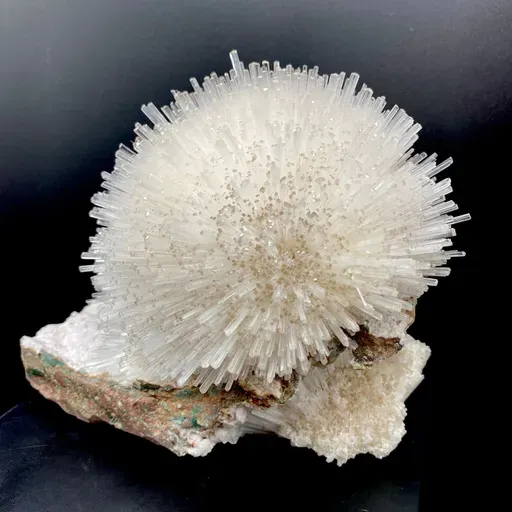
Mesolite is a hydrated sodium-calcium silicate that crystallizes in slender, needle-like radiating or fibrous habits. Often colorless or pale to light blue, its lustre ranges from vitreous to silky when in aggregates, and crystals can form delicate mesolite clusters that catch the light along their slender prisms. Specimens from classic locales such as India and Tanzania have long drawn the attention of collectors for their intricate, lace-like aggregates and the way the fibres radiate from a common core. Smaller, well-formed prisms can sometimes be found encrusting matrix or in twin associations with other zeolites, offering interesting textures and contrasts for display.
Collectors prize mesolite for its ethereal appearance and the challenges of handling and displaying fine fibrous needles. Although it occurs with other zeolites, the best material shows clean, crisp crystallites with little alteration, creating a delicate, almost ethereal aesthetic that appeals to micromounts and cabinet collections alike. Its presence in classic mineral-hunting regions, including India and parts of Africa and Europe, adds provenance value and storytelling potential for diverse mineral ensembles.