$750Median
5Sold (12 mo)
$85Last sale
44 for sale · $56–$7,500 USD
87 in the gallery
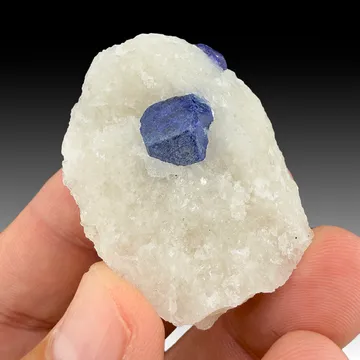
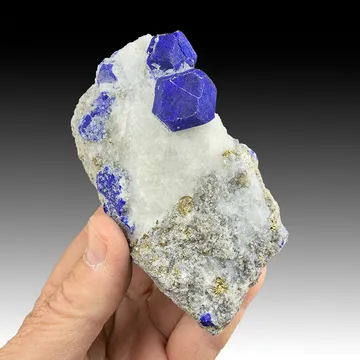
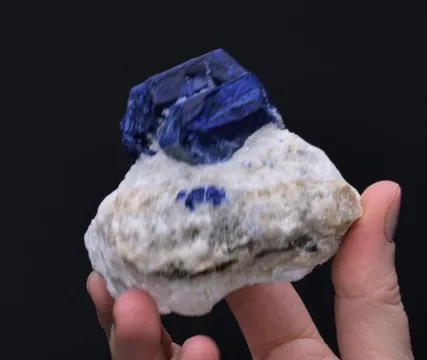
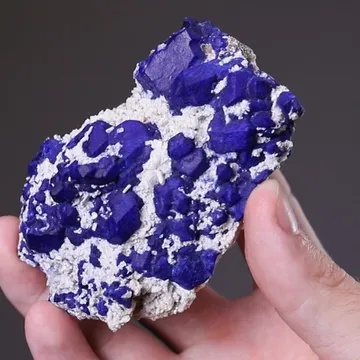
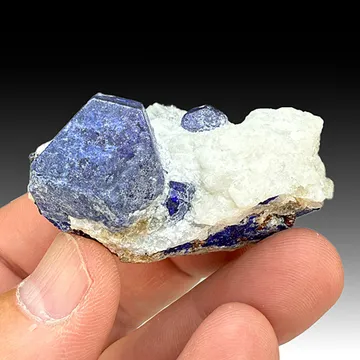
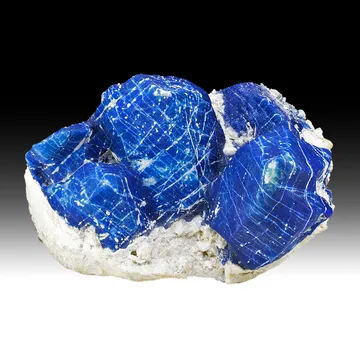
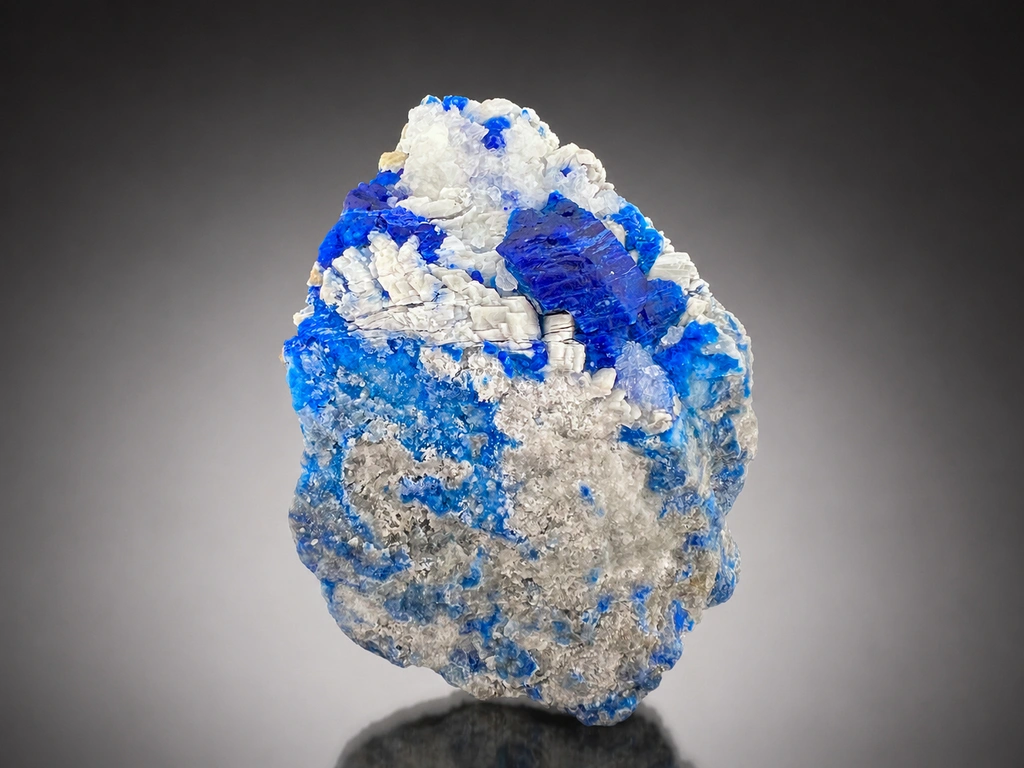
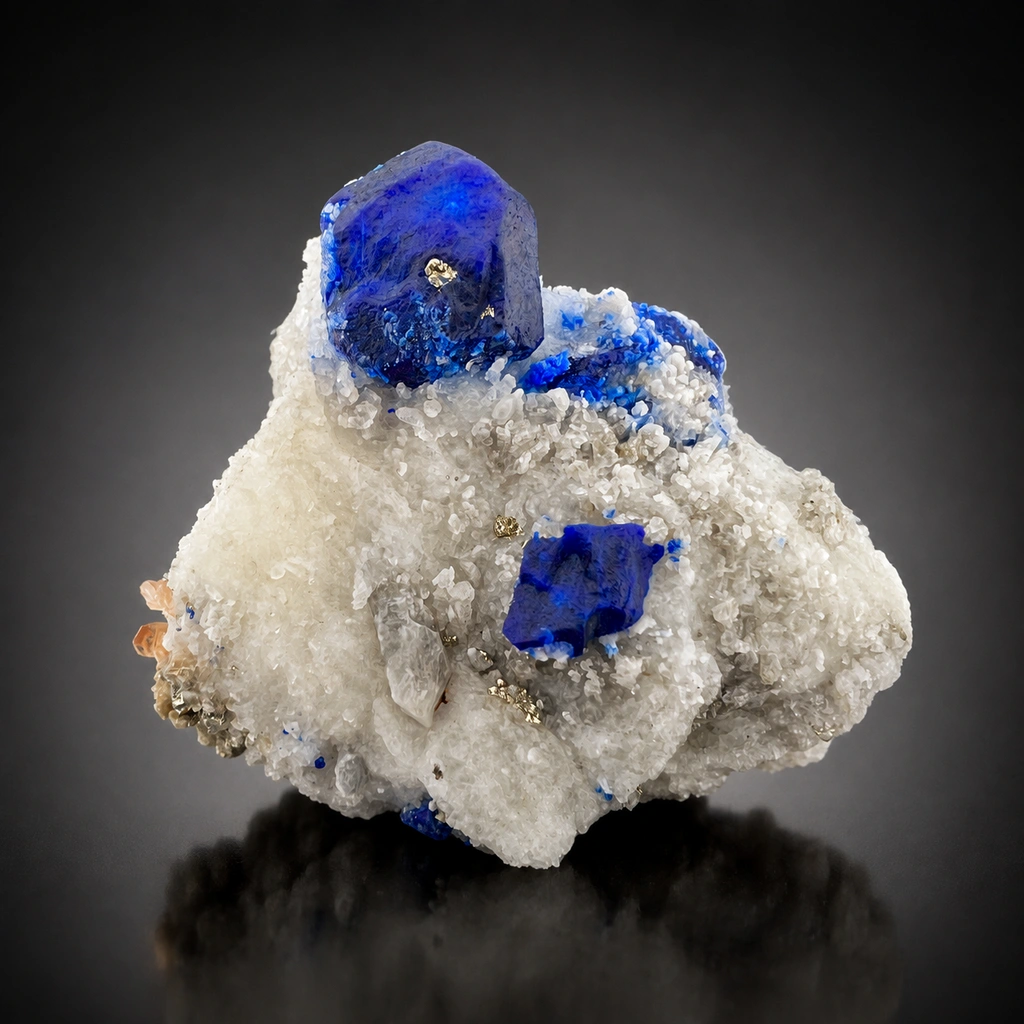
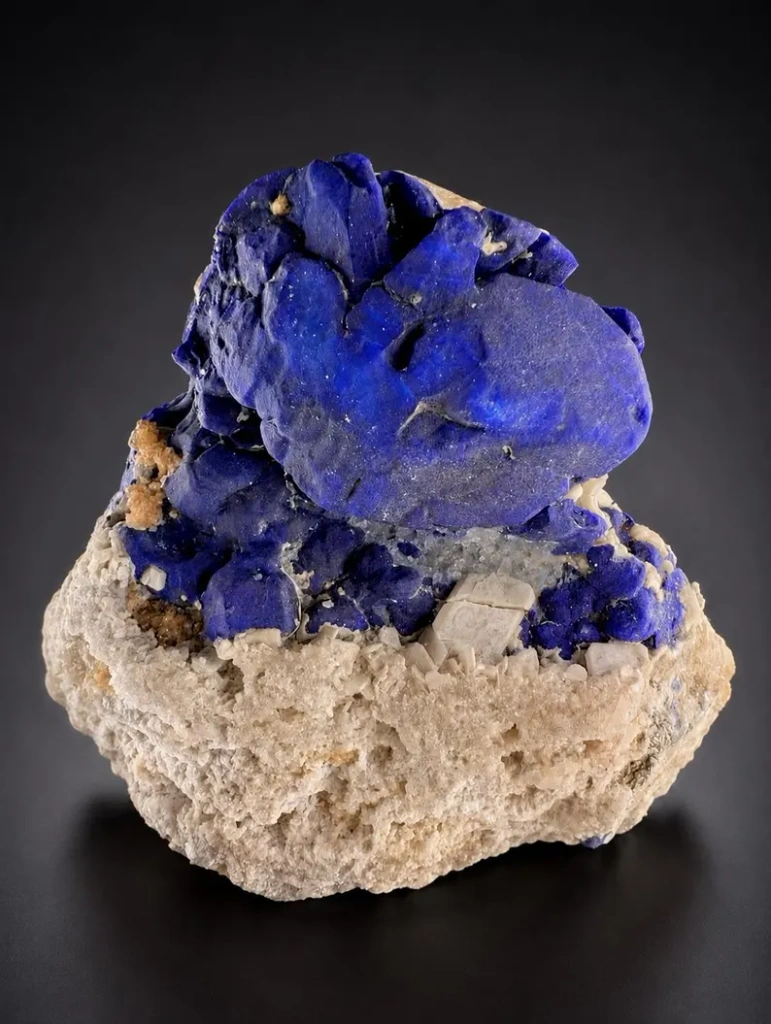
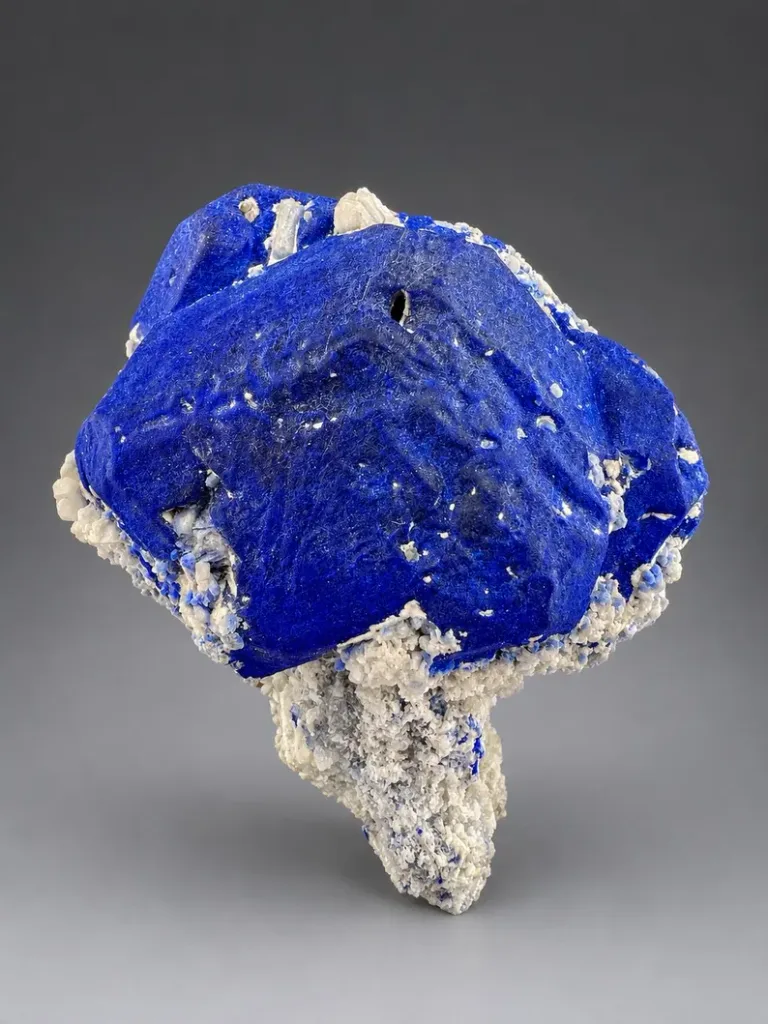
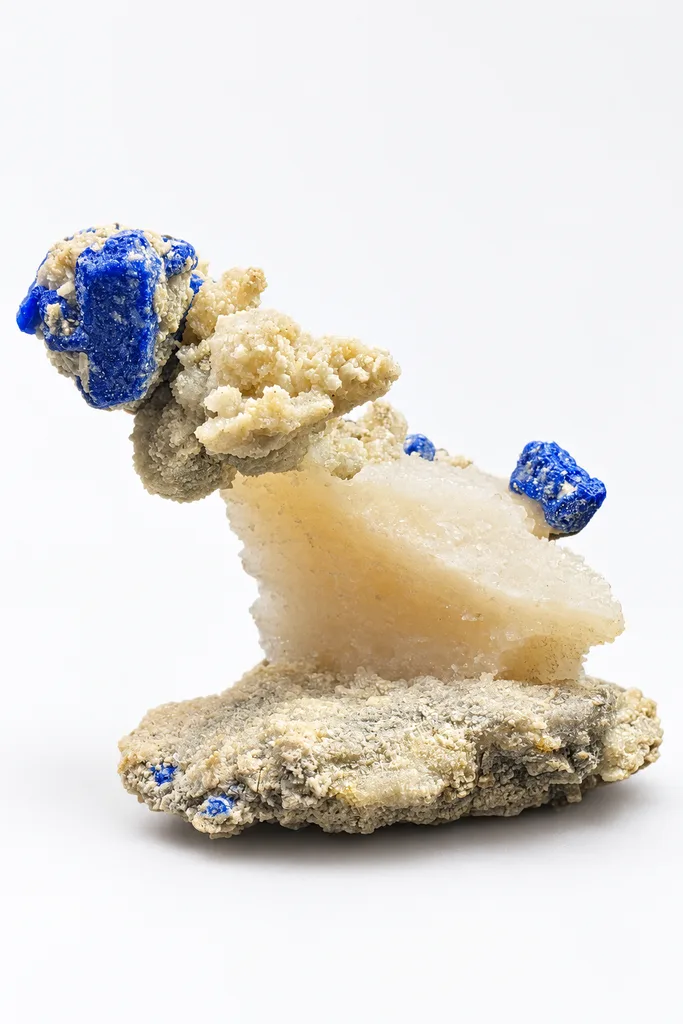
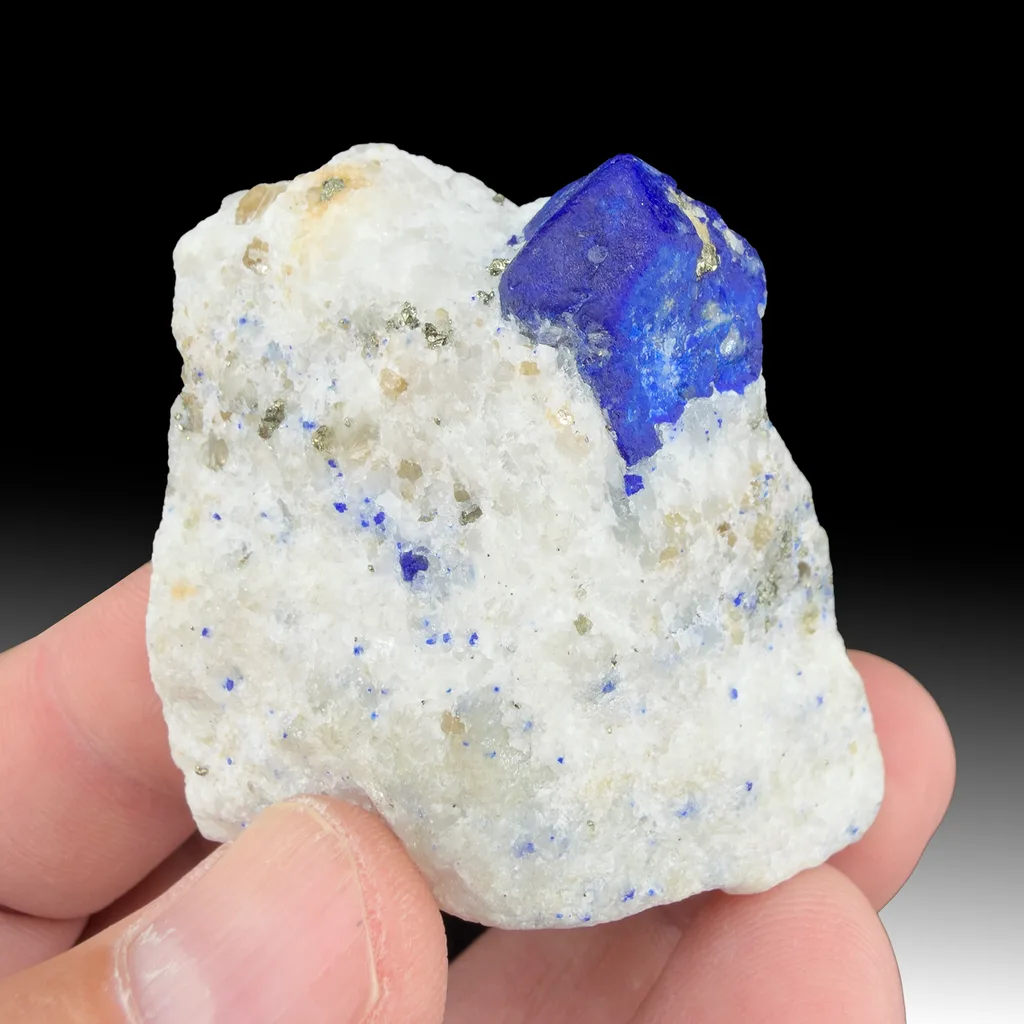
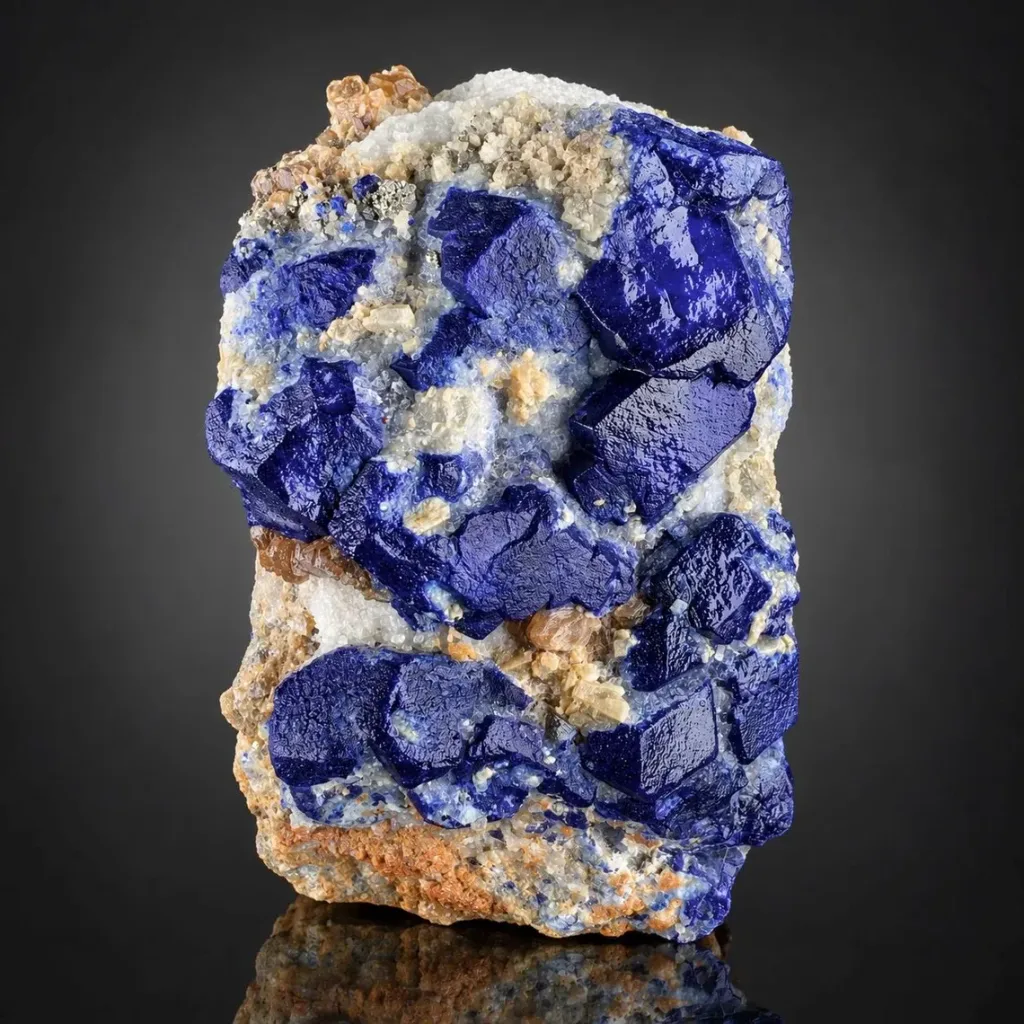
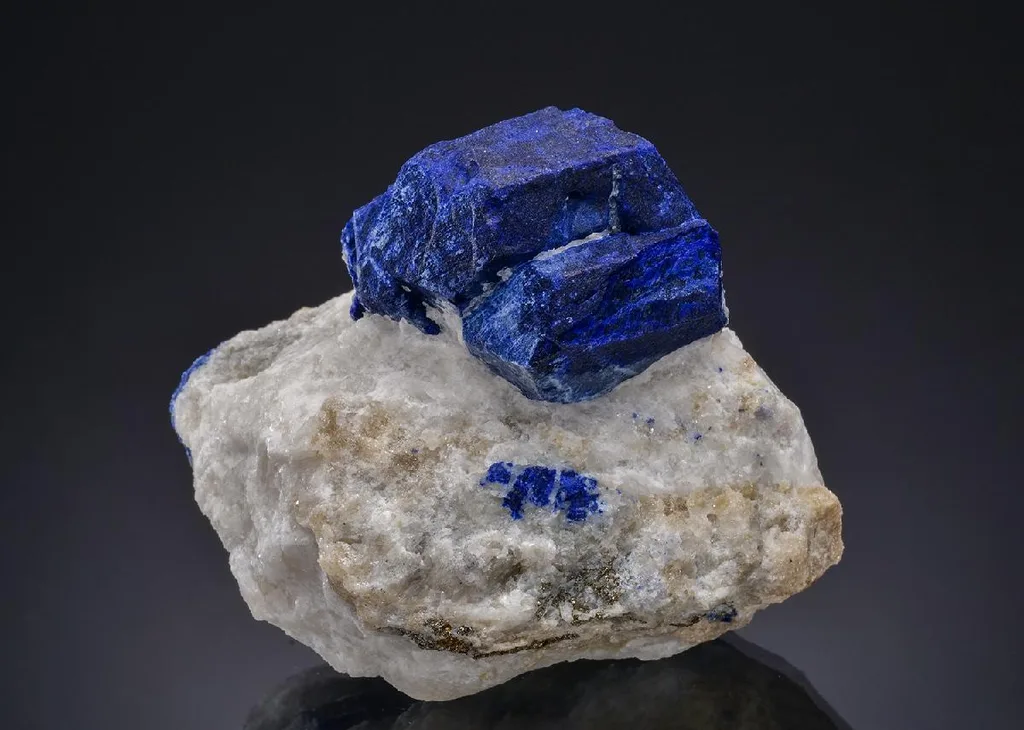
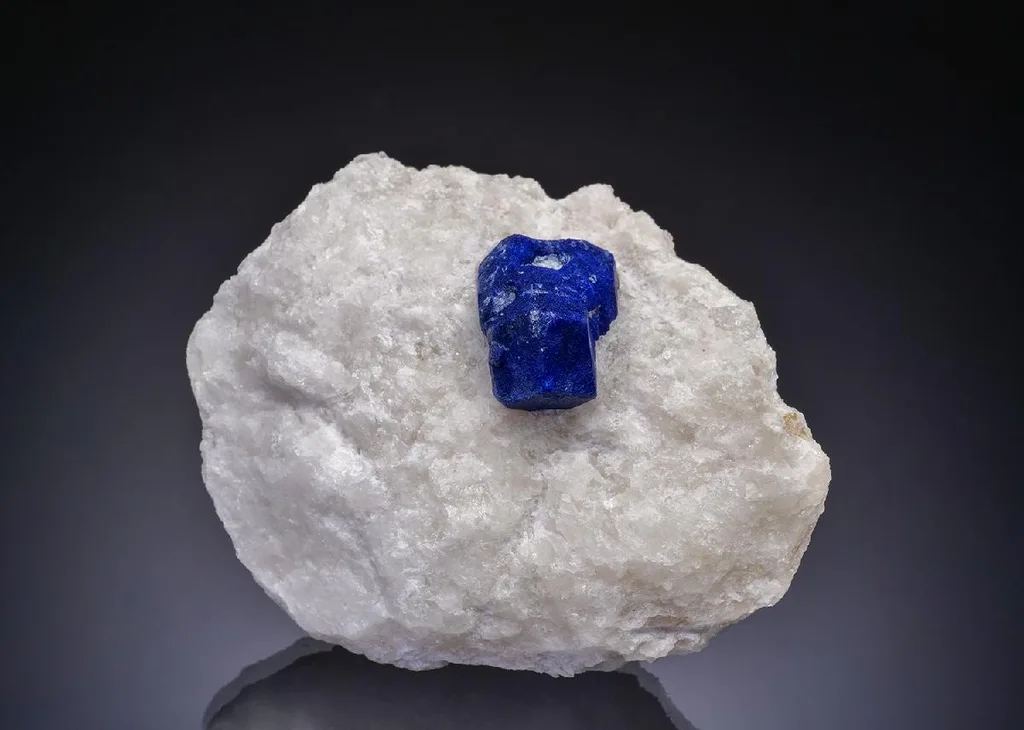
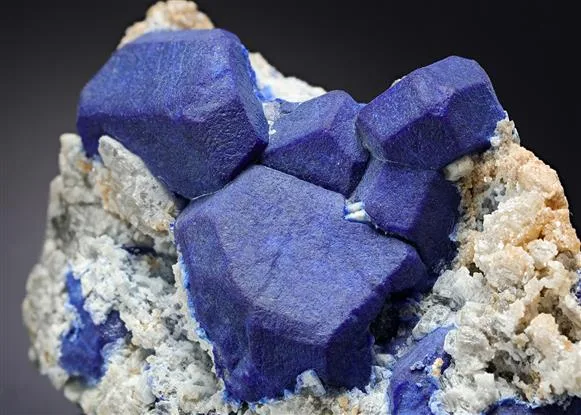
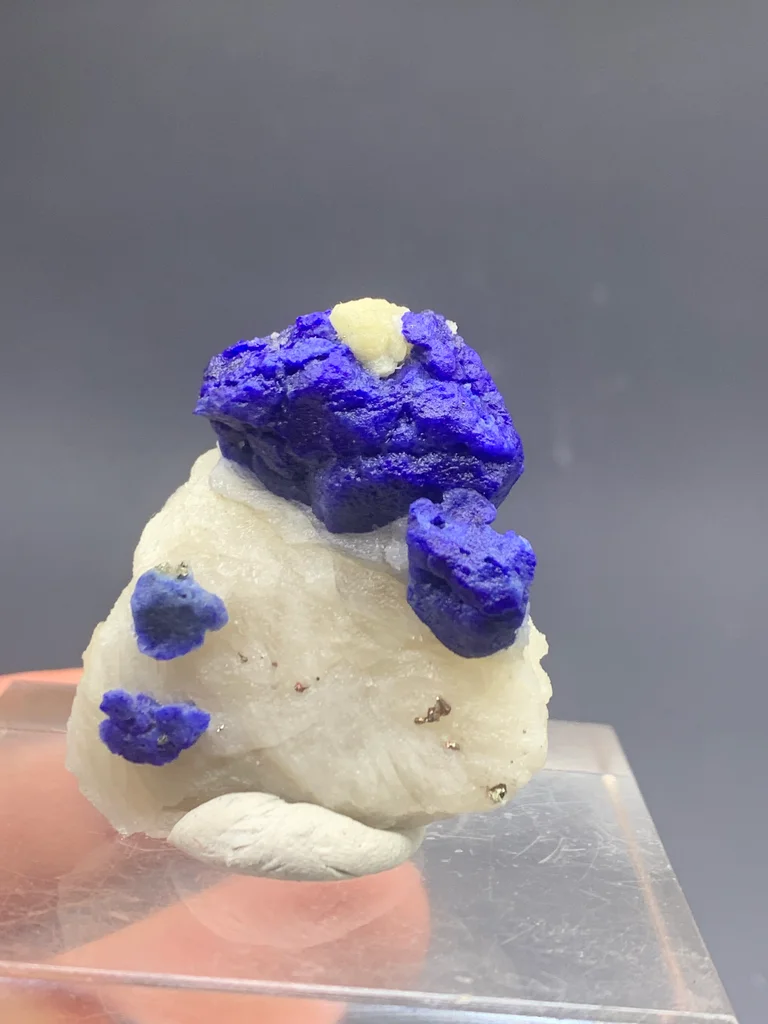
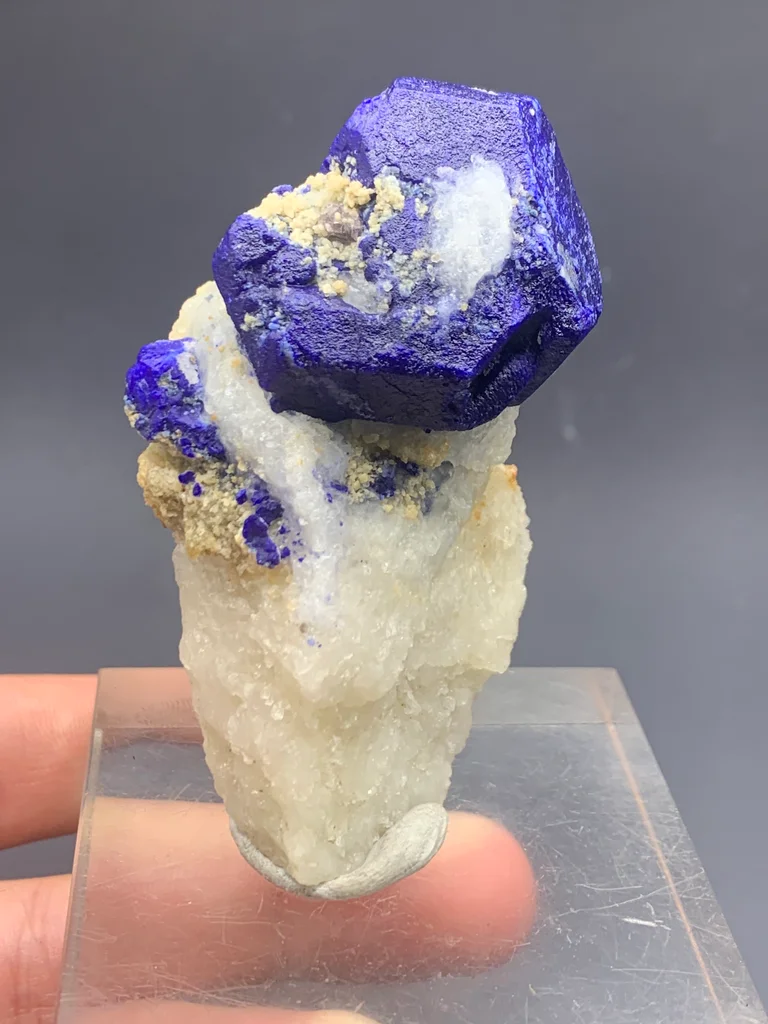
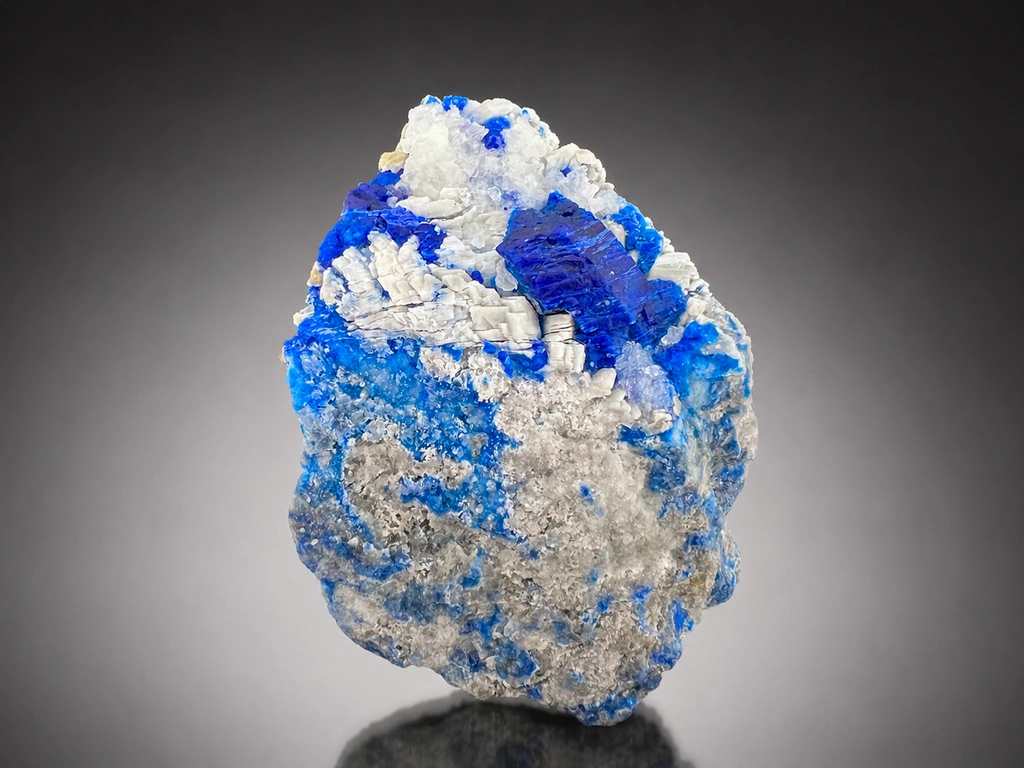
Lazurite is a blue silicate mineral that forms in triclinic crystals and more commonly as crusts, veins, or massive aggregates. The characteristic ultramarine blue color comes from sulfur-bearing defects within the crystal structure, often accompanied by white calcite or other gangue minerals in the host rock. Specimens display a range of blue hues from deep royal to lighter azure and may show a silky to vitreous luster on fresh surfaces, with hardness around 5–6 on the Mohs scale.
Notable specimens come from classic localities in Afghanistan, Italy, and Myanmar, where Lazurite occurs within ultramarine-bearing rocks associated with sodalite and other feldspathoids. In Afghanistan, highland deposits yield rich, intensely colored pieces, while Italian localities contribute well-formed crystals and solid blue masses. Collectors prize Lazurite not only for its color but for the occasional presence of complementary minerals and well-preserved crystal habits that reveal the mineral’s complex geology.
Collectors value Lazurite for its vivid blue color and its historical significance in pigment and mineral collections. Fine specimens can show dramatic color zoning and crisp crystal outlines, offering both aesthetic appeal and scientific interest for display cabinets and study collections alike.