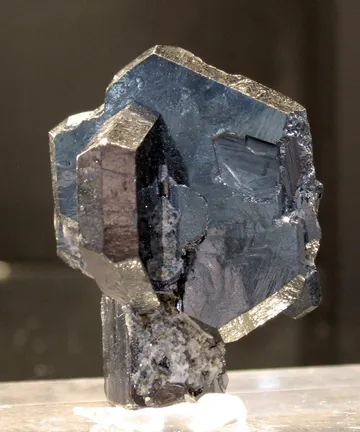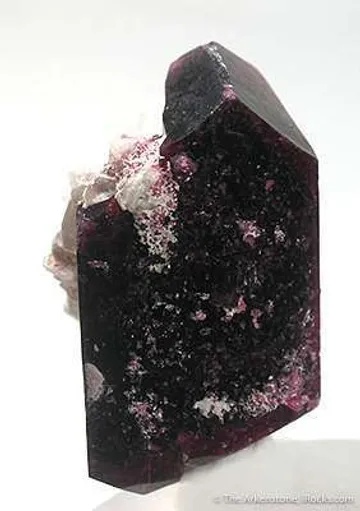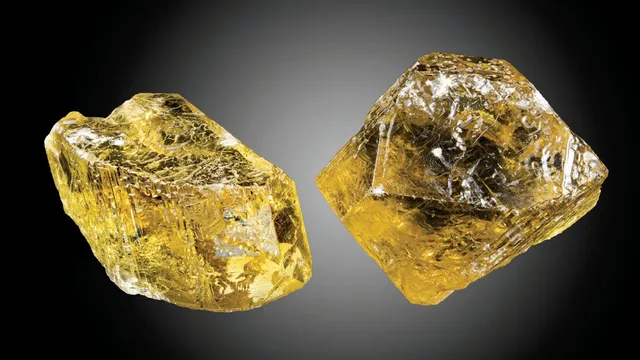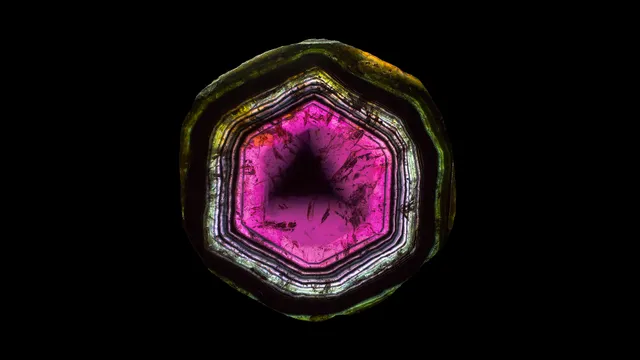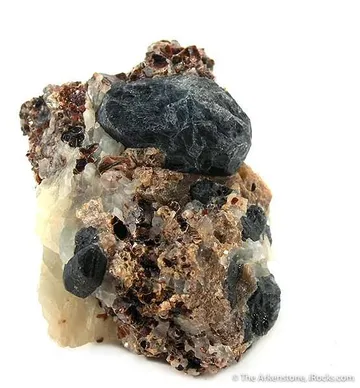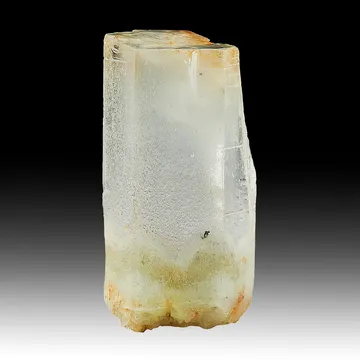
Antetezambaro, Madagascar: premier garnet locality yielding gemmy demantoid andradite and topazolite in lustrous crystals on pale skarn, famed for color zoning.
Key facts
Antetezambaro, better known in the mineralogical literature under the closely related spelling Antetezambato, is one of the great modern garnet localities: a mangrove-swamp skarn occurrence in far northwestern Madagascar that brought the island suddenly into the top tier of demantoid-producing regions. Its best specimens are not simply green garnets on matrix; they are lustrous, transparent to gemmy andradite crystals with the fire and edge definition expected of elite demantoid, set on pale skarn, altered sandstone, quartz-rich or calcite-bearing matrix. The deposit became important because it yielded both gem rough and cabinet-quality mineral specimens, especially andradite in the demantoid and topazolite varieties, from cavities in metasomatized sedimentary rocks close to alkaline magmatic intrusions.
The collector appeal here is very specific. Fine Antetezambaro pieces show sharp dodecahedral and trapezohedral crystals, commonly in saturated yellow-green, grass-green, olive-green, army-green, bluish green, honey-yellow, amber-yellow, brownish yellow, or brown tones. Many specimens have bright, glassy faces and a jewel-like transparency that contrasts beautifully with white to pale-green skarn matrix. The locality is also famous for complex color zoning: green demantoid cores rimmed or overgrown by yellow-brown topazolite, sometimes producing phantom-like internal architecture. In a display case, the best specimens have an immediately recognizable look—transparent, highly lustrous garnets rising out of light matrix, often as separated clusters or sparkling plates rather than the darker, fibrous-horsetail-bearing material familiar from serpentinite-hosted demantoid localities.
Regional View
Country View
Geologically, Antetezambaro matters because it is not a classic Madagascar pegmatite locality. The garnets occur in skarn developed where Permian-Mesozoic sedimentary rocks were invaded and altered by alkaline-related magmatic activity. The host sequence includes sandstone and silica-rich limestone, altered along fractures, bedding contacts, and contacts with lamprophyric intrusions. Cavities in the resulting fine-grained garnet-rich skarn provided the open space for demantoid and topazolite crystals. That setting explains both the associations—quartz, calcite, pyrite, stilbite-Ca, probable wollastonite, diopside inclusions—and the gemological signature: these are skarn demantoids, not serpentinite demantoids, and they characteristically lack the classic chrysotile “horsetail” inclusions of the Urals.

Photo: Wikimedia Commons

Photo: Wikimedia Commons
Search for specimens: View all specimens from Antetezambaro, Madagascar
The principal collector locality is the Antetezambato Demantoid-Topazolite Mine near the village of Antetezambato in the Ambanja area of the Diana Region, northern Madagascar. EarthWonders uses the spelling Antetezambaro for this collecting guide; collectors should recognize both spellings on labels, especially on older dealer tags, European publications, and specimen records. The productive area lies west of the village, close to the northwestern coast and within a tidal mangrove setting. Published coordinates place the mining area near 13°30.460'S, 48°32.652'E, and descriptions put most of the diggings in a swamp that is flooded daily by seawater.
The deposit is a skarn-type andradite occurrence formed in altered sedimentary rocks, not a pegmatite or alluvial garnet field in the usual Madagascar sense. The sedimentary package is part of the Isalo Formation, described in the Antetezambato area as fine- to medium-grained fossiliferous sandstone interlayered with silica-rich limestone. Below the superficial weathered zone, the productive ground consists of a tilted block of layered sediments dipping about 45–60° south and cut by lamprophyric dikes related to the broader alkaline-magmatic province around Ambato, Ampasindava, and Nosy Be. Pneumatolytic to hydrothermal fluids moved along bedding, fractures, and intrusive contacts, replacing sedimentary rock with very fine-grained white to pale-green garnet-rich skarn. Cavities in these veins and altered zones are where the collectible andradite crystals formed.
The ore bodies, in specimen-collector terms, are not ore shoots but garnet-bearing skarn veins and pocket systems. Fissure-like cavities in massive impure sandstone may be only a few millimeters to a few centimeters wide but can extend for a meter or more; the best crystal development is reported where two or more fissures intersect. In more heterogeneous sediments, alteration produced larger cavity systems—“caves” to the miners—partly filled with corroded quartz and clay. These pockets yielded fragments of snow-white matrix carrying gem andradite crystals and quartz. Other matrices include spongy gray rock, brecciated altered sediment, partially replaced fossiliferous sandstone, fine-grained garnet-calcite rock, and pale garnet skarn cut by coarse calcite.
The mining history is short, dramatic, and unusually well documented for a modern garnet rush. Rumors of “green tourmaline,” “green zircon,” or “green sapphire” from the Ambanja-Antetezambato area circulated between 2006 and 2008, but the material did not attract serious attention until late 2008, when samples were identified as demantoid. By April and May 2009, the rush had begun. Hundreds and then thousands of miners, buyers, and brokers moved into an area that had been a small settlement; contemporary accounts describe about 2,000 miners digging by May 2009 and as many as several thousand people around the village during the peak. Early work in the weathered zone yielded abundant broken or loose crystals, much of it gem rough; as pits deepened into less altered rock in June and July 2009, increasingly fine matrix specimens appeared.
Mining was almost entirely artisanal and tidal. At low tide, miners worked pits dug in mangrove mud and sediment, using hand tools, buckets, pumps, and generators. Some pits reached around 18 meters, and later publications describe tunnels no deeper than about 5–20 meters. The daily problem was seawater: pits had to be pumped out, mud had to be removed, and miners had only a few hours before the tide returned. This unusual setting explains both the brief intensity of production and the scarcity of carefully recovered matrix pieces in pristine condition. By late 2009 and 2010, production had already fallen sharply because of deepening pits, flooding, instability, and the rainy season. A joint venture involving Italian, German, and Malagasy operators legally acquired the claims covering the deposit in December 2010 to investigate deeper potential, but any significant future production has always depended on overcoming tidal flooding and the cost of organized pumping.
The best known specimen finds came from the 2009 production, especially the period when deeper pits entered fresh garnet-bearing skarn. Fine matrix pieces include plates and clusters of demantoid crystals to about 2 cm, topazolite crystals to around 2 cm and locally larger, and exceptional color-zoned andradites with green demantoid cores and brown-yellow overgrowths. One of the finest specimens observed by Federico Pezzotta was described as matrix bearing several lustrous eye-clean crystals up to 2.8 cm across, each with a green core and thin brown-yellow rim. Published figures also document demantoid with quartz, demantoid on calcite, demantoid with white stilbite, a dumbbell-shaped demantoid crystal of 2.3 cm, topazolite crystals to 1.8–2 cm, and a demantoid crystal perched on a doubly terminated pale amethyst crystal.
Collecting access today should be treated as a mining-rights, safety, environmental, and community issue rather than an ordinary field-collecting opportunity. The productive ground is in a mangrove ecosystem subject to tidal inundation, mud collapse, and unstable pit walls, and published environmental studies describe significant disturbance to mangrove habitat during and after the rush. Serious collectors should obtain Antetezambaro specimens through established dealers or collections with clear provenance rather than attempting casual field collecting.
Antetezambaro andradite is the umbrella species behind the locality’s fame: demantoid, topazolite, brown andradite, rare brownish red material, color-zoned crystals, and small opaque pale green to pale gray, yellow, or pinkish garnets on matrix all belong to this Ca3Fe2(SiO4)3-dominant system, with analytical work showing the better crystals are very close to end-member andradite. Specimen crystals range from a few millimeters to nearly 3 cm, occurring as loose crystals, groups, and most desirably as matrix specimens from thumbnail to cabinet size. Habits combine dodecahedron and trapezohedron, with many crystals carrying complex modifications by hexoctahedral forms; cube faces are very rare. The finest pieces here are not merely large: they have glassy luster, transparency, sharp form, balanced green-yellow or honey-brown color, clean positioning on pale skarn or altered sediment, and enough separation between crystals that the individual geometry can be read.
Demantoid from Antetezambaro is the green to yellow-green andradite variety that made the locality famous, typically occurring as modified dodecahedral to dodecahedral-trapezohedral crystals in vugs and fissures in white to pale-green skarn, altered sandstone, quartz-rich matrix, calcite-bearing zones, and, rarely, with white stilbite. Colors range from yellow-green through grass-green, army-green, emerald-green, olive-green, and bluish green, commonly with low to moderate saturation rather than the darker chrome-green look expected from some serpentinite localities; the green color is linked principally to Fe3+ rather than meaningful chromium or vanadium. Individual crystals are often millimetric to about 1–1.5 cm on commercial specimens, with exceptional examples reaching about 2 cm or more, and the best pieces combine transparency, adamantine-to-glassy luster, crisp faces, minimal bruising on high points, and aesthetic spacing on light matrix. A key identification point for faceted or broken Antetezambaro demantoid is the absence of classic chrysotile horsetails; internal scenes more often include diopside aggregates, wollastonite or channels after needles, fluid inclusions, growth structures, pyrite, quartz, calcite, fluorapatite, and rare native bismuth.
“Garnet” on Antetezambaro specimen labels almost always means andradite rather than the almandine, spessartine, or pegmatite-associated garnets more familiar from other Madagascar localities, and the best collecting pieces should be judged within that skarn-andradite context. Productive veins yielded crystal groups from narrow fissures, cavity intersections, and larger pocket systems in replaced fossiliferous sediments; some matrices preserve shell, coral, or ammonite structures replaced by fine-grained garnet and quartz, giving certain specimens unusual pale, porous, fossil-derived supports beneath bright green or yellow-brown garnets. Ordinary pieces have broken crystals, muddy or unattractive matrix, dull faces, or crowded indistinct growth; superior pieces show architectural placement, strong luster, clean color, visible zoning or phantom structure, and enough matrix to document the Antetezambaro skarn environment rather than appearing as anonymous loose garnets.
Topazolite from Antetezambaro is the yellow to brown gem andradite variety, occurring in honey-yellow, amber-yellow, greenish brown, yellowish brown, and brown crystals that are generally reported as larger than the demantoids. Its habits lean more strongly toward trapezohedral and more complex modified forms, including hexoctahedral modifications, and December 2009 material included crystals modified by trisoctahedron and tetrahexahedron. The locality is especially interesting for topazolite because it produced transparent trapezohedral crystals with green demantoid phantoms, scepter-like growths where larger topazolite or army-green demantoid sits on a smaller grass-green demantoid stem, and extraordinarily flattened topazolite crystals from small fissures—some over 3 cm across yet only about 1 mm thick. The best topazolites have rich honey-to-amber color, transparency, bright unabraded faces, and matrix or zoning that preserves their relationship to demantoid; dull brown, chipped, opaque, or muddy pieces are much less desirable.
Stilbite at Antetezambaro is a minor but highly collectible accessory because it gives a soft white accent to the hard, glassy andradite crystals. Published descriptions identify it as stilbite-Ca occurring only occasionally, either as isolated small crystals or as druses up to about 5 mm encrusting demantoid and topazolite. These associations are much scarcer than ordinary garnet-on-skarn pieces, and the finest examples are those where the stilbite is visibly fresh, not clay-stained or crushed, and arranged so that it enhances rather than hides the garnet crystals. Because stilbite is soft and the garnets are much harder, surviving specimens with undamaged white stilbite on sharp lustrous demantoid or topazolite are particularly condition-sensitive and should be handled with care.
Beyond the main andradite varieties, documented Antetezambaro minerals include quartz, calcite, pyrite, stilbite-Ca, chalcedony or opal-like silica, and probable wollastonite; diopside, fluorapatite, dolomite, calcite, quartz, pyrite, and rare native bismuth are important as inclusions in demantoid. Quartz is the most common associated mineral and is usually elongated, milky, and dull, though crystals can reach about 10 cm and may show faint amethyst color; flattened Japan-law twins are recorded. Calcite is common only in some veins, typically as milky white rhombohedra with short prismatic rims around 1 cm, though one November 2009 pocket produced transparent lustrous calcites to 10 cm. Pyrite occurs in the sedimentary rock as small cubic aggregates and can also encrust garnet, often with goethite alteration.
The most important locality-specific caution is construction. Published accounts document fakes made by gluing garnet crystals onto plausible matrix, sometimes onto matrix that already carries lower-quality garnets. The reported methods included different glues or cement mixed with dust from the pockets, making some examples difficult to recognize at a glance. Examine contact points under magnification: look for suspicious dust-packed seams, unnatural crystal orientation, glue meniscus, mismatched luster around the base, matrix powder that softens or lifts, or garnets perched where there is no natural cavity relationship. A specimen with a spectacular freestanding demantoid on bland matrix should invite more scrutiny than a plate where crystal bases are naturally integrated into a garnet-rich skarn lining.
Mislabelling is also common. First, the place name appears as Antetezambaro, Antetezambato, Tetezambato, Ambanja, Diana Region, Antsiranana Province, or simply Madagascar demantoid. For this guide, Antetezambaro is the EarthWonders locality name, while Antetezambato is the spelling used in most mineralogical publications for the demantoid-topazolite mine. Second, green Madagascar garnet is sometimes confused with tsavorite or grossular from other Madagascar localities; Antetezambaro demantoid is andradite and should have the higher density, higher refractive character, and skarn inclusion suite expected of andradite. Third, topazolite-demantoid boundaries can be subjective on olive, yellow-green, or brownish green crystals; color zoning may place both varietal names on a single crystal.
Condition matters greatly. Andradite is hard, but Antetezambaro specimens are often made of exposed glassy crystals on friable or porous altered matrix. High points bruise, edges chip, and plates can shed small matrix fragments. Stilbite-bearing pieces need extra care because the white zeolite accent is much softer and more easily crushed than the garnets. Avoid ultrasonic cleaning, aggressive brushing, and acid testing on matrix specimens; loose dust can be removed with air and the lightest possible soft brush. Matrix that includes pyrite or goethite-stained areas should be kept dry and stable.
For faceted stones and rough, Antetezambaro demantoid should not be expected to show Russian-style horsetail inclusions. Its internal features are more consistent with skarn formation: diopside aggregates, wollastonite or channels after needle-like inclusions, two-phase fluid inclusions, negative crystals, growth tubes, pyrite, quartz, calcite, fluorapatite, and rare native bismuth. Heat treatment is an important general demantoid topic, and Russian demantoid has been treated to reduce yellowish color; published work on Antetezambaro material reported experiments up to 800°C in oxidizing and reducing conditions that did not produce significant color change in the tested samples. For high-value gems, modern lab reports remain the right approach.
Market availability is better than for many one-season classics but far from unlimited. The locality produced a great quantity of rough in 2009, yet clean, well-colored, larger crystals and top cabinet matrix pieces were always a small subset. Today the marketplace includes thumbnails, miniatures, small cabinets, loose crystals, faceted stones, and occasional high-end matrix specimens, but the finest pieces with transparent crystals over 1 cm, strong color, intact matrix, and credible provenance are legitimately scarce.
The Antetezambaro story begins almost absurdly quietly for a world-class demantoid locality. In 2006, bits of green stone from the Ambanja area were being spoken of in Antananarivo as “green tourmaline of good color.” Then, for two years, a few local workers from what was described as a village of about twenty cabins produced small amounts of material that entered the Ambanja market under equally wrong names: “green zircon” and “green sapphire.” The first fragments may have been discovered not by prospectors at all, but by people cutting mangrove wood and preparing charcoal terraces along the edge of the swamp. Another account has crab fishermen finding the first stones in late 2008. Either way, the world’s next important demantoid locality was hiding in mud, mangrove roots, and misidentification.
The turning point came in November 2008, when French gem dealer Jacques Le Quéré brought rough and cut stones to the gemological school of the University of Nantes, where the material was identified as demantoid. Around the same time, early parcels reached Antananarivo and gemologist-dealer Giuseppe Pocobelli alerted Federico Pezzotta. The discovery then sat through the heavy rains of the cyclone season before erupting into a rush. By April 2009, word of the new green gemstone had moved through Madagascar’s gem circuits; by May, reports described roughly 2,000 miners digging and up to 10,000 people living around Antetezambato village. What had been a small coastal settlement had become a mining camp almost overnight.
The mine was unlike the dry pits and hard-rock workings many garnet collectors imagine. It sat in a mangrove swamp reached by tidal channels from the sea, and high tide pushed 50–80 cm of seawater across the workings every day. Miners walked out in darkness at three or four in the morning, carrying generators, pumps, and tools. Before they could mine, they had to pump out their pits—sometimes for as long as five hours—then muck out mud washed in by the previous tide. Small fish and crabs were reported everywhere in the pits. If a generator failed or fuel ran out, the day was gone.
When conditions were favorable, mining could begin at the bottom of pits and narrow galleries as much as 18 meters below sea level. But the window was brief. After only three or four hours, the tide returned. Miners worked until seawater reached the mouth of a pit and began to cascade in with mud and rubble. Then everyone had minutes to evacuate with equipment, scramble between the pits, and get back toward the market area before the entire swamp was under water again. The specimen record from Antetezambaro is inseparable from that rhythm: pump, dig, sort, run.
The early material was mostly loose rough. Up to late May 2009, much work was in the superficial weathered zone, producing more than 20 kg per week of broken or loose crystals suitable mainly for cutting. Then, in June, the pits reached less altered rock. Specimens improved suddenly. Pocket fragments emerged with bright crystals still on pale matrix, and by July the production of mineral specimens was at its peak. Pezzotta saw the extraction of some of the best Antetezambaro pieces then found, including exceptional matrix specimens with lustrous green-to-yellow-zoned crystals.
The same rush that produced the specimens also brought danger. Trade, food supply, and logistics around the camp were drawn into the orbit of organized crime and local corruption during Madagascar’s political instability. Armed robberies became frequent enough that miners, Malagasy dealers, foreign buyers, and even visiting researchers were not immune. Authorities regained some control by October 2009, but the site remained difficult and hazardous. The swamp itself was no safer: waste rock and mud could not be hauled far, so miners built unstable ridges and bunkers between pits, reinforced with wood piles and ropes, all of it kept wet and shifting by seawater. Accidents were common.
The strangest Antetezambaro specimens are the fossil ghosts. The metasomatic fluids that produced the skarn sometimes preserved the structure of the sedimentary host, replacing shells, corals, and even ammonites with fine-grained garnet and quartz. Some demantoid crystals grew on or around cavity forms probably inherited from fossil shells. These are among the locality’s most distinctive matrix types: a gemstone garnet deposit where the matrix can quietly record Jurassic sea life as well as Cenozoic magmatism.
Federico Pezzotta, “Andradite from Antetezambato, North Madagascar,” The Mineralogical Record, Vol. 41, No. 3, 2010, pp. 209–229. The essential locality article for specimen collectors, covering discovery, mining, geology, pocket types, crystal morphology, associated minerals, and known fakes. (researchgate.net)
Federico Pezzotta, Ilaria Adamo and Valeria Diella, “Demantoid and Topazolite from Antetezambato, Northern Madagascar: Review and New Data,” Gems & Gemology, Vol. 47, No. 1, Spring 2011, pp. 2–14, DOI: 10.5741/GEMS.47.1.2. A major gemological and geological study with analytical data, production estimates, inclusion observations, and the genetic model for the skarn deposit. (gia.edu)
J. C. (Hanco) Zwaan, “Demantoid Garnet from Antetezambato, Northern Madagascar—Internal Characteristics and Their Use in Deciphering Geographic Origin,” The Journal of Gemmology, Vol. 38, No. 1, 2022, pp. 64–79, DOI: 10.15506/JoG.2022.38.1.64. A detailed modern treatment of inclusions and origin determination in Antetezambato demantoid, especially useful for separating skarn Madagascar material from serpentinite-related demantoid. (gem-a.com)
F. Danet, “Gem News International: New discovery of demantoid from Ambanja, Madagascar,” Gems & Gemology, Vol. 45, No. 3, 2009, pp. 218–219. One of the early published notices of the discovery as the material began entering international gem channels. (gia.edu)
B. Rondeau, E. Fritsch, B. Mocquet and Y. Lulzac, “Ambanja (Madagascar)—A New Source of Gem Demantoid Garnet,” InColor, No. 11, 2009, pp. 22–24. Early gemological reporting on the new Madagascar demantoid source. (gia.edu)
B. Mocquet, Y. Lulzac, B. Rondeau, E. Fritsch, J. Le Quéré, B. Mohamady, G. Crenn, C. Lamiraud and S. Scalie, “Ambanja, premier gisement d’andradite démantoïde gemme à Madagascar,” Revue de Gemmologie A.F.G., No. 169, 2009, pp. 4–8. French-language early study of the Ambanja-Antetezambato demantoid discovery. (gia.edu)
J. Raoul et al., “Pseudomorphose de fossiles en andradite ‘démantoïde’ à Antetezambato, Madagascar,” Le Règne Minéral, Vol. 123, 2015, pp. 21–26. Publication documenting the unusual fossil pseudomorph material from the garnet skarn. (gia.edu)
Gaston Giuliani, Marie-Christine Boiron, Christophe Morlot, Julien Raoul and Pierre-Yves Chatagnier, “Demantoid Garnet with Giant Fluid Inclusion,” Gems & Gemology, Winter 2015 Gem News International. Documents an Antetezambato demantoid crystal with a large two-phase fluid inclusion and X-ray CT work on the internal cavity. (gia.edu)
The Journal of Gemmology, 2010, Vol. 32, No. 1–4, review note on Pezzotta’s Mineralogical Record article. Useful concise summary of the locality’s geological and collecting significance, including early misidentifications and the mangrove-swamp mining problem. (gem-a.com)
WWF / Estelle Levin Ltd., Madagascar Case Study: Artisanal Mining Rushes in Protected Areas and Critical Ecosystems, 2012. Not a mineralogical specimen paper, but important context for the Antetezambato rush, permit history, mangrove setting, environmental impact, and post-rush charcoal production. (delvedatabase.org)
“Andradite garnet, variety Demantoid. Antetezambato, Madagascar” — MChMinerals, fine minerals. Vimeo specimen video showing transparent demantoid crystals with trapezohedral and dodecahedral forms on a 5 cm × 4 cm specimen. URL: https://vimeo.com/186278832 (vimeo.com)
“JHG1442 ANDRADITE, Antetezambato Mine, Madagascar.” — Crystal Classics. Vimeo specimen video of an Antetezambato andradite specimen, useful for seeing luster and crystal presentation under dealer lighting. URL: https://vimeo.com/843017144 (vimeo.com)
Mindat: Antetezambato Demantoid-Topazolite Mine — Locality database entry with mineral list, hierarchy, and references for the demantoid-topazolite mine. (mindat.org)
GIA: Demantoid and Topazolite from Antetezambato, Northern Madagascar — Open-access analytical article on geology, production, gemology, inclusions, and origin. (gia.edu)
ResearchGate record: Andradite from Antetezambato, North Madagascar — Accessible text from Pezzotta’s Mineralogical Record locality article, including specimen types, associated minerals, and fakes. (researchgate.net)
Gem-A: Demantoid Garnet from Antetezambato, Northern Madagascar — Detailed inclusion study for geographic origin work on Madagascar demantoid. (gem-a.com)
GIA: Demantoid Garnet with Giant Fluid Inclusion — Short gemological note on a remarkable Antetezambato demantoid crystal with a large visible two-phase fluid inclusion. (gia.edu)
Wikimedia Commons: Andradite-dem12a.jpg — Photograph of a glassy olive-green demantoid crystal plate from Antetezambato, credited to Rob Lavinsky / iRocks.com. (commons.wikimedia.org)
Wikimedia Commons: Andradite-dem18a.jpg — Photograph of green to olive-green demantoid andradite on pale metasomatized limestone matrix. (commons.wikimedia.org)
Delve Database / WWF: Madagascar Case Study on Artisanal Mining Rushes — Context on the Antetezambato rush, mangrove ecosystem, mining access, permit history, and environmental impacts. (delvedatabase.org)