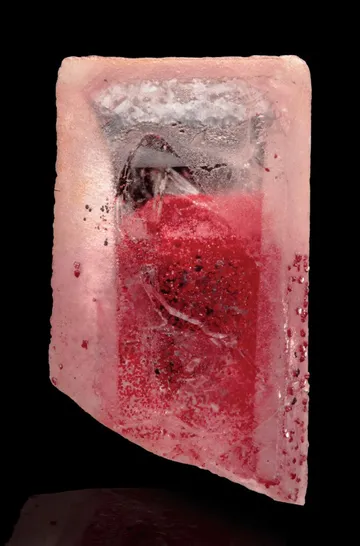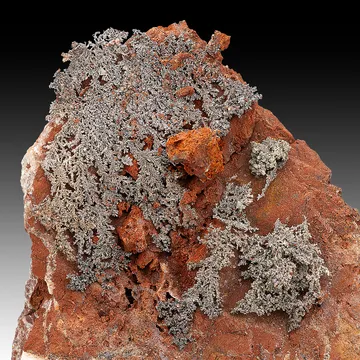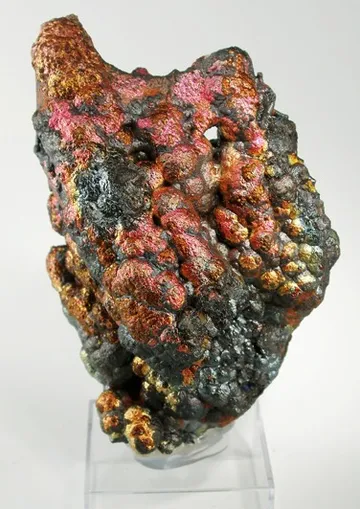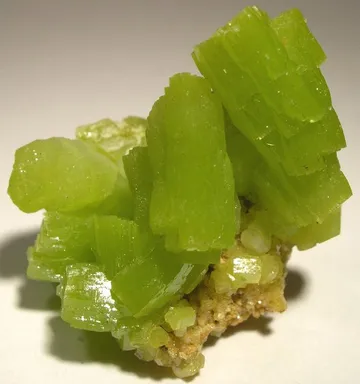
Cartagena, Spain — a famed Sierra Minera locality yielding argentiferous galena, sphalerite, barite, and oxides; prized for diversity and collecting appeal.
Key facts
Cartagena is not a single pocket locality so much as the collecting face of the great Sierra Minera de Cartagena-La Unión, the coastal Pb-Zn-Ag-Fe district that runs eastward from Cartagena toward Portmán and Cabo de Palos. For mineral collectors it matters because the district combines long-lived ore geology with an unusually rich specimen history: argentiferous galena and sphalerite as the economic backbone; iron and manganese oxides in weathered caps; smithsonite, hemimorphite, cerussite and anglesite in the oxidized zones; and, in certain mines, memorable barite, amethystine quartz, fluorite, cassiterite, greenalite, vivianite, ludlamite, pyrolusite, romanechite, and rare chloride-sulfate suites.
Geologically, the district sits in the eastern Betic realm, where Nevado-Filábride and Alpujárride basement units are overlain and cut by Neogene sedimentary, volcanic, and subvolcanic rocks. The ores are not simple veins alone. The classic Cartagena-La Unión field includes stratabound replacement bodies in carbonates, disseminated sulfides in Miocene rocks, veins, stockworks, and gossans produced by oxidation of the sulfide masses. That variety explains the look of the specimens: dense, heavy sulfide pieces; rust-red and black oxide matrices; pale to honey carbonate crusts; and, from the better barite occurrences, sharp tabular crystals that can be blue, white, cream, ocher, yellowish, or orange-zoned.
Regional View
Country View
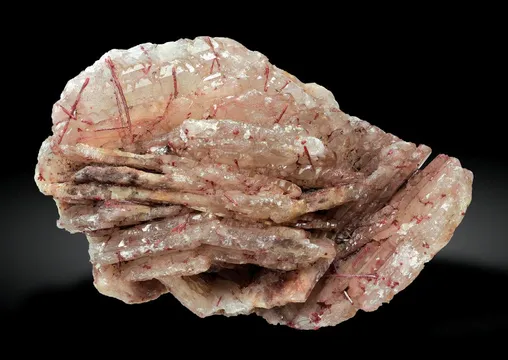
The finest Cartagena barites have a distinctly Mediterranean personality: transparent to translucent blades and tablets, often thick rather than papery, set in rosettes, books, spear-point clusters, or intergrown plates on iron-stained matrix. Teresita Mine at Atamaría is the modern name most collectors associate with blue barite from the Cartagena side of the district, while Victoria, Haití, Marisol, Rincón de San Ginés, and other mines broaden the color range and habit. Good pieces show clean terminations, strong luster, a balanced cluster rather than a jumbled crust, and enough matrix to anchor the locality visually.

Photo: Museo Virtual de Mineralogía
Historically, Cartagena is one of Europe’s great metal districts. Copper mineralization was worked in antiquity, but silver-bearing galena made the district famous under Carthaginian and Roman control. Nineteenth-century operators reworked Roman slags, reopened old workings, and exploited secondary lead and zinc ores before deeper sulfides and large-scale twentieth-century open pits transformed the landscape. The last industrial phase, especially under Peñarroya and then Portmán Golf, left both a major specimen legacy and one of Spain’s best-known mining-environment stories: Portmán Bay, partly filled by flotation tailings from the Lavadero Roberto.
Search for specimens: View all specimens from Cartagena, Spain
The collecting locality normally filed as Cartagena, Spain belongs to the broader Sierra Minera de Cartagena-La Unión, a compact but complex mining belt on the southern margin of Murcia. It extends through the Cartagena and La Unión municipalities, with named collecting ground around Llano del Beal, El Beal, San Ginés de la Jara, Atamaría, Cabezo de Ponce, El Gorguel, Portmán, and Cabo de Palos. Many older labels abbreviate the district heavily: “Cartagena,” “La Unión,” “Carthagena,” “Murcia,” “Portmán,” or “Sierra de Cartagena” may all refer to closely related ground, but serious collectors should preserve the mine name whenever it is known.
The ore field is classically described in several morphological-genetic styles. The mantos were the chief historical ore bodies: stratiform replacement masses, mainly in carbonate levels, with one important horizon at the base of the lower Alpujárride carbonate package and another in marble levels of the upper Nevado-Filábride. Disseminations occur in Miocene materials, particularly as irregular sulfide bodies in pelitic-sandy beds and by replacement of limestone clasts in conglomerates. Veins cut several lithologies, and in the district can reach hundreds of meters to about a kilometer in length, though their thickness is generally modest. Stockworks of smaller veinlets are commonly associated with volcanic rocks. Above and around the sulfide mineralization, oxidation produced gossans rich in iron and manganese oxides and secondary lead-zinc minerals.
The primary ore assemblage is led by galena, sphalerite, pyrite, marcasite, and locally cassiterite, with siderite, silica, chlorite, magnetite, greenalite, and related iron silicates or carbonates in the more unusual stratabound bodies. One reason the district remains interesting to economic geologists is the iron oxide–iron silicate–iron carbonate association in some Pb-Zn ores: greenalite, magnetite, minnesotaite, siderite, galena, and sphalerite form a paragenesis far less ordinary than the outwardly familiar “lead-zinc district” label suggests.
The oxidized zone supplied much of the mineral-collector diversity. Galena altered to anglesite and cerussite; sphalerite contributed smithsonite and hemimorphite; pyrite and marcasite generated sulfates and iron oxides; and manganese-rich zones yielded pyrolusite, romanechite, coronadite, chalcophanite, and related black oxide assemblages. In arid, chloride-bearing settings near the coast, particularly at the Ferruginosa mine in the Cabo de Palos area, a suite of rare secondary chlorides and chloro-sulfates developed with cotunnite, caracolite, sideronatrite, penfieldite, boleite, chlorargyrite, atacamite, paratacamite, and halite on iron-rich matrices.
Mining history divides naturally into three broad chapters. Ancient activity began with copper indications and reached a major silver-lead phase under Roman control, when argentiferous galena and silver-bearing gossan material were exploited around places such as Cabezo Rajado and the mantos. After long periods of sporadic work, the nineteenth-century revival began with the reprocessing of Roman slag heaps and then moved into secondary lead ores and later sulfides. A useful figure for the scale of the old metallurgy is the estimate of more than a million tonnes of ancient slag in the zone, still containing around ten percent lead, which explains why the slag dumps themselves became an early target of modern exploitation.
The final industrial chapter belongs to the mid-twentieth century. Differential flotation, large open-pit mining, and large treatment plants made low-grade and complex ores workable. Peñarroya became the dominant modern operator in the district, introduced and expanded large open-cast work, and fed the Lavadero Roberto near Portmán. The Cartagena facilities were sold to Portmán Golf in 1988, and the industrial mining era ended around 1990-1991, with different sources recording the cessation as 1990 for the final shutdown of operations and 1991 for the definitive closure of the district’s mining activity.
For collectors, the most important specimen sources are scattered through many named mines rather than a single “Cartagena mine.” Teresita Mine at Atamaría is central for blue barite and is the name most likely to lift an otherwise ordinary Cartagena barite label. Victoria Mine at Cabezo de San Ginés is known for ocher to orange-zoned barite rosettes and pseudohexagonal aggregates on goethitic matrix. Haití Mine, also in the Cabezo de San Ginés area, has produced notable manganese oxide specimens, including pyrolusite and romanechite, as well as barite and rare secondary associations. The Marisol Mine at Barranco Las Nogueras has yielded large tabular white barite groups. The Ferruginosa Mine at Cabo de Palos is a micromount and analytical locality rather than a source of showy cabinet pieces, but it is exceptional for rare chlorides and chloro-sulfates in an arid coastal oxidation environment. Corta San Valentín, Corta Sultana, San José, Gloria, Catón, Precaución, Tercera Esperanza, and Los Blancos Quarry are among the other names that matter on labels and in literature.
Collecting access today should be approached conservatively. The district is inactive industrially, much of the landscape is protected as cultural or mining heritage, and abandoned workings are unstable, contaminated, or on private or restricted land. The official public experience is through heritage sites such as the Mining Park and interpretation routes, not casual entry into shafts and stopes. The danger is not theoretical: local reporting in December 2025 described a fatal accident involving an experienced mineral collector in an abandoned mine in the Llano del Beal area. For modern specimens, the safest and most ethical route is acquisition from old collections, Spanish dealers, documented field collectors, and material with mine-specific provenance.
Barite is the signature collectible species for Cartagena in today’s market, especially from Teresita Mine at Atamaría, where the best specimens are translucent blue tabular crystals, commonly thick-bladed, chisel-shaped, spear-pointed, or clustered in open groups; documented examples range from small thumbnails and miniatures to cabinet pieces, with individual crystals reported from about 1 cm to several centimeters, and Spanish collection material includes specimens around 5-13 cm overall. Other Cartagena-La Unión barites widen the aesthetic: Victoria Mine pieces can be ocher, yellowish, or orange-zoned pseudohexagonal rosettes on goethite or limonite; Marisol Mine has produced snowy white tabular groups; Haití and Rincón de San Ginés material includes yellowish, dissolved, or classic tabular forms; and some district pieces show iron and manganese oxide staining or sit with galena, fluorite, dolomite, calcite, or goethite. The best Cartagena barites are crisp, lustrous, and damage-free, with attractive color zoning or blue saturation; ordinary examples tend to be iron-stained crusts, dull plates, or incomplete cleavages lacking the clean geometry that makes Teresita and Victoria specimens distinctive.
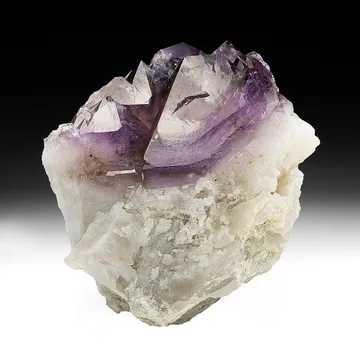
Beyond barite, Cartagena is a deep locality for the collector willing to look past cabinet aesthetics. Galena remains the emblematic ore mineral, typically in cubic, octahedral, or cuboctahedral crystals and growths, often argentiferous; sphalerite is widespread and commonly iron-rich, producing the dark “marmatite” look, but the district is also celebrated in Spain for caramel-brown sphalerite. The oxidized suite includes smithsonite, hemimorphite, cerussite, anglesite, goethite, hematite, pyrolusite, romanechite, coronadite, chalcophanite, hydrohetaerolite, and jarosite-group minerals. Quartz occurs as amethyst in some old workings, and fluorite, dolomite, calcite, siderite, cassiterite, marcasite, pyrite, chalcopyrite, chalcocite, malachite, azurite, greenockite, aragonite, and celestine are documented from the district. No widely accepted type-locality mineral appears to define Cartagena in the way that some classic European mines are tied to a new species, but the district’s rarity credentials are strong: greenalite is a characteristic and uncommon iron silicate in the “manto de los azules” style ores, vivianite and ludlamite occur as scientifically interesting phosphates, and Ferruginosa Mine has produced a notable Spanish occurrence of cotunnite, caracolite, sideronatrite, boleite, chlorargyrite, penfieldite, cadwaladerite, atacamite, paratacamite, glauberite, and other arid-zone secondary species.
The main authenticity issue with Cartagena specimens is not widespread artificial treatment but locality precision. Older labels often compress the whole district into “Cartagena,” “La Unión,” or “Murcia,” while modern collecting and market value may depend strongly on the exact mine. A blue tabular barite simply labelled “Cartagena” is plausible, but a Teresita attribution should ideally be supported by an old label, dealer history, collector provenance, or morphology consistent with the Atamaría material. Likewise, orange-ocher barite rosettes are better compared with Victoria Mine material, while black manganese oxides from Haití should not be casually relabelled as generic “pyrolusite” without analytical support where romanechite or mixed Mn oxides are possible.
Condition is crucial. Barite has perfect cleavage, a relatively low hardness, and exposed tabular edges that chip easily; many otherwise attractive Cartagena pieces have bruised margins, sheared blade tips, or repaired plates. Strong blue color can hide small nicks, so inspect terminations under oblique light. Iron-stained matrices are normal and can enhance contrast, but aggressive cleaning may dull barite or expose cleavages. Avoid acid testing on mixed secondary assemblages: carbonates such as calcite, smithsonite, cerussite, and siderite may react or be damaged, and rare chloride-sulfate micromount material from Ferruginosa can include soluble or humidity-sensitive phases. Halite, cotunnite-bearing associations, sideronatrite, and other delicate efflorescent species should be stored dry, stable, and away from repeated handling.
For galena and sphalerite specimens, check for oxidation, loose sulfide grains, and old matrix repairs. Galena is dense and easily bruised; sphalerite can be brittle; marcasite and pyrite-bearing matrices may oxidize if stored damp. Manganese oxide specimens from Haití and similar mines can be difficult to identify visually because botryoidal romanechite, pyrolusite crusts, and mixtures may look deceptively similar. Analytical labels from respected Spanish collectors or dealers add real value for those pieces.
Availability is uneven. Barite from Cartagena appears regularly enough on the Spanish and European market to be obtainable, but top Teresita blue groups, clean Victoria rosettes with old labels, and large undamaged cabinet specimens are much less common than the locality name might suggest. Ferruginosa rare-species pieces are primarily micromount or analytical specimens, not show minerals. Good old labels from collectors such as J. A. Robles, Joan Astor, Raul Sanabria, Miguel David Martínez, Joan Viñals, or other documented Spanish collections can be especially desirable because they help separate precise locality material from the large volume of broadly labelled district specimens.
The oldest Cartagena mining story is almost too large to imagine from a cabinet specimen. Classical accounts, repeated in modern studies of the Sierra Minera, describe the silver mines of Carthago Nova as lying about twenty stadia from the city, occupying an area of about four hundred stadia, and employing forty thousand workers. The ore was not treated once and forgotten: silver-bearing material was washed, crushed, sieved, reworked, and smelted after repeated concentration until lead and silver could be separated. A galena specimen from Cartagena is therefore not merely a sulfide; it is a fragment of the mineral economy that helped make Roman Cartagena one of Hispania’s major industrial places.
The nineteenth-century revival began with a collector’s kind of irony: the old waste was still ore. Roman slag heaps around the Sierra de Cartagena retained enough lead to be valuable, and modern operators began exploiting them in 1843. For nearly two decades the ancient dumps were registered, claimed, and re-smelted. Only after that did attention move fully into the secondary lead ores that earlier miners had ignored or left behind. This is one reason Cartagena specimens so often have a palimpsest quality: a single locality label may carry ancient silver mining, nineteenth-century slag recovery, and twentieth-century open-pit work in the same landscape.
Ferruginosa Mine at Cabo de Palos offers a very different image: not roaring furnaces, but mineralogists moving through dusty abandoned passages, dropping down a steep inclined ramp, and noticing yellow efflorescences on gallery walls. In the study of the mine’s rare secondary suite, the memorable discoveries were measured in millimeters and microscope fields, not kilograms. Caracolite appeared in tiny brilliant pseudohexagonal crystals associated with cotunnite, halite, natrojarosite, and sideronatrite; sideronatrite formed yellow rosettes only a few millimeters across; and some suspected species required SEM-EDS analysis before they could be placed confidently. The mine’s importance lies in that tension between harsh, iron-rich old workings and a chemistry delicate enough to build rare chlorides and chloro-sulfates from arid air, sea salts, and altered lead ore.
The modern Portmán story is the district’s darkest field note. Peñarroya’s Lavadero Roberto treated immense volumes of ore, and the unwanted sludge went through a discharge pipe into Portmán Bay. Local accounts remember the pipe being moved because the sea in front of it had already vanished beneath tailings. By the time dumping ended, tens of millions of tonnes of waste had advanced the shoreline hundreds of meters and sent contamination far offshore. For collectors, this does not diminish the mineralogical importance of Cartagena; it makes the locality harder to romanticize. The same ores that gave Spain handsome barite, galena, sphalerite, and manganese specimens also left a landscape where industrial heritage, environmental repair, and public memory remain inseparable.
There is also a cultural story underground. Mina Agrupa Vicenta, rehabilitated as part of the La Unión Mining Park, became a place where the mining world and flamenco literally met beneath the surface. In November 2014 the pianist Abdón Alcaraz recorded music there with Jorge Pardo, Javier Colina, Verónica Sobrino, Miguel Ángel Orengo, and Gautama del Campo, in a chamber about eighty meters underground. The choice was not decorative. La Unión’s Festival del Cante de las Minas grew from a landscape of shafts, ore carts, migrant labor, and mining families; to hear flamenco in a mine is to understand why the district’s mineral specimens often feel culturally heavy as well as physically dense.