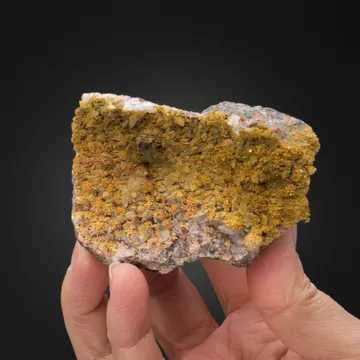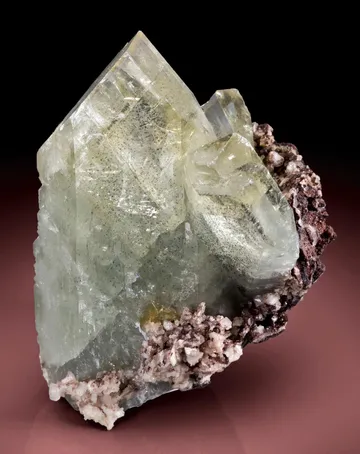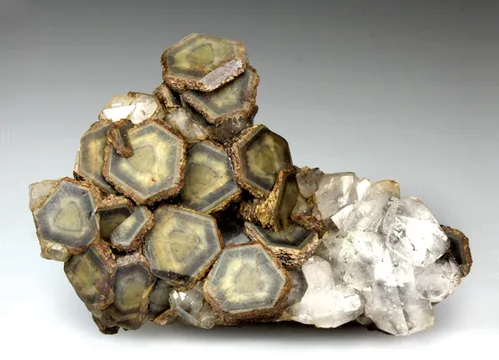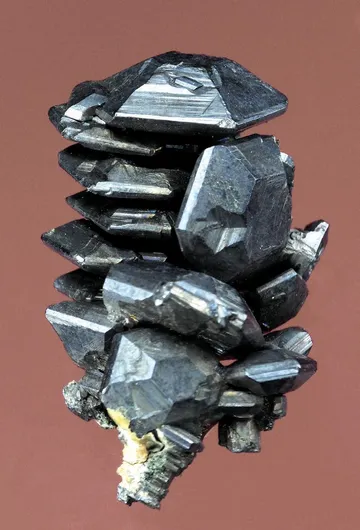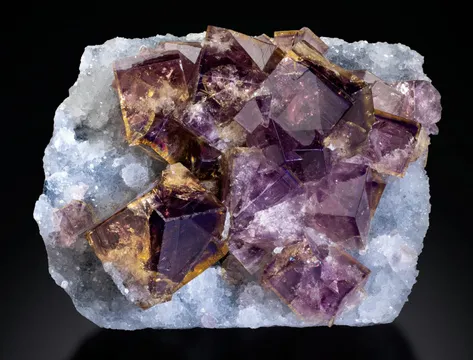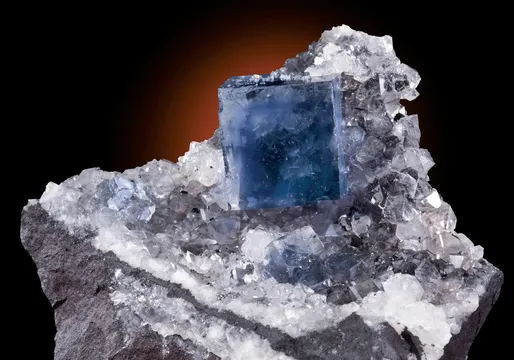
Boulby Mine, UK — a North Sea evaporite locality famed for boracite-group minerals, especially sea-green to blue-green boracite crystals; access is controlled.
Key facts
Boulby Mine is one of the great modern evaporite localities of Britain: a deep, active mine on the North Yorkshire coast where industrial potash and polyhalite mining unexpectedly opened a world-class collector occurrence for boracite-group minerals. The mine is developed in Upper Permian Zechstein evaporites of the Cleveland Basin, on the southwestern margin of the North Sea Basin, where repeated marine evaporation produced thick successions of halite, anhydrite, dolomite, carnallite, sylvinite and polyhalite. For specimen collectors, however, Boulby’s importance rests on a narrow and unusual borate-bearing interval associated with the potash horizon, where hard nodules yielded boracite, hilgardite, magnesite, trembathite, questioned “ericaite,” congolite and, more recently, exceptional volkovskite.
The best Boulby specimens have a look unlike the showier vein-mineral classics of northern England. Instead of fluorite cubes or galena groups, one sees miniature landscapes of sea-green to blue-green boracite: dense crusts of sharp, glassy, millimetre-scale crystals over hard borate nodule matrix, sometimes with pink-orange to salmon hilgardite, transparent magnesite plates, or rare colourless to nearly colourless volkovskite blades. The finest pieces combine uncommon colour, sparkle, undamaged pocket surfaces and enough three-dimensional form to lift them beyond the usual massive nodule material. In the history of British mineral collecting, Boulby is important because it added a thoroughly modern deep-mine chapter to the classic northern England canon, and because its borates became reference material for mineralogical work on marine evaporite borates.
Regional View
Country View
Boulby is not a collecting ground in the casual field-collecting sense. It is a working industrial mine more than a kilometre beneath the surface, with access controlled by the operator. Historically, specimens reached collectors through mine geologists, miners, and a relatively small number of well-connected British collectors and dealers. That restricted pathway is part of the locality’s character: good pieces are finite, strongly provenance-dependent, and often trace to a handful of finds in the late twentieth and early twenty-first centuries.

Photo: Wikimedia Commons / Dave Eagle
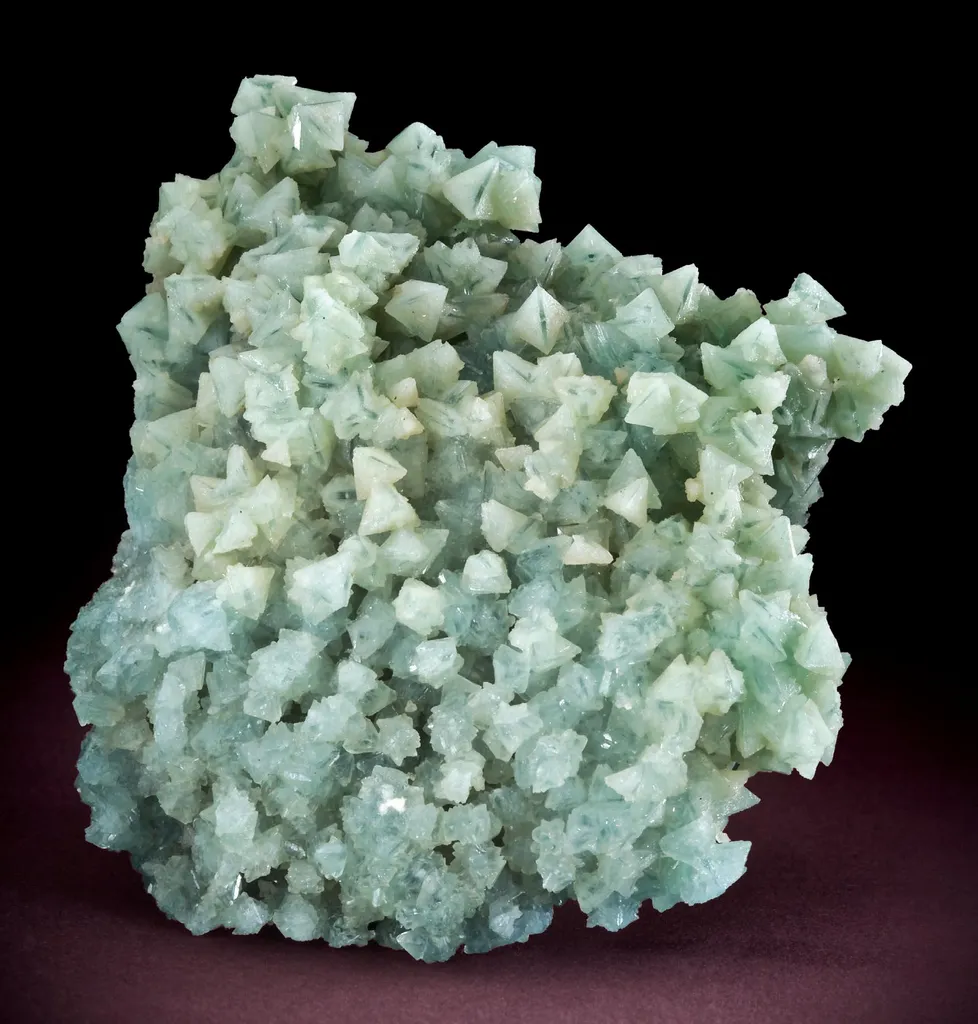
Photo: EarthWonders
Search for specimens: View all specimens from Boulby Mine, UK
Boulby Mine lies near Loftus and Staithes on the northeast coast of England, within the North York Moors National Park and adjacent to the North Sea. The deposit belongs to the Permian Zechstein evaporite province, a broad northern European evaporitic system formed as a restricted sea underwent repeated cycles of flooding, evaporation and brine concentration. At Boulby, the mine exposes and exploits part of this carbonate-evaporite succession: thick halite, anhydrite, dolomite, carnallitic beds, sylvinite potash horizons and underlying polyhalite.
The original economic target was potash in the Boulby Potash horizon, a sylvinite ore made chiefly of sylvite and halite, with subordinate evaporite minerals including anhydrite, carnallite, magnesite, talc, clay minerals, hematite and boracite. The modern mining focus is polyhalite, K2Ca2Mg(SO4)4·2H2O, a potassium-calcium-magnesium sulfate marketed as a multi-nutrient fertilizer mineral. The polyhalite lies below the former potash workings and is reached through underground development from the existing mine infrastructure. Current mining is carried out at depths greater than 1,000 metres and extends offshore beneath the North Sea.
The collector minerals come from a different scale of observation than the orebody itself. The famous boracite-bearing material occurs as hard borate nodules and associated pockety masses in the potash sequence. Published and collector accounts describe nodules ranging from egg-sized lumps to masses approaching a metre across. These nodules were a nuisance to mining machinery designed for the comparatively more workable salt and sylvinite, but they proved to be the source of Boulby’s best mineral specimens. Broken open carefully, the best nodules revealed vugs and crusts lined with boracite, hilgardite and related borates.
The mining history begins with regional potash discovery in 1939, when the D’Arcy Exploration Company encountered potash while drilling near Whitby in search of oil. ICI and Fisons explored the Whitby district in the late 1940s and early 1950s, but the great depth of the seams delayed development. Cleveland Potash Ltd received planning permission in 1968, and construction of the mine followed in 1969 with the sinking of two major shafts. Potash production began in the early 1970s, with full production achieved later that decade. Ownership ultimately passed to ICL in 2002, and in 2018 the operation ceased potash mining and shifted to sole production of polyhalite, while continuing to produce salt products.
Specimen recovery has always depended on mine access. The great boracite specimens were not the product of open collecting trips but of underground finds made during mining. The best-known collector period centres on the early 1990s, especially a celebrated 1991 find that produced many of the finest green to blue-green boracite specimens. Specimens mined in 1993 are also represented in important collections. Later, the mine yielded rare volkovskite in surprisingly large crystals for the species, again as a limited find rather than a sustained collecting source. The mine is active and access today is industrial, not recreational; collectors should treat any Boulby piece as a specimen whose value rests heavily on reliable provenance, old labels, and association with known collections such as the Lindsay Greenbank material.
Boulby also has a second identity: deep underground science. The Boulby Underground Laboratory occupies the mine environment because the overlying rock suppresses cosmic radiation dramatically and the surrounding salt has low natural radioactivity. This does not directly produce mineral specimens, but it adds to the locality’s singular status: few mineral localities are at once a working evaporite mine, a source of world-class borates, and one of the United Kingdom’s major underground science sites.
Boulby boracite is the locality’s signature collector mineral and occurs chiefly in hard borate nodules associated with the potash horizon, where crystals line vugs, cover nodule surfaces, or form sparkling crusts and aggregates. The common material is white to colourless or pale blue-green in pseudo-cubic to pseudo-tetrahedral habits, while the most desirable pieces show saturated sea-green, blue-green or electric-blue tones, sharp glassy faces, and undamaged crystals typically in the millimetre range; crystals around 4–5 mm are already significant for fine Boulby material. Associations are important: salmon to pink-orange hilgardite adds contrast, transparent magnesite plates are a prized accessory, and some pieces show more than one generation of boracite growth. Good specimens are judged by colour, luster, isolation of crystals, vuggy three-dimensional form, lack of bruising from mining or trimming, and a trustworthy history tying them to the classic early 1990s finds rather than to anonymous massive nodule fragments.
Beyond boracite, Boulby is an important locality for a compact but scientifically rich suite of evaporite borates. Hilgardite, Ca2B5O9Cl · H2O, occurs with boracite and may form pink-orange, salmon or reddish crystalline aggregates and crusts. Volkovskite is one of the great rarities of the mine: Boulby specimens have been described as intergrown, glassy, nearly colourless bladed crystals up to about 2.5 cm on salmon-coloured hilgardite, from a small find amounting to only a few dozen good specimens. Trembathite, (Mg,Fe)3(B7O13)Cl, occurs as a boracite-group rarity, and old Boulby labels reading “ericaite” should be treated cautiously because some or all such material has subsequently been regarded as trembathite or congolite. Iron-bearing boracite from Boulby was important enough to receive a dedicated 1977 Mineralogical Magazine note, and the broader mineral list includes halite, sylvite, anhydrite, gypsum, carnallite, polyhalite, magnesite, calcite, quartz, talc, hematite, szaibélyite and veatchite-1M.
The principal authenticity issue with Boulby specimens is not widespread artificial treatment but documentation. Because the mine is a closed industrial environment, specimens should have a credible route out of the mine: old British labels, mine-geologist provenance, dealer records, or a known collection history. Lindsay Greenbank provenance is especially meaningful for classic Boulby boracite, and specimens with solid older documentation command more confidence than anonymous “Boulby Mine” labels attached to generic pale boracite.
The most important specific mislabelling problem concerns boracite-group names. Older specimens labelled “ericaite” from Boulby may not be ericaite in the strict sense; Boulby material so labelled has been questioned and in some cases regarded as trembathite or congolite. For valuable black, brown, purple or unusual boracite-group crystals, visual identification is not enough. Analytical confirmation by XRD, Raman, microprobe or a reliable published provenance is appropriate, especially when the label uses names such as ericaite, trembathite or congolite.
Condition varies sharply. Boracite itself is relatively hard and durable, but the best crystals are small and exposed on uneven nodule surfaces, so contact wear, chipped tips, pocket bruising and trimming scars are common. Specimens can be deceptively heavy and tough because the nodules are hard, yet the display surface may be delicate. Matrix may include water-soluble evaporite minerals such as halite and sylvite, and carnallitic material, where present, can be moisture-sensitive. Avoid washing, soaking, ultrasonic cleaning, humid storage, or display in cases prone to condensation. Dry brushing, air puffs and stable low-humidity storage are safer.
Boulby boracite is available often enough that patient collectors can choose, but fine examples are much scarcer than the number of locality labels suggests. Ordinary pieces are pale, massive, compact or only weakly crystallized. The market rewards vivid green to blue-green colour, bright luster, crystals approaching several millimetres, attractive vugs, hilgardite contrast, and old provenance. Volkovskite and confirmed trembathite or congolite are specialist rarities and should be purchased with documentation.
The modern Boulby story begins with an oil search that found fertilizer instead. In 1939, D’Arcy Exploration Company drilled near Whitby looking for petroleum and encountered potash at depths of roughly 1,100 to 1,300 metres. That was an awkward discovery: valuable, but buried beneath a formidable pile of water-bearing and sedimentary rocks. For decades the deposit was known but technically daunting. ICI and Fisons explored it after the war, considered it, and stepped back. The decision to build at Boulby came only after mining and processing technology caught up with the depth of the seam.
The shaft-sinking years left one of the best human snapshots of the mine. On 4 February 1971, crews sinking the Rock Shaft broke a European shaft-sinking record by advancing 400 feet in 30 days. A local archive preserves the moment not as an abstract engineering statistic but as a photograph of the men who did it. Family memories still cling to the image: James Stanley Smith remembered as a steel fixer during the sinking, and Steve Peirson recalling the men he worked with in the Boulby and Whitemoor years. The record was later beaten again during the sinking of the Main Shaft, but the first achievement captures the physical audacity of creating a potash mine more than a kilometre below the North Yorkshire coast.
For collectors, the memorable underground object was not a polished crystal pocket waiting neatly in the wall, but a hard, awkward nodule that could damage machinery. The boracite-bearing masses were initially industrial irritants, not treasures. Only when miners and collectors learned what the broken nodules could contain did Boulby’s mineralogical importance become clear. That reversal is part of the locality’s charm: the very material that frustrated equipment became the source of some of the finest boracite specimens ever to enter British collections.
The 1991 boracite find has become the classic collector episode. Accounts describe it as the source of the best Boulby boracite: green to electric-blue pseudo-tetrahedral crystals, some with the odd optical trick of appearing paler blue in daylight and darker blue under tungsten light. Later specimens, including material mined in 1993, entered important collections and publications. A 7 cm specimen in the EarthWonders records carries the kind of description collectors love: sharp boracite crystals to 5 mm, a size that is genuinely meaningful for Boulby’s normally millimetric crystal habit.
Then came the science-fiction turn: Boulby became a place where people went underground not only to mine salts but to listen for dark matter. Visitors descend in a mine cage for six to eight minutes, dropping about 1.1 kilometres into the earth. One account describes the body-shaking cage, the roar of ventilation air, airlock doors and ears popping before the descent; another remembers helmet lights in a cage with no lighting, salt dust sparkling in the beams, and miners at shift’s end waiting for the ride back up. The underground laboratory exists because the rock overhead cuts cosmic-ray interference by about a factor of a million. In that setting, the same salt mine that produced boracite nodules also hosts physicists searching for weakly interacting massive particles, neutrino technologies, low-background materials, and even experiments involving life in extreme environments.
Milne, John K. (1978). The potash deposits and their associates in the area of the Boulby Mine, Cleveland. PhD thesis, University of Edinburgh. A foundational thesis for the petrology, geochemistry and borate nodule setting of the Boulby evaporites.
Milne, John K.; Saunders, Michael J.; and Woods, Peter J. E. (1977). “Iron-Boracite from the English Zechstein.” Mineralogical Magazine, 41, 404–406. The key publication documenting iron-bearing boracite from Boulby.
Embrey, Peter G. (1978). “Fourth supplementary list of British minerals.” Mineralogical Magazine, 42, 169–177. Includes Boulby iron-boracite among additions to the British mineral record.
Woods, P. J. E. (1979). “The Geology of Boulby Mine.” Economic Geology, 74(2), 409–418. A principal geological reference for the mine and its evaporite setting.
Talbot, C. J.; Tully, C. P.; and Woods, P. J. E. (1982). “The structural geology of Boulby (potash) mine, Cleveland, United Kingdom.” Tectonophysics, 85, 167–204. The major structural-geology treatment of the mine’s Upper Permian potash and salt.
Green, David I.; and Freier, Max D. (1994). “Borate nodules from the English Zechstein at Boulby Mine, Cleveland.” UK Journal of Mines and Minerals, 14, 4–8. The essential collector-mineral reference for Boulby’s borate nodules.
Schindler, M.; and Hawthorne, Frank C. (1998). “The crystal structure of trembathite (Mg1.55Fe1.43Mn0.02)B7O13Cl, a mineral of the boracite group.” The Canadian Mineralogist, 36, 1195–1201. Important for understanding Boulby trembathite and the boracite-group nomenclature problem.
Genis, Jac; Freier, Max D.; Green, David I.; and Cotterell, Tom F. (2016). “Exceptional Volkovskite Crystals from Zechstein Evaporites at the Boulby Mine, Cleveland, England.” Rocks & Minerals, 91(5), 434–443. The definitive publication on Boulby volkovskite.
Wilson, Wendell E., ed. (2010). Classic Minerals of Northern England. Special supplement to The Mineralogical Record, 41(1). Includes the Boulby Mine boracite chapter based on the Lindsay and Patricia Greenbank collection.
Northern Mine Research Society, British Mining 121: Cleveland Potash’s Boulby Mine, 1982 by Roger Bade. A modern mining-history monograph covering Boulby geology, equipment and mining methods, with later development into rock salt and polyhalite.
The secret science facility 1km below Yorkshire — The Royal Society A 29-minute live-linked tour of Boulby Underground Laboratory and its science projects inside the mine.
Emma Meehan: Helping scientists find dark matter in an underground lab — UKRI Short UKRI profile of a Boulby Underground Laboratory technician working in the 1.1 km-deep facility.
Searching for Dark Matter — ICL Boulby Operator-hosted media piece on the mine’s partnership with STFC and the underground dark-matter research environment.
Down in the dark matter lab — Lewis Dartnell, Boing Boing A vivid first-person account of descending into Boulby Mine to visit the underground laboratory.
Mindat: Boulby Mine locality page The best single online mineral list for Boulby, with photos, references and species-by-species occurrence records.
Mindat: Boracite from Boulby Mine Species-specific occurrence record for the locality’s most important collector mineral.
Mindat: Hilgardite from Boulby Mine Useful for Boulby hilgardite associations with boracite and volkovskite.
Mindat: Iron-bearing Boracite from Boulby Mine Occurrence record for the iron-bearing boracite material described from the English Zechstein.
Mindat: Ericaite from Boulby Mine Important cautionary record noting the questioned status of Boulby “ericaite” labels.
Steetley Minerals: Yorkshire localities Concise collector-oriented account of Boulby boracite habits, colour, nodules and associated minerals.
ICL 2024 Technical Report Summary for Boulby Mine Detailed current technical source for ownership, geology, mining method, production and polyhalite resources.
UKRI: Boulby Underground Laboratory Authoritative overview of the deep underground science facility hosted in the mine.
Wikimedia Commons: Boulby Mine photograph Reusable surface photograph of the mine by Dave Eagle.
EarthWonders: Boracite specimen from Boulby Mine Example of a classic Boulby boracite specimen with published-label information.