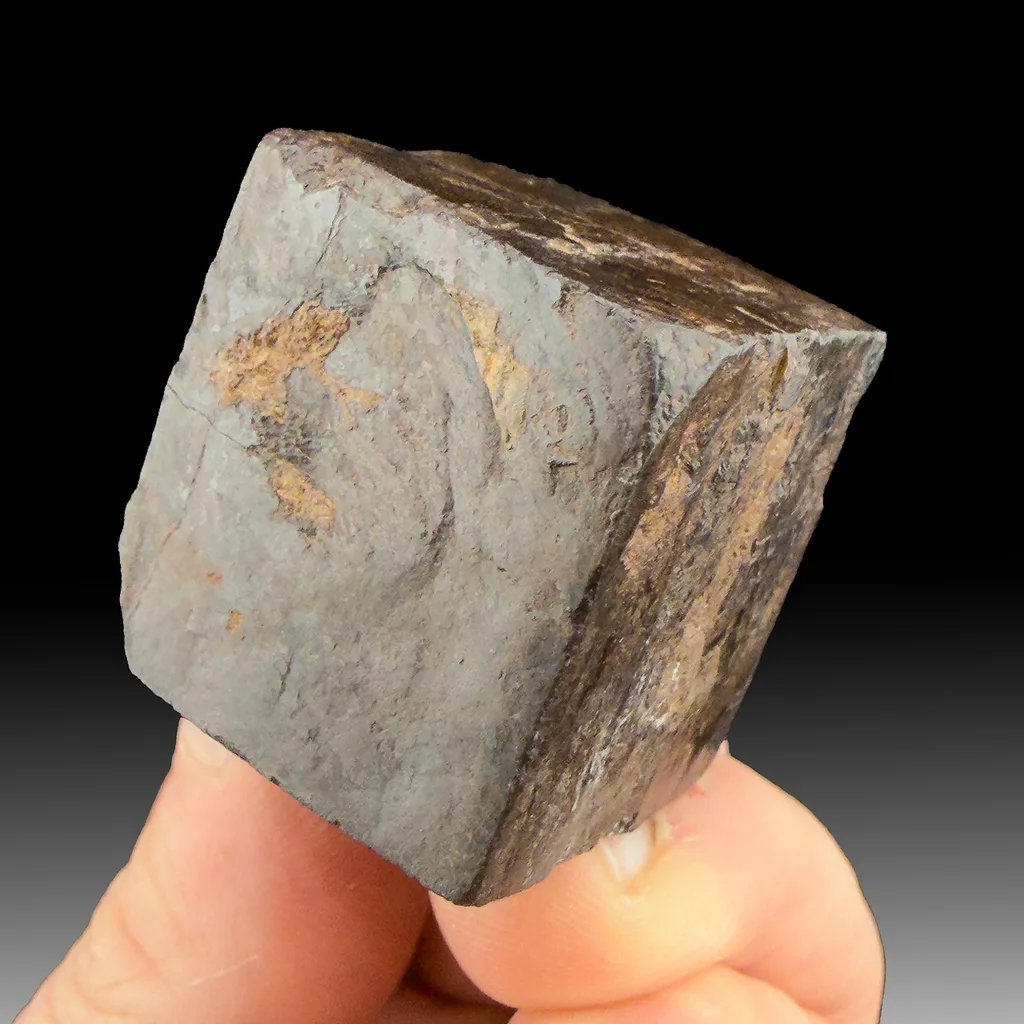
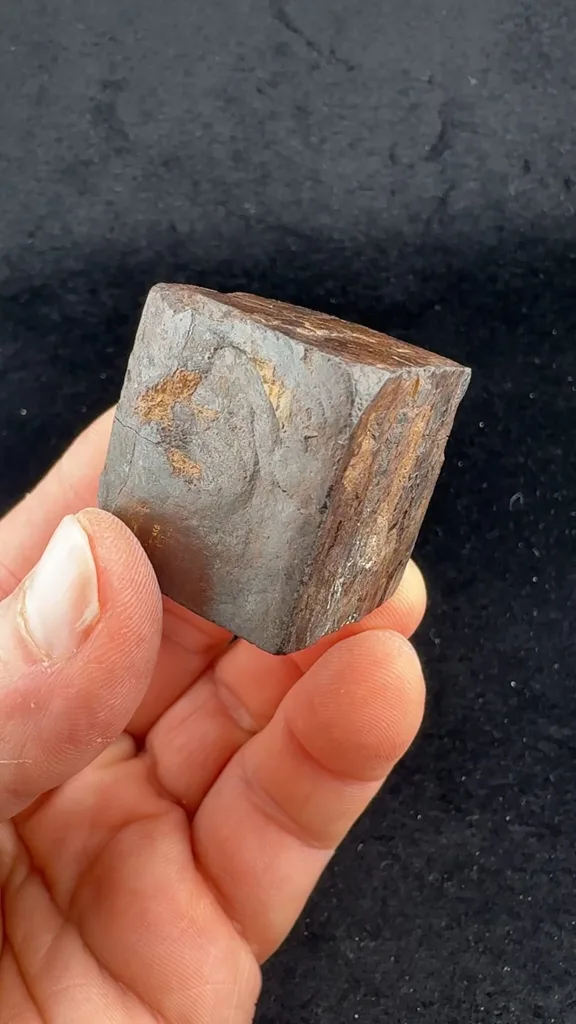
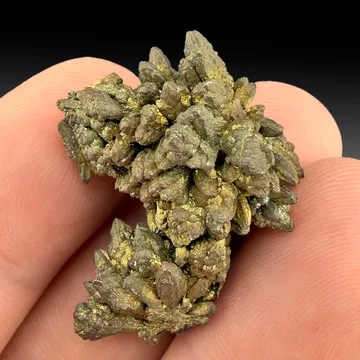
A loose sharply formed cube of pyrite, this now replaced by goethite. Complete all around with no points of attachment and in great condition. The largest dimension is measured from one corner to the other across the center of the crystal.Lancaster County in southeastern Pennsylvania lies within the Piedmont province, a complex geological region defined by metamorphosed Paleozoic sedimentary formations, including limestone, dolomite, and shale beds. Throughout the eighteenth and nineteenth centuries, the area sustained active iron mining operations to feed historic local furnaces, which led to extensive quarrying and mineral exploration by early American collectors. Within these limestone host rocks, iron-rich pyrite crystals originally formed as sharp cubes and pyritohedrons under reducing conditions. Over long periods, exposure to oxygenated groundwater and weathering caused goethite to systematically replace the original pyrite, preserving the exact geometric crystal shape while altering the underlying mineral composition. These pseudomorphs, locally referred to as limonite after pyrite, are celebrated by collectors for their crisp form, dark brown coloration, and rich connection to Pennsylvania's early mining heritage.


 Ships from USA
Comments