A collector's guide to Trepča Stari Trg Mine, Kosovo: its geology, mining history and notable minerals, illustrated with the 533 specimens documented from this locality on EarthWonders.
Key facts
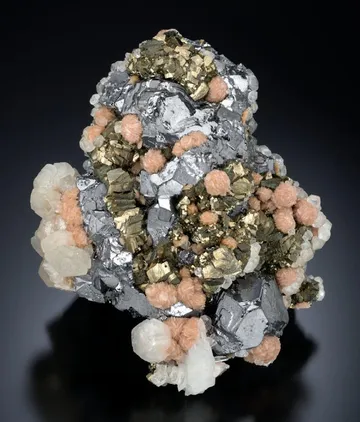
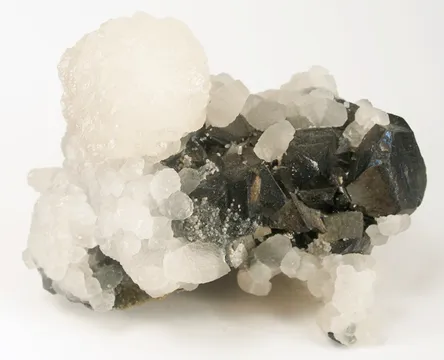
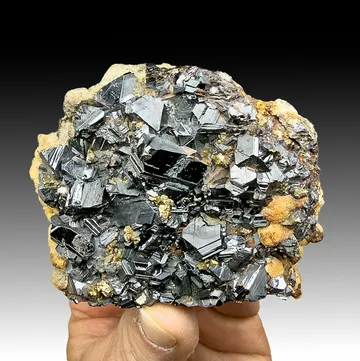
Trepča Stari Trg is one of the great European polymetallic specimen localities: a lead-zinc-silver mine where industrial scale, complicated Balkan mining history, and superb cabinet mineralogy meet in the same narrow valley northeast of Mitrovica. In mineralogical literature the locality appears under several names—Trepča, Stari Trg, Stan Trg, Stan Terg, and Stantërg—but collectors usually mean the classic Stari Trg mine at the heart of the Trepça complex, not the broader district. Its best specimens have an unmistakable look: black, lustrous iron-rich sphalerite; brassy pyrite, often as replacements after pyrrhotite; steel-gray galena; silvery arsenopyrite; bronze pyrrhotite; white to colorless calcite and quartz; dolomite; and touches of pink rhodochrosite or Mn-Fe carbonate. A fine Trepča piece is rarely a single-mineral object. It is usually a miniature cross-section of a flooded carbonate-replacement cavity, with several sulfides and carbonates locked together in a compact, high-contrast assemblage.
Geologically, Stari Trg sits in the Trepça Mineral Belt of the Vardar Zone, within the Alpine-Balkan-Carpathian-Dinaride metallogenic realm. The ore formed where hydrothermal fluids related to Oligocene-Miocene magmatism replaced carbonate rocks and produced both manto-style carbonate-replacement ore and skarn mineralization near a volcanic conduit and breccia pipe. The mine is famous not only because it produced millions of tonnes of lead and zinc ore, but because the same open cavities and replacement fronts that made rich ore also made exceptional crystals. For collectors, that is the essential point: Trepča was not merely a bulk-metal deposit that happened to yield specimens; its ore geometry, karstic cavities, carbonates, sulfides, and repeated mineralizing pulses were unusually well suited to producing aesthetic, complex mineral specimens.
Regional View
Country View
The mine’s reputation among collectors was built through older Yugoslav-era material, museum collections in Zagreb and at Trepça itself, European dealers, and later post-reopening specimens from miners and local contacts. The very best examples are sculptural rather than merely rich: sharply twinned sphalerite set against snowy calcite; pyrrhotite tablets converted to pyrite while preserving their hexagonal outlines; galena with corroded, flowing, cubo-octahedral faces; sprays of quartz and dolomite carrying sulfide accents; or unusually complex pieces with bournonite, boulangerite, jamesonite, vivianite, ludlamite, childrenite, or other rarities.

Search for specimens: View all specimens from Trepča Stari Trg Mine, Kosovo
Stari Trg is the central and most famous mine of the Trepça complex, near the village of Stari Trg/Stantërg in the Trepça valley, roughly northeast of Mitrovica. Older specimen labels commonly read “Trepca, Stari Trg, Yugoslavia,” “Stan Trg,” or “Stan Terg,” while modern labels may use Kosovo and Mitrovica District. For collectors, the name matters: the broader Trepça district includes several mines and prospects, but Stari Trg is the classic source of the familiar black sphalerite-calcite-pyrite-galena-pyrrhotite assemblages.
The deposit is best understood as a polymetallic Pb-Zn-Ag carbonate-replacement and skarn system. The main ore bodies are hosted in the Stari Trg Series at and near the contact between thick marmorized limestone below and schists above, locally with quartzite and quartz-mica schist along the contact. This contact is folded into a northwest-plunging antiform, and a volcanic conduit with dacite-trachytic affinities and explosion breccia lies along the structural hinge. That conduit was a major control on mineralization. Around it, the mine developed skarn assemblages with ilvaite, hedenbergite, actinolite, garnet and magnetite, while farther along the carbonate contact, hydrothermal fluids formed manto-style sulfide-carbonate ore.
The ore body is not a simple vein. Geological descriptions emphasize a set of coalescing, columnar and manto-like ore bodies, roughly hose-shaped in aggregate, developed along the folded schist-limestone contact and around the volcanic pipe. A frequently cited model describes at least eleven ore bodies, with mineralization concentrated along the sides of the conduit and in structurally prepared carbonate rock. Fractures, karstic dissolution, brecciation, and the impermeable schist cap all helped focus the mineralizing fluids. This is why Trepča specimens so often look like cavity linings rather than broken vein fragments: many crystals grew into flooded cavities, replacement voids, and carbonate-lined spaces.
The main economic minerals are galena and sphalerite, with pyrite, pyrrhotite and arsenopyrite as major sulfides and sulfosalts such as boulangerite, bournonite, jamesonite, tetrahedrite-group minerals, stannite, enargite and cosalite in smaller amounts. The gangue is equally important for collectors: calcite, quartz, dolomite, rhodochrosite, siderite and ankerite make the pale and pink framework against which the metallic species show. The mine’s manganese- and iron-bearing carbonates are a defining part of the visual character of its specimens.
Mining in the Trepça region has medieval roots, with silver, lead and iron extraction documented long before modern industrial development. Modern mining began when British interests, through Selection Trust and Trepča Mines Limited, developed the deposit in the late 1920s and opened the modern Stan Trg mine in 1930 at the site of older workings. The spelling “Stan Trg” appears to have originated as an early administrative misreading of Stari Trg and became embedded in mine documents and labels. After the Second World War the operation was nationalized within Yugoslavia and became the center of a large lead-zinc mining, smelting and chemical complex. Production declined sharply during the political and economic crises of the 1990s, and the Kosovo War caused forced closure and flooding. The mine was rehabilitated and reopened in 2005, and later studies and corporate reporting show continuing activity at the Stan Tërg mining-and-flotation unit.
From a collecting standpoint, Stari Trg is an active industrial mine, not an open public collecting site. Specimens historically reached collectors through miners, mine geologists, exchanges, old institutional collections, and dealers; modern material is still seen on the market, but legitimate provenance matters. Pockets and productive faces have been described from operating levels rather than named collector “pockets” in the style of a gem pegmatite. The most specific modern field descriptions include material collected during scientific visits in the reopened mine, including specimens from Level XI, hundreds of meters below surface, with sphalerite, pyrrhotite, arsenopyrite, galena, quartz, calcite and associated sulfosalts.
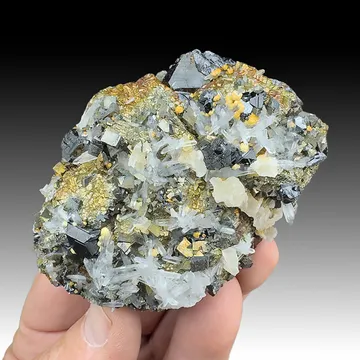
Calcite is the most visible pale counterpoint to Trepča’s dark sulfides, occurring as snowy white, colorless, translucent, lenticular, rhombohedral, nail-head, flattened and drusy crystals, and also as carbonate bands in karstic ore fillings. Fine calcite specimens from Stari Trg are valued less for isolated purity than for contrast: white calcite sitting on black sphalerite, brassy pyrite, galena, arsenopyrite or pyrrhotite is the classic look, and some calcites fluoresce under long- and short-wave UV, especially where manganese is present. Ordinary pieces are massive or heavily coated carbonate; good pieces have crisp, undamaged crystal form, clean white or glassy faces, balanced sulfide association, and enough open space to show the pocket texture rather than a dense ore lump.
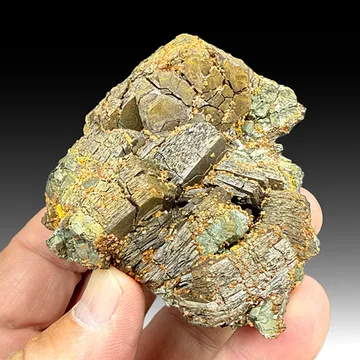
Pyrite at Trepča appears both as bright cubic to pyritohedral crystals and, very characteristically, as pseudomorphs or replacements after pyrrhotite, preserving platy, rosette-like or hexagonal outlines that immediately suggest the locality. Sharp brassy pyrite on black sphalerite or white calcite is common enough to define many market pieces, but high-quality pyrite specimens are less routine than their abundance might imply: the best have lustrous, well-separated crystals, clear striations or stepped growth, strong contrast, and recognizable pyrite-after-pyrrhotite forms rather than dull granular coatings. It is especially collectible when associated with twinned sphalerite, calcite, galena, quartz or rhodochrosite, because these assemblages preserve Trepča’s sulfide-carbonate paragenesis in a single specimen.
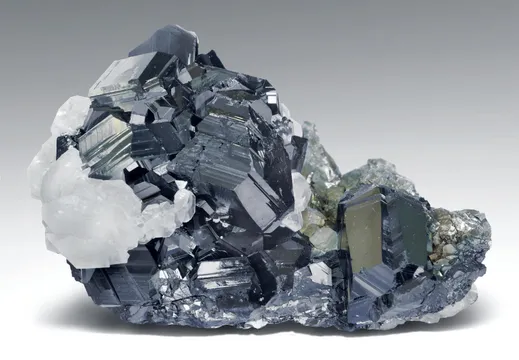
Sphalerite is one of the signature species of Stari Trg, usually as iron-rich, black to nearly black marmatitic crystals with high resinous to submetallic luster, modified tetrahedral forms, spinel-law twinning, complex intergrowths and, in studied examples, cyclic twins with multiple orientations. Most collector crystals are in the millimeter to 3 cm range, while published descriptions and older specimen accounts note exceptional crystals reaching several centimeters and rarely larger; the most desirable pieces show individualized, lustrous crystals instead of massive black ore. Associations with calcite, quartz, galena, pyrite, arsenopyrite, pyrrhotite, dolomite, rhodochrosite, bournonite or boulangerite are not incidental decoration here—they are the reason a Trepča sphalerite specimen reads as Trepča.
Quartz from Trepča is typically white to hyaline and prismatic, often forming slender crystals or sprays with calcite, dolomite, sphalerite, pyrite, arsenopyrite and galena; published collector accounts note quartz crystals up to several centimeters and occasional scepter-like habits. It is rarely the economic story of the mine, but it is important aesthetically because bright quartz points lighten the dense sulfide assemblages and help separate individual crystals on a specimen. The best quartz pieces from Stari Trg show glassy, undamaged tips and natural placement with metallic sulfides or carbonates, while ordinary examples are milky, broken, massive, or visually overwhelmed by ore.
Pyrrhotite is one of Trepča’s most diagnostic sulfides, especially as bronze-brown to brassy hexagonal tabular crystals, rosettes and plates, sometimes partly or wholly replaced by pyrite, marcasite, and more rarely galena while retaining the original pyrrhotite outline. Descriptions of the mine emphasize unusually large tabular pyrrhotite crystals, with exceptional examples far larger than the common collector pieces; on the market, miniatures and small cabinets with visible platy habit are far more typical. Good pyrrhotite specimens must be judged for both aesthetics and stability: sharp, lustrous tablets with sphalerite, calcite, arsenopyrite or galena are excellent, but altered, crumbling or powdery material demands caution because pyrrhotite and associated marcasite can oxidize in poor storage.
Arsenopyrite gives Trepča assemblages their cold silver flash, occurring as short prisms, bladed to tabular crystals, striated metallic crystals and parallel aggregates, commonly with sphalerite, pyrrhotite, pyrite, galena, quartz and calcite. Older descriptions note crystals up to several centimeters, although most collector specimens show smaller arsenopyrite accents rather than large isolated crystals. The finest pieces have sharply formed, bright arsenopyrite that stands proud of the matrix and is visually legible against black sphalerite or white carbonate; ordinary pieces have scattered gray metallic grains that disappear into a mixed sulfide mass.
Galena from Stari Trg is prized for more than weight: the mine produced cubes, octahedra, cubo-octahedra, skeletal or “star-like” forms, pseudomorphic relationships, and the famous corroded or melted-looking faces sometimes described in older European literature as flowing galena. It is commonly argentiferous and associated with sphalerite, pyrite, pyrrhotite, arsenopyrite, calcite, quartz, rhodochrosite and sulfosalts, and the best specimens show bright, sharp gray crystals with interesting form rather than massive lead ore. Good Trepča galena is especially attractive where it sits with black sphalerite and white calcite, or where pyrrhotite and pyrite add texture; damage, bruising, cleavage scars and indistinct massive galena quickly reduce the collector appeal.
Dolomite is one of the key carbonate gangue minerals at Trepča and occurs as white to cream, buff or pale rhombohedral crystals, sometimes with pearly luster and often in association with quartz needles, calcite, sphalerite, pyrite, galena and Mn-Fe carbonates. Older locality accounts describe impressive dolomite rhombohedra, including large crystals and multi-kilogram specimens, but the collector market more often sees dolomite as a matrix or accent mineral that gives structure to mixed sulfide pieces. The best examples have crisp rhombs, clean pale color and open association with quartz or sulfides; ordinary dolomite is massive carbonate that contributes little visually except as matrix.
Rhodochrosite is Trepča’s most desirable color accent, usually not as large transparent crystals but as pink to pale rose carbonate coatings, small rhombs, crystalline masses, and Mn-Fe carbonate components intergrown with calcite, dolomite, siderite, sphalerite, pyrite, arsenopyrite and galena. Its value here is compositional and aesthetic: even modest pink rhodochrosite can transform a dark sulfide specimen by adding color and by confirming the Mn-rich carbonate character of the Stari Trg system. The best pieces show obvious pink color, fresh surfaces and clear association with sharp sulfides; ordinary pieces are pale, brownish, massive or easily confused with other Mn-bearing carbonates unless the label and associations are convincing.
Siderite belongs to the Fe-Mn-Ca-Mg carbonate suite that is so important at Stari Trg, appearing as brown, tan to reddish-brown rhombohedral crystals, coatings or carbonate matrix with sphalerite, pyrite, galena, quartz, calcite, dolomite and rhodochrosite. It is less visually dominant than calcite and less colorful than rhodochrosite, but good siderite specimens from Trepča have crisp rhombs and warm contrast against black sphalerite or brassy pyrite. The main collecting challenge is identification: brown carbonate on Trepča specimens may be siderite, ankerite, Fe-rich dolomite, altered rhodochrosite or mixed carbonate, so pieces labeled specifically as siderite are strongest when they show clean crystal habit, credible provenance, and ideally analytical or old-collection support.
Jamesonite is a rarer Trepča sulfosalt and occurs as lead-gray metallic needles, fibers, sprays and thicker prismatic crystals in the complex Pb-Sb sulfide assemblage, associated with sphalerite, galena, pyrite, pyrrhotite, calcite, quartz, rhodochrosite and other sulfosalts. Published locality summaries note that the mine museum displayed jamesonite crystals several centimeters long and unusually stout, but most collector specimens are smaller and valued for well-developed acicular habit rather than size alone. A good Stari Trg jamesonite is one where the fine metallic crystals are exposed, lustrous and not merely a dark felt hidden in massive sulfide; pieces with clear association to boulangerite/plumosite-style sulfosalts and carbonate gangue are especially characteristic.
Bournonite is scarce but highly appealing at Trepča because even small crystals can show the classic cogwheel habit that collectors recognize immediately, usually in association with galena, sphalerite, pyrite, calcite, quartz and other Pb-Cu-Sb sulfosalts. In modern specimen accounts it is often discovered as a bonus species while sorting mixed sulfide-carbonate pieces rather than as the headline mineral of a large cabinet specimen. The best Stari Trg bournonites are sharp, metallic, clearly visible crystals with enough matrix and associated sulfides to prove the locality character; ordinary examples are tiny, dark, poorly exposed grains that require magnification and trust in the label.
Beyond the main collector species, Trepča has a deep mineral list that reflects both skarn formation and later hydrothermal carbonate-replacement mineralization. Documented species include actinolite, hedenbergite, ilvaite, garnet, magnetite, wollastonite, chalcopyrite, tetrahedrite-group minerals, tennantite-group minerals, boulangerite, falkmanite, cosalite, stannite, stibnite, enargite, pyrargyrite, native bismuth, native gold, scheelite, löllingite, marcasite, vivianite, ludlamite, struvite, childrenite, crandallite, baryte, anglesite, cerussite, smithsonite, gypsum, melanterite and chalcanthite. The most collectible rarities include green vivianite and apple-green ludlamite, childrenite with crandallite alteration, fibrous boulangerite/plumosite, cosalite needles, scheelite as a tungsten indicator, and microscopic or accessory precious-metal and bismuth-bearing phases tied to galena, pyrite, pyrrhotite and sphalerite.
The first rule with Trepča is to read the locality label carefully. “Trepça” can mean the mine, the mining complex, or the broader ore belt, and old labels may use Yugoslavia, Serbia, Kosovo, Stari Trg, Stan Trg, Stan Terg or Stantërg. For high-value specimens, a label specifying Stari Trg/Stan Terg is preferable to a vague “Trepca, Kosovo.” This matters especially for sphalerite, galena, pyrite-after-pyrrhotite, arsenopyrite and rhodochrosite, because visually similar polymetallic sulfide-carbonate specimens occur at Madan in Bulgaria, Cavnic and Baia Sprie in Romania, Dalnegorsk in Russia, and other European skarn or replacement deposits.
No single widespread “Trepča fake” dominates the market in the way that some classic localities suffer from systematic fabrications, but mislabeling and over-identification are real concerns. Massive black sulfide may be sold as crystallized sphalerite when it has little form. Brown carbonate may be called rhodochrosite, siderite or dolomite too casually. Pyrite coatings may be described as primary pyrite when the more interesting feature is a pseudomorph after pyrrhotite. Bournonite, jamesonite, boulangerite, cosalite and tetrahedrite-group minerals should be treated cautiously unless the habit is clear or the specimen has a reliable source.
Condition is a major issue. Sphalerite has perfect cleavage and chips easily, especially on exposed black crystals. Galena bruises, cleaves and dulls; fresh gray cleavages on exposed corners can be distracting. Arsenopyrite is fairly robust but sharp edges can be rubbed. Calcite scratches and bruises easily, and late calcite druses may hide repairs or contact damage. Quartz tips often show small chips. Many Trepča specimens are heavy for their size, so falls and old display bruises are common.
Storage matters because the assemblage can contain pyrrhotite, marcasite, pyrite and secondary sulfates such as melanterite or chalcanthite. Stable, dry storage is essential. Avoid high humidity, rapid humidity cycling, damp wooden cabinets, and sealed boxes that trap acidic byproducts from deteriorating sulfides. Specimens with pyrrhotite or marcasite should be inspected periodically for powdering, sulfur odor, cracking, rust-colored staining or efflorescent salts. If deterioration appears, isolate the piece from the rest of the collection.
Fluorescence is a bonus rather than the main reason to buy Trepča. Some calcite and manganoan calcite on Stari Trg specimens fluoresce under long- and short-wave UV, sometimes pinkish to reddish where manganese activates the carbonate. Do not assume all white calcite from the locality fluoresces strongly, and do not use fluorescence alone to identify carbonate species.
Availability is good for mixed sulfide-carbonate pieces and small sphalerite-calcite-pyrite specimens, especially from post-reopening material and dispersed old European collections. Truly fine specimens are much scarcer: large sharp sphalerite twins, undamaged pyrite-after-pyrrhotite rosettes, aesthetic galena with flowing or skeletal habit, well-colored rhodochrosite associations, stout jamesonite, visible bournonite cogs, and documented old-label pieces all command a premium. The best Trepča specimens should feel balanced and specific—black, white, brassy, gray and pink in a natural relationship—not merely like heavy ore.
In the summer of 1959, an undergraduate on an IAESTE student exchange found himself assigned to the Stari Trg mine with three other students from Norway, Poland and Germany. They were not there as mineral dealers or pocket hunters; they were young visitors in an operating industrial mine. Yet after going underground, when they returned toward the surface, the miners allowed them to gather specimens from ledges where special crystal clusters had been set aside. That small detail says much about Trepča’s specimen culture. In a mine built to feed smelters, crystals still had enough presence that miners noticed them, saved them, and left them where a visiting student could collect them.
The name “Stan Trg” has one of the more memorable origin stories in European mineral labels. Stari Trg means “Old Market,” but early British administrative paperwork apparently misread the adjacent letters “ri” as “n,” producing “Stan Trg.” The error was not corrected in later mine documents and persisted through plans, labels and publications. For collectors, that accident became part of the locality’s identity. A specimen labeled Stan Trg is not necessarily from a different place; it may simply carry the history of a typographical mistake that became an official mining name.
Trepča’s modern history also includes loss. On September 18, 1999, in the confusion after the Kosovo War, the mine’s mineralogical museum was plundered. Contemporary accounts reported the disappearance of the museum’s most valuable vivianite specimen, more than 1,500 crystals collected from the mine since 1927, and about 150 specimens received from 30 countries. The story is painful because Trepča was not only a mine; it was also a mineralogical archive. Specimens that recorded decades of underground discovery vanished from the public record into private obscurity.
The reopening story has a different texture. After the war, the mine had been flooded and production interrupted, but rehabilitation work brought Stan Terg back into operation in 2005. By April 2011, a preliminary agreement involving the University of Milan, the University of Pristina and mine management led to a scientific visit underground. During a short survey at Level XI, about 640 m below surface, participants collected several mineralogical samples of collector interest. That image—researchers and mine staff standing deep below the valley in a reopened ore body, gathering specimens again after war, flooding and political rupture—captures why modern Trepča pieces carry more than aesthetic value. They belong to a classic locality that had to be physically and institutionally recovered.