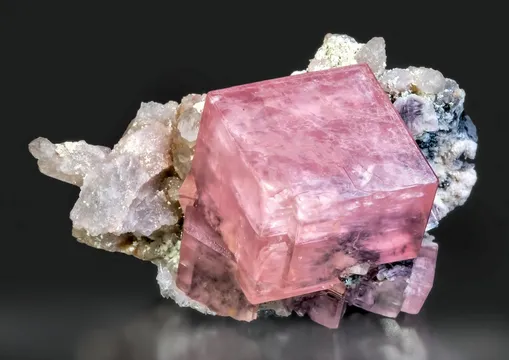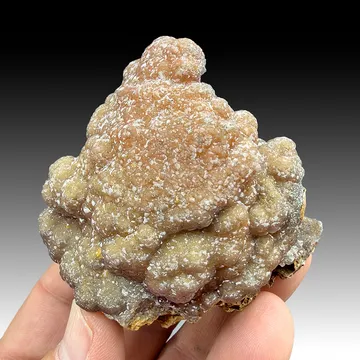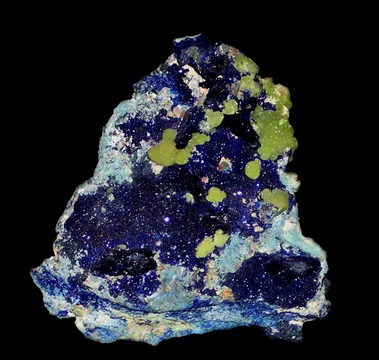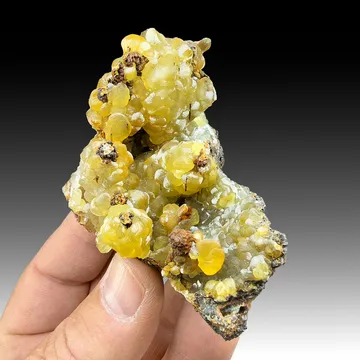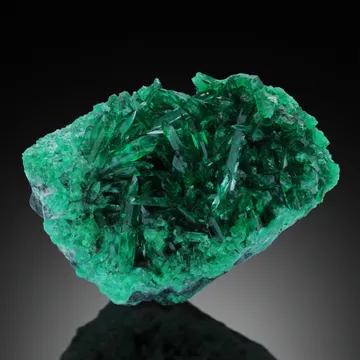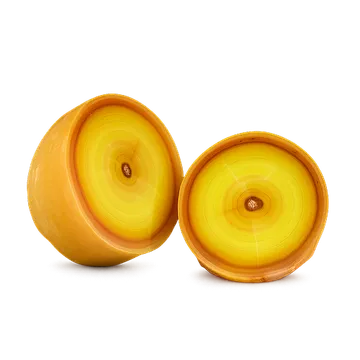
Smithsonite from Tsumeb, Namibia — varied rhombohedral and botryoidal forms, pink to green colors, and mineral associations; a prized locality for collectors.
Key facts
Smithsonite is one of the defining collector minerals of Tsumeb: not merely because it is common there, but because Tsumeb turns a usually massive or botryoidal zinc carbonate into a locality signature mineral with uncommon crystal variety, depth of color, and association. Tsumeb smithsonite spans the familiar apple-greens and blue-greens of copper-bearing material, soft pink to violet-pink cobaltoan and manganoan-looking rhombs, yellow-brown and chocolate-brown iron-rich crystals, pale grey to white crusts, colorless to translucent rhombs, and rare red-pink material from the deeper oxidized workings. The best specimens combine sharp rhombohedral or scalenohedral crystals with the sculptural mineralogical theater for which Tsumeb is famous: galena-rich sulfide matrix, sugary dolomite, black tennantite and pyrite ore, cerussite, mimetite, malachite, wulfenite, duftite, dioptase, and willemite.
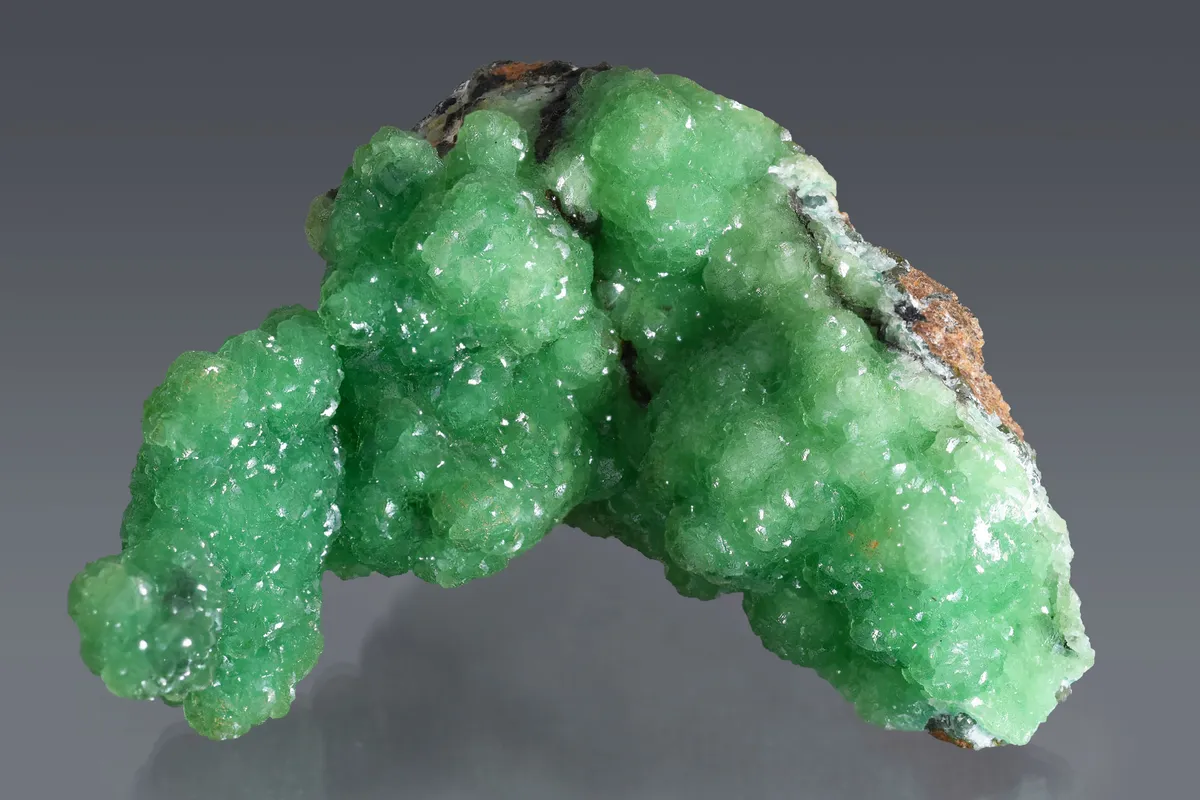
Photo: Tsumeb Mine Notebook
The Tsumeb Mine was a copper-lead-zinc-silver-germanium-cadmium deposit hosted in Neoproterozoic carbonate rocks of the Otavi Mountainland. Its orebody was an irregular, pipe-like, brecciated structure that allowed oxidizing groundwater to penetrate unusually deep into the mine. That plumbing system is central to the fame of Tsumeb smithsonite. Instead of a single shallow oxidation blanket, Tsumeb developed three major oxidation zones: the first from surface to about 11 Level, the second from 24 to 35 Level around the North Break Zone, and a third from about 42 Level downward. Smithsonite occurred in all three, so Tsumeb material reflects several different underground environments rather than one uniform “style.”

Photo: Tsumeb Mine Notebook
Collectors prize Tsumeb smithsonite for three reasons. First is the crystal habit: modified rhombs, rounded scaleno-rhombohedra, curving pseudo-cubic or analcime-like crystals, flattened tabular rhombs, sheaf-like growths, botryoidal crusts, and pseudomorphs. Second is the color range, especially pink cobaltoan smithsonite, vivid apple-green material, blue-green zoned “Blue Pocket” crystals, and orange to brown iron-influenced pieces. Third is association and provenance. A pink plate from the late-1970s second oxidation zone, a 9 Level West green specimen with Wilhelm Klein documentation, or a smithsonite-on-galena from an old European or museum collection carries a locality identity that is much more specific than “Tsumeb, Namibia.”
Search for specimens: View all smithsonite specimens from Tsumeb, Namibia
The locality is the Tsumeb Mine, also known historically as Tsumcorp Mine and later Ongopolo Mine, at Tsumeb in the Oshikoto Region of northern Namibia. The mine is inactive as a specimen-producing underground locality. It should be treated as a closed industrial mine, not a modern collecting site. Contemporary collector access is effectively through old collections, dealers, museums, and documented specimens already recovered during mining.
Tsumeb was a rich polymetallic pipe deposit, not a simple vein or stratiform replacement. The orebody cut through dolomitized carbonate rocks and was shaped by brecciation, folding, shearing, hydrothermal alteration, and later oxidation. Its primary ore minerals included bornite, chalcocite, tennantite, enargite, galena, sphalerite, and pyrite, with economically important copper, lead, zinc, silver, cadmium, germanium, and other elements. The secondary mineral suite developed when oxygenated waters attacked that exceptionally complex primary ore, releasing metals into carbonate-hosted voids, fractures, breccias, and vugs.
The geometry of the orebody explains why Tsumeb produced smithsonite over such a long vertical range. The first oxidation zone, from the surface to roughly 11 Level, yielded abundant green, grey, brown, white, and locally pink smithsonite. The second oxidation zone, from about 24 to 35 Level, was related to the North Break Zone, a permeable horizon interpreted as an important paleoaquifer. This deeper oxidized environment was one of Tsumeb’s great specimen engines and produced many of the classic modern smithsonites, including pink cobaltoan-looking groups and the celebrated blue-green “Blue Pocket” style. The third oxidation zone, from around 42 Level downward, produced red-pink rhombs and the return of apple-green smithsonite at depths where, in an ordinary deposit, a collector might not expect such oxidized zinc carbonates.
Mining history matters to smithsonite identification. Local people exploited copper at the outcrop before European commercial mining. The deposit was formally discovered in the 1890s, commercial operations began in the early 1900s, and the mine ultimately closed, for practical collecting purposes, in 1996. Early open-pit and upper-level workings produced enough smithsonite that early writers treated it as a major zinc mineral of the oxidized ore. Later mining, especially in the 1970s and early 1980s, brought out the deeper pink, green, and zoned material that now defines many high-end Tsumeb smithsonite collections.
Notable smithsonite finds include the old upper-level green crusts and large rhombohedral crystals recorded by Wilhelm Klein, the late-1970s second-zone pink “cobaltoan smithsonites” recalled from 28 Level by former Tsumeb Corporation Limited geologist Clive King, the mid-1970s “Blue Pocket” of sharp blue-green zoned rhombs on pinkish-grey sugary dolomite, and the red-pink rhombs from 45 to 47 Level associated with pyrite-tennantite-germanite ore and fine chalcocite.
Smithsonite from Tsumeb is ZnCO3, trigonal, and supergene in origin. Its most collectible expression is crystalline rather than merely massive: rhombohedral to scalenohedral crystals, rounded scaleno-rhombohedra, steep rhombs, flattened rhombs, curved faces, pseudo-cubic or analcime-like forms, and drusy crusts of tiny curved rhombohedra. Botryoidal and sub-botryoidal crusts are also classic, especially in green material from the upper oxidation zone.
Crystal size varies widely. Fine miniature and small-cabinet specimens commonly show individual rhombs from a few millimeters to around 1 or 2 cm. Tsumeb is unusual in having produced larger crystals: early descriptions record crystals reaching several centimeters, and Gebhard noted upper-level rhombohedra up to about 6 cm. Deep red-pink rhombs from 45 to 47 Level are recorded to about 3 cm, while “Blue Pocket” crystals are typically much smaller, around 9 mm, but are treasured for color zoning, sharpness, and matrix contrast rather than size.
The color palette is a diagnostic pleasure. Relatively pure smithsonite may be colorless, white, or pale grey. Copper-bearing material is commonly green to blue-green and may be apple-green, sea-green, or turquoise-tinged. Pink to violet-pink specimens are traditionally described as cobaltoan smithsonite, though manganese can also contribute to pink coloration and analysis is the safest way to distinguish chromophores. Iron-rich smithsonite may be yellowish, brown, chocolate-brown, orange-red, or nearly black where inclusions or iron-related effects dominate. Nickel has also been proposed as a possible contributor in some greenish material.
Associated minerals are one of the major reasons Tsumeb smithsonite is so collectible. The most important and frequently encountered associations include cerussite, mimetite, galena, calcite, azurite, malachite, tennantite, dolomite, willemite, cuprite, duftite, quartz, native copper, rosasite, wulfenite, dioptase, goethite, pyrite, tsumcorite, aragonite, adamite, otavite, mottramite, chalcocite, bayldonite, hematite, hydrocerussite, greenockite, baryte, linarite, minrecordite, zincolivenite, aurichalcite, conichalcite, hydrozincite, leiteite, phosgenite, and reinerite. The full Tsumeb association list is much longer, but the market value of a smithsonite specimen is usually built around a few visible, aesthetically placed associates rather than a long label.
Tsumeb also produced smithsonite pseudomorphs and epimorphs. Reported pseudomorphs include smithsonite after aragonite, azurite, calcite, cerussite, and enargite, plus rare epimorphs after wulfenite. Smithsonite after cerussite is especially desirable when the form is still readable and the surface carries lustrous pink or green smithsonite rather than dull replacement.
Quality factors are highly locality-specific. The finest Tsumeb smithsonites have identifiable color, strong luster, crisp or attractively rounded crystal form, visible translucency, and a matrix that tells the Tsumeb story. A pale pink rhomb on black sulfide ore, apple-green botryoids on iron-stained carbonate, blue-green rhombs on sugary dolomite, or brown smithsonite perched on galena will generally outrank a larger but dull, massive, or contextless piece. Provenance is unusually important: labels from Wilhelm Klein, old Tsumeb Corporation sources, major European collections, the Arkenstone/iRocks archive, Crystal Classics, museum holdings, or documented old collections add confidence and historical depth.
The Tsumeb mine is closed as a meaningful source of new collector production, so the market is fed largely by old collections, dealer inventories, estate material, and occasional recirculation from major collections. Commoner grey, white, brown, and green crusts still appear with some regularity, but fine pink cobaltoan-style crystals, saturated apple-green plates, sharply crystallized blue-green “Blue Pocket” material, large clean rhombs, and good pseudomorphs are scarce and increasingly competed for.
The main authenticity concern is not a famous Tsumeb-specific treatment industry, but misidentification, overconfident varietal naming, and weak provenance. Pink Tsumeb smithsonite is often sold as “cobaltoan,” yet color alone does not prove cobalt; manganese may be present, and iron-related effects can obscure or modify color. “Cuprian” or “copper-bearing” is likewise safest when the color, association, and provenance are consistent, or when supported by analysis. For high-value pieces, an old label, collection history, dealer archive record, or analytical note can matter as much as appearance.
Condition is a serious issue. Smithsonite has moderate hardness but is brittle, and Tsumeb rhombs often have exposed edges and curved faces that bruise easily. Check crystal terminations and high points under magnification. Pink smithsonite on sulfide matrix may hide small edge bruises among iron-oxide dusting or dark matrix shadows. Botryoidal pieces can have rubbed summits, especially where the surface is composed of tiny curved rhombs. Plates of smithsonite pseudomorphing cerussite may be thin and fragile; breaks at the margins are common, but central faces should be evaluated carefully.
Old Tsumeb labels can be imprecise. Specimens may be labeled “Tsumeb, South West Africa,” “Tsumeb Mine, Otjikoto,” “Tsumcorp Mine,” or simply “Tsumeb.” Historical “Otjikoto” and modern “Oshikoto” usage both appear in the trade. A label that preserves a mine level, pocket, or old collection number is much more valuable than a generic locality tag. Be cautious with specimens marketed as “Blue Pocket” unless the style is convincing: sharp blue-green rhombs, generally small, with pronounced zoning on pinkish-grey sugary dolomite. The actual mine location of the pocket was not recorded, so “Blue Pocket” is a descriptive/historical occurrence name rather than a precisely mappable underground coordinate.
Pricing is strongly tiered. Representative green or brown miniatures can remain accessible. Fine pink cobaltoan-style rhombs, large clean crystals, and aesthetic cabinet specimens are much more expensive. True top-end pieces—especially those with superb color, undamaged crystals, strong matrix contrast, old provenance, or unusual pseudomorph character—belong in the same competitive market as other classic Tsumeb species.
The Tsumeb smithsonite story begins before collectors had a mine to visit. Around 1900, a large sample of ore was shipped to Germany for metallurgical testing. The engineer handling the material was Wilhelm Maucher at the Bergakademie in Freiberg. He did what every collector hopes someone will do in an ore-testing room: he noticed that the test material was not just ore. He recognized well-crystallized secondary minerals in the shipment, preserved them, and later wrote one of the first detailed mineralogical descriptions of the Tsumeb ore. Smithsonite was already part of that early oxidized abundance, along with azurite, cerussite, and malachite.
Wilhelm Klein’s records give Tsumeb smithsonite an unusually human paper trail. Klein was a senior manager at Tsumeb between 1916 and 1939, and he recorded mine levels for many of his specimens. His catalogue listed more than 140 smithsonite specimens from the open pit down to 13 Level. The open pit and levels 6, 8, 9, and 11 supplied most of them, and his descriptions leaned heavily on green, grey, and brown material. One surviving specimen, number 323 in Klein’s collection, came from 9 Level West in the first oxidation zone: a 120 mm apple-green smithsonite crust on iron-stained carbonate, now recorded in the MGMH collection. Another Klein specimen, number 1045, from 8 Level, was catalogued in German as “Zinkspat mit Kaolin & Azurit”—smithsonite with kaolinite and azurite—and shows alternating botryoidal layers of pale sea-green smithsonite and dark goethite, with azurite caught at the junction.
The 1970s changed the collector’s idea of Tsumeb smithsonite. In the second oxidation zone, especially around 28 Level, modified pink rhombs were recovered in enough quantity to become a recognizable Tsumeb classic. Former TCL geologist Clive King later recalled those late-1970s finds as groups of aesthetic pink “cobaltoan smithsonites.” They were not just pink carbonate curiosities; they became a signature of the deep oxidized Tsumeb environment, often with a satin to waxy luster and the soft mineral color that reads instantly as Tsumeb when it is perched on dark sulfide matrix.
The “Blue Pocket” is the most evocative named smithsonite occurrence at Tsumeb precisely because it combines fame with a missing coordinate. It was discovered in the mid-1970s, but the exact location in the mine was not recorded. The specimens were distinctive: sharp blue-green smithsonite rhombs, typically to about 9 mm, with pronounced color zoning, set on a contrasting pinkish-grey, sugary dolomite matrix. For collectors, that description is more useful than a level number. When a true “Blue Pocket” specimen is placed beside ordinary green smithsonite, the difference is immediate: smaller crystals, sharper personality, and a color that seems to sit between copper green and watery blue.
The third oxidation zone delivered one of Tsumeb’s late surprises. From between 45 and 47 Level, superb red-pink smithsonite rhombs to about 3 cm were found on pyrite-tennantite-germanite ore. They were associated with some of the finest chalcocite crystals from Tsumeb, but the secondary suite was otherwise restrained: malachite, mimetite, and wulfenite. In a mine famous for crowded paragenesis, that relative spareness makes the association memorable. The same deep zone also produced apple-green smithsonites, a color normally associated with the upper levels, proving again that Tsumeb’s oxidation history did not behave like a simple shallow blanket.