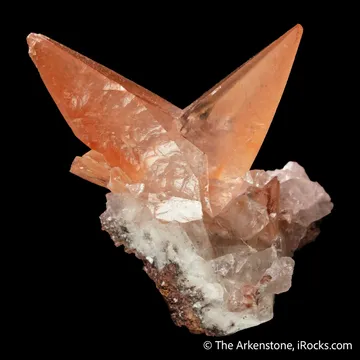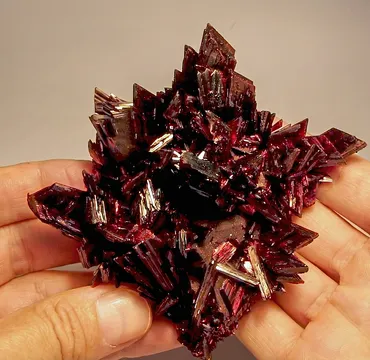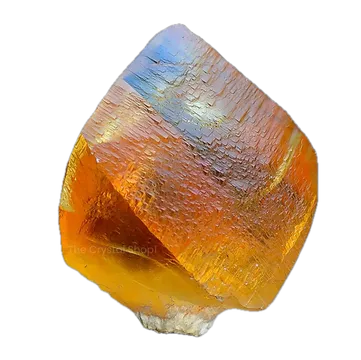
Calcite from Bou Azzer, Morocco - cobalt-bearing pink calcite with saturated body color, high luster, and gemmy crystals, a prized locality for collectors.
Key facts
Calcite from the Bou Azzer mining district is not collected as ordinary calcite. Its reputation rests on the cobalt-bearing variety: intense rose, raspberry, bubble-gum, lavender-pink, and fuchsia calcite colored by cobalt in the carbonate lattice. In the best pieces, the color is not a surface stain but a body color carried through transparent to translucent crystals, giving Bou Azzer specimens the saturated “pink window” look that serious calcite collectors recognize across a room.
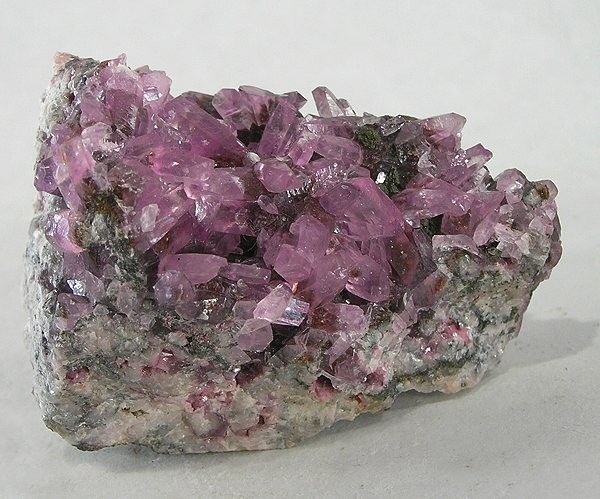
Photo: Wikimedia Commons
The visual vocabulary of Bou Azzer calcite is unusually broad. Some specimens are tight druses of tiny sparkling rhombs; others carry gemmy elongated crystals rising from gray-green and carbonate-rich matrix; still others show rounded, botryoidal, almost confectionery masses with shimmering microcrystalline surfaces. The most desirable examples combine a saturated cobalt-pink color, high luster, undamaged crystal tips, and contrast with dark ore minerals, white to gray carbonate gangue, or associated cobalt arsenates.
Mineralogically, Bou Azzer is one of the great cobalt districts of the world, and the calcite belongs to that story. The district lies in Morocco’s central Anti-Atlas, in the Bou Azzer–El Graara inlier, where cobalt-nickel-iron arsenide and sulfarsenide mineralization is developed around serpentinite bodies of the Bou Azzer ophiolitic complex. Calcite is part of the quartz-carbonate gangue and also appears in later carbonate-rich openings, fracture fillings, and vugs. Where cobalt entered the carbonate system, ordinary CaCO3 became the collector’s prize: cobalt-bearing calcite, commonly sold under the trade names cobaltoan calcite, cobaltian calcite, or “cobaltocalcite.”

Photo: Wikimedia Commons
Historically, Bou Azzer’s fame predates the modern specimen market. Cobalt minerals from the district led to mining activity in the early twentieth century, and the district became a major industrial source of primary cobalt. For collectors, that industrial history matters because fine specimens have typically emerged from mining rather than from casual surface collecting. The locality names attached to specimen labels—Bou Azzer Mine, Aghbar Mine, Agoudal Mines, Aït Ahmane, Bou Azzer East, and other workings—refer to a working mining district, not a single open collecting spot.
The best Bou Azzer calcites are classic “cobalt district” specimens: pink calcite with roselite, erythrite, cobaltaustinite, spherocobaltite, dolomite, quartz, skutterudite, safflorite, löllingite, gersdorffite, cobaltite, malachite, and other arsenate or ore minerals. A specimen with lustrous roselite crystals perched on cobalt-bearing calcite from Aghbar has a different collector status than a loose pink druse with only a broad district label. The locality rewards precision.
Search for specimens: View all calcite specimens from Bou Azzer mining district, Morocco
Bou Azzer is in the central Anti-Atlas of southern Morocco, south of Ouarzazate, in the Drâa-Tafilalet Region. The mining district extends along the Bou Azzer–El Graara belt and is tied to a Pan-African ophiolitic setting: serpentinites, altered ultramafic rocks, quartz-dioritic and volcanic country rocks, and fault-controlled hydrothermal mineralization. The ore system is famous for primary cobalt, with nickel, arsenic, iron, gold, silver, copper, and a long list of secondary arsenates.
The deposit type is best described as hydrothermal cobalt-nickel-iron arsenide and sulfarsenide mineralization in quartz-carbonate gangue, with important structural control. Ore occurs in contact zones along serpentinite margins and in cross-cutting vein systems. Published paragenetic work describes a sequence that progresses through nickel arsenides, cobalt-rich arsenides, iron arsenides, sulfarsenides, and later sulfide-sulfosalt assemblages, with calcite appearing both in early quartz-carbonate gangue and in later carbonate-rich stages. In practical collector terms, that means Bou Azzer calcite is not an isolated carbonate occurrence; it is a visible part of a cobalt-arsenic hydrothermal system.
Mining history is unusually well documented. Cobalt indications were recognized in the Bou Azzer area in 1928–1929. According to the mine operator’s historical account, a geologist visiting Jamaa el-Fna in Marrakech recognized erythrite being sold there as a cobalt mineral, which helped lead attention back to the Bou Azzer–El Graara district. Economic exploitation began with visual prospecting in 1929, artisanal mining in 1932, and industrial-scale mining in the 1930s. Mining was suspended during World War II and later resumed. From 1969 to 1971, the Soviet group Technoexport carried out exploration that led to discoveries including Taghouni, Bou Azzer East, and Tamdrost. The district was again affected by reserve depletion and closure in 1983, then revived in 1987 when CTT resumed work and discovered the Méchoui deposit.
The modern operation is an underground cobalt mine worked by cut-and-fill stoping, with cobalt concentrate feeding hydrometallurgical processing. It is therefore not a casual rockhounding locality. Fine calcite specimens reach the market through mine production, miner/dealer channels, old collections, and occasional pocket finds, not through open public collecting. Labels that claim “Bou Azzer” without a mine or sublocality may still be acceptable for older material, but a precise label—Aghbar Mine, Agoudal Mines, Bou Azzer Mine, Bou Azzer East, Aït Ahmane, Oumlil, or another named working—adds meaningful scientific and collector value.
Notable calcite-producing sublocalities include the Bou Azzer Mine itself, where cobalt-bearing calcite is well represented in photo records; Aghbar Mine, long celebrated for roselite and cobalt-bearing calcite; and the Agoudal Mines area, which produced vivid cobaltoan calcite specimens that entered the collector market in quantity. Mindat records calcite from numerous localities in the district and cobalt-bearing calcite from multiple named workings, reflecting how widespread carbonate gangue is across the cobalt system.
The essential characteristic is color. Bou Azzer cobalt-bearing calcite ranges from pale shell pink through lavender-pink to saturated raspberry and neon fuchsia. The most sought-after pieces show even, vivid color in well-defined crystals rather than dull massive carbonate or color limited to fractures. Some specimens show zoning, with darker pink cores and paler terminations; in others, the pink crystals sit on pale calcite or gray-green serpentinized matrix, producing strong contrast.
Crystal habit varies by pocket and sublocality. Common forms include rhombohedral crystals, nail-head rhombs, stepped-growth rhombs, drusy coatings, rounded botryoidal aggregates, elongated gemmy crystals, and vug linings. Fine specimens may show crystals to around 1 cm or a little more; many attractive pieces are made of smaller, densely packed crystals. Older and trade-documented examples include miniatures and small cabinets in the 4–8 cm range, cabinet specimens around 12 cm, and large vein sections when preserved well enough to survive trimming.
Luster is a major quality factor. The most desirable Bou Azzer material has a glassy to bright vitreous luster on open crystal faces. Botryoidal material should have a shimmering, fresh surface rather than a chalky or etched skin. In drusy examples, the best pieces sparkle evenly across the surface and do not rely on color alone.
Associated minerals are central to the locality’s personality. Roselite on cobalt-bearing calcite is among the classic combinations, especially from Aghbar. Erythrite gives deep purple-red cobalt color and can occur with ore minerals in the district. Spherocobaltite, cobaltaustinite, cobaltlotharmeyerite, annabergite, conichalcite, malachite, dolomite, quartz, talc, skutterudite, safflorite, löllingite, gersdorffite, cobaltite, chalcopyrite, and arsenopyrite are all part of the broader Bou Azzer mineralogical setting. A calcite specimen with sharp associated roselite, a distinct ore-matrix context, or a credible sublocality label is more than a pretty pink carbonate—it is a mineralogical document from one of the world’s signature cobalt districts.
Quality grading should focus on five points: saturated natural color, transparency or translucency, luster, crystal definition, and undamaged display surfaces. Matrix contrast is a sixth factor for advanced collectors. A small, complete specimen with intense color and sharp crystals can be preferable to a larger but dull, bruised, or massive piece. For sublocality specialists, a precise Aghbar or Agoudal label can outweigh size, especially when paired with roselite or a distinctive crystal habit.
Bou Azzer calcite is common enough that specimens appear regularly, yet top-quality pieces are not common. Small drusy fragments and moderate pink clusters are widely available. High-end specimens—large, undamaged, strongly saturated, lustrous, gemmy, and precisely localized—are much scarcer. The difference between an inexpensive pink calcite cluster and a serious Bou Azzer cabinet specimen is usually not species; it is crystal quality, color saturation, aesthetics, and label precision.
The name “cobaltocalcite” is widely used in commerce, but collectors should understand it as a trade or informal name. The proper mineral species is calcite, CaCO3; the collector variety is cobalt-bearing or cobaltoan calcite, often written with the compositional shorthand (Ca,Co)CO3. Some specimens marketed as cobaltocalcite may be dominantly calcite with cobalt content; others may include spherocobaltite or mixed cobalt carbonates. If the distinction matters for a serious collection, rely on analytical confirmation rather than a sales label.
Authenticity issues are usually questions of identification and enhancement rather than famous, locality-specific forgeries. Pink dyed carbonate exists in the broader mineral market, and low-grade pink druses can be overstated. On suspicious pieces, look for dye concentrated along cracks, saw cuts, porous zones, or the edges of matrix; unnaturally uniform color across unrelated minerals; and color bleeding into white carbonate or glue lines. Natural Bou Azzer cobalt-bearing calcite commonly shows color zoning, variable saturation, and geological context with cobalt minerals, not a flat cosmetic pink wash.
Mislabeling is a more realistic concern. “Bou Azzer” is sometimes used loosely for Moroccan cobalt-bearing calcite without a sublocality. A label reading only “Morocco” or “Bou Azzer” may be acceptable for a decorative specimen, but advanced collectors should prefer mine-level provenance, especially for pieces associated with roselite, wendwilsonite, cobaltaustinite, or unusual habits. Older dealer labels from established mineral firms, collection tags, and Mindat minIDs add value.
Condition issues are typical for calcite and for mine-run cobalt specimens. Calcite is soft, cleaves readily, and can show bruised edges, cleaved crystal tops, contact marks, and pocket damage. Bright cobaltoan druses can hide small broken areas because the color distracts the eye; examine under angled light. Botryoidal specimens should be checked for rubbing on the high points. Matrix pieces should be inspected for stabilization, trimming, and repaired detached plates. Associated arsenates such as erythrite and roselite are not as forgiving as quartz; avoid ultrasonic cleaning and aggressive acids, and keep labels with the specimen because locality context is part of its value.
Market availability remains good for modest specimens, with many small to miniature examples circulating from old finds and recent dealer inventories. Fine large pieces, especially those with gemmy elongated crystals, richly saturated rhombs to about a centimeter, roselite on pink calcite, or Agoudal/Aghbar provenance, trade at a premium. The strongest pieces appeal to three overlapping audiences: calcite collectors, cobalt-mineral specialists, and collectors of classic Moroccan localities.
Bou Azzer’s origin story begins far from the mine, in the noise and commerce of Marrakech. In 1928, a geologist visiting Jamaa el-Fna recognized erythrite being sold there as a cobalt mineral. The material had come from the Bou Azzer–El Graara area, where local Berber communities had long known the striking purple-red cobalt arsenate. That moment—an expert eye catching a cobalt clue in a market square—helped redirect attention to the district that would become Morocco’s great primary cobalt source.
The early years moved quickly. After the cobalt indications were recognized in 1928–1929, prospecting cataloged the outcropping occurrences in 1929, artisanal mining followed in 1932, and industrial mining began in the 1930s. The district was not merely a specimen locality; it became an industrial cobalt camp. Mining paused during World War II, resumed afterward, and later underwent major exploration. Between 1969 and 1971, Technoexport’s work led to discoveries at Taghouni, Bou Azzer East, and Tamdrost. Then came depletion, closure in 1983, and revival in 1987 when CTT’s geological team resumed work and discovered Méchoui.
For collectors, another story is written in the specimen market rather than in mine production ledgers. Around the late 2000s and early 2010s, especially fine Bou Azzer cobaltoan calcites appeared with unusual crystal size, brightness, and color. Dealer descriptions from that period repeatedly emphasize how difficult it was to obtain large, gemmy, vividly colored crystals rather than ordinary druse. One documented specimen measured 6.9 x 4.7 x 3.6 cm and carried crystals over 1 cm; another 5.4 x 4.4 x 3.3 cm piece was described as a pocket of elongated transparent pink crystals; a botryoidal 4.1 x 2.3 x 2.9 cm piece represented the rounded, shimmering style. Those specimens fixed the modern collector image of Bou Azzer calcite: not just pink crust, but luminous cobalt-colored crystal groups.
The Agoudal material added a different chapter. Dealer accounts describe sections of vein filled with intensely pink cobaltoan calcite, including pseudo-stalactitic forms and large displayable cabinet specimens. Reports that Agoudal workings had ceased gave those pieces a sharper edge in the market: the mine had already produced beautiful cobaltoan calcites and roselites, and collectors began treating good Agoudal labels as finite rather than routine. Whether a specimen is a small bright cluster or a large vein section, the best Agoudal calcites carry the feel of a pocket frozen in carbonate—pink crystal growth coating every available surface.