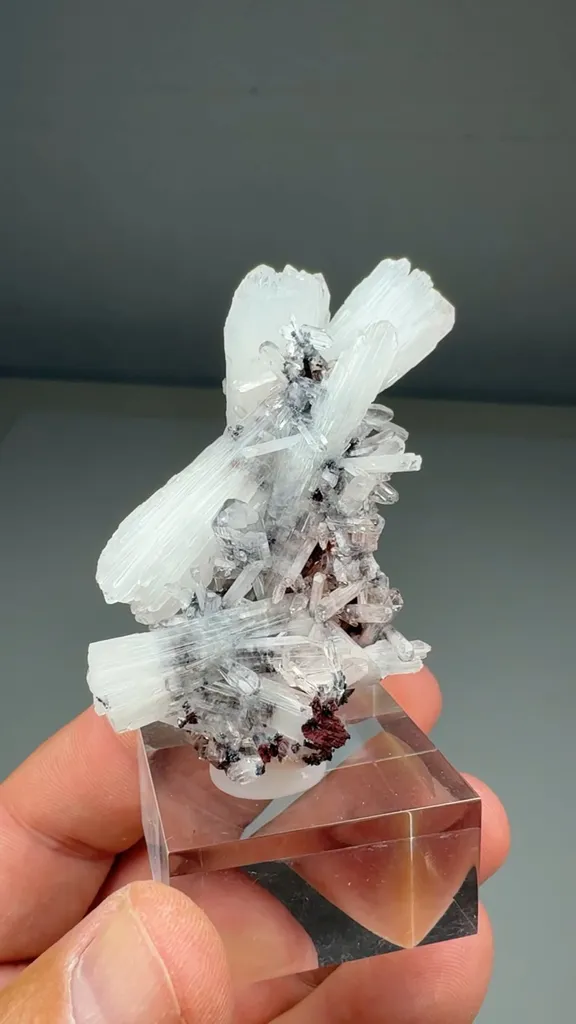
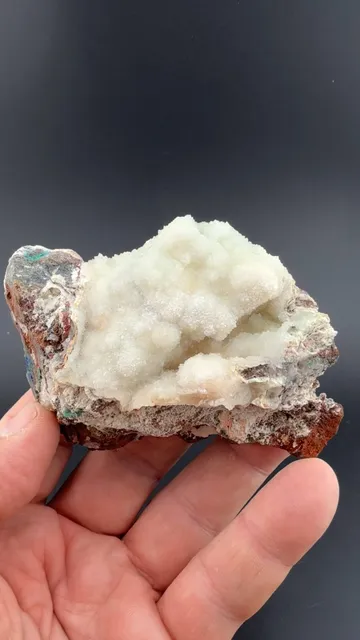
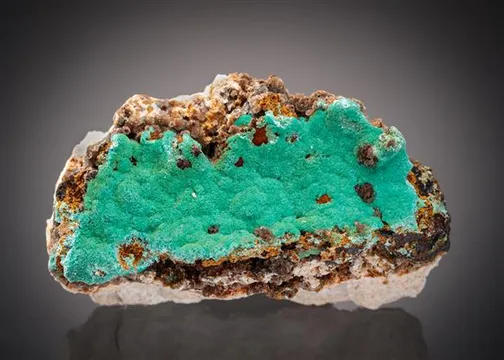
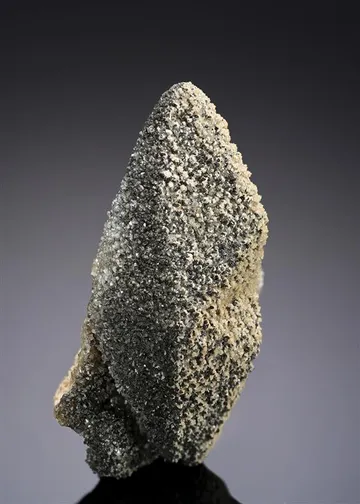
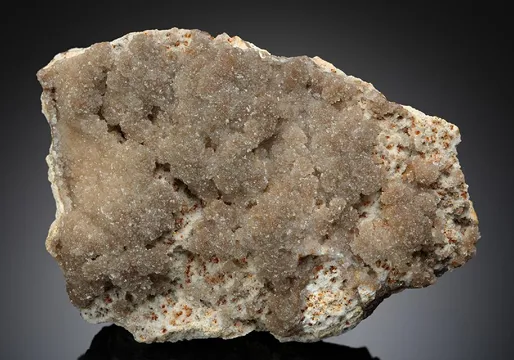
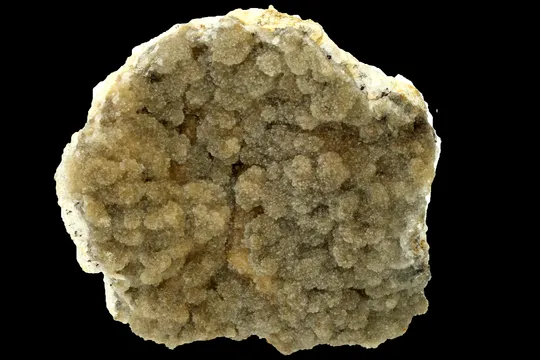
Superb lustrous white slightly translucent crystals of hemimorphite coming aesthetically off matrix. In super condition, this is outstanding for the species.
The Potosi mine, located in the Santa Eulalia mining district of Chihuahua, Mexico, is a historically massive underground operation primarily exploited for silver, lead, and zinc. Geologically, the deposit is a premier example of a high-temperature carbonate-replacement system hosted within thick sequences of Cretaceous-aged limestones, specifically the Aurora Formation. Hydrothermal fluids originating from Tertiary intrusive bodies migrated upward along faults and fractures, dissolving the limestone and replacing it with massive sulfide orebodies in the form of vertical chimneys and horizontal mantos, consisting primarily of argentiferous galena, sphalerite, and pyrrhotite. Commercial underground development of the Potosi mine intensified during the late nineteenth century and expanded rapidly after the property was acquired by the Chihuahua Mining Company and later managed by the American Smelting and Refining Company (ASARCO) in the early twentieth century. The mine operated continuously as one of the district's largest producers until declining base-metal reserves and economic shifts led to the cessation of large-scale corporate mining operations in 1991, though the underground workings remain legendary for their complex sulfide geology and vast solution cavities.



 Ships from USA
Comments