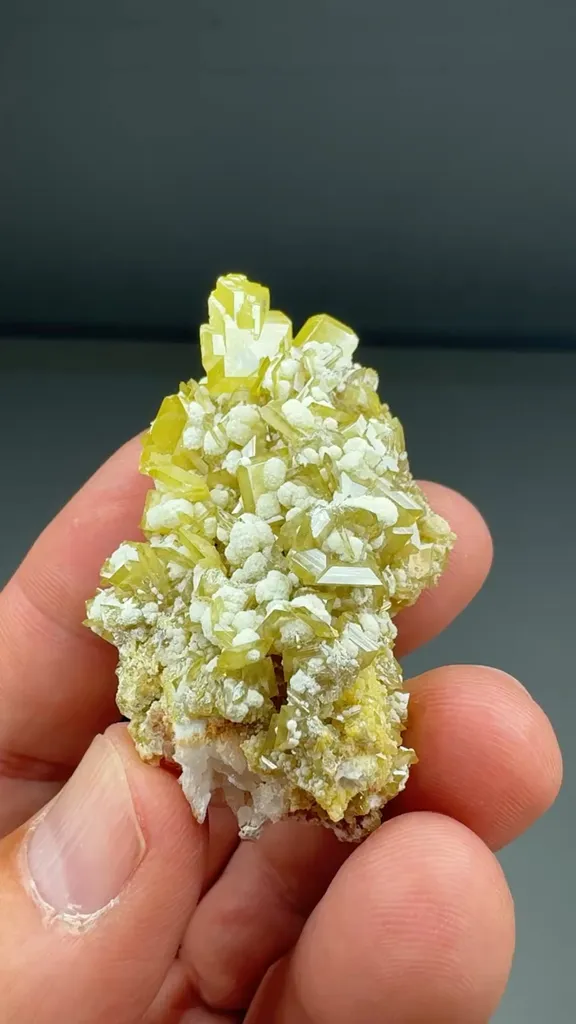
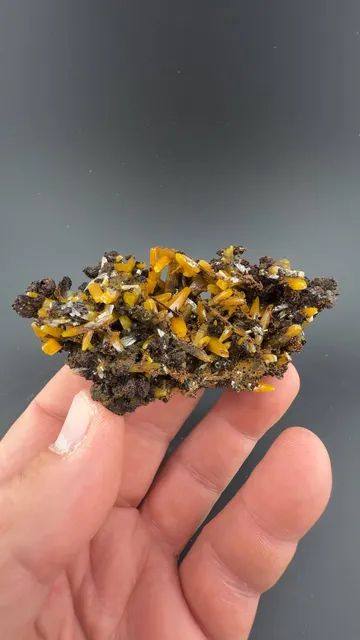
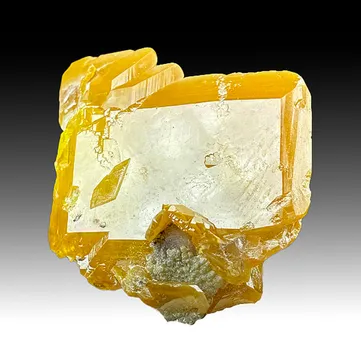
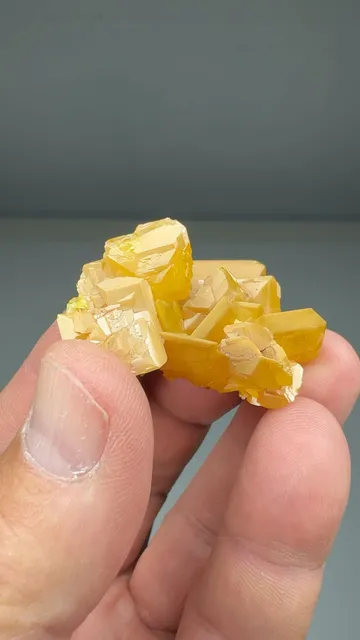
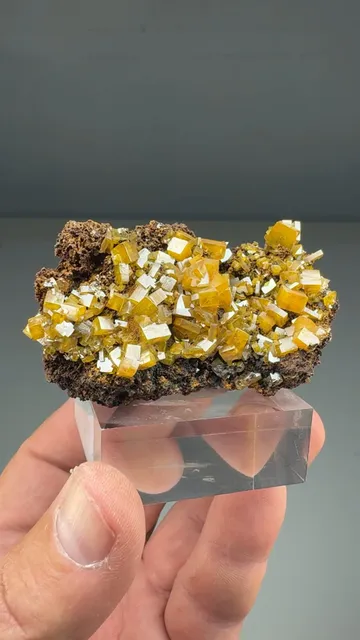
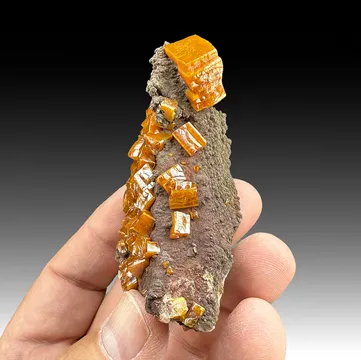
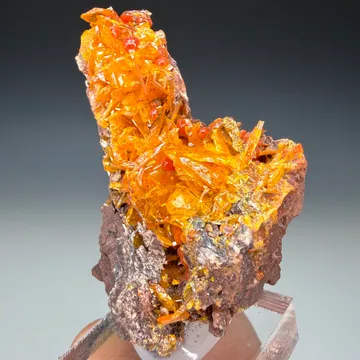
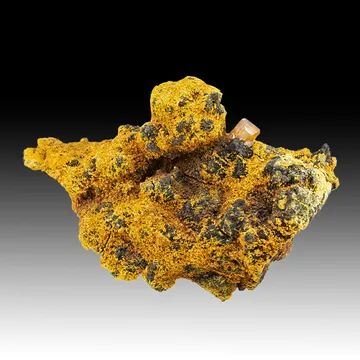
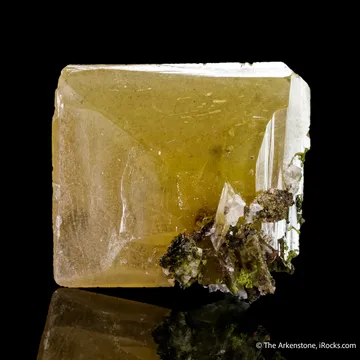
Attractive yellow lustrous platy crystals of wulfenite to 1.0 cm in size on matrix with many white crystals of phosphohedyphane. In great condition, neat combination piece for this locality.
The La Morita mine, located in the Camargo Municipality of Chihuahua, Mexico, is a lead-zinc-silver mining operation noted for producing colorful mimetite, wulfenite, and carbonate replacement mineral specimens. Geologically, the deposit consists of low-temperature hydrothermal veins and replacement bodies hosted within Cretaceous-aged sedimentary limestone sequences, where structural fracturing allowed metal-rich fluids to deposit primary sulfides that later underwent extensive supergene oxidation near the surface. Small-scale mining at the site began in the early to mid-twentieth century, with intermittent underground development and exploratory surface pitting continuing until formal operations largely ceased in the late 1980s, leaving the area accessible to local miners and specimen collectors who have periodically recovered fine oxidized minerals into the 2000s.
Phosphohedyphane is a rare lead calcium phosphate mineral belonging to the apatite supergroup, typically forming as a secondary mineral in the oxidized zones of base-metal deposits. It frequently occurs as small, lustrous hexagonal crystals or crusts that range from colorless to pale yellow, light green, or cream, often closely associated with other secondary lead minerals like mimetite and pyromorphite.



 Ships from USA
Comments