






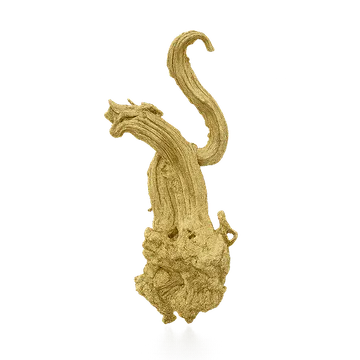
Farncomb Hill, Breckenridge, Colorado — classic American locality for leaf, wire, and sculptural gold; prized for dramatic forms and historic collector demand.
Key facts
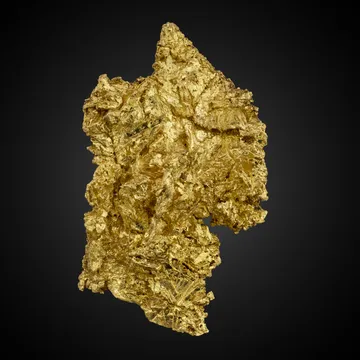
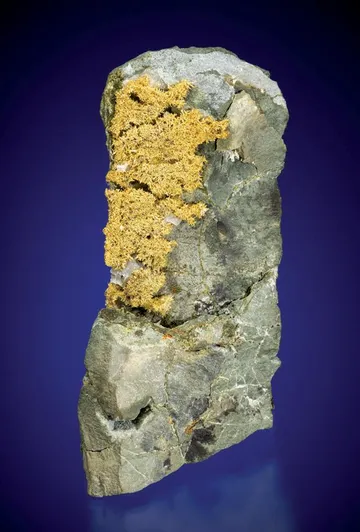
Farncomb Hill is the classic American locality for leaf, wire, and sculptural crystalline gold. Its best specimens have the immediate visual signature collectors mean when they say “Breckenridge gold”: bright yellow leaves rising in ragged, paper-thin blades, spongy arborescent masses, ribbed wires and ribbons, and glittering surfaces dusted with tiny octahedral faces. Unlike ordinary placer nuggets rounded by water, the finest Farncomb Hill pieces retain the geometry of growth in narrow veins and pockets—crumpled sheets, skeletal forms, ragged dendrites, and “bird’s nest” tangles that look less like bullion than a naturally cast metal sculpture.

Photo: James St. John / Wikimedia Commons
The locality sits in the French Gulch area of the Breckenridge Mining District, where rich placer gold in the gulches led prospectors back uphill to its lode source. Farncomb Hill’s gold is tied to narrow hydrothermal veins and oxidized vein pockets in shale and porphyritic intrusive rocks; in the collector’s cabinet, that geology translates into gold on rusty limonite, gold in calcite, and open leaf or wire aggregates freed from soft oxidized matrix. The old reports emphasize just how unusual this locality was: Farncomb Hill was considered the principal source of vein gold in the Breckenridge district, and a remarkable proportion of its output survived as specimens rather than being melted.
Historically, this hill helped change the way American collectors valued gold. Before the Breckenridge boom in crystalline gold, native gold was usually treated as metal first and specimen second. Farncomb Hill proved that form, locality, and aesthetics could carry a premium beyond melt value. Colonel Albert J. Ware’s displays and John F. Campion’s later collecting helped establish a market for crystallized gold as mineral specimens. Campion’s Farncomb Hill gold became one of the foundation treasures of the Denver Museum of Nature & Science, and the locality’s most famous piece, “Tom’s Baby,” remains Colorado’s legendary gold specimen.

Collectors prize Farncomb Hill gold for three linked qualities: unmistakable morphology, old-time Colorado provenance, and rarity in fine condition. Leaf gold with sharp, undamaged edges; wires with natural ribbing; skeletal or octahedral crystal faces; attractive limonite or carbonate matrix; and labels tying a piece to the Wire Patch, Gold Flake, Key West, Boss, Ontario, or Wapiti workings all add significance. Even small pieces can be important when they show true locality character.
Search for specimens: View all gold specimens from Farncomb Hill, Breckenridge, Colorado, USA
Farncomb Hill lies in the French Gulch sector of the Breckenridge Mining District, Summit County, Colorado, several miles from Breckenridge in the drainage system that first made the district famous. Mindat places Farncomb Hill at 39° 28' 55" N, 105° 57' 19" W, and treats it as the parent locality for a cluster of historic gold workings, including the Wire Patch Mine, the Wapiti group, and mine groups along the Ontario, Key West, Boss, Gold Flake, Fair Fountain, and Bondholder veins.
The deposit is best understood as a combination of lode gold and derived eluvial or placer gold. The placer side of the story began in the gulches: gold washed from Farncomb Hill entered French Gulch and related drainages, where early miners found sharp-edged leaves and wires rather than merely rounded grains. Those shapes were the clue that the gold had not traveled far. The lode side lay in narrow, irregular, locally bonanza-grade hydrothermal veins cutting altered shale and porphyritic intrusive rocks. The gold-bearing veins were famous for pinching out abruptly and then opening into rich pockets rather than forming broad, regular ore bodies.
The geological setting is part of the Breckenridge district’s complex mix of sedimentary rocks, porphyry intrusions, veins, faults, and secondary enrichment. Descriptions of the Farncomb Hill veins emphasize Pierre Shale, early Tertiary quartz monzonite porphyry sills, altered and pyritized shale near intrusive contacts, and narrow calcite-bearing veins carrying gold with pyrite, chalcopyrite, sphalerite, and galena. Oxidation converted much of the vein material to rusty limonite, leaving bright native gold in pockets, leaves, wires, and stockwork-like masses. The richest gold pockets were especially associated with shale near porphyry contacts and faulted vein segments, where downward-moving waters could reconcentrate gold into spectacular secondary masses.
Harry Farncomb’s discovery gave the hill its name and its collecting identity. After years in the Breckenridge area, he traced French Gulch gold uphill and found the source in weathered material on Farncomb Hill. The famous Wire Patch began as an eluvial or shallow placer discovery of wire, leaf, and crystalline gold, then led into underground workings. Farncomb quietly bought adjoining ground before the news spread, and within a short time the hill had become a focus of intense local interest.
By the 1880s, hard-rock mining on Farncomb Hill was producing the specimens that would later define “Breckenridge gold.” Important named veins included Ontario, Key West, Boss No. 2, Boss, McQuery, Reveille, Carpenter, Gold Flake, Graton, Silver, Bondholder, and Fountain; later collecting literature often highlights the Bondholder, Boss, Fountain, Gold Flake, Key West, and Ontario as major gold veins. The richest area was small—old reports describe the important veins as confined to a zone only a few thousand feet long and less than two thousand feet wide—yet its specimen output was disproportionate to its size.
Mining was largely historic and underground, supplemented by placer and hydraulic work in surrounding gulches and later district-wide dredging. Farncomb Hill itself was already largely mined out by the late 1890s, after which Breckenridge gold production shifted heavily toward deeper placer gravels worked by dredges. The district’s bucket-line dredges later became famous in their own right, but they rarely preserved the kind of delicate crystalline gold that made Farncomb Hill a world locality.
Collecting access today should be treated conservatively. Farncomb Hill and the old workings are not open public collecting ground; modern accounts describe upper French Gulch and Farncomb Hill as posted private property, and mine-location databases caution that old mine sites should be assumed to be private unless permission is explicit. Serious collectors should pursue specimens through established dealers, old collections, museum deaccessions when legitimate, and well-documented estate material rather than attempting field collecting.
The most famous find is “Tom’s Baby,” discovered on July 23, 1887, by Tom Groves and Harry Lytton on the Gold Flake Vein. Accounts differ in exact weight because the specimen broke and was cleaned, but all agree that it was the great Farncomb Hill gold mass: a large crystalline gold specimen from a pocket, wrapped like an infant and carried into Breckenridge, then ultimately preserved in the Denver Museum of Nature & Science. Its fame is not merely size; it is the emblem of a locality where crystallized gold was finally recognized as more than ore.
Farncomb Hill gold is most admired in leaf, wire, dendritic, skeletal, and spongy forms. The leaves can be broad, ragged, and thin, sometimes rising as upright sheets or septa rather than lying as flat flakes. Their surfaces may glitter with minute triangular octahedral faces, giving the gold a scaly or frosted sparkle under low-angle light. Old descriptions note triangular crystal faces up to about 3 mm on some leaf surfaces, while other areas show crowded, distorted, or imbricated microfacets.
The wires are less common in the strictest sense than the locality’s reputation might imply. Much of what collectors call “wire” gold from Farncomb Hill grades into ribbons, curled filaments, dendritic rods, striated shavings, and felted spongy masses. True isolated wire is rare; more typical are coherent aggregates where filaments, blades, and ragged leaves merge. Some wires are longitudinally striated, some transversely ridged like chains of crystals, and some branch into little curled tendrils. The best examples have a living, grown quality that is hard to confuse with melted or water-worn gold.
Crystal forms include octahedral faces, skeletal octahedral growths, flattened octahedral intergrowths, and hackly dendritic crystals. Farncomb Hill leaf gold is often described as parallel intergrowths of flattened octahedrons, and old reports mention skeletal octahedra with triangular depressed panels. The result is gold that may look massive at arm’s length but resolves under magnification into a fabric of tiny crystal faces, ridges, panels, and growth steps.
Color ranges from rich metallic yellow to warmer buttery or slightly coppery tones. Some accounts note that Farncomb Hill gold was about 90 percent pure and that minor copper could enrich the color. Pieces in limonite matrix can appear especially warm because the rusty brown contrast heightens the yellow. Fresh, exposed gold should have the dense metallic luster of native gold, not the brassy flash of pyrite or the pale gray-yellow look of tarnished alloys.
Typical collector pieces are small. Thumbnail and miniature specimens are far more available than cabinet-sized leaves or large wire masses. Fine leaves several inches across or high are museum-class objects, and historical accounts describe Farncomb Hill wires up to roughly 2 inches long and 1/4 inch thick, arborescent masses up to about 3 inches, and leaf intergrowths up to about 6 inches. The Denver Museum collection includes exceptional leaf and septa specimens far beyond what most collectors will ever have the chance to buy.
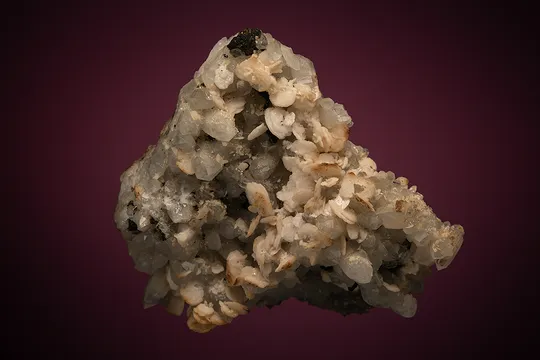
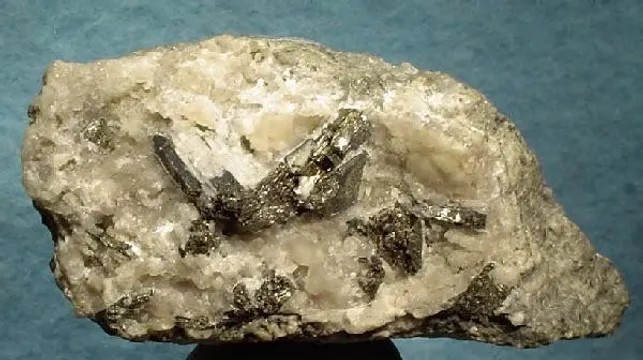
Matrix associations are important. Limonite is the classic visual partner, especially for Gold Flake-type material where gold forms bright veinlets and leaves in rusty oxidized gangue. Calcite is another significant host, and old reports mention gold filaments in calcite from the Key West vein and deeper gold associated with sphalerite in calcite above the Fair tunnel. Galena can be intimately associated with gold, including specimens where galena crystals sit on or partly enclose gold threads. Mindat’s Farncomb Hill list also records or references ankerite, bismuthinite, calcite, chalcopyrite, fluorite, galena, gypsum, kaolinite, limonite, malachite, pyrite, quartz, rhodochrosite, sphalerite, and wad from the broader locality and workings.
The quality factors are locality-specific. A Farncomb Hill specimen should not be judged only by weight. A small, sharp, sculptural leaf with visible octahedral sparkle and old provenance can be more desirable than a heavier, amorphous lump. Collectors look for undamaged leaf edges, natural curls, branching wires, open negative spaces, pleasing contrast with limonite or calcite, and labels that narrow the locality to Wire Patch, Gold Flake, Key West, Boss, Ontario, Wapiti, or another historic working. The finest pieces combine crystallography and drama: they look like gold that grew, not gold that was merely found.
Farncomb Hill gold is a classic old-collection material, and provenance matters. Because the hill’s great specimen era was in the late nineteenth century, the most convincing pieces often carry older labels, museum-style locality wording, or a chain of ownership through established Colorado collections. A label reading only “Breckenridge gold” is plausible but less precise than “Farncomb Hill,” “Wire Patch,” “Gold Flake,” or another named working. Since “Breckenridge” can describe both lode and placer gold from a broad district, locality precision strongly affects collector value.
Misattribution is the main authenticity concern. Wire and leaf gold occur at other world localities, and generic natural gold can be sold with a famous name attached. Farncomb Hill material should show the expected morphology: thin ragged leaves, crystalline sparkle, dendritic wires or ribbons, limonite or carbonate associations, and the warm old Colorado look. Smooth water-worn nuggets, melted-looking beads, or bright artificial-looking wires without credible provenance deserve skepticism if offered as Farncomb Hill. When the price is significant, ask for earlier labels, invoices, collection history, and, when appropriate, nondestructive analytical confirmation that the metal is gold.
Condition is a serious issue because the very features that make the locality desirable are fragile. Thin leaves bend, tear, and crease easily. Wires snag on cotton, foam, and careless handling. Limonite matrix can shed, and old shale or oxidized gangue may crumble if repeatedly cleaned or soaked. Avoid ultrasonic cleaning. Avoid aggressive acids unless the specimen is already a low-grade ore piece and you fully understand what will be lost; iron oxides and carbonate context are often part of the specimen’s identity, not merely dirt.
A second condition issue is historical handling. Farncomb Hill gold was collected, bought, sold, high-graded, displayed, cleaned, stored, and remounted for well over a century. Some pieces may have been flattened, clipped, trimmed, repaired, glued to matrix, or mounted on posts. Carefully inspect contact points, unnatural shiny breaks, modern adhesive at the base of leaves, and suspiciously fresh cut surfaces. Repaired gold is not automatically without value, but repairs should be disclosed and priced accordingly.
Rarity is high in the forms collectors most want. Small grams and sub-gram pieces appear from time to time, especially as old collections are dispersed. Attractive miniatures with convincing leaves or wires are much less common. Matrix pieces with gold-rich limonite from the Gold Flake style are desirable when the gold is bright and the structure is legible. Large free-standing leaves, sculptural wire masses, and pieces with nineteenth-century provenance belong in the upper tier of Colorado gold collecting and are usually contested quickly when offered.
Market value is driven by specimen premium, not bullion. Weight matters, but form, locality, condition, and provenance matter more. A delicate Farncomb Hill leaf can trade at many multiples of melt value, while a damaged or locality-ambiguous lump may be little more than gold content plus a modest premium. The best buying discipline is to pay for the mineral specimen in front of you: visible crystal habit, honest condition, credible source, and a label story that will still make sense to the next serious collector.
Harry Farncomb’s great advantage was that he noticed what the creek gold was trying to tell him. Down in French Gulch, the gold was not merely rounded placer dust. It came as sharp-edged fragments, wires, and leaves—shapes that had not been tumbled far. Farncomb, who had been in the Breckenridge area for years without striking it rich, worked uphill toward the source. Near the head of the gulch he came to a low, rounded hill whose surface looked discouraging: loose, rotten shale and no obvious quartz outcrop. He dug anyway. Under several feet of decomposed gray shale lay the weathered remains of gold-bearing vein material, including the same leaves and twisted wires seen in the gulch below.
Farncomb understood what would happen if he talked. Instead of announcing a bonanza, he quietly staked the Wire Patch Placer and began buying adjacent ground an acre at a time. His work was modest on the surface—pick, shovel, and silence—but the gold coming out was anything but modest. A year later he walked into a Denver bank with 300 troy ounces of gold, about 25 pounds, in forms unusual enough that the bank’s description itself became part of the story. When word reached Breckenridge, miners hurried toward French Gulch, only to find that Farncomb had already secured the best ground.
The Wire Patch then went underground. After stripping the eluvial gold, Farncomb drove a short drift into the hill and found erratic but extraordinarily rich veins cutting the shale. In just two years, accounts credit him with recovering 7,000 troy ounces—about 580 pounds—of wire gold, then worth roughly $140,000. By 1886 he sold his holdings and retired as one of Colorado’s wealthy mining men. His name stayed on the hill, but the gold kept its own identity: ragged leaves, wires, and bonanza pockets that seemed to appear and vanish with maddening suddenness.
The most famous day came on July 23, 1887. Tom Groves and Harry Lytton, contract miners working the Gold Flake Vein, blasted into one of Farncomb Hill’s rich pockets. The pocket contained hundreds of troy ounces of gold; the largest mass was so extraordinary that the episode immediately moved from mining news into legend. Accounts vary in the precise sequence of weights—160 troy ounces before pieces separated, 136 troy ounces for the main surviving mass, or 13.5 pounds in popular retellings—but the central image never changes: Groves cradling the huge crystalline gold piece like an infant and carrying it through Breckenridge.
The town named it before history could polish the story. “Tom’s Baby” was not an abstract collector’s label; it came from the sight of Groves swaddling and carrying the gold. One local account places the assayer’s shop on what is now Ridge Street, near the building later known as Angel’s Hollow, and says the gold was moved across the street to the assayer’s house because a large plate-glass window made everyone nervous. The assayer cleaned it in acid to remove non-gold material, and one account says a small piece fell away during that process. After that, the specimen’s exact weight became part of the mystery.
Its disappearance is nearly as good as its discovery. After the initial excitement, Tom’s Baby traveled toward Denver and then slipped out of public memory. The specimen was connected with the Campion gold material and the museum world, yet for decades it was absent from display and surrounded by contradictory stories. In the early 1970s, Reverend Mark Fiester of Breckenridge, while researching the town’s history, began asking where the famous gold had gone. The trail led to the First Denver National Bank vaults, where a crate belonging to the museum sat among stored material.
The rediscovery has the feel of a mineralogical detective story. A curator, keys, a bank vault, a wooden crate, and a famous specimen no one had seen for years: when the box was opened, the great mass of gold was there. One retelling says it had been tucked away in a corner under other material and labeled “dinosaur bones.” Museum accounts differ on exactly how long it had been hidden from view and how much weight had been lost, but the emotional truth is clear enough: Colorado’s most famous gold specimen had not vanished into a private hoard or the melting pot. It had been forgotten in institutional storage and then brought back into the light.
John F. Campion’s role in Farncomb Hill gold is quieter but just as important to collectors. Campion owned important Colorado mining interests and acquired several Farncomb Hill properties in the 1890s. High-grading was rampant—miners stealing specimen gold and selling it privately—and Campion adopted a policy that sounded absurd to his contemporaries: he bought crystallized gold even from his own high-grading miners, paying above street prices and asking no questions. Critics mocked him for “buying gold that already belonged to him,” but the policy saved specimens. His 600-piece Farncomb Hill gold collection became a foundation gift to what is now the Denver Museum of Nature & Science, where the locality’s best pieces could be studied as minerals rather than reduced to ounces.
_1_(17049002892).jpg)
_10_(16891764318).jpg)