Amethyst
 Quartz
 Fluorite
 Tourmaline
 Malachite
 Azurite
 Rhodochrosite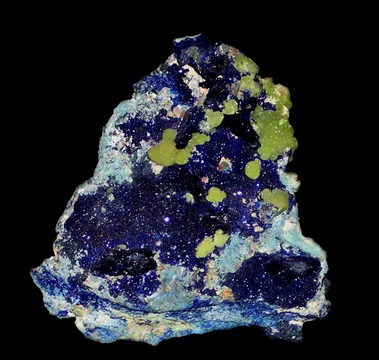
区域视图
国家视图
Tsumeb, in Namibia’s Otavi Mountainland, is renowned for its exceptional azurite. -> Tsumeb 位于 纳米比亚的 奥塔维山地,以其 卓越 的 蓝铜矿 而 闻名。 The mine’s steep, pipe-like orebody cut through carbonate rocks and multiple oxidation zones, yielding crystals with saturated royal-to-electric blue color, mirror luster, and razor-sharp form. -> 矿脉陡峭、管状的矿体穿过碳酸盐岩及多个氧化带,产出晶体呈现饱和的皇家蓝至电蓝色、镜面光泽和锋利清晰的晶形。 Classic habits range from thick tabular and blocky crystals with bevelled edges to stacked rosettes and radiating sprays. -> 经典晶型包括厚扁片状和块状晶体,边缘带倒角,或叠层的玫瑰簇和放射状晶束。 Aesthetic matrix pairings are a hallmark: azurite on snowy dolomite, set among curved smithsonite, or accented by velvety malachite. -> 美学上的基质搭配是其标志:蓝铜矿镶嵌在雪白的白云岩上,周围点缀弯曲的 smithsonite,或以丝绒般的孔雀石点缀。 Partial alteration rims where blue azurite grades to green malachite can frame the color without dulling the overall brilliance when the balance is right. -> 蓝色蓝铜矿向绿色孔雀石过渡的部分改性边缘,在比例恰当时能框住色彩而不过度削弱整体光彩。 Well-composed clusters often display equally well from several angles, giving Tsumeb azurite an architectural quality prized by collectors -> 构图良好的簇体往往在多个角度同样出色,使 Tsumeb 的蓝铜矿具备收藏家所珍视的建筑美感。
Collectors seek saturated color, high luster, sharp edges, and undamaged terminations. -> 收藏家追求颜色饱和、光泽高、边缘清晰且端面完好。 On matrix, proportion is everything: clusters that sit naturally on dolomite or smithsonite, with breathing room around the main crystal group, feel “complete.” -> 在基质上,比例至关重要:自然安放于白云岩或 smithsonite 上的簇落,在主晶群周围留有呼吸空间,显得“完整” 。 Minor malachite halos can add contrast; heavy overgrowth or dull matte green lowers desirability. -> 微小的孔雀石晕环可增添对比;过度生长或黯淡的哑光绿会降低吸引力。 Look closely for micro-chipping along edges, rehealed cracks, or surface etching, these are common and materially affect value on otherwise fine pieces. -> 仔细观察边缘的微小碎片、重新愈合的裂纹,或表面蚀刻,这些很常见,在本来优秀的件上会实质性地影响价值。 Crystal habit matters: tabular or blocky crystals with beveled edges and bright, reflective faces are elite; rosette and radial sprays can be superb if individual blades are thick and unabraded. -> 晶体形态很讲究:板状或块状晶体若具倒角边缘和明亮、反光的晶面,是顶级之选;若晶片厚实且未磨损,玫瑰簇状和放射簇也可非常出色。 Pseudomorphs of malachite after azurite are an important subcategory, crisp replacement preserving the original form is more desirable than partial, patchy alteration. -> 拟同形的孔雀石在蓝铜矿后的替代体是一个重要子类别,保留原始晶形的清晰替代比部分、斑驳的改动更理想。 Stability and care: azurite is relatively soft and reactive. Avoid ultrasonic cleaning, acids, or aggressive brushing. Keep away from prolonged direct light and high humidity to minimize surface dulling or further alteration. Support heavy clusters securely; point-loading can cause cleavage. For display, neutral backgrounds (white dolomite, pale smithsonite) amplify blue without competing hues. Documentation of Tsumeb level/zone, old labels, or provenance adds meaningful premium. -> 稳定性与护理:蓝铜矿相对较软且易反应。避免超声清洗、酸性物质或强力刷洗。避免长时间直射光与高湿度,以最小化表面变暗或进一步变质。对重型簇体要稳固支撑;点压可能导致解理。展示时,使用中性背景(白色白云岩、淡色 smithsonite)可以放大蓝色而不被其他色调抢镜。关于 Tsumeb 的层位/带、旧标签或出处的文档记录,能显著提升价值。
著名发现
Tsumeb produced azurite from multiple oxidation zones, each with distinct “looks.” -> Tsumeb 产自多个氧化带,每个区域都有独特的“外观”。 Early pockets yielded thick, lustrous tabular crystals—often in architectural stacks—on white dolomite. -> 早期的脉室产出厚重、光亮的板状晶体——常呈建筑般的层叠——生长在白云岩上。 Later finds produced dramatic rosette clusters and intergrown sprays with exceptional surface sheen. -> 后期发现出现引人注目的玫瑰簇状晶群和互生的放射状晶束,表面光泽非凡。 Some pockets were celebrated for azurite with delicate malachite rims that outlined the edges like neon, while others are remembered for sculptural, freestanding blocky crystals showing bevels and “windowed” faces. -> 一些脉室以蓝铜矿配以细腻的孔雀石边缘而著称,边缘如霓虹般勾勒边线;另一些则以具雕塑感、独立的方晶体著称,显示出倒角和“透窗”晶面。 A smaller but important subset includes azurite on smithsonite, where the silky zinc carbonate matrix provides a soft contrast to the intense blue. -> 一个较小但重要的子集包括镶嵌在 smithsonite 上的蓝铜矿,其中丝滑的锌碳酸盐基质为强烈的蓝色提供柔和对比。 Classic pseudomorphs—malachite after azurite preserving sharp azurite form (including bevels and terminations), remain sought after as a parallel collecting theme tied to the same geology. -> 经典的拟同形体——以孔雀石取代蓝铜矿,仍保持锋利的蓝铜矿形态(包括倒角和终端面),作为与相同地质相关的并行收藏主题,仍受追捧。
Collecting History
From the early 20th century through the end of mining, Tsumeb fostered an unusually close relationship between miners, geologists, and the collector community. -> 从20世纪初到矿业结束,Tsumeb 培育了矿工、地质学家与收藏者社群之间异常紧密的关系。 As new stopes intersected oxidation pockets, exceptional azurite was selectively saved, first circulating locally and then through international dealers. -> 随着新的开采工作面的进入,氧化带中的卓越蓝铜矿被有选择地保存,最初在本地流通,随后通过国际经销商传播。 Over decades, consistent quality built the mine’s reputation; as production waned and ultimately ceased, availability became increasingly provenance-driven. -> 数十年间,稳定的品质铸就了矿山的声誉;随着产量下降并最终停止,供应越来越依赖于产地与来源。 Today, fine Tsumeb azurite enters the market primarily from old collections and estate dispersals. -> 如今,优质的 Tsumeb 蓝铜矿主要来自旧藏与遗产分散。 Competition for undamaged, well-balanced matrix examples is strong, with top pieces regarded as cornerstones of any advanced suite of African classics—often displayed alongside the mine’s renowned dioptase, cerussite, and smithsonite. -> 对无损、平衡良好的基质样本的竞争激烈,顶级件被视为任何高阶非洲经典藏品套组的基石,往往与该矿著名的 dioptase、cerussite 和 smithsonite 一同展出。