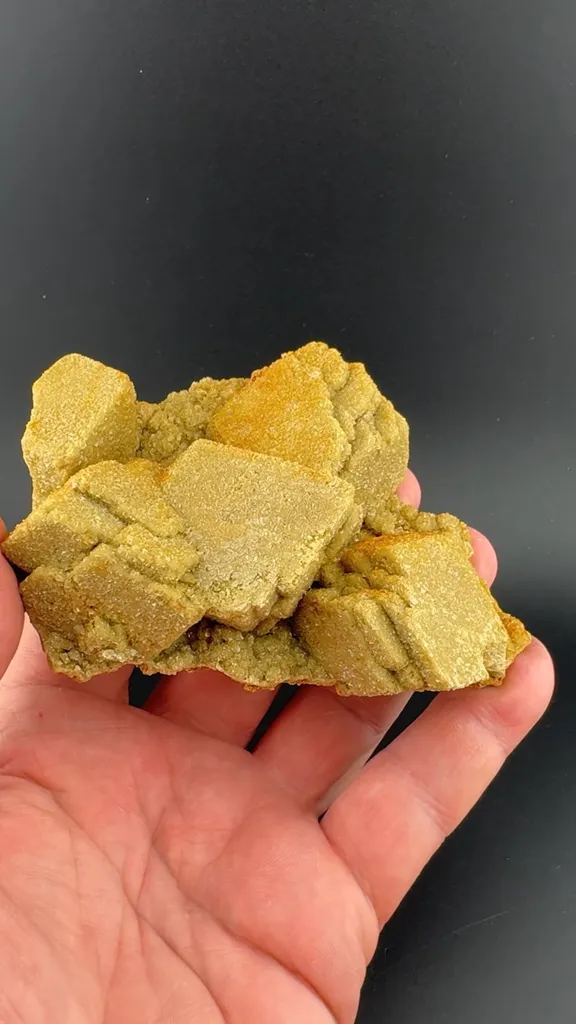
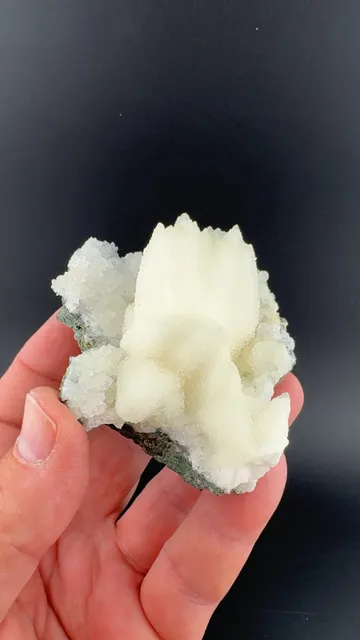
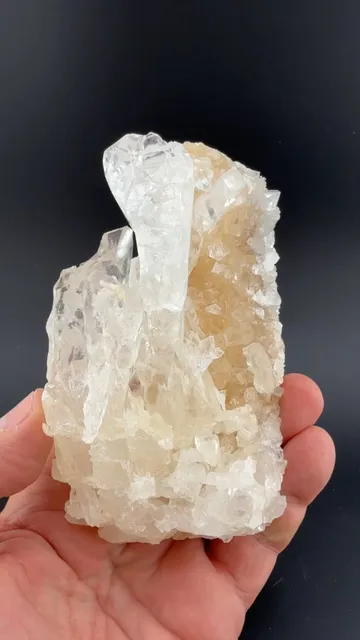
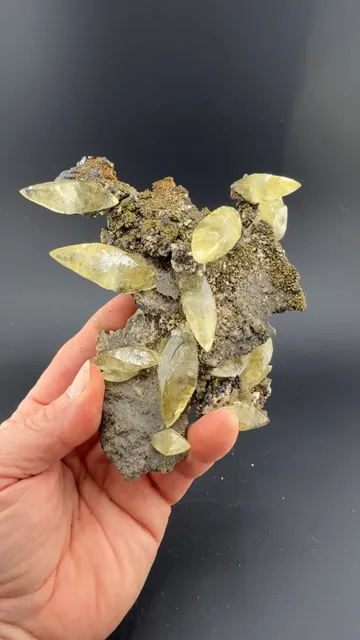
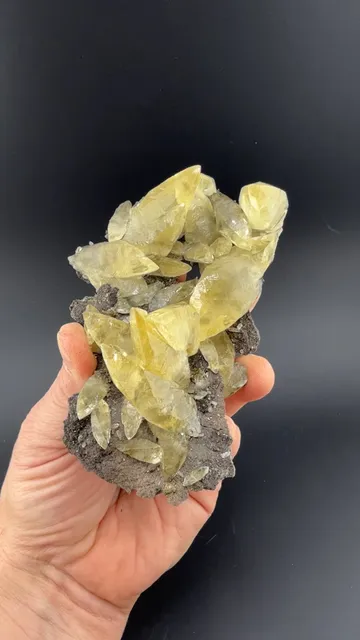
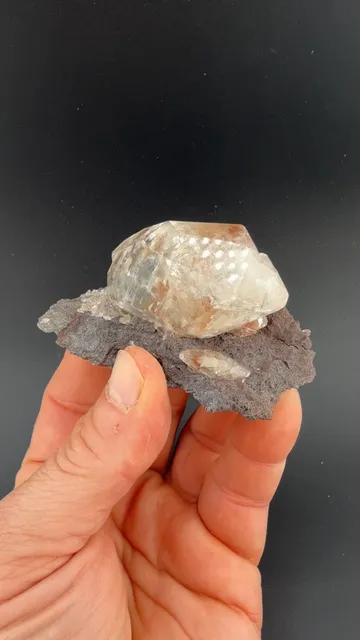
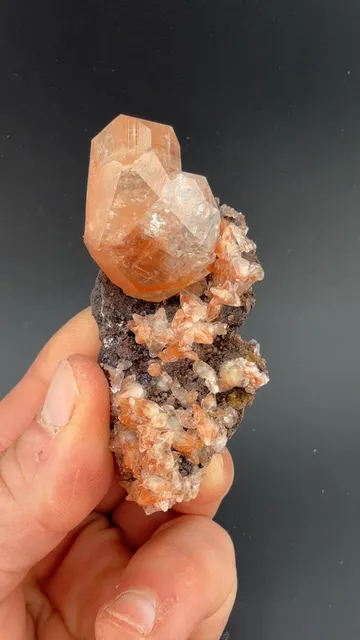
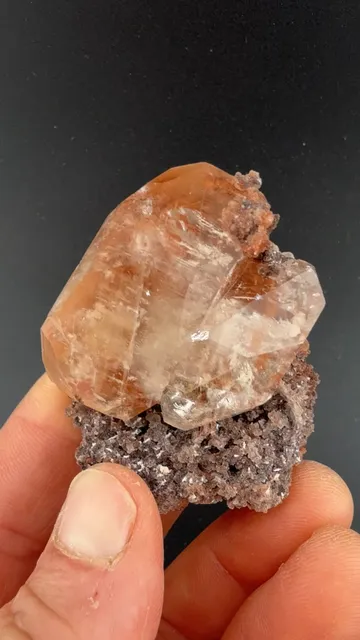
Large sharp rhombohedral crystals of what were once calcite to 4.5 cm are in size, these now replaced by crystallized siderite, aesthetic across the top of matrix. In great condition. This is classic material for this locality now long closed.
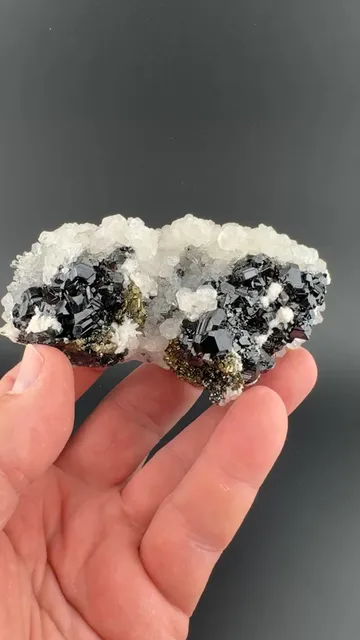
The Turt Mine, located in the Satu Mare County of northwestern Romania within the Oas Mountains, is a historic mining district with roots extending back several centuries, with structured commercial and state operations expanding during the Austro-Hungarian period and continuing through the 20th century before closing. Geologically, the deposit is associated with Neogene calc-alkaline volcanic activity, consisting of epithermal veins hosted in volcanic and sedimentary rocks formed during intense hydrothermal mineralization. Mineralogically, the district is celebrated for its rich base metal assemblages, producing exceptional specimens of siderite forming replacements after calcite, pyrite, galena, etc.
Pseudomorphs of siderite after calcite form through a chemical replacement process where an original calcite crystal structure is gradually substituted by siderite, an iron carbonate mineral, while retaining the external crystal shape of the precursor. Geologically, this transformation typically occurs when circulating hydrothermal or groundwater solutions rich in iron come into contact with pre-existing calcium carbonate crystals in sedimentary or vein environments. Mineralogically, the resulting specimens display the characteristic habit and sharp geometric forms of calcite, such as rhombohedrons or scalenohedrons, but exhibit the distinct brown, yellowish-brown, or buff coloration and composition of siderite, making them fascinating examples of mineralogical alteration cherished by collectors.

Comments