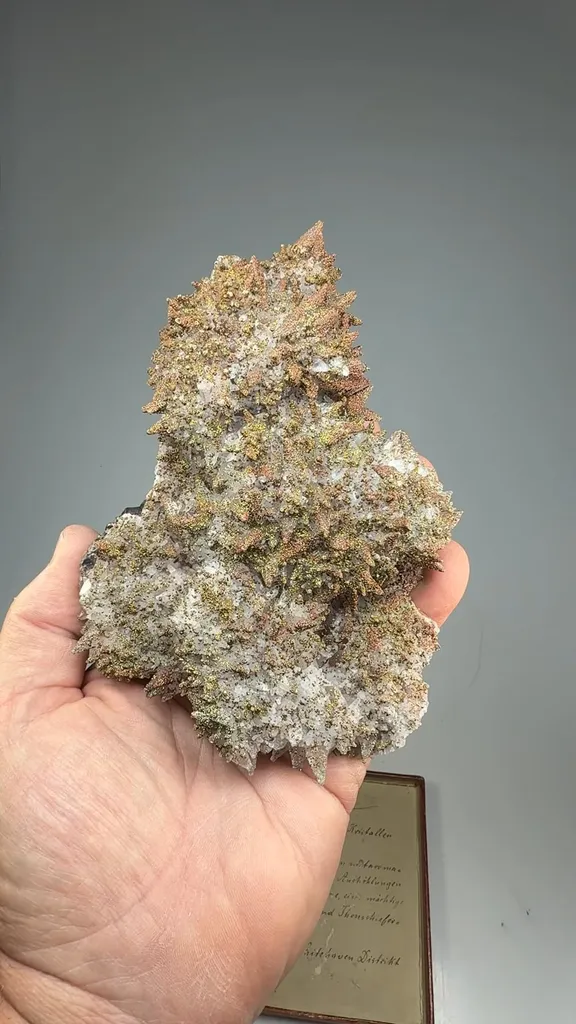
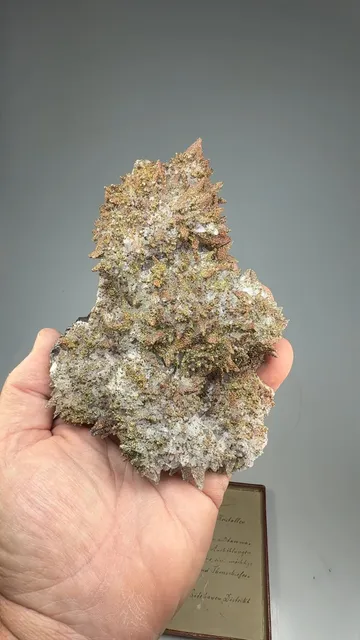
An attractive combination piece from this classic British locality. Top of matrix is covered with sharp scalenohedral crystals of calcite measuring to 1.2 cm in size. These are partially coated with beautiful iridescent micro crystals of pyrite. In very good condition with slight damage present. The specimen comes with an antique label as shown at the end of the video. At one time the specimen was part of the collection of Wilhelm Hoyer and dates to the 19th century.The Frizington mineral district, situated within the West Cumberland iron ore field of Cumbria, England, is a world-renowned historic locality celebrated for producing spectacular mineral combinations, including magnificent colorless to white scalenohedral calcite crystals coated with a shimmering, iridescent layer of microcrystalline pyrite. Geologically, this classic deposit is hosted within Carboniferous-age Limestone strata that underwent extensive fracturing and dissolution, creating massive solution cavities and karst pocket networks. High-temperature, iron-rich hydrothermal fluids associated with regional rifting circulated through these open fractures, depositing vast bodies of high-grade hematite along with superb secondary pocket minerals where sharply pointed scalenohedral calcites crystallized first, followed by a late-stage, microscopic dusting of fine pyrite crystals that exhibit a brilliant, multi-colored metallic iridescence due to natural surface oxidation. Historically, organized underground shaft mining in the Frizington area escalated dramatically during the industrial revolution to feed Britain's booming steel industry, with major mining concessions like the Parkside mine and Mowbray mine operating at peak capacity from the 1840s through the late nineteenth century. These rich hematite operations systematically wound down as the deepest ore bodies were exhausted, leading to the permanent closure of the classic Frizington mines by the early twentieth century.Wilhelm Hoyer (1849-1913) was a prominent German engineer and mineral collector based in Hanover, whose professional work in railway construction and geology facilitated the assembly of a significant mineralogical collection. Geologically, Hoyer was noted for his deep expertise in the Mesozoic formations of northwestern Germany, particularly the Hildesheim area, where he meticulously documented and collected specimens from active quarries and construction sites. His collection was scientifically important for its comprehensive representation of regional minerals and fossils, reflecting the systematic approach of 19th-century European collectors who bridged the gap between industrial mining and academic mineralogy. Historically, Hoyer was active in the latter half of the 1800s and early 1900s, contributing numerous papers to geological societies and maintaining professional ties with major institutions of his era. Following his death, his extensive mineralogical and paleontological holdings were integrated into the collections of the University of Gottingen and the Prussian Geological Survey in Berlin, where they continue to serve as vital reference materials for researchers through 2026.


Comments