Hematite: iron oxide with steel-gray to jet-black crystals and red earthy varieties; prized iron-rose rosettes and kidney ore, with a diagnostic red streak.
Key facts
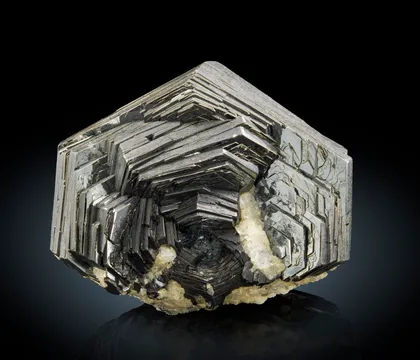
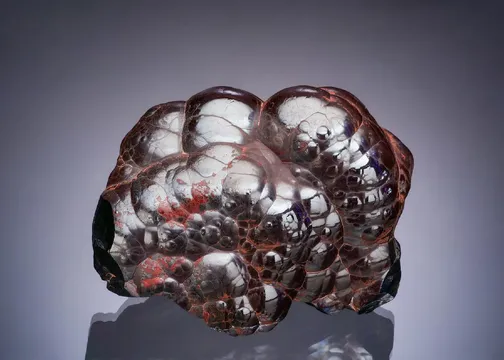
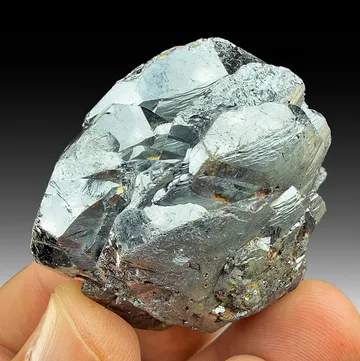
Hematite (Fe2O3) is the most important iron oxide in Earth’s crust and a cornerstone species for mineral collectors. It occurs in an impressive range of habits: mirror-bright metallic plates and blades; elegant “iron rose” rosettes composed of stacked tabular crystals; iridescent or micaceous specularite; and massive, botryoidal “kidney ore” with a silky sheen. Color ranges from steel-gray to jet black in crystalline forms, while earthy varieties are red to reddish-brown—always with the diagnostic red streak.
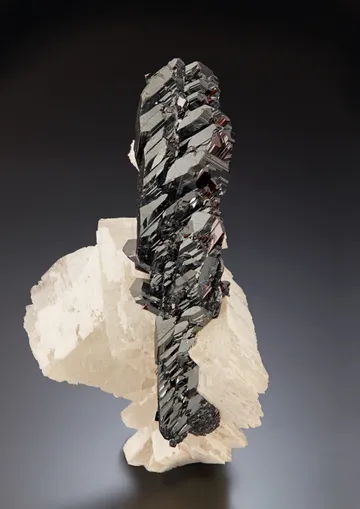
The most coveted specimens balance sculpture and luster: razor-sharp, lustrous plates arranged in rose-like aggregates, ideally on contrasting white quartz or Alpine adularia. Alpine cleft hematites in Switzerland and northern Italy set the world standard for superb iron roses, often accompanied by hairlike rutile and trim adularia. Classic botryoidal “kidney ore” from England’s Cumberland iron mines and brilliant metallic plates from Elba’s Rio Marina iron district are historic essentials. Hematite’s appeal lies in this variety—there are good, affordable examples for beginners, yet the best iron roses and historic classics are trophy-level pieces.
Hematite has been collected for centuries—first as pigment (red ocher) and iron ore, later as a display mineral. Its aesthetic pinnacle, the Alpine “iron rose,” captured collectors’ imaginations in the 19th century and remains a benchmark today. Meanwhile, English “kidney ore” built the industrial age and also filled Victorian cabinets with gleaming, sculptural botryoids. Elba’s Rio Marina yielded brilliant metallic plates that became staples in European museums.
Today, demand is strong across the spectrum. Alpine iron roses with fine geometry and perfect luster are fiercely competed for and command high prices, especially when perched on quartz with rutile “sunbursts.” Historic English hematites from Egremont and Florence Mine are widely collected for their provenance and form. Because hematite forms so many habits—from cabinet-size rosettes to delicate micaceous sprays—collectors can build specialized suites by habit, locality, or association (e.g., hematite with rutile). Accessibility plus the enduring mystique of the best Alpine pieces keep hematite firmly in the first rank of collector species.
Below are renowned sources whose hematites have defined quality and style. Each is represented by a locality map and a gallery for visual reference.
The iron mines of Rio Marina on Elba Island produced some of Europe’s most iconic hematites. Expect mirror-bright metallic plates and blades, often forming rosette clusters or stacked growths with crisp edges and reflective faces. Equally classic are lustrous botryoidal “kidney ore” masses with a silky surface. Associations include quartz, siderite, and occasionally pyrite or calcite, providing contrast to the jet-black hematite. Historic importance, superb luster, and the breadth of habits make Rio Marina a cornerstone locality for hematite collectors.
Cavradi is an Alpine cleft classic famed for razor-sharp hematite plates and exquisite iron roses perched on white to smoky quartz. Many crystals are decorated by radiant sprays of rutile epitaxially grown on hematite surfaces, creating a dramatic “starburst” effect. Adularia often adds snowy contrast. The best pieces have jewel-like precision—thin, perfectly lustrous plates arranged in airy compositions that epitomize Alpine aesthetics.
The Fibbia area yields delicate to robust iron roses and brilliant tabular plates on Alpine quartz. Assemblages can be finely detailed—thin, lustrous blades arranged like petals with small adularia crystals or rutile hairlines adding sparkle. While sizes vary, Fibbia specimens are often praised for refinement and immaculate luster, fitting perfectly into advanced suites of Alpine hematite.
Cumberland’s iron mines around Egremont are the world reference for “kidney ore” hematite—rounded, botryoidal crusts with silky to mirror luster—and for massive, vivid red ocher. Specimens frequently show rich, satiny surfaces and sculptural forms, sometimes with calcite or quartz for contrast. Historic labels, museum provenance, and the role these mines played in the Industrial Revolution add strong historical cachet—Cumberland pieces are essential in any comprehensive hematite collection.
Form and habit
Luster and surface quality
Aesthetics and composition
Condition
Size vs. quality
Repairs and reattachments
Polishing and coatings
Composites
Disclosure
Handling
Cleaning
Environment and display
Long-term care
By focusing on crisp form, ultra-bright luster, thoughtful composition, and honest condition, collectors can assemble a hematite suite that spans the species’ remarkable aesthetic range—from silky Cumberland kidney ore to the pinnacle Alpine iron roses.