Mbuji-Mayi diamond — Congo cubes and modified cube crystals, formed in kimberlites with a mantle mineral suite; a crystallographic favorite prized for provenan…
Key facts
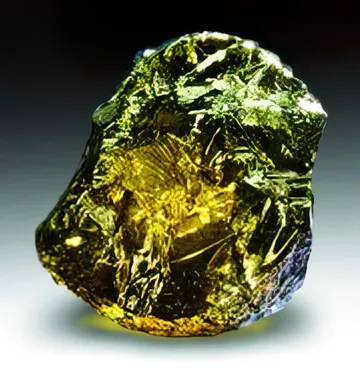
Mbuji-Mayi diamond is one of the classic African collector diamonds: not usually the icy, cuttable, octahedral gemstone ideal that dominates jewelry advertising, but a rich family of natural crystals that serious mineral collectors recognize immediately. The most distinctive pieces are sharp to rounded cubic “Congo cube” diamonds, modified by octahedral, dodecahedral, tetrahexahedral, and hexoctahedral faces, often with honey-yellow, amber, greenish-yellow, silvery, grey, beige, or reddish tones. Many are true floaters—complete all around, naturally etched or frosted, and surprisingly sculptural under magnification.
The locality’s importance rests on geology as much as beauty. The Mbuji-Mayi kimberlites, including the MIBA mine area, belong to the Congo-Kasaï craton and are Late Cretaceous diamond-bearing pipes that cut Archean basement and younger sedimentary cover. They are part of a deeply mantle-derived system that brought not only diamond to the surface, but also a notable suite of kimberlitic and mantle minerals: pyrope and other garnet-group minerals, diopside, ilmenite, olivine, biotite, chlorite, goethite, hematite, zircon, baddeleyite, rutile, kyanite, and even corundum megacrysts. That associated megacryst suite is one reason Mbuji-Mayi occupies a special place in the literature: the diamonds are not isolated curiosities, but part of a well-studied mantle sample brought up by kimberlite volcanism.
For collectors, the appeal is strongly crystallographic. Mbuji-Mayi is one of the localities that can furnish well-formed diamond crystals in habits that are harder to obtain than the more familiar octahedra. Cubes and modified cubes are particularly prized, especially when they are complete, lustrous, translucent when backlit, and accompanied by old labels or a credible chain of custody from established dealers. The best crystals can be small in millimeters and still highly desirable; a 3 mm sharp cube may be more collectible than a larger, rounded, industrial fragment.
Historically, Mbuji-Mayi was the heart of industrial diamond production in Congo. The city, formerly Bakwanga, grew around diamond extraction, and the Société Minière de Bakwanga—MIBA—became synonymous with the region. Its output once made Mbuji-Mayi one of the world’s great industrial diamond districts, while the later collapse and partial stoppages of MIBA transformed the locality from an industrial powerhouse into a more irregular source of specimens and rough. Today, collector-quality crystals remain available, but the best old-time MIBA diamonds—with sharp cubic or complex modified forms, good luster, attractive yellow to greenish tones, and solid provenance—are a distinct specialty item.
Search for specimens: View all diamond specimens from Mbuji-Mayi, DR Congo
Mbuji-Mayi is in Kasaï-Oriental Province, south-central Democratic Republic of Congo, in the traditional diamond country of the Congo-Kasaï craton. The better-known collecting locality name is the MIBA Mine, named for the Société Minière de Bakwanga, the state-linked diamond company that operated the principal industrial deposits around the city. Mindat places the MIBA Mine at approximately 6° 7' 59" South, 23° 36' 0" East, very close to Mbuji-Mayi itself.
The deposit type is kimberlite, with associated eluvial and alluvial redistribution of diamonds in nearby streams, gravels, and worked ground. The Mbuji-Mayi kimberlite field is described in the geological literature as diamond-rich, unlike the better-known but diamond-poor Kundelungu kimberlites of southeastern DRC. At Mbuji-Mayi the kimberlites intruded Archean Congo-Kasaï cratonic rocks and overlying Proterozoic to Cretaceous sedimentary units. The pipe material includes breccias made of kimberlite clasts, limestone, sandstone, and gneiss fragments in a sandy clay matrix. Kimberlite facies are important: pyroclastic facies are the productive diamond host, while epiclastic, resedimented volcaniclastic units are far poorer in diamonds.
The MIBA mining area has been described as containing multiple kimberlite bodies. Radio Okapi reported statements by MIBA technical management in 2020 that the company counted roughly 13 to 14 kimberlite massifs on which grade and structural drilling had been carried out; the same report cited the Massif 1 resource at about 45 million carats to 200 m depth after nearly 197 drill holes. These figures are best read as company-context mining-resource statements rather than collector information, but they show the scale of the field.
Mining history is long and politically charged. Diamonds were found in the wider Kasai region in the early twentieth century, and Mbuji-Mayi—then Bakwanga—became a company mining town under Belgian colonial control. Kimberlite in the region was formally recognized by the mid-1940s, and the Tshibua/Tshibwe kimberlite pipes were discovered by MIBA in 1955. In the 1950s and early 1960s the area was widely described as one of the world’s most important industrial diamond districts. MIBA’s output was dominated by industrial and near-gem material, not fine cutting goods, which is precisely why so many natural crystal specimens survived as mineral specimens rather than disappearing into the cutting pipeline.
Access is not casual collecting access. The productive ground is a commercial diamond concession with legal, security, and safety restrictions. Collectors should assume that field collecting is not available without formal permission from land and mineral-rights holders. Much of the specimen market consists of old material, parcels dispersed through dealers, individual crystals sold with historic labels, or stones that left the region through the rough-diamond trade. Any fresh rough diamond crossing borders must be treated as a regulated commodity, not as an ordinary mineral hand specimen.
Production has been uneven. MIBA was once a major diamond producer, but output collapsed from the high levels of the late twentieth century. Recent reporting has described periods of severe stoppage: in 2020, MIBA resumed production after a year-long shutdown, and in 2025 Radio Okapi reported that MIBA produced no diamonds from March to August 2024 according to a CTCMP report. The broader DRC diamond sector remains active, but artisanal production and other industrial operators now dominate much of the reported output. This matters to collectors because “new” Mbuji-Mayi specimens are sporadic, while old MIBA crystals with reliable provenance are increasingly important.
Notable finds include large industrial and gem rough, but the collector record is most vivid in individual crystallized specimens: 1–3 mm sharp cube sets, 0.4–5 carat modified crystals, 7–10 mm octahedral and cubic diamonds, 25-carat yellow intergrown cube clusters, 31.5-carat twinned crystals, and exceptionally large complete cubic diamonds reportedly reaching 56 carats in dealer and gallery records. Those are not everyday collector finds; they are the upper end of what makes the locality famous among diamond-crystal specialists.
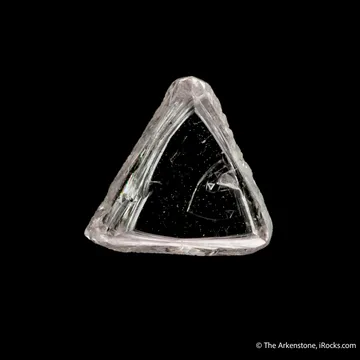
Mbuji-Mayi diamonds are best known to collectors for cubic and modified cubic habits. The “Congo cube” form is a recurring theme: yellow to silvery cubic crystals, often complete, sometimes showing subtle modifying faces that become apparent only under a loupe. Fine examples may show an almost architectural balance between cubic square faces, triangular octahedral faces, and narrow dodecahedral faces. Some specimens are described as cube-octahedron-dodecahedron crystals, others as cubic-dodecahedral-tetrahexahedral forms, and some show hexoctahedral modifications in small faces along edges and corners.
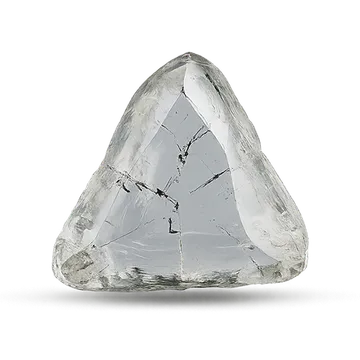
Octahedra also occur and can be attractive, particularly when sharp, greyish, amber, or yellowish, with minor dodecahedral faces or trigons. Dodecahedral and rounded dodecahedral forms are also represented. Twinning is an important feature: interpenetrant cubic crystals and paired dodecahedral crystals occur, and well-formed twinned crystals from Mbuji-Mayi can be far more interesting than single fragments of comparable size. Skeletal, etched, frosted, and complex crystals are known, as are rounded cream-colored and greenish-grey industrial pieces.
Color is one of the locality’s pleasures. Reported and photographed specimens include honey-yellow, bright yellow, amber, greenish-yellow, greenish-grey, grey, silvery-beige, reddish to colorless, pinkish-yellow, deep translucent yellow, and cream-colored crystals. Many pieces are not transparent in the cut-gem sense, but a strong crystal may be translucent when backlit, revealing a greenish-silver, honey, or warm internal glow beneath an etched skin. Opaque industrial stones are common, but a cabinet-quality specimen does not need high clarity if the crystal form, luster, color, and completeness are strong.
Typical collector sizes run from about 2.5–3 mm micro-to-thumbnail cubes through 4–10 mm thumbnail crystals. Carat weights of documented collector specimens commonly fall below a few carats, but larger fine crystals are known: approximately 4–6 carat modified crystals are represented in auction and gallery records, 7–10 carat clusters occur, and much larger old-time stones are recorded but should be regarded as exceptional. For diamonds, millimeter size can be deceptive; a 6 mm complete crystal may already be a substantial specimen.
Associated minerals reflect the kimberlitic and mantle setting. At the MIBA Mine, recorded minerals include diamond, biotite, chlorite-group minerals, garnet-group minerals, goethite, hematite, ilmenite, and olivine-group minerals. The broader Mbuji-Mayi locality adds diopside, pyrope, phlogopite, rutile, zircon, baddeleyite, kyanite, spinel, corundum, and amphibole-group minerals. The corundum story is particularly intriguing: studies describe centimeter-scale ruby and pink to grey sapphire megacrysts in the Mbuji-Mayi diamond-bearing kimberlites, with inclusions such as Cr-bearing spinel, chromite, rutile, Mn-rich ilmenite, and margarite. These are not matrix associations on ordinary diamond specimens, but they confirm the deep mantle and xenocrystic complexity of the locality.
Quality in Mbuji-Mayi diamond specimens is judged differently from faceted-diamond quality. For mineral collectors, the strongest factors are crystal habit, completeness, natural surface, luster, color, translucency, and provenance. Sharp cubic morphology with meaningful modifying faces is especially desirable. Damage-free floaters are preferred. Natural etching and frosting are acceptable—often beautiful—when they enhance surface character; obvious breaks, cleavages, bruises, or dull abraded surfaces lower value. For this locality, a complete, lustrous 3 mm yellow cube with old MIBA provenance may be much more important than an anonymous larger industrial chip.
The first authenticity issue is not whether diamond can be identified—thermal conductivity and advanced gem testing make that straightforward—but whether the stone is a natural Mbuji-Mayi diamond with an honest locality. Loose diamonds are easy to detach from context. Once a rough stone is out of the parcel and separated from original paperwork, locality becomes a matter of documentation. The best specimens carry old dealer labels, collection history, minID documentation, archived dealer pages, or a consistent chain of custody from recognized mineral dealers.
Mbuji-Mayi provenance should be treated with care because the broader Kasai diamond trade has long involved artisanal production, informal transactions, smuggling, and mixing of stones from different sources. A label reading simply “Congo” or “Zaire” is not the same as MIBA Mine, Mbuji-Mayi. “Kasai” can refer to a broader diamond-producing region, including alluvial stones from far outside the MIBA kimberlite field. For high-value specimens, ask whether the dealer can distinguish Mbuji-Mayi/MIBA from Tshikapa, Luebo, Angola-related Kasai alluvials, or generic DRC rough.
Treatments are less common as an issue for crystallized mineral specimens than for faceted gems, but they cannot be ignored. Diamonds may be laser drilled, HPHT treated, irradiated, annealed, surface coated, or fracture filled. Color-treated rough can enter the collector market, and lab-grown diamond can be misrepresented as natural if sold without adequate testing. For unusually bright green, blue, pink, or fancy-color pieces, or for any expensive “gem rough,” laboratory testing is prudent. A mounted rough diamond crystal should not be bought solely on the basis of a handheld tester; spectroscopy and careful microscopic examination are the safer standard for valuable material.
There are no well-established, locality-specific fake styles unique to Mbuji-Mayi that define the market in the way some fake matrix specimens do for other minerals. The greater risk is misattribution, undocumented rough, artificially colored diamond, lab-grown diamond sold as natural, or conflict- and export-document problems. Natural diamond simulants such as quartz, topaz, zircon, moissanite, cubic zirconia, and synthetic corundum are easily separated in a competent gem lab, but they still appear in informal rough-diamond scams.
Condition issues are common because diamond has perfect octahedral cleavage despite its hardness. Mbuji-Mayi crystals may show broken corners, cleavage windows, bruised edges, naturally etched pits, frosted skins, or post-recovery abrasion. Cleavage windows can be attractive if they reveal a transparent interior, but a major fresh break should be priced accordingly. Natural rounding from transport or resorption is not damage, but it changes the specimen’s character: a rounded industrial dodecahedron is a different object from a sharp cubic floater.
Rarity is tiered. Small industrial diamonds from the DRC are not inherently rare. Well-crystallized Mbuji-Mayi diamonds with sharp form, attractive color, and reliable locality are much scarcer. Large complete crystals, twinned cubes, large yellow intergrowths, and complex cube-octahedron-dodecahedron crystals are genuinely desirable. The collapse and irregular operation of MIBA have also shifted the market toward older material; when good specimens appear, they are often from old collections rather than fresh production.
Market availability remains real but selective. Small Mbuji-Mayi diamonds appear from time to time through mineral dealers, auctions, and online specimen marketplaces. Fine old-time examples with exact MIBA labels and strong crystallography command a premium, especially if they are complete floaters. As with all rough diamonds, buyers should prioritize legality, documentation, and ethics as much as aesthetics.
Mbuji-Mayi is a city built over the thing collectors hold in tweezers. In the company-town era, the diamond field was not just outside the city; in places, the city itself stood above diamond-bearing ground. Accounts of the district describe houses and even company buildings being demolished when the ground beneath them became more valuable as ore than as real estate. The image is almost too literal: a city where the subsoil could overrule the street plan.
By the early 1960s, the numbers attached to Mbuji-Mayi were extraordinary. The MIBA operation was credited with a huge share of the world’s industrial diamond output, while smuggling rose alongside official production. Diamonds were not only produced by the mine; they were also found in streams and waterways around the district, making the boundary between formal extraction and individual digging porous from the beginning. That porous boundary never really disappeared.
In February 2003, that boundary became deadly. A commission of inquiry was convened in Mbuji-Mayi after about 25 miners died under disputed circumstances inside the MIBA concession. Miners accused police of blocking the entrance to a tunnel where unauthorized diggers were hiding, and protesters brought seven bodies to MIBA offices, demanding action from the provincial governor. MIBA and local authorities gave a different account, saying fewer people had died and attributing deaths to a cave-in and clandestine tunneling into an active mine. However the final responsibility is weighed, the episode captures the hard underside of the locality: the same diamond field that produced beautiful cubic crystals also drew desperate diggers into abandoned workings, active concessions, and dangerous confrontations.
A similar danger appeared again in 2007 at Bakuatshimuna, about 17 km from Mbuji-Mayi, when clandestine diamond diggers working at night were caught by a mine collapse. Radio Okapi reported conflicting death tolls: police spoke of roughly twenty dead, while shaken witnesses said more than 47 people might have been buried. Seven bodies had been recovered when the report was published, and searches continued in the hope of finding more bodies—or, in the best case, survivors. For collectors, these stories are a reminder that “locality” is not just a line on a label. It is a lived landscape, and in Mbuji-Mayi the landscape has often been dangerous.
The company’s decline has its own drama. MIBA, once the economic engine of the Kasai diamond country, entered a long collapse marked by lost concessions, underinvestment, debt, accusations of corruption, and repeated revival plans. In October 2020, after a year of stoppage, MIBA announced a first new production of 78 carats. Company officials went to the mining polygon to see the restart; the interim managing director called it “the start,” and technical management spoke of kimberlite massifs, drilling, and tens of millions of carats remaining in the ground. The reported first production was tiny compared with the old MIBA era, but symbolically large: a handful of stones standing in for a regional hope that the company could live again.
There is also a quieter collector story in the specimens themselves. Some Mbuji-Mayi diamonds on the market are old pieces that sat for decades in private collections: small complete floaters purchased in the 1990s, 50- to 60-year-old crystals sold from old stock, yellow cubes with provenance from named collectors, and thumbnail diamonds that passed through shows such as Denver before reappearing online. The best of them have the feel of survivors—natural crystals from a mine whose industrial story has risen, fallen, and repeatedly tried to restart.