






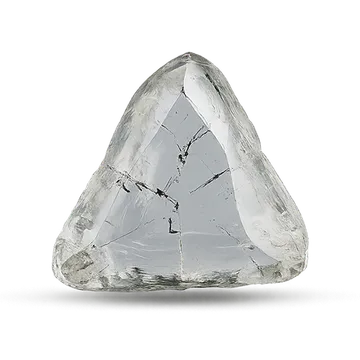
Ekati Diamond Mine, Canada - Lac de Gras locality producing high-value rough diamonds; sharp octahedra, macles, and provenance-driven collector appeal.
Key facts
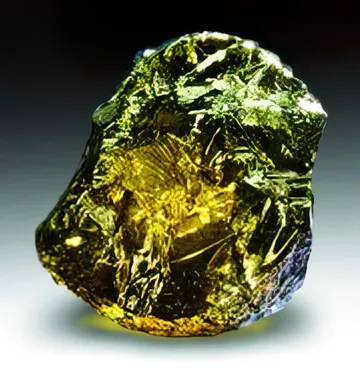
Ekati is the locality that made Canada a diamond-producing nation. Set in the Lac de Gras region of the Northwest Territories, roughly 300 km northeast of Yellowknife, it opened in October 1998 as Canada’s first diamond mine and remains one of the defining hard-rock diamond localities of the modern era. For collectors, the name carries two kinds of weight: it is historically important, and its rough diamonds can be visually superb—especially sharp, bright octahedra and macles with the clean, icy look that became associated with early Canadian production.

Photo: Wikimedia Commons
The diamonds came up in kimberlite pipes of the Lac de Gras kimberlite field, small but high-value volcanic intrusions punched through Archean rocks of the Slave craton. The pipes are not the diamonds’ birthplace; they are the delivery system. Many of the stones are far older than the kimberlites that carried them, having resided deep in the continental mantle before violent Paleogene kimberlite eruptions excavated and transported them toward the surface. That contrast—ancient mantle crystals in young explosive pipes beneath Arctic lakes and till—is central to Ekati’s appeal.
The best-known collector material consists of loose rough crystals rather than matrix specimens. Commercial diamond recovery is engineered to free diamonds from kimberlite, not preserve cabinet specimens, so genuine diamond-on-kimberlite examples with convincing provenance are scarce. Most attractive pieces seen by collectors are individual crystals: transparent to translucent octahedra, rounded dodecahedral forms, macles, coated stones, yellow cubes, and brown resorbed crystals. The most desirable specimen-grade Ekati diamonds combine recognizable crystal form, lively adamantine luster, minimal breakage, and documentation that ties them to the mine rather than merely to “Canada” or the Northwest Territories.
Ekati also has unusual paleontological and geological color. Fossil wood, leaves, fish remains, and turtle bone reported from crater-facies kimberlite show that the pipes erupted into a very different northern landscape than today’s treeless Arctic mining district. The locality is therefore not merely a diamond mine; it is a deep-mantle and near-surface time capsule, where Paleoarchean diamond growth, Paleogene kimberlite volcanism, glacial transport, permafrost engineering, and modern mineral economics all meet.

Photo: Wikimedia Commons
Search for specimens: View all diamond specimens from Ekati Mine, Canada
Ekati lies in the central Slave Structural Province of the Canadian Shield, in a terrain of Archean metamorphosed supracrustal rocks and granitoid plutons cut by Proterozoic mafic dyke swarms. The mine property occupies part of the Lac de Gras kimberlite field, where diamondiferous pipes pierce ancient basement rocks and are commonly hidden by glacial overburden or shallow lakes. The modern mine area is a remote subarctic industrial landscape of open pits, underground workings, haul roads, camps, winter-road logistics, permafrost engineering, and processed-kimberlite containment facilities.
The deposit type is primary kimberlite-hosted diamond. Ekati’s pipes are mostly small volcanic pipes, many with steep, inward-tapering diatreme-like walls, but their shapes and internal geology are more irregular than the classic southern African kimberlite model. Faults, joints, dyke intersections, and structural lineaments influenced emplacement. The pipes are commonly filled with resedimented volcaniclastic kimberlite, olivine-rich volcaniclastic kimberlite, mud-rich units, crater sediments, and locally primary volcaniclastic or magmatic kimberlite. In collector terms, this explains why “Ekati diamond” is not one uniform look: different pipes sampled different diamond populations and then sorted, mixed, resorbed, coated, or preserved them in different ways during eruption and pipe infill.
The discovery story begins before the mine existed. Charles “Chuck” Fipke and Stewart Blusson traced kimberlite indicator minerals across the northern glacial terrain through years of exploration, leading to the 1991 discovery of the Point Lake kimberlite, the first diamondiferous kimberlite pipe found in the Northwest Territories. Point Lake itself was not the immediate foundation of the first mine, but the discovery triggered a vast staking rush and transformed Canadian diamond exploration. Production at Ekati began officially in October 1998 after evaluation and development, with BHP as the original operator; later ownership passed through Dominion and Arctic Canadian Diamond Company before Burgundy Diamond Mines acquired control in 2023.
Mining has moved among several named kimberlites, including Panda, Koala, Koala North, Fox, Misery, Sable, Lynx, Pigeon, and Point Lake. Panda and Koala were crucial in the early mine life, with open-pit development followed by underground mining as near-surface ore was depleted. Misery became one of the mine’s major production centres and is especially noted for fancy yellow stones. Sable, Fox, Lynx, Pigeon, and Point Lake mark later stages, extensions, or future-oriented mine planning. By 2024, Ekati had reached the 100-million-carat production milestone, underscoring that this is not a small curiosity locality but a world-class commercial diamond camp.
Collector access is effectively closed. Ekati is an active industrial diamond mine with strict security, permitting, environmental regulation, and chain-of-custody controls. It is not a fee-collecting site, and casual collecting is not permitted. Rough diamonds leaving the mine do so through controlled commercial and regulatory channels. Provenanced collector specimens are therefore secondary-market pieces, old collection pieces, or legally released rough, and any specimen offered as “on matrix” deserves especially careful scrutiny.
The operational picture has changed with the diamond market. Burgundy’s public updates in 2025 and 2026 describe a difficult natural-diamond price environment, temporary suspension of Point Lake open-pit mining, continued focus on higher-margin ore, and a court-supervised restructuring process involving Arctic Canadian Diamond Company while operations at Ekati continued. For collectors, the significance is straightforward: new supply of documented rough specimens is intermittent, highly dependent on commercial flows, and not comparable to ordinary mineral localities where diggers select specimens for the collector market.
Notable finds include a 71.26 ct fancy vivid yellow rough diamond recovered from the Misery pipe, described as a near-perfect octahedral form and later acquired by Tiffany & Co.; it yielded two significant emerald-cut fancy vivid yellow diamonds. Burgundy’s media materials also note a 186 ct gem-quality diamond from the Pigeon pit as the largest stone found at Ekati. Such stones are not mineral-cabinet specimens in the usual sense, but they help define the locality’s reputation for high-value rough, strong crystal form, and rare Canadian fancy-color diamonds.
Ekati diamond is best understood as a family of diamond populations from multiple kimberlite pipes rather than as a single uniform material. Studies of Ekati parcels describe abundant octahedra and dodecahedra, significant cubes, both fibrous and non-fibrous, minor cubo-octahedra and aggregates, rare macles, rare pseudo-hemimorphic crystals, and octahedra with fibrous coats. The collector’s “classic” Ekati look is a sharp to slightly modified octahedron, often colorless to near-colorless, bright, transparent to translucent, and sometimes with trigons, growth textures, or minor resorption features visible on the faces.
Color ranges are locality-dependent. Colorless and near-colorless octahedra are important in the better-quality diamond populations from pipes such as Panda and Koala. Brown diamonds, including rounded resorbed octahedra and dodecahedra, are more characteristic of some other Ekati populations, with Misery and Jay noted for brown resorbed material in the published descriptive work. Yellow diamonds are a minor but persistent component at Ekati; Sable is specifically noted for lemon-yellow cubes, and Misery produced the celebrated large fancy vivid yellow rough. Dark brown, highly resorbed, rutted stones also occur in some pipes, giving the locality a broader visual range than the public image of “Canadian white octahedra” suggests.
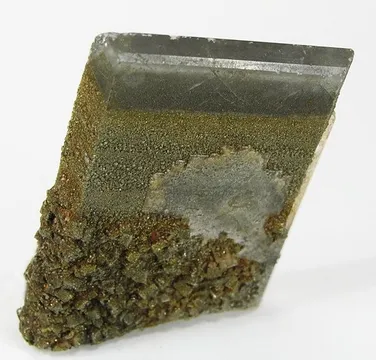
Crystal form is a major value driver. Flat-faced sharp-edged octahedra, especially colorless ones, are the most immediately recognizable collector crystals. Macles—flattened twinned diamonds—are desirable when complete and lustrous. Dodecahedral forms record resorption and can be attractive when rounded, glassy, and symmetrical. Cubes and fibrous cubes are mineralogically interesting but often less transparent; some are small, and fibrous cubes are described as predominantly small in Ekati studies. Coated stones, where a fibrous diamond layer mantles an older octahedral core, are especially appealing to technically minded collectors because they show multiple growth episodes in one crystal.
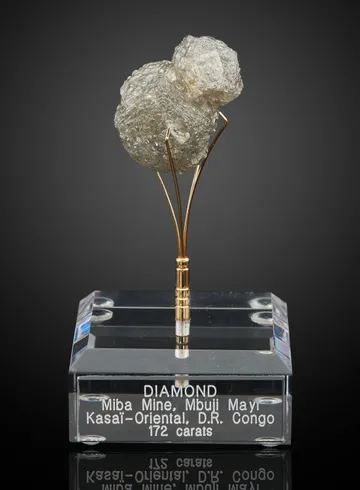
Size varies enormously between mine production and collector availability. Scientific studies discuss parcels and populations, while the collector market usually sees small loose crystals, commonly sub-carat to a few carats. Larger intact, well-formed crystals are much less common, and any large Ekati stone with exceptional transparency or color tends to be absorbed by the gem trade rather than preserved as an uncut specimen. The 71.26 ct Misery yellow and the 186 ct Pigeon gem-quality stone are important locality records, but they should not create unrealistic expectations for specimen availability.
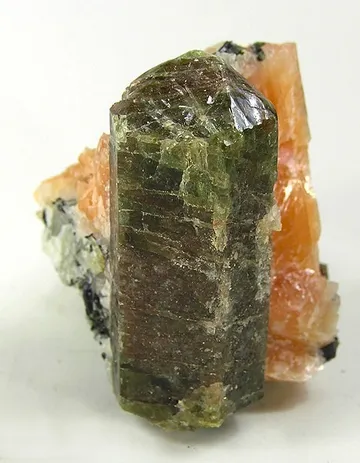
Associated minerals are those of kimberlite, mantle xenoliths, and altered pipe fill rather than the open-vug associations familiar from pegmatites or hydrothermal veins. Mindat and the geological literature record diamond with graphite, olivine-group minerals including forsterite, pyrope and other garnets, chromite, chrome-bearing diopside, ilmenite, magnetite, spinel, phlogopite-related material, serpentine, calcite, dolomite, perovskite, pyrite, zircon, and a suite of unusual carbonate and halide minerals in specific Ekati pipes. In hand specimens, however, most collector diamonds are loose; attractive natural matrix specimens with diamond visibly seated in kimberlite are far rarer than the associated-mineral list might imply.
The quality factors for Ekati collector diamonds differ from cut-gem grading. Form comes first: a complete octahedron with sharp edges and natural surface features is more collectible than a shapeless fragment of better clarity. Luster matters; a small bright crystal can outperform a larger dull or heavily frosted stone. Transparency and color help, especially in colorless, near-colorless, or vivid yellow stones. Surface preservation is important, but some resorption is not a flaw when it produces pleasing dodecahedral curvature or etched natural sculpture. Damage is different: fresh chips, cleavage breaks, bruised points, and sawn or abraded surfaces reduce mineral specimen value even when the diamond remains gemologically durable.
The first authenticity issue is provenance. “Canadian diamond” is not the same as “Ekati diamond,” and “Northwest Territories” is not precise enough for a serious locality collection. Ekati, Diavik, Snap Lake, Gahcho Kué, and other Canadian sources have all contributed to the market at different times. A specimen offered as Ekati should ideally be accompanied by an old label, dealer invoice, mine-issue documentation, laboratory or branded chain-of-custody information, or a well-preserved collection history. Without that, the locality attribution is often a matter of seller assertion.
The second issue is matrix. Diamond in kimberlite is irresistibly attractive to collectors, but true undisturbed diamond-on-kimberlite specimens are uncommon from commercial mines because ore processing is designed to crush, liberate, separate, and secure diamonds. A diamond perched too neatly on a cut or broken piece of kimberlite should be examined with suspicion. Look for glue, resin halos, mismatched surface freshness, improbable seating, a diamond that bridges no natural cavity or broken-out socket, and matrix that does not resemble Ekati kimberlite or lacks provenance. A loose Ekati rough diamond with reliable paperwork is often more believable than a spectacular but undocumented “in matrix” piece.
There is also a documented history of questionable “Canadian” diamond claims soon after Ekati opened. Gemological reporting in 2001 noted that polished diamonds purporting to be Canadian appeared on the world market in volumes difficult to reconcile with the young mine’s production and polishing capacity, and also discussed concerns that non-Canadian conflict diamonds could be routed through Canada to evade scrutiny. That is mainly a gem-trade problem rather than a mineral-specimen scandal, but the lesson is the same: the Canadian origin premium encouraged misrepresentation early, and provenance still matters.
Condition issues are specific to diamond’s paradoxical nature. Diamond is the hardest natural material in ordinary collector language, but it is not indestructible. It has perfect octahedral cleavage and can chip, bruise, or cleave if struck. Inspect octahedral tips and edges closely. Broken macles, chipped octahedral points, and cleaved fragments are common in rough parcels and may still be interesting, but they should not be priced like complete crystals. Surface features such as trigons, etching, frosting, fibrous coats, and natural resorption are not damage; fresh flat breaks and unnatural abrasion are.
Treatment is less often the central issue for loose mineral-specimen rough than for polished colored diamonds, but buyers should remain alert. Artificial irradiation, HPHT processing, coating, or filling are gem-market realities for diamond generally. For Ekati rough specimens, the more likely collector problems are incorrect locality, undocumented Canadian origin, glued matrix, or altered presentation rather than sophisticated treatment. Any unusually saturated yellow, green, blue, or pink diamond sold as natural-color Ekati material should have strong documentation or laboratory support.
Ekati diamonds are available, but good ones are not common. Small loose crystals appear in the collector market more often than matrix specimens. Attractive colorless octahedra, complete macles, yellow natural crystals, and pieces with old labels or credible mine-era provenance are the forms to prioritize. As with most commercial diamond-mine localities, the best collector strategy is not to chase size alone; it is to buy a crystal whose form, surface, and paperwork all make sense together.
In May 2001, a Gems & Gemology field party reached Ekati when the mine was still young enough that Panda dominated the operation. Darren Dyck, senior project geologist for BHP Diamonds, hosted the visit. The group toured the mine, processing plant, tailings containment area, and living quarters for about 400 personnel. At the time, Panda was the only active ore source, though Misery and Koala were already being stripped for production. The Panda pit was about 150 m deep, only halfway to its projected 300 m open-pit depth, and measured roughly 500 m across at the top. The geometry was impressive, but so was the waste burden: about 14 tonnes of granitic country rock had to be moved for each tonne of kimberlite.
The plant details from that visit remain one of the clearest snapshots of early Ekati. About 10,000 tonnes of kimberlite were processed daily. After crushing and screening, roughly 4,000 tonnes per day went through heavy-media separation. That stream was reduced to about 200 tonnes per day of concentrate, then processed by X-ray sorting, with a small portion also sent to grease tables. Security prevented the visitors from seeing the X-ray sorting facility itself. BHP told the group that continuous audits indicated recovery of 99.9% of diamonds larger than 1 mm; smaller diamonds were rejected to tailings. The rough diamonds shown to the visitors as a typical day’s production would fill a coffee can, and the stones were described as primarily sharp, near-colorless octahedrons and macles.
The same field account captures Ekati’s Arctic engineering character. Panda Lake had covered part of the Panda kimberlite, so the mine built the Panda Diversion Channel, a canal more than 3 km long, to divert water and fish from Panda Lake to Kodiak Lake. The channel reportedly moved more than 3,000 fish to Kodiak Lake in the preceding year. This is the kind of detail that makes Ekati hard to compare with old hand-worked diamond fields: the locality was not only a geological discovery but an engineered reworking of water, permafrost, roads, lakes, and ore flow in a subarctic setting.
The fossil story is stranger still. In Panda crater-facies kimberlite, workers and geologists recovered Eocene-age material including Metasequoia logs, fish teeth and scales, and a turtle femur. Later geological descriptions of Panda reported abundant well-preserved wood, including several hundred pieces and parts of logs up to 2 m long, along with tree stumps. The wood cell walls were described as largely intact, with anatomical features preserved well enough to show annual rings typical of growth under mesic seasonal conditions. The image is almost cinematic: diamonds and mantle minerals in a pipe mined north of the present treeline, and inside the same volcanic archive, wood from a warm Paleogene landscape.
The discovery itself has the quality of a modern prospecting legend. Fipke and Blusson did not simply stumble on a diamond mine; they followed indicator minerals across a glaciated northern terrain for years, interpreting tiny resistant grains as clues to buried kimberlite. Their work led to the 1991 Point Lake discovery, and the shock of that success set off one of the great Canadian staking rushes. Point Lake was not the first economic orebody mined at Ekati, but it was the proof-of-concept pipe: the signal that the Slave craton could host world-class diamond deposits under lakes, till, muskeg, and Arctic weather.
Ekati’s later history added a very different kind of drama, one tied to the luxury market rather than the tundra. The Misery pipe produced a 71.26 ct fancy vivid yellow octahedral rough diamond, described as the largest rough fancy vivid yellow diamond discovered in Canada. Tiffany & Co. later announced that its artisans cut the rough into two important emerald-cut yellow diamonds of more than 15 and 20 carats. For a mineral collector, the most tantalizing part is that the rough was not an amorphous lump: it had a near-perfect octahedral shape, exactly the form that would have made it an extraordinary cabinet specimen had the economics of cutting not prevailed.
J. J. Gurney, P. Hildebrand, J. Carlson, D. Dyck, and Y. Fedortchouk, “Diamonds from the Ekati core and buffer zone properties,” International Kimberlite Conference: Extended Abstracts, Vol. 8, 2003. A concise but important source on Ekati diamond components, including colorless octahedra, macles, dodecahedra, brown resorbed stones, yellow cubes, and fibrous cubes. https://doi.org/10.29173/ikc2996
J. J. Gurney, P. Hildebrand, J. Carlson, Y. Fedortchouk, and D. Dyck, “The morphological characteristics of diamonds from the Ekati property, Northwest Territories, Canada,” Lithos, 77, 2004, pp. 21–38. The main peer-reviewed paper on Ekati diamond morphology across multiple kimberlites. https://doi.org/10.1016/j.lithos.2004.04.033
T. Nowicki, B. Crawford, D. Dyck, J. Carlson, R. McElroy, H. Helmstaedt, and P. Oshust, “The geology of kimberlite pipes of the Ekati property, Northwest Territories, Canada,” Lithos, 76, 2004, pp. 1–27. A key geological synthesis of the Ekati pipes, their volcaniclastic infill, pipe shapes, ages, and emplacement model. https://doi.org/10.1016/j.lithos.2004.03.020
T. Nowicki, B. Crawford, D. Dyck, J. Carlson, R. McElroy, H. Helmstaedt, and P. Oshust, “A review of the geology of kimberlite pipes of the Ekati property, Northwest Territories, Canada,” 8th International Kimberlite Conference Long Abstract, 2003. An accessible extended abstract version of the Ekati pipe geology. https://ikcabstracts.com/index.php/ikc/article/download/3128/3128/3114
D. Dyck, T. Nowicki, B. Crawford, J. Carlson, S. Harrison, and P. Oshust, “The geology of the Panda kimberlite, Ekati Diamond Mine, Northwest Territories, Canada,” 8th International Kimberlite Conference Long Abstract, 2003. Detailed account of the Panda pipe, including structure, lithologies, wood-bearing units, and emplacement interpretation. https://journals.library.ualberta.ca/ikcabstracts.com/index.php/ikc/article/download/3124/3124/3110
A. Menzies, K. Westerlund, J. Gurney, J. Carlson, A. Fung, and T. Nowicki, “Peridotitic mantle xenoliths from kimberlites on the Ekati Diamond Mine property, NWT, Canada,” 8th International Kimberlite Conference Long Abstract, 2003. Useful for collectors interested in Ekati’s mantle mineral context. https://ikcabstracts.com/index.php/ikc/article/download/3201/3201/3187
K. A. Mychaluk, “Field excursion to Canadian diamond mines,” Gems & Gemology, Summer 2001. Includes an unusually vivid early field-trip account of Ekati’s Panda pit, processing plant, security, rough diamonds, and environmental works. https://www.gia.edu/dam/jcr:2e6b48e2-164f-4850-ae74-a3630b8c9433/SU01.pdf
M. Y. Lai, T. Stachel, C. M. Breeding, and R. A. Stern, “Yellow diamonds with colourless cores – evidence for episodic diamond growth beneath Chidliak and the Ekati Mine, Canada,” Mineralogy and Petrology, 114, 2020, pp. 91–103. Important for understanding Canadian yellow diamonds with colorless cores and episodic growth. https://doi.org/10.1007/s00710-020-00693-0
Christopher J. Stefano and John Betts, “The Ekati and Diavik diamond mines, Lac de Gras, Northwest Territories, Canada,” The Mineralogical Record, 53(2), 2022, pp. 243–262. A collector-oriented treatment of the Lac de Gras mines and their mineralogical significance. https://www.mindat.org/loc-22634.html
“Ekati Diamond Mine” — MegaStructures, National Geographic / NGHT, Inc. A 45-minute 2005 documentary episode on heavy mining equipment and operations in the subarctic Ekati setting. https://tv.apple.com/gb/episode/ekati-diamond-mine/umc.cmc.364ygm1gv8zkjg3f0ssehdex9
“Incline Caving at Ekati Diamond Mine” — SRK Consulting Technical video page discussing the transition from open-pit mining at Panda and Koala to underground methods, including sub-level retreat, sub-level caving, and incline caving. https://www.srk.com/en/videos/incline-caving-at-ekati-diamond-mine
Burgundy Diamond Mines Media Gallery — Burgundy Diamond Mines Official media gallery with images of Ekati rough diamonds, surface mining, underground mining, Misery pit, winter road logistics, and notable yellow and large stones. https://burgundydiamonds.com/media-gallery/
“Diamonds in the Sub-Arctic Rough” — NASA Earth Observatory Satellite-based view of the Lac de Gras diamond-mining district, useful for understanding Ekati and Diavik in their lake-rich Arctic landscape. https://www.earthobservatory.nasa.gov/images/84085/diamonds-in-the-sub-arctic-rough
Burgundy Diamond Mines — Ekati Mine — Official current mine page with operations, named pipes, history, Indigenous agreements, winter road, and mine-life planning.
Burgundy Diamond Mines — 100 million carats milestone — Official announcement of Ekati reaching 100 million carats of production.
Burgundy Diamond Mines — July 18, 2025 Operational Update — Official update on Point Lake suspension, Misery underground production, and mine-plan adjustments under weak rough-diamond market conditions.
Burgundy Diamond Mines — Life of Mine Plan Update — Technical corporate document on Misery, Fox, Point Lake, reserves, resources, permitting, and mine-life scenarios.
Mindat — Ekati Mine, Lac de Gras, Northwest Territories, Canada — Locality page with coordinates, mineral list, photos, sublocalities, references, and associated minerals.
Mindat — Diamond from Ekati Mine — Mindat entry specifically for diamond at Ekati.
Gurney et al. — Diamonds from the Ekati core and buffer zone properties — Compact technical reference on Ekati diamond forms, colors, and pipe-to-pipe variation.
Nowicki et al. — The geology of kimberlite pipes of the Ekati property — Essential geological paper on Ekati pipe morphology, lithologies, and emplacement.
GIA — Diamonds from the Deep: How Old Are Diamonds? Are They Forever? — Clear gemological discussion of diamond ages, including ancient Ekati and Diavik diamonds.
Tiffany & Co. — 71-carat Ekati fancy vivid yellow diamond — Press release on the major Misery-pipe yellow rough and the two polished diamonds cut from it.
Wikimedia Commons — Ekati Diamond Mine heat-pipe photograph — Licensed image showing frozen dam core heat pipes used in Ekati permafrost and water-control engineering.
Wikimedia Commons — Arctic Metasequoia from Ekati — Licensed image of mummified wood associated with Ekati’s kimberlite fossil story.

.jpg)