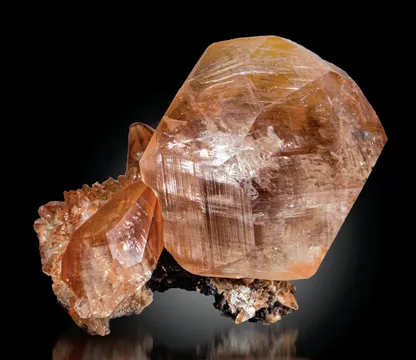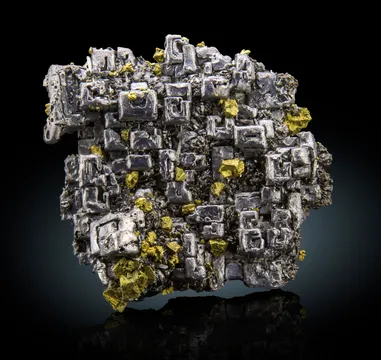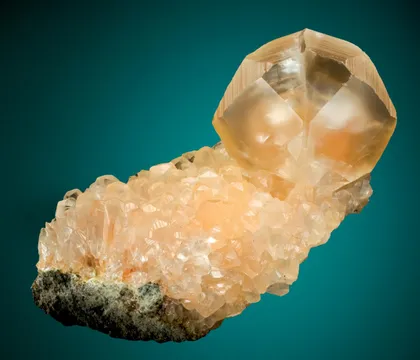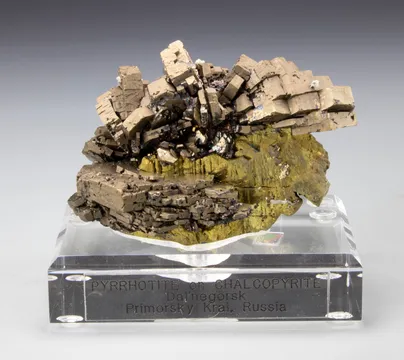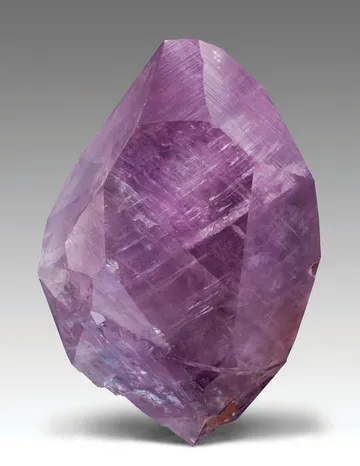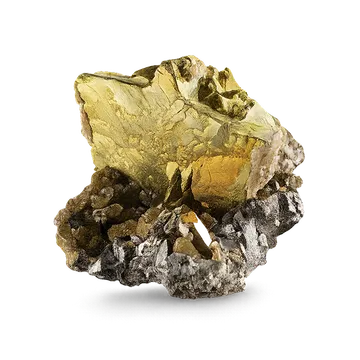
中国・大冶市同龍山鉱山の黄銅鉱。ブラス色の結晶と虹色のブリスター銅球を含む。希少性と文脈でコレクターに評価されるスカルン鉱区。
Key facts
Tonglushanの黄銅鉱は、現役の産業鉱体であり、重大な角霊石系統であり、中国の偉大な考古学的銅鉱床のひとつである鉱山から採掘されるという点で、現代中国の銅 localityのクラシックとして位置づけられます。収集家にとって、この名称は通常、二つの全く異なる外観を想起させます:Daye周辺の方解石の標本と関連する輝くブラス色の黄銅鉱と、はるかに議論の的となり忘れがたい「ブリスタ copper(結晶球状の銅鉱)」習性—丸みを帯びた金属的で虹色に光る黄銅鉱の球体と、2019年に市場に現れた球状の塊の集合体です。
球体材料は locality のサイン的コレクター・オッドity です。優れた標本は、重く丸い黄銬鉱「オーブ」のコンパクトなクラスターで、通常はブルーグレー、パープル、ブロンズ、ゴールド、または微妙な虹色の光沢を持ち、普通の結晶の平滑で鏡のような断面ではなく、微細な質感の輝きを持ちます。いくつかは浮遊していますが、より希少な標本は泥板岩様基質や砂岩様基質に球体が付着した状態を preserves しており、基質片が習性を説明するのに役立つだけでなく、文脈のない単独の球体だけよりも真剣なコレクターにはるかに説得力があります。
地質学的には、Tonglushan は孤立した標本ポケットではなく、Daye の鄂東採鉱地区における大規模な Cu-Fe-Au 風化岩系の一部です。鉱石系は、前期白亜紀の侵入岩が Daye Formation の三畳紀の炭酸塩岩と相互作用した場所で発達し、磁鉄鉱、黄銅鉱、黄鉄鉱、磁鉄砒、方鉛鉱、榴晶石、透輝石、チャート、緑簾石、石英、方解石を豊富に含む風化岩組を生み出しました。その風化岩の設定が、Tonglushan の標本が多くの高地の細い亀裂を持つ繊細な開放脈系黄銅鉱の外観よりも、密度の高い鉱石感を示す理由を説明します。
locality の歴史的な深さは標本に通常とは異なる文化的共鳴を与えます。Daye の古代 Tonglüshan 銅鉱山と冶金跡は、西周から漢代に及ぶ鉱山坑道、木製支持物、炉、スラグ、工具を保存しています。現代の収集家はしたがって、生産的な中国の鉱山からの硫化銅鉱石を単に買うのではなく、中国青铜時代の金属史の深い歴史と結びついた風景からの標本を手にしているのです。
コレクターが求めるものは、習性に強く依存します。ブリスタ-銅球の球体は、完全に自然に結合された球体が揃っていること、球体のサイズが多様で調和していること、強い金属的輝き、自然な虹色の色、頂点部の摩耗が最小であること、そして理想的には基質の保存状態や2019年初頭の発見時の古い、信頼できるラベルの痕跡があることです。方解石上の黄銅鉱については、質は対比にあります:明るいブラス微結晶または結晶被覆が淡い方解石の上に選択的に配置され、特に黄銅鉱がエッジや角、あるいは後の透明な方解石成長の下にある初期の結晶形を強調している場合です。## 特集標本
Search for specimens: View all chalcopyrite specimens from Tonglushan Mine, China
Tonglushan Mine is in the Edong mining district, Daye County-level city, Huangshi, Hubei Province, China, close to Daye and within the Middle–Lower Yangtze River metallogenic belt. Mindat records the mine as an active open-cast mine, with the Tonglushan Cu-Au-Fe deposit also known under the spellings Tonglüshan and Tonglvshan.
The deposit is a skarn-type Cu-Fe-Au system developed around a quartz monzodiorite to quartz-diorite intrusive center and its contacts with carbonate rocks. The principal carbonate host is the Lower Triassic Daye Formation, described in geological work as thin- to thick-bedded limestones and dolomitic limestones with evaporitic components. The main ore bodies occur near intrusive-carbonate contacts, where hydrothermal fluids produced magnesian and calcic-magnesian skarns. Tonglushan is not just a “chalcopyrite mine” in the specimen sense; chalcopyrite is one of the ore minerals in a much broader skarn assemblage dominated locally by magnetite and accompanied by pyrite, pyrrhotite, bornite, hematite, molybdenite, calcite, quartz, garnet, diopside, epidote, phlogopite, amphibole, chlorite, and other alteration minerals.
Published descriptions commonly describe the Tonglushan system as a set of multiple ore bodies. One modern summary gives 13 skarn orebodies mainly along the contact between the Tonglushan quartz-diorite pluton and the Daye Formation carbonates. Mindat’s locality description notes ore bodies over an area of roughly 2,000 by 600 meters, generally lenticular, with individual bodies on the order of hundreds of meters long and tens to more than a hundred meters thick. This scale matters for collectors because the finest chalcopyrite specimens were incidental to a large operating copper-iron-gold mine, not the result of a small specimen-only dig.
The ancient mining story is equally important. The Tonglushan ancient copper mining and smelting site was discovered during modern opencast mining and was excavated archaeologically from the 1970s into the 1980s. Sources describe hundreds of ancient shafts and drifts, wooden support structures, smelting furnaces, slag heaps, and more than 1,000 unearthed tools and utensils. The ancient workings span from Western Zhou through Han times, and the site has been described as among China’s earliest, largest, and best-preserved ancient copper mining and smelting remains. The modern mine entrance and the archaeological-museum landscape are part of the same copper-bearing district, which is why Tonglushan specimens carry a locality story far beyond their mineral aesthetics.採集アクセスは、鉱山および関連する全当局から明示的な許可を得ていない限り、閉鎖とみなされるべきです。通公山は現役の産業鉱山であり、考古学的区域は文化財として保護されています。現代の標本は鉱夫、仲介業者、標本ロットを通じて市場に流通しており、 casual な野外採集地とは言えません。より良い閃亜鉛鉛鉱(銅黄鉄鉱)球体材料は、2018年末から2019年前半頃の短期間の発見から来たものらしく、いくつかの情報源は2019年1月の市場供給開始を、同年春の時期により良いロットが入手できたと述べています。後年の出品は通常、転売品や以前のディーラー在庫から分散された標本であり、継続的な標本供給の証拠というよりはむしろ在庫の再流通であることが多いです。
注目すべき発見には、2019年の閃亜鉛鉄鉱球状群、初期の大業/通公山の発見からの閃亜鉛鉄鉱コーティングの砒鉄鉱・ジュルレイト標本、そして微結晶状の閃亜鉛鉄鉱が方解石の面・エッジを強調する、後期の成長を通じて見える初期のスカレノヘドロンを示すカルサイト標本などがあります。通公山はまた、方解石、孔雀石、藍銅鉱、砒鉄鉱、天然铜、黄鉄鉱、その他の銅スカルン種などでよく代表されますが、閃亜鉛鉄鉱は鉱山の鉱 ore アイデンティティと密接に結びついた鉱物の一つであり続けています。## Tonglushan Mine, China からの 黄銅鉱の特徴
Tonglushan 産の最も特徴的な黄銅鉱の形は、丸みを帯びたブリスター銅の形状です。これらの標本は普通の球状の外皮ではなく、最高段階のものは個別で密集した金属玉または玉の塊で、いくつかはブドウの房のように結合しているか、気泡が融合したようなものです。個々の球は顕著なミニチュア・クラスターで約1〜2センチ程度になることがありますが、大きな標本は自然に球が結合して cabinet サイズに達することがあります。いくつかのディーラーや MinID の記録には 5センチメートル級の塊が記録され、 indexed market listings には 7〜10センチメートル程度のブリスター銅の例も報告されています。
色は大きな魅力のひとつです。新鮮な黄銅鉱は真鍮色の黄色ですが、Tonglushan の球体標本はしばしば青灰色、紫、ブロンズ、金、緑がかった色、または iridescent な混色の表面を示します。最高の作品は、平面的な人工的な虹光よりもきらめく微細なスパーク肌を持っています。表面は不均一でクレーター状、孔隙があり、またはかすかに粒状であり、その質感はこの形状の魅力の一部です。あまりにも均一に磨き上げられすぎていたり、あまりにも完璧に球状であったり、または珠状過ぎる作品には追加の精査が必要です。
球体材料の内部研究は、この形状をさらに興味深いものにしています。スミソニアンの NMNH C7858 標本の Raman 分光法による黄銅鉱の確認と EDS による銅-鉄硫化物の検出、さらには多孔質な黄銅鉱の縁と内部に 10–100 ミクロンの銅-鉄硫化物の球状粒子がより細かな基質に含まれていることが報告されています。同研究は間隙性の硫酸カルシウムと硫化カルシウム、さらに微量の石英、白雲母、長石ナトリウムを報告しました。これらの観察は、普通の黄銭鉱結晶には見られないものであり、Tonglushan の球体が鉱物学者だけでなく収集家にも引き続き関心を集める大きな理由となっています。
関連する鉱物は、どのスタイルの標本が論じられているかによって異なります。鉱鉱石やスカルンの文脈では、黄銅鉱は磁鉄鉱、黄鉄鉱、閃鉄鉱、を含む鉱物群と関連します。ブリスター銅のポケット材料では、基質が泥岩状または硬い砂岩様の基質を持ち、球体の周囲に硫化物が豊富な縁または帯状の領域があると記述されています。Tonglushan/ Daye 市場全体からのコレクター向け標本では、黄銅鉱は方解石、黄砒石、デュルライテ、黄鉄鉱、石英と共に現れることがあります。
Tonglushan 産の方解石上の黄銅鉱は、より伝統的でありながらも魅力的なスタイルです。いくつかの標本は、圧縮されたまたは階層状結晶の角や角の縁に、Brassy-gold の微小黄銅鉱粉末をまとうものがあります。別の標本は、初期の方解石世代の微結晶黄銅鉱の層を示し、後の半透明な方解石の「窓」の下に見えることがあります。これらは展示標本としての価値が高く、鉱床標本としての価値は二番手です。その魅力は、きらめき、対比、および黄銅鉱が方解石の構造をどう際立たせるかに依存します。Tonglushanの黄銅鉱の品質は、自然感、保存状態、産地の信頼性によって判断されます。球状群集の場合、コレクターは結合した球が完全で、接触ダメージが最小、強くかつ信じられる虹彩、表面のキラツキ、安定した硫化物状態、できれば母岩や初期の記録があるものを好みます。黄銅鉱-方解石の標本では、鋭い方解石、明るい金属光沢の黄銅鉱、清浄な対比、そして黄銅鉱が単なる埃っぽさではなく視覚的に意図的に配置されている組成を探します。## Collector Notes
Tonglushan chalcopyrite spheres are one of the few modern mineral finds where authenticity concerns are part of the specimen’s collecting history. When the 2019 balls first appeared, many collectors suspected fabrication, coating, carving, or artificial iridescence because the habit looked almost too strange. Dealer-side testing reported chalcopyrite by EDS and cross-sectioned material that was not carved. Smithsonian work later confirmed chalcopyrite and anhydrite in analyzed sections, while also finding the unexpected presence of calcium sulfate and calcium sulfide within the spheres. Mindat now explicitly notes that doubt has been raised about the authenticity of the chalcopyrite balls, while also recording chalcopyrite var. blistered copper from Tonglushan as an occurrence.
The practical collector’s position should be neither gullible nor dismissive. Buy these as documented Tonglushan chalcopyrite spheres only when the chain of custody is credible: an early 2019 or shortly thereafter label, a known dealer source, matrix evidence, clear photographs of the surface, and no signs of drilling, polishing, casting, glue seams, dye pools, or uniform manufactured bead geometry. Loose single balls are the hardest to evaluate; matrix pieces and naturally joined clusters are more persuasive. Specimens with a suspiciously even rainbow skin should be examined carefully because chalcopyrite from many localities is sometimes acid-treated or chemically altered to enhance “peacock” colors.
Condition issues are typical for dense sulfide specimens but with some Tonglushan-specific concerns. The sphere surfaces can be abraded on high points, especially if loose balls were scooped from pocket bottoms and later handled in bulk. Cluster contact points may be natural, but broken joins or reattached balls should be checked under magnification. The surface sparkle is easy to dull with oil, skin contact, or aggressive cleaning. Avoid ultrasonic cleaning, acids, metal brushes, and prolonged soaking. A gentle dry brush or minimal distilled-water rinse followed by thorough drying is safer.
Stability is usually better than unstable marcasite, but any sulfide containing pyrite, pyrrhotite, or fine-grained intergrowths deserves sensible storage. Keep Tonglushan chalcopyrite dry, away from strong humidity swings, and not sealed in damp foam. If a piece has pyrite or pyrrhotite present, watch for sulfur odor, white or yellow efflorescence, cracking, or powdering. For the sphere material, the Smithsonian observation that an exposed polished section grew calcium sulfate crystals after months in air is a reminder that freshly cut or damaged surfaces may behave differently from intact specimen surfaces.希少性はニュアンスがある。Tonglushanでの砒鉄鉱(チャルコパイライト)を鉱石として見ると豊富だが、良質なチャルコパイライト標本はそう多くない。2019年の blister-銅材料は限定的な発見だったようで、ベストなクラスターやマトリックスの例は、バラ売りの標本よりもはるかに希少である。現在の市場入手性は、主に旧来のディーラーストック、リセール標本、鉱物マーケットプレイス全体に散らばる小規模リストに依存している。価格は大きく分かれる:小さなルースやシンプルな球状クラスターは控えめ〜中程度の価格で現れることがあり、外観が良く、文献性の高いクラスター、大型キャビネット標本、マトリックス標本ははるかに強いコレクターズプレミアムを生み出す。## Stories & Field Notes
The Tonglushan sphere find entered the mineral market with the kind of disbelief normally reserved for obvious fakes. In January 2019, according to dealer accounts adapted in The Mineral Newsletter, the strange balls began coming out of the mine. They were not sharp crystals, not ordinary botryoidal crusts, and not familiar Chinese calcite combinations. They were heavy metallic spheres—some loose, some joined, some iridescent—coming from a mine whose name literally evokes green copper.
最初の反応は疑念だった。その物質は「銅鉱物の偽造の新しい手法かもしれない」と見なされる外観であったため、より大きな黄色い球の一つを断面にして調べた。内部構造は通常で放射状で、彫刻されたものではないと説明された。その後、アリゾナ大学でEDS分析が行われ、マルチカラーのコーティングがボーンクリートではなく、カロップパイライトと判定され、ボースナイトは検出されなかった。この点は重要だった。もし虹色が何か別のものの上にボースナイトの皮膜だった場合、標本は全く異なる採集条件になるところだった。
採掘者は最初に容易な塊を提供した:開口ポケットの底から浮遊していた球体。これらはすでに解放された球だった。より重要な標本は手に入りにくかった。ディーラーの話によればマトリックス片が特に求められ、最終の第四ロットで、4月に採集された材料から5月に得られた。これらのマトリックス標本は、最後のポケットの屋根から取り除くには工具と時間と労力を要したため、底から拾い上げるだけではなく追加料金がかかった。
マトリックスが物語を変えた。匿名の緩い球ではなく、硫化鉄の球が細粒の泥岩または硬い砂岩様の母岩に付着しており、硫化物と基質の間に縁または移行帯が見られた。中国で標本を検査したピーター・メガウ博士は、流体が泥岩を結束させるセメントを溶解して Heavy な硫化物の球を解放し、空隙の底部へ「抜け出した砂の巣」のように落ち込ませた可能性を示唆した。そのモデルでは、ポケットはカオリン化した粘土の宝石ポケットのように振る舞い、支えとなる基質が弱くなると、重い結晶や硫化物が下方へ沈み、浮遊体の濃度を生じさせた。
この光景は地下の機械的な場面へと標本採集を変換するため、印象に残る。割れ目や空洞を満たす黄銅鉱が、空間が許す限り丸みを帯びた形状へ泡立ち、後に流体が周囲の泥岩を弱める。いくつかの球は頭部や壁に付着したままで残り、他のものは外れ落ち、ポケットの底に蓄積した。採掘者はそれらをすくい出した。最良の生存マトリックス標本は、単に見た目が美しいだけではなく、収集家がポケットを再構成する手掛かりとなる証拠でもある。 Smithsonian chapter added a second layer of mystery. The National Museum of Natural History acquired specimen NMNH C7858 at the 2019 Tucson Gem and Mineral Show and began analytical work. EDS confirmed copper iron sulfide; Raman later confirmed chalcopyrite and anhydrite in sections. But the study also found calcium sulfate and, more surprisingly, calcium sulfide in the interstices. Calcium sulfide is not a casual accessory phase in ordinary chalcopyrite specimens; the Smithsonian noted that such material is better known from unusual environments, including meteorites and rare natural localities with exotic conditions. That unexpected internal chemistry is why Tonglushan’s chalcopyrite balls remain more than a pretty market novelty—they are a mineralogical puzzle still worth careful documentation.## 鉱物学的記録と出版物- Mindat locality page: Tonglushan Mine, Edong Mining District, Daye Co., Huangshi, Hubei, China — 座標、状態、鉱物リスト、地質、別表記、文献参照のコアローカリティ参照。
Mindat occurrence page: Blistered Copper from Tonglushan Mine — Tonglushanでの閃亜鉛銅鉱(黄銅鉱変種:割れ銅)に関する特定の産出情報。
Smithsonian National Museum of Natural History, “Curious Chalcopyrite” — NMNH C7858の分析ノート、EDS、SEM、ラマン、閃亜鉛銅鉱の確認、多孔性リム、10–100ミクロンの球状体、硫酸カルシウム、硫化カルシウムに関する情報。
Zhao, H.; Xie, G.; Wei, K.; Ke, Y. “Mineral compositions and fluid evolution of the Tonglushan skarn Cu–Fe deposit, SE Hubei, east-central China.” International Geology Review 54(7), 737–764. DOI:10.1080/00206814.2011.569418 — 13個のスカルン鉱脈、鉱石・伴鉱物、風化段階、流体含有物、およびスカルン鉱物化学を説明する重要な鉱床規模の論文。
Chen, Y.-J.; Chen, H.-Y.; Zaw, K.; Pirajno, F.; Zhang, Z.-J. “Geodynamic settings and tectonic model of skarn gold deposits in China: An overview.” Ore Geology Reviews 31, 139–169. DOI:10.1016/j.oregeorev.2005.01.001 — Tonglushanの鉱物学的ローカリティ記録で引用される中国のスカルン金鉱床の地域的文脈。
Pan, Y.; Dong, P. “The Lower Changjiang (Yangzi/Yangtze River) metallogenic belt, east central China: intrusion- and wall rock-hosted Cu–Fe–Au, Mo, Zn, Pb, Ag deposits.” Ore Geology Reviews 15(4). DOI:10.1016/S0169-1368(99)00022-0 — Tonglushanを含む広域地質地域を示す地域的成因帯の参照。
Zhang, F.; Williamson, B. J.; Rollinson, G. K.; Hughes, H. S. R. “A mineralogical investigation into the formation of ore-barren endoskarn: An example from the Tonglushan porphyry system, eastern China.” Ore Geology Reviews 157. DOI:10.1016/j.oregeorev.2023.105441 — 東中国の Tonglushan斑岩-スカルン系統における鉱石欠乏型エンドスカルン形成の最近の研究。
Wu, X.; Xie, G.; Xu, J.; Voudouris, P.; Liu, W. “Distribution of Co, Te, Se in porphyry copper systems: A case study of the Tonglvshan deposit, Eastern China.” Ore Geology Reviews 174, 106304. DOI:10.1016/j.oregeorev.2024.106304 — Tonglvshan/Tonglushan系の硫化物鉱化に関連する微量元素研究。
Zhu, Q.; Xie, G.; Lu, L.; Yan, F.; Cai, H. “Trace element of epidote from the Tonglushan Cu-Fe-Au deposit, eastern China: Implications for exploration indicator fまた、スカルン成 vinha までの鉱化について。” 174, 106298. DOI:10.1016/j.oregeorev.2024.106298 — Tonglushanスカルン探鉱に直結した最新のエピドット地球化学論文。
Zhang, S.; Gao, J.-F.; Zhang, H.; Huang, X.-W.; Li, J.; Li, R.; Xu, H. “Revealing the distribution and efficient enrichment of cobalt in a Cu–Au skarn mineralization system.” Ore Geology Reviews 181, 106643. DOI:10.1016/j.oregeorev.2025.106643 — Tonglushan Cu-Auスカルン系におけるコバルト分布を記録した最新論文。
MinID LDU-JUT: Chalcopyrite, Tonglushan Mine — 2018–2019年の発見として、ディーラー注記付きの5.1 × 3.4 × 3.3 cmのチャルコパイライトボールミニチュアを文書化。
MinID P1P-VUK: Djurleite and Chalcopyrite, Tonglushan Mine — Tonglushan産の170 × 70 × 50 mmのジュルライト-チャルコパイライト標本を文書化、カリコサイト-ジュルライト-チャルコパイライト型の産出様式に有用。
Mario Pauwels Mindat gallery entry for Tonglushan chalcopyrite floater — ブリスターカッパーと説明された5.8 × 4.5 × 3.5 cmのチャルコパイライト浮遊標本の写真記録エントリ。## Videos & Media
“Chalcopyrite on Calcite Crystals and Minerals from Daye Copper Mine” — Heritage 1971 — Tonglushan/Dayeの銅鉱山由来のカルサイト結晶上の黃鉄鉱のデーラー動画(2020年10月の発見品)
“キャルコパイライト〖Chalcopyrite〗PEANUTS MINERALS” — PEANUTS MINERALS — Tonglushanの小さな黄銅鉱球のクラスターの短い標本動画。暗い金属光沢と虹彩色の反応を見るのに適しています。
“Calcite with Pyrite from Tonglüshan Mine, Edong, China” — Fabre Minerals on Vimeo — 2022年のTonglüshanカルサイト標本の映像記録。光沢のある虹彩微結晶黄鉄鉱で覆われた初期のカルサイト相を示す。## さらなる読書と外部リンク
Mindat: Tonglushan Mine locality — 鉱物リスト、地質、座標、参考文献のベストな単一ローカリティデータベースページ。
Mindat: Tonglushan Mine の blistered copper — 硬水晶状銅鉱変種 blistered copper の局在ページ。
Smithsonian: Curious Chalcopyrite — 2019 年の Tonglushan 銅鉱球体材料の分析的議論の必須解説。
The Mineral Newsletter, June 2023 — 2019 年の球体発見、マトリックス片、形成アイデアの最良の語り口を含む適応版アーケンストン記事。
China Daily / China Services: Tonglushan Ancient Copper Mine Site listed as National Archaeological Site Park — 古代採掘 site の現代遺産の要約と考古学的意義。
ChinaCulture: Tonglushan Mining and Smelting Site — 古代竪坑、窯、道具、銅生産に関する有用な文化史背景。
ChinaCulture: Museum of the Former Site of Ancient Tonglüshan Copper Mine — 博物館の背景、公開、考古学的発掘史。
ResearchGate: Mineral compositions and fluid evolution of the Tonglushan skarn Cu–Fe deposit — Tonglushan スカルン地質に関する主要な International Geology Review 論文の要旨と図を閲覧可能。
Fabre Minerals video page: Calcite with Pyrite from Tonglüshan Mine — Tonglüshan 由来の方解石と微結晶性黄鉄鉱スタイルの視覚参考。
Heritage 1971: Chalcopyrite on Calcite from Daye Copper Mine, China — Tonglushan/Daye から Calcite 上に選択的に沈着した銅礦鉱のディーラー出品。
Minfind: Chalcopyrite from Tonglushan Mine — Tonglushan 銅の結晶標本 50 × 40 × 30 mm の販売アーケンストン掲載、市場とサイズの reference に有用。