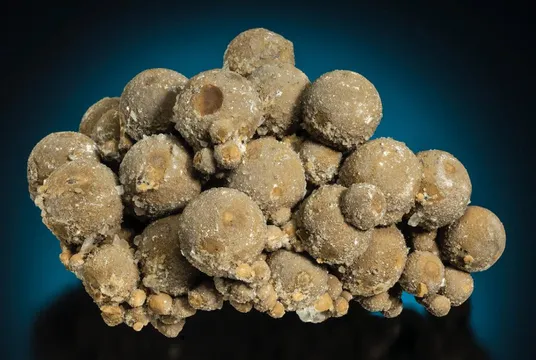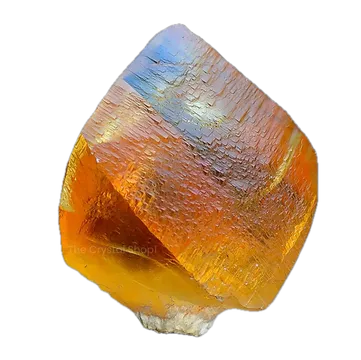
Dalnegorsk, Russia: Calcite crystals with sharp, glassy prisms in pink manganoan to colorless forms; a notable mining district with diverse associations and co…
Key facts
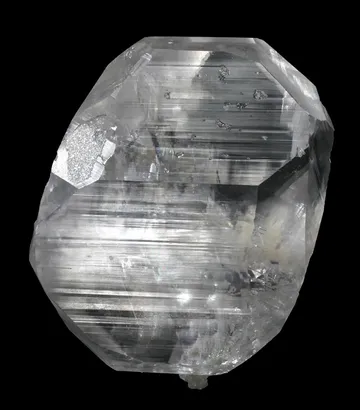
Dalnegorsk is one of those mineral names that experienced collectors read almost as a guarantee of sharp form, strong association, and geological complexity. Calcite from the district is not a single “look,” but a family of looks: water-clear trigonal prisms, pale honey to colorless scalenohedra, pink manganese-bearing crystals, flattened rhombohedral plates, nailhead forms, and complex multi-generation pieces in which one calcite habit overgrows another. The best examples have a crispness that feels almost engineered—bright faces, glassy transparency, and a habit vocabulary broad enough that two Dalnegorsk calcites can appear to have come from different countries.

Photo: Rob Lavinsky, iRocks.com / Wikimedia Commons
The locality’s mineralogical personality comes from the meeting of carbonate rocks, skarn-forming fluids, and later hydrothermal systems in the Sikhote-Alin region of the Russian Far East. Dalnegorsk is a mining district centered on the city of Dalnegorsk in Primorsky Krai, roughly 300 km northeast of Vladivostok. Older labels may use Tetyukhe, Tetjuche, Tjetjuche, or related spellings; those names are not errors but part of the district’s long collecting history.
Calcite is widespread through the district, but the collector classics are especially tied to the Nikolaevskiy Mine, the 2nd Sovetskii Mine, the Verkhnii Mine, and the Bor Pit. Nikolaevskiy is celebrated primarily for crystallized sulfides, yet it also produced some of Dalnegorsk’s most desirable calcites—pink manganoan groups, colorless gemmy prisms, and calcite associated with fluorite, quartz, sphalerite, galena, pyrite, pyrrhotite, siderite, dolomite, and chalcopyrite. The 2nd Sovetskii Mine is important for colorless and manganese-bearing calcite, often in association with fluorite and quartz. The Bor Pit, a boron skarn locality also known as the Bor Quarry or Boron Pit, gives calcite a different setting: datolite, danburite, axinite-(Fe), andradite, hedenbergite, ilvaite, quartz, and fluorite surround it in classic calc-silicate assemblages.

Photo: Rob Lavinsky, iRocks.com / Wikimedia Commons
Historically, Dalnegorsk’s reputation grew from ore mining—lead, zinc, silver, boron, and associated metals—but mineral collectors know it as one of the great post-Soviet sources of show-quality crystallized specimens. The region’s calcite matters because it is both abundant enough to show extraordinary variety and fine enough, in select pieces, to stand beside the locality’s more famous fluorites, sulfides, quartz, ilvaite, and datolite. Collectors look for sharply terminated crystals, high luster, transparency, attractive zoning or phantoms, strong fluorescence in some pieces, and the particular Dalnegorsk aesthetic of calcite perched with metallic sulfides or glassy fluorite.
Search for specimens: View all calcite specimens from Dalnegorsk, Russia
Dalnegorsk is not a single mine but a district of related deposits in Primorsky Krai, Russia. The main specimen-producing names include Nikolaevskiy, 1st Sovetskii, 2nd Sovetskii, Verkhnii, Danburitovyi, and the Bor Pit. The district has been described as comprising multiple deposits, with commodities including lead, zinc, and boron. In collector usage, “Dalnegorsk” may be accurate for older or insufficiently precise labels, but serious locality work should preserve the mine name whenever it is known.
The geological setting is dominated by carbonate-hosted skarn and hydrothermal mineralization. Triassic limestone blocks in a complicated Mesozoic basement provided the reactive host rock; intrusive and fault-controlled hydrothermal systems introduced boron, sulfur, metals, silica, fluorine, and carbonate stages. The borosilicate skarn deposit is especially important geologically because it is a giant boron deposit, with datolite and danburite as signature boron minerals. Scientific studies distinguish major stages of mineralization, including skarn assemblages with wollastonite, hedenbergite, and andradite; borosilicate stages with danburite, axinite, datolite, and quartz; and later quartz-carbonate stages that include quartz, calcite, apophyllite, and fluorite.
The Bor Pit, also called the Boron Pit or Bor Quarry, is an open pit at the Dal’negorsk B deposit. The Russian word “Bor” translates as “boron,” an unusually direct reminder of the deposit’s economic reason for being. It is a boron locality, not simply a specimen quarry, and is also the type locality for dalnegorskite. Calcite from the Bor Pit belongs to the broader skarn story: it may occur with quartz, datolite, axinite-(Fe), andradite, danburite, ilvaite, pyrite, hedenbergite, fluorite, and native antimony or arsenic-bearing species.
Nikolaevskiy is an underground mine locality opened in 1982 and is famous for crystallized sulfides. The mineralizing solutions used cavities in the limestones as open space, allowing large, sharply formed galena, sphalerite, pyrrhotite, pyrite, quartz, fluorite, and calcite specimens to develop. For calcite collectors, Nikolaevskiy is important because it produced both classic associations and distinctive manganese-bearing calcite. Mindat records calcite there as common, excellent, and essentially a “calcite collector’s paradise,” with habits ranging from scalenohedra and rhombs to nailheads, hexagonal barrels, and twins.
The 2nd Sovetskii Mine, also known in transliteration as Second Sovietsky, 2nd Sovietskiy, Vtoroi Sovietskiy, or 2nd Sovietskii, is another key Dalnegorsk calcite locality. Its recorded assemblage includes calcite and manganese-bearing calcite with fluorite, quartz, dolomite, galena, sphalerite, chalcopyrite, pyrite, pyrrhotite, hedenbergite, ilvaite, datolite, and apophyllite-group minerals. Collectors particularly recognize 2nd Sovetskii for colorless fluorite and calcite-fluorite-quartz combinations, along with jackstraw or elongated calcite groups from older material.
Mining history in the district reaches back to the late nineteenth century in the broad Dalnegorsk area, while specific deposits have their own timelines. The Verkhnee deposit was first developed in 1912; boron mineralization was prospected in 1945; the giant Dalnegorsk borosilicate deposit was discovered in 1946 and put into operation in 1959. The Nikolaevskiy Mine opened in 1982. A great deal of the classic specimen material entered Western collections in the 1990s and early 2000s, when Russian Far East material became far more visible at international shows and through Western dealers.
Collecting access should be treated as industrial-mine access, not casual field collecting. These are active or historically active mine properties, and entry requires permission from the relevant land, mineral-rights, or operating authorities. Old labels are common, and pieces may circulate for decades through collections; in practice, the most reliable specimens are those accompanied by older dealer labels, mine-level locality information, or provenance to known collections.
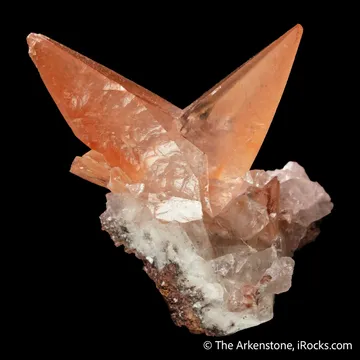
Dalnegorsk calcite is prized first for variety. At Nikolaevskiy, recorded habits include scalenohedra, rhombs, nailhead forms, hexagonal barrels, twins, and related complex forms. Other dealer-described pieces add trigonal prisms, flattened rhombohedral plates, “feather”-like manganoan groups, stacked thin platy rhombohedra, and complex crystals with dominant scalenohedral form but many subsidiary faces. Verkhnii specimens can be exceptionally clear and bright, often with dominant scalenohedra. Some pieces show aragonite association; others are calcite-on-calcite, with one generation etched, frosted, or coated before a later generation developed sharp faces.
Color ranges from water-clear and colorless to white, cream, honey-yellow, brown, blackened by inclusions or coatings, and pale pink where manganese is present. The pink manganoan calcites from Nikolaevskiy are among the most recognizable: soft blush-pink crystals, often lustrous, sometimes stepped, and commonly fluorescent orange-red to red under ultraviolet light. Colorless Dalnegorsk calcites can be strikingly transparent, with internal reflections, sharp edge definition, and optical clarity in the best crystals.
Size ranges are broad. Thumbnails and miniatures with one or two sharp crystals are common in the market, but cabinet specimens are well documented. Published and dealer-listed examples include small-cabinet pieces around 6–9 cm across, 9–12 cm Verkhnii and Dalnegorsk calcite groups, an 11 cm jackstraw cluster from the 2nd Sovetskii Mine, and larger calcite-fluorite specimens in the 20 cm class. Elite size is not simply a matter of dimensions: Dalnegorsk calcite becomes important when size is combined with clean terminations, undamaged edges, transparency, and a balanced association.
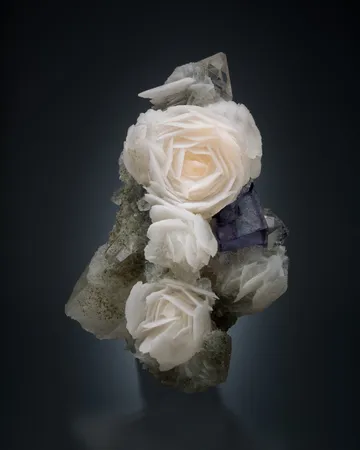
Associations define much of the locality’s charm. Nikolaevskiy calcite is commonly seen with quartz, fluorite, pyrrhotite, siderite, galena, pyrite, chalcopyrite, sphalerite, boulangerite, ilvaite, dolomite, hedenbergite, arsenopyrite, and magnetite. The 2nd Sovetskii suite overlaps but often emphasizes fluorite, quartz, dolomite, galena, sphalerite, and manganese-bearing calcite. Bor Pit calcite belongs to a borosilicate skarn environment and is documented with quartz, datolite, axinite-(Fe), andradite, danburite, ilvaite, pyrite, hedenbergite, and fluorite. These associations are not incidental; they are part of how collectors recognize sublocality and paragenesis.
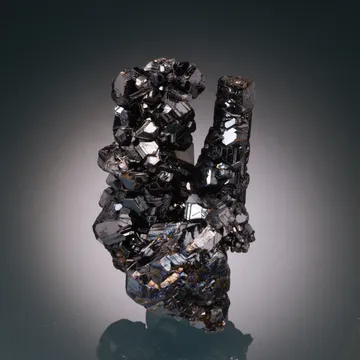
Quality factors are unusually nuanced. For colorless specimens, the best pieces have water-clear interiors, strong luster, complete terminations, and little or no bruising along the many exposed edges. For pink manganoan calcite, even color, attractive crystal separation, and fluorescence improve desirability. For matrix pieces, collectors value sculptural placement: calcite rising from black sphalerite, sitting with glassy fluorite, crossing quartz needles, or contrasting against bronze siderite and metallic galena. A specimen with one perfect calcite crystal in a visually coherent Dalnegorsk association is often better than a larger, crowded group with abrasions and broken tips.
Fluorescence is a useful but not universal feature. Some Dalnegorsk calcites fluoresce strongly red, orange-red, or related warm tones under ultraviolet light, and some dealer descriptions specify strong longwave and shortwave response. Other specimens are valued purely as daylight display pieces. Fluorescence should be treated as an added quality, not a diagnostic guarantee of locality.
The most important authenticity issue is locality precision. “Dalnegorsk” is often correct at district level, but it is less informative than Nikolaevskiy Mine, 2nd Sovetskii Mine, Verkhnii Mine, or Bor Pit. Because these mines produced overlapping associations—calcite with quartz, fluorite, galena, sphalerite, pyrite, and siderite—labels can become generalized when specimens pass through multiple hands. Older labels using Tetyukhe or Tetjuche are plausible and collectible; they should not be “corrected” away, but interpreted as historical Dalnegorsk-area names.
I am not aware of a published, Dalnegorsk-specific problem involving systematically faked or treated calcite comparable to the well-known fake issues at some other mineral localities. The more realistic concern is misattribution: calcite from another Russian or skarn locality being sold simply as Dalnegorsk, or district-level Dalnegorsk material being assigned to a more desirable mine without evidence. Strong provenance, old labels, and matching associated minerals are more meaningful than a clean modern label with an overly specific mine name.
Condition deserves close inspection. Calcite is soft, cleaves easily, and many Dalnegorsk habits expose sharp corners, stepped faces, or pointed terminations. Look for tiny bruises on scalenohedral tips, cleaved rhombohedral corners, rubbing on high points, and peripheral breaks where the specimen was removed from a pocket wall. On fluorite-calcite combinations, calcite may be the more vulnerable mineral; on sulfide-rich pieces, sulfides may tarnish or shed small grains while calcite remains visually dominant.
Etching and uneven surfaces are not automatically damage. Some Dalnegorsk calcites naturally show etched faces, frosted zones, overgrowths, or multi-generation textures. A glassy face next to a matte or etched face can be part of the growth history. The distinction between natural dissolution and post-collection damage is learned by looking at edges: natural etched surfaces tend to be continuous and integrated with the crystal form, while fresh damage cuts through luster, zoning, or coatings abruptly.
Rarity depends heavily on style. Ordinary Dalnegorsk calcite, especially small association pieces, is obtainable. Good cabinet specimens remain available through dealers, auctions, and older collections, but the best water-clear crystals, strong pink manganoan groups, large undamaged fluorite-calcite combinations, and elegant calcite-on-sulfide pieces are much scarcer. The finest examples often appear as older stock, collection deaccessions, or auction material rather than fresh production.
Market availability remains active but selective. Recent dealer and auction listings show Dalnegorsk calcites ranging from affordable small-cabinet specimens to higher-end pieces with provenance, strong aesthetics, fluorescence, or unusually gemmy crystals. Values rise quickly when the specimen combines mine-level attribution, no obvious damage, bright luster, transparency, fluorescence, and a visually satisfying association with fluorite, quartz, sphalerite, galena, pyrrhotite, or siderite.
Grant, Raymond W., and Wendell E. Wilson. “Famous Mineral Localities: Dal’negorsk, Primorskiy Kray, Russia.” The Mineralogical Record, Vol. 32, No. 1, 2001, pp. 3–30. The classic English-language collector reference for the Dalnegorsk district and its specimen-producing mines.
The Mineralogical Record, January–February 2001, Vol. 32, No. 1: “Dalnegorsk!” Back-issue page confirming the Dalnegorsk special issue and its major article by Grant and Wilson.
Baskina, V. A., V. Yu. Prokof’ev, V. A. Lebedev, S. E. Borisovsky, M. G. Dobrovol’skaya, A. I. Yakushev, and S. A. Gorbacheva. “The Dal’negorsk borosilicate skarn deposit, Primorye, Russia: Composition of ore-bearing solutions and boron sources.” Geology of Ore Deposits, 51(3), 2009, pp. 179–196. Detailed study of the borosilicate skarn deposit, its fluid inclusions, boron sources, and isotopic evidence.
Prokof’ev, V. Yu., M. G. Dobrovol’skaya, F. G. Reif, Yu. M. Ishkov, and T. B. Zhukova. “Composition of ore-bearing fluids in the Dal’negorsk borosilicate deposit, Russia.” Doklady Earth Sciences, 391(5), 2003, pp. 699–702. Short scientific paper recognizing skarn, borosilicate, and quartz-carbonate stages, the last including quartz, calcite, apophyllite, and fluorite.
Ratkin, V. V., O. A. Eliseeva, M. S. Pandian, A. A. Orekhov, M. Mohapatra, and S. K. Vishnu Priya. “Stages and Formation Conditions of Productive Mineral Associations of the Dalnegorsk Borosilicate Deposit, Sikhote Alin.” Geology of Ore Deposits, 60(8), 2018, pp. 672–684. Fluid-inclusion and geochemical work on danburite and datolite from the Dalnegorsk borosilicate skarn system.
Shchipalkina, N. V., I. V. Pekov, D. A. Ksenofontov, N. V. Chukanov, D. I. Belakovskiy, and N. N. Koshlyakova. “Dalnegorskite, Ca5Mn(Si3O9)2, a new pyroxenoid of the bustamite structure type, a rock-forming mineral of calcic skarns of the Dalnegorskoe boron deposit.” Zapiski RMO, 148(2), 2019, pp. 61–75. Publication cited for dalnegorskite, whose type locality is the Bor Pit at the Dal’negorsk B deposit.
Mindat occurrence record: Calcite from Nikolaevskiy Mine, Dalnegorsk. Concise occurrence record documenting calcite habits, colors, abundance, associated minerals, and references for Nikolaevskiy.
Mindat occurrence record: Calcite from Bor Pit, Dal’negorsk B deposit. Useful for the Bor Pit calcite association, especially quartz, datolite, axinite-(Fe), andradite, danburite, ilvaite, and hedenbergite.
“Ilvaite, Hedenbergite, Calcite and Quartz, Dalnegorsk, Russia” — Minerals and Crystals Short specimen video showing a Dalnegorsk association with ilvaite, hedenbergite, calcite, and quartz.
“カルサイト〖Calcite〗ロシア産” — PEANUTS MINERALS Dealer video for a Verchniy Mine calcite specimen from Dalnegorsk, showing the three-dimensional habit of a cabinet-size piece.
Wikimedia Commons: Category “Nikolaevskiy Mine” Open-media gallery with numerous Dalnegorsk specimen photographs, including calcite, manganese-bearing calcite, fluorite-calcite-quartz combinations, and associated sulfides.
Mindat: Dalnegorsk, Dalnegorsk Urban District, Primorsky Krai, Russia Best starting point for the district-level locality, historical names, mineral list, commodities, and references.
Mindat: Nikolaevskiy Mine, Dalnegorsk Key mine page for one of the district’s most important specimen sources, including calcite, sulfides, quartz, and fluorite associations.
Mindat: 2nd Sovetskii Mine, Partizanskoe Pb-Zn deposit Useful mine-level reference for calcite, manganese-bearing calcite, fluorite, quartz, dolomite, galena, sphalerite, and other associated species.
Mindat: Bor Pit, Dal’negorsk B deposit Essential reference for the boron skarn locality also known as the Boron Pit or Bor Quarry.
Mindat specimen record 2G8-GTL: Calcite from 2nd Sovetskii Mine A documented 11 cm jackstraw cluster of doubly terminated transparent calcite from early 1990s material.
Fabre Minerals: Dalnegorsk calcite reference specimens Dealer reference page documenting several Dalnegorsk calcite styles, including Verkhnii scalenohedra, fluorescent pieces, pink calcite with quartz, and old-label material.
Fabre Minerals: Calcite with Aragonite from Verkhnii Mine Detailed specimen page for a clear, complex calcite with aragonite from Verkhnii Mine.
The Assay House: “Dalnegorsk: Crystal Perfection from the Russian East” Accessible collector-oriented overview of the district’s major mines and mineral styles.
Smart Minerals: “Dal’negorsk Mining Area” Older collector article summarizing the district’s geography, mining history, active and closed mines, and important specimen minerals.
Mineral Auctions: Calcite, Nikolaevskiy Mine, ex Jack Halpern Auction listing illustrating the market for gemmy, colorless Dalnegorsk calcite with collection provenance.
UC Minerals: Fluorescent calcite from Dalnegorsk Current-market example of a transparent to translucent fluorescent Dalnegorsk calcite specimen.