Schlema-Hartenstein Bismuth: native bismuth from the Erzgebirge, famed for silvery-gray crystals with pink-blue patina, compact masses, and rich mining history.
Key facts
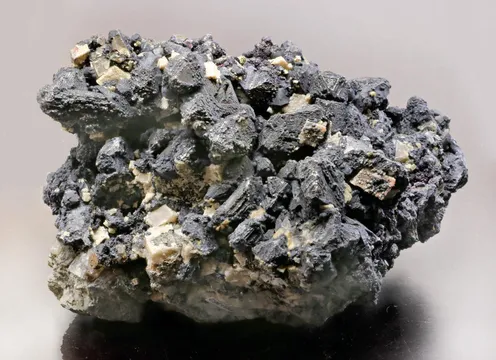
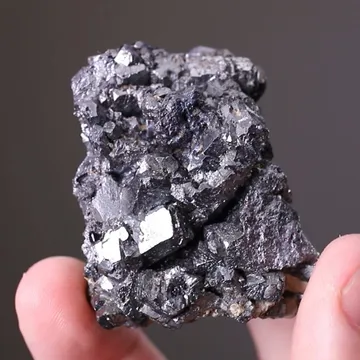
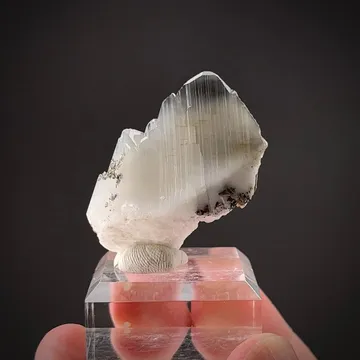
Schlema-Hartenstein is one of the great European names for natural native bismuth: not laboratory-grown rainbow “hopper” bismuth, but dense, metallic, hydrothermal Bi from the old Saxon vein fields of the Erzgebirge. The best specimens have a distinctly Saxon character—silvery to grey-white bismuth with pinkish, yellowish, bluish, or brownish patina, commonly in compact crystallized masses, skeletal or reticulated aggregates, and small sharp crystals on quartz, calcite, dolomite, siderite, or arsenide-rich matrix. Fine matrix pieces are prized because bismuth is soft, sectile, and easily bruised; intact edges, bright luster, and undamaged free-grown crystals are much harder to obtain than their size might suggest.

Photo: Wikimedia Commons
Mineralogically, this is not an isolated bismuth occurrence but part of the highly complex Schneeberg–Schlema–Alberoda uranium-polymetallic vein system. Schlema-Hartenstein specimens come from a district in which native bismuth, bismuthinite, matildite, wittichenite, aikinite–bismuthinite solid-solution minerals, rare Bi selenides, cobalt-nickel arsenides, silver minerals, selenium minerals, quartz, carbonates, and uranium minerals occur in a multi-stage hydrothermal system. That complexity is why a small Schlema bismuth specimen can carry such a powerful locality signature: bismuth beside nickelskutterudite, skutterudite, safflorite, erythrite, siderite, dolomite, quartz, or late pink cobalt arsenates speaks directly to the Erzgebirge vein environment.
The historical setting adds another layer. The district belongs to a mining landscape where silver, cobalt, nickel, bismuth, and uranium were pursued over centuries, and where twentieth-century uranium mining by SAG/SDAG Wismut transformed the area on an industrial scale. Shaft 371 at Hartenstein, one of the district’s most important preserved mine complexes, became the emblematic modern locality for many collectors. For native-element specialists, Schlema-Hartenstein bismuth sits in the same classic European conversation as Schneeberg, Freiberg, and Jáchymov, but the best Schlema material has its own look: dense, old-time, arsenide-rich, and often beautifully patinated rather than artificially gaudy.
Search for specimens: View all bismuth specimens from Schlema-Hartenstein Mining District, Germany
The Schlema-Hartenstein mining district lies in the western Erzgebirge of Saxony, between the Bad Schlema–Aue area and Hartenstein. In collector usage the name commonly covers specimens from the broader Schlema-Hartenstein district and its sublocalities, especially Niederschlema, Alberoda, Shaft 38, Shaft 371, and the Opal Lose locality at Shaft 371. Mindat records the district as a silver and uranium mining district between Bad Schlema and Hartenstein, with bismuth, cobalt, silver, and uranium among its exploited commodities.
Geologically, the collector bismuth belongs to a vein-type uranium-polymetallic system hosted in the Erzgebirge basement. The Niederschlema–Alberoda deposit is described in the mineralogical literature as an unconformity-related vein-type uranium deposit with important selenide and polymetallic mineralization. Its mineral assemblages were produced by repeated hydrothermal events from the Permian through the Cretaceous, with uranium minerals, selenides, sulfides, arsenides, tellurides, native elements, and carbonate-quartz gangue introduced and reworked in successive pulses.
The vein architecture is central to the district’s specimen style. Hydrothermal solutions moved through open fissures produced and reactivated by tectonic movement. Among the economically and mineralogically important vein associations were quartz-calcite-pitchblende, dolomite-pitchblende, and bismuth-cobalt-nickel-silver arsenide veins. In collector shorthand, bismuth from Schlema-Hartenstein is often linked to the Bi-Co-Ni association: native bismuth with cobalt and nickel arsenides, carbonates, quartz, and secondary cobalt arsenates such as erythrite.
Mining history at Schlema-Hartenstein is inseparable from Wismut. After the Second World War, uranium mining expanded rapidly in the Schneeberg–Schlema–Alberoda area. Wismut records describe the Schlema-Alberoda site as one of the world’s largest uranium ore deposits, mined from 1946 to 1990, with around 80,000 tonnes of uranium extracted from its veins. Between 1949 and 1990, more than 1,000 uranium-bearing veins were explored and mined to depths approaching 2,000 m. The workings extended over roughly 22 square kilometres at surface, with about 4,200 km of horizontal excavation and approximately 40 million cubic metres of underground cavities.
Shaft 371 at Hartenstein is especially important for collectors because it is both a specimen locality and a preserved mining landmark. It was built from 1956 onward, officially commissioned in 1959, and became the most important winding shaft of the Aue mining operation from the 1960s. The shaft tube was about 1,000 m deep with a diameter of 7 m, and the associated mine reached depths greater than 1,800 m. The complex produced more than 73,000 tonnes of uranium before closure in 1990. It remains one of the best-preserved Wismut uranium mining facilities, with its shaft building, 50 m steel headframe, machine house, winding machinery, and functional buildings still standing.
Modern field collecting should be approached realistically. This is not an open rockhounding destination in the casual sense. The uranium mine workings are closed, the dumps have been subject to extensive remediation, and access to sites, dumps, and mine land is controlled by ownership, safety, and radiological considerations. The most legitimate way for collectors to engage with the locality today is through documented old specimens, curated collections, and the Wismut deposit collection at Shaft 371, which displays minerals, rocks, maps, profiles, and documentation from the Saxon-Thuringian uranium mining districts.
Notable finds range from compact masses and vein pieces rich in small native bismuth crystals to rare free-grown crystals on carbonate matrix. Historic references and dealer records mention pieces from Shaft 38, Shaft 371, Opal Lose, and related Schlema-Hartenstein workings. The most coveted old specimens are not simply “bismuth from Germany,” but precisely labeled examples with matrix and associations that tie them to the district’s Bi-Co-Ni and uranium-polymetallic vein paragenesis.
Schlema-Hartenstein native bismuth is typically metallic grey to silvery white when fresh, often with a warm pinkish, yellowish, brownish, or iridescent tarnish. Unlike synthetic bismuth crystals, which are commonly large, brightly rainbow-colored, and strongly stepped in artificial hopper forms, natural Schlema bismuth is usually subtler: compact, heavy, crystalline, reticulated, skeletal, laminar, or in small but sharp crystals on matrix.
Crystal morphology is one of the key quality factors. Good pieces may show complex elongated aggregates, reticulated groups, parallel growth, skeletal development, slight hopper growth, stout tapering crystals, or bright, sharply defined small crystals. The best natural crystals can be surprisingly sculptural, but most collector specimens have crystals in the millimetre range rather than the dramatic centimetre-scale architecture familiar from laboratory-grown bismuth. Dealer and collector records include Schlema-Hartenstein specimens with individual crystals around 2–5 mm, richer pieces with crystals to about 0.9 cm, and rare high-end examples described with free-grown crystals reaching several centimetres.
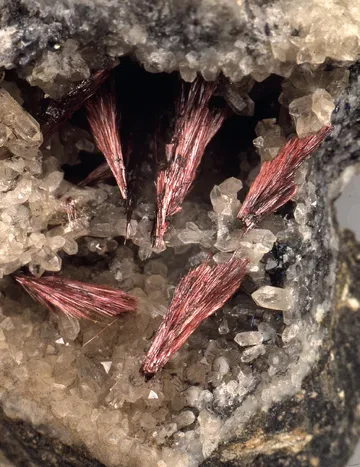
Matrix matters greatly. Quartz is common and can provide a pale contrasting ground for the metal. Calcite, dolomite, siderite, and ankerite-series carbonates are important because they point toward the carbonate-rich hydrothermal stages of the district. Cobalt-nickel arsenides and related minerals—skutterudite, nickelskutterudite, safflorite, nickeline, and others—are especially desirable associations because they place the bismuth in the classic Erzgebirge Bi-Co-Ni mineralization. Pink erythrite or other secondary cobalt arsenates can give old specimens strong visual identity, particularly when they dust or line cavities in bismuth-rich masses.
A typical hand specimen may be a dense vein section with bismuth seams and small metallic crystals, or a miniature to small-cabinet matrix piece with bismuth intergrown with quartz and arsenides. Thumbnails with crisp, bright crystals can be more significant than larger but massive lumps. Strong small specimens are judged on crystal sharpness, luster, patina, matrix contrast, and evidence that the bismuth is natural and not a cleaned mass made visually confusing by aggressive preparation.
The locality is also scientifically distinguished by its broader bismuth mineral suite. Published work on the Niederschlema–Alberoda U-Se-polymetallic deposit documents native Bi along with bismuth sulfides and sulfosalts, bismuthinite–aikinite-series material, matildite, wittichenite, and rare Bi selenides such as watkinsonite, nevskite, and bohdanowiczite. These micro- to ore-mineral associations are not usually what makes a cabinet specimen beautiful, but they are the mineralogical reason Schlema-Hartenstein is more than a “pretty native bismuth” locality.
For display specimens, the strongest examples have bright metallic bismuth, visible crystal form, stable patina, and an undisturbed matrix association. Pieces with freestanding crystals on dolomite, siderite, or calcite are particularly prized. Specimens with old labels from Saxon dealers, Wismut-era collections, or recognized European dealers carry additional weight because locality precision is important in a district with many shafts, veins, and overlapping historical names.
The first authenticity issue is species-wide: most bright rainbow “bismuth crystals” on the market are synthetic. They are made by crystallizing molten bismuth and usually show vivid artificial color, large stepped hopper forms, and no natural matrix. Schlema-Hartenstein bismuth should not look like that. Natural pieces are typically heavier-looking, more compact or irregularly crystallized, and tied to quartz, carbonate, arsenide, or secondary arsenate matrix. A label saying “Schlema-Hartenstein” on a freestanding rainbow hopper crystal with no matrix should be treated with skepticism.
For this locality, the more subtle issue is preparation. Collector commentary on Schlema-Hartenstein material notes that bismuth crystals have often been cleaned out of calcite or stripped of secondary coatings because the bismuth crystals are the commercial prize. Cleaning is not automatically disqualifying; many classic European bismuth specimens have been etched or prepared. But it does affect desirability. Unetched pieces with free-grown crystals on carbonate matrix are scarcer and more valuable than loose, overcleaned metallic masses. Secondary coatings of erythrite, bieberite, or other arsenates can be part of the specimen’s story, not simply dirt to remove.
Condition is critical. Native bismuth is soft, sectile, and brittle enough that edges bruise, contacts flatten, and tiny crystal faces dull readily. High points on reticulated aggregates are vulnerable. Old specimens may show natural tarnish, oxidation, powdery secondary minerals, or areas where bismuth has been partly replaced or overgrown by bismuthinite, matildite, or other phases. Tarnish can be attractive and locality-appropriate, but powdery coatings should be assessed for stability, especially on erythrite-rich pieces.
Rarity is uneven. Small Schlema-Hartenstein bismuth specimens are available often enough that the locality is familiar to serious collectors, but fine crystallized matrix pieces are much scarcer than ordinary massive material. Large, aesthetic, well-crystallized, undamaged specimens with strong matrix and old provenance are genuinely hard to replace. The most desirable examples—free-grown bismuth on dolomite or siderite, strong skeletal crystal groups, or rich pieces with classic arsenide associations—are chased by both native-element collectors and Erzgebirge specialists.
Market availability remains intermittent. Dealer archives and current listings show Schlema-Hartenstein bismuth in thumbnail, miniature, and cabinet sizes, including pieces from Shaft 38, Shaft 371, Opal Lose, and broader district labels. Prices vary widely with aesthetics and documentation: small crystallized examples can be approachable, while exceptional miniatures and small-cabinet specimens from respected dealers or old collections may command strong prices. The safest purchases are specimens with clear sublocality information, old labels, and matrix consistent with the district’s known associations.
The story behind a Schlema-Hartenstein bismuth specimen is often larger than the specimen itself. Shaft 371 looks, at first glance, like an industrial relic: a steel headframe, a shaft building, a machine house, administrative structures. But the numbers behind that surface are staggering. Wismut’s Schlema-Alberoda operation explored and mined more than 1,000 uranium-bearing veins between 1949 and 1990. The mine reached depths beyond 1,800 m, and deep rock temperatures reached about 65°C, forcing special ventilation and air-conditioning measures. Underground, the works eventually represented roughly 4,200 km of horizontal excavation and about 40 million cubic metres of cavities. Above ground, the mining area occupied about 22 square kilometres.
Oberschlema paid for that industrial transformation in a very literal way. Mining subsidence caused such severe damage in the center of Oberschlema that the entire spa district was demolished in 1952. This was not a small local adjustment; it erased a spa quarter in a town once known for radioactive waters and transformed the cultural landscape into one dominated by uranium production, dumps, shafts, and remediation problems. When collectors hold a bright bismuth specimen labeled Schlema-Hartenstein, they are holding a piece from a district where the twentieth century did not merely mine the ground—it rearranged the town above it.
Shaft 371 itself became one of Wismut’s defining installations. Built from 1956 onward and commissioned in 1959, it was transferred to Object 09 on May 1, 1959 and entered Wismut memory as the “Youth Shaft May 1.” From the 1960s it became the key winding shaft of the Aue mining operation. At times it employed up to 3,000 people. By the time the mine closed in 1990, the shaft complex had produced more than 73,000 tonnes of uranium. The last large Wismut shaft was finally closed in March 2011, long after the specimens had migrated into collections and dealer drawers.
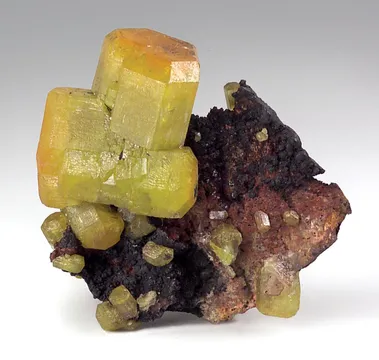
There is also a quieter collector’s story, one that every mineral buyer understands. A Mindat article on a Richard Gunter catalogue specimen describes a 5 x 4 x 1 cm nugget bought as erythrite. The pink coating was the label attraction, but the real value lay beneath and within it: native bismuth crystals, minor native arsenic, late quartz crystals, powdery pink erythrite, and small yellow resinous secondary bismuth minerals. The author’s punchline was that the specimen had been acquired for the “least valuable phase” on the piece. That is very Schlema. A casual glance sees cobalt bloom; the experienced collector sees bismuth crystals, arsenides, secondary Bi minerals, and a classic Saxon vein association.
The same account points to a persistent tension in Schlema-Hartenstein bismuth collecting. Many bismuth specimens have been cleaned because the metal crystals are valuable. Yet the old secondary coatings—the erythrite, the bieberite, the resinous yellow bismuth arsenates or oxides—can preserve exactly the paragenetic texture that makes the piece meaningful. A bright, cleaned bismuth crystal group may be more immediately saleable, but a partly coated, old-time specimen can tell the richer story of the vein.